
Capsule polishing sits quietly between filling and packaging, but it decides how many capsules survive the trip to the blister line. Filled capsules carry static charge, loose powder, and small surface imperfections. If those are not removed, capsules jam in feeders, print poorly, and get rejected at inspection. The tool doing this work is a capsule polishing brush, a rotating cylinder that sweeps every shell as it passes through the machine. Because the brush touches every capsule, its material sets the ceiling for polish quality, machine uptime, and batch consistency.
Operators often choose a replacement brush only when the old one wears out, which puts the decision under time pressure. By then, the production schedule does not allow for testing different materials. Understanding the materials before you need a spare is the practical way to avoid trial-and-error downtime.
In short, capsule polishing brushes are made from polymer filaments, most commonly nylon, wound around a metal coil core. The right choice depends on your machine model, capsule size and shell hardness, and line speed. A standard nylon capsule polishing brush fits most installations, while high-density versions suit faster machines and softer capsules that need gentler surface contact.
The rest of this guide covers each material in detail, explains how filament type, coil construction, and bristle density change performance, and gives a step-by-step method for picking the right brush. It also lists the failure signs that mean a brush has reached the end of its useful life, so you can plan replacements instead of reacting to them.
What Is a Capsule Polishing Brush
A capsule polishing brush is a cylindrical brush that rotates inside a capsule polishing machine, removing dust, static, and loose powder from filled capsules before they move to packaging.
The brush works by rotating at high speed while capsules travel along its surface. The bristles contact each shell, lift powder from the surface, and neutralize static buildup that makes capsules stick together. Some machines also use a vacuum or air stream alongside the brush to carry removed dust away from the polishing chamber.
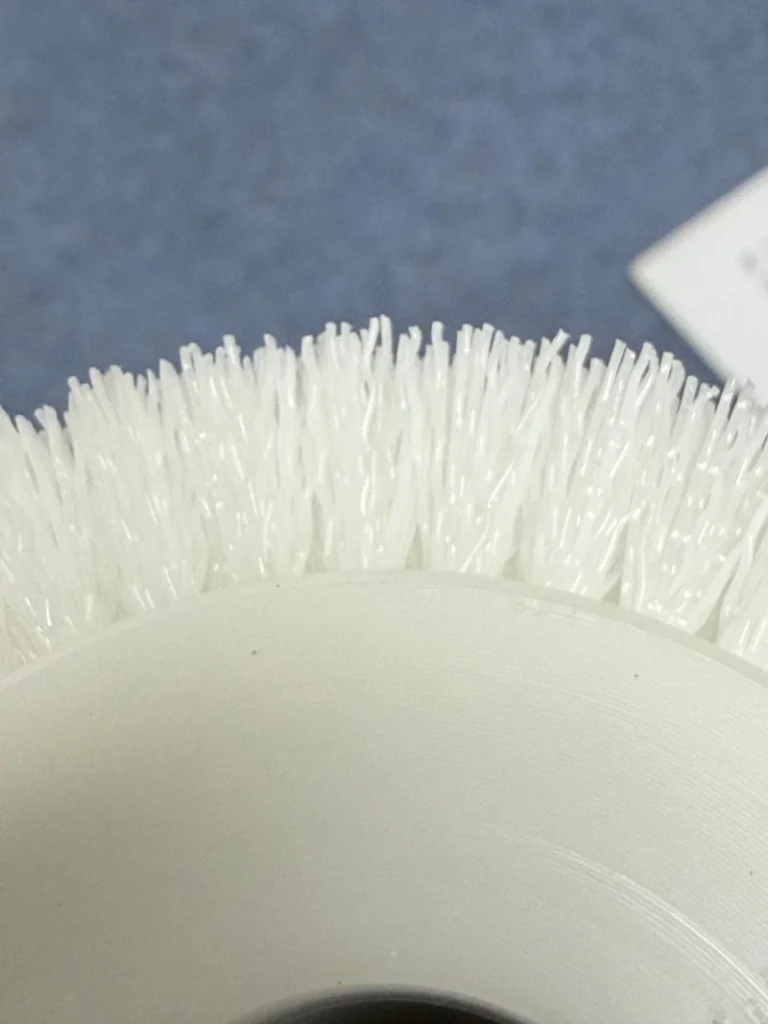
A typical brush has three parts: the bristle bed, the supporting coil, and the end fittings. The bristle bed does the actual cleaning. The coil gives the brush its cylindrical shape and transfers rotation from the machine drive. The end fittings lock the brush into the machine shaft and determine whether installation takes minutes or requires rework. All three parts are made from different materials, and each one influences how the brush behaves in production.
What Materials Are Used in Capsule Polishing Brushes
Capsule polishing brushes are built from two main material groups: polymer filaments for the bristles and metal wire for the coil core. Nylon is the dominant filament material in pharmaceutical polishing applications.
Nylon Filaments
Nylon is the standard bristle material for capsule polishing brushes, and for good reasons. It resists abrasion well, so the brush keeps its cleaning profile across thousands of hours. It is elastic enough to press against a capsule shell without cracking it, which matters when the line runs hard gelatin or soft capsules. Nylon also tolerates the cleaning agents and mild disinfectants used in pharmaceutical washdowns.
Not all nylon behaves the same. Filament diameter changes the contact pressure: thin filaments feel softer and suit delicate shells, while thicker filaments remove stubborn powder faster. Nylon 6 and nylon 66 are the most common grades, with nylon 66 offering slightly better heat resistance and dimensional stability. If the brush runs in a heated room or near drying equipment, that difference can extend service life noticeably.
Metal Coil Core
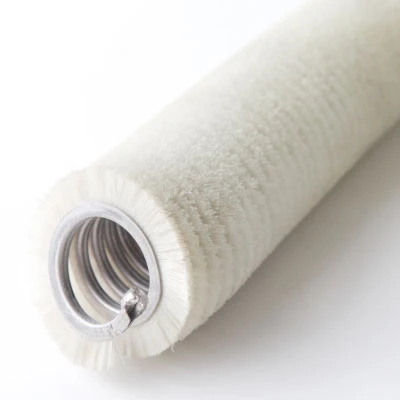
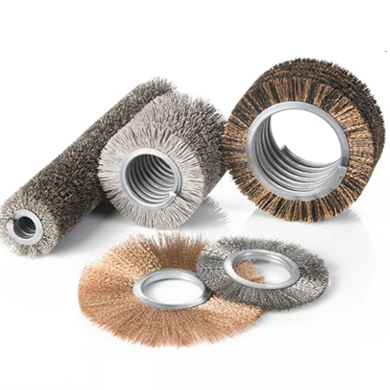
The coil core is the backbone of the brush. It is usually formed from stainless steel wire or a coated carbon steel, wound into a helix that supports the bristles and transfers torque from the drive shaft. Stainless steel is preferred in pharmaceutical environments because it does not rust and survives repeated washdowns without corroding.
The coil pitch and wire diameter determine how rigid the brush feels. A tightly wound coil keeps bristles stable under load, which reduces vibration at high speed. A looser coil flexes more, which can help the brush follow the shape of the capsule path but also shortens bristle life if the flexing is excessive. For most machines, the correct coil geometry is defined by the manufacturer, which is why matching the brush to the machine model matters more than picking the cheapest option.
Bristle Density and Fill
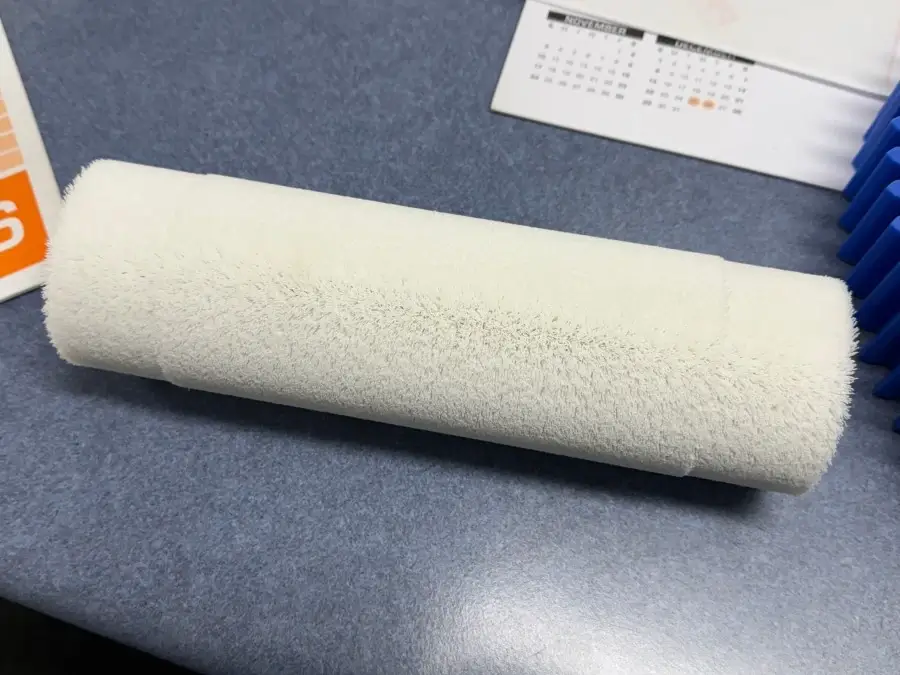
Density describes how many bristles are packed into each row of the brush. A dense fill creates more contact points per capsule, so powder removal is faster and more uniform. A lighter fill flexes more easily and is less aggressive on soft shells.
Density also interacts with machine speed. On a high-output line, a low-density brush can leave streaks or miss powder entirely because each bristle has less contact time. On a slow line, an overly dense brush can polish the same spot repeatedly and wear the shell surface unevenly. The relationship between density and polish quality is covered in detail in our guide on bristle density, which explains how to diagnose density-related defects on the line.
How to Choose the Right Capsule Polishing Brush Material
Choose the brush material by matching three factors: your polishing machine model, the capsule size and shell hardness you run, and your daily output volume.
Step 1: Confirm the Machine Model
The machine defines the brush length, outer diameter, and mounting interface. A brush with the right material but the wrong fitting will not seat correctly and can vibrate loose during production. Check the machine manual or measure the existing brush before ordering. For machines using a helical mounting, an outside coil brush is often the direct match.
Step 2: Match Filament to Capsule Hardness
Hard gelatin capsules tolerate a stiffer filament, which removes powder faster. Soft capsules need a softer or lighter-density fill, otherwise the bristles can mark the shell and create rejections at the inspection station. When in doubt, start with a standard nylon fill and adjust density only after observing the polish result.
Step 3: Match Density to Line Speed
High-speed lines need a brush that contacts every capsule long enough to remove dust. A capsule polishing machine brush with high-density nylon filaments is designed for this case. Low-speed or small-batch lines can run a standard density and still hit the same finish.
Step 4: Plan for Cleaning and Replacement
Pharmaceutical production requires regular cleaning. Choose a brush with materials that survive the washdown protocol used in your facility. Stainless steel coils tolerate aggressive cleaning; coated carbon steel cores may degrade faster if the cleaner is acidic. Keep a documented replacement schedule based on hours of operation rather than calendar time.
Matching Brush Construction to Machine Type
Different polishing machines accept different brush constructions, and using the wrong one is the most common cause of poor polish quality and short brush life.
Capsule polishing machines vary in shaft size, rotation speed, and how the brush is driven. Some machines drive the brush from one end, others support it at both ends. The brush must match not only the mounting but also the operating speed range. At high RPM, a brush with an unbalanced core vibrates, which transfers to the capsules and produces inconsistent polish.
For machines that use a continuous coil design, the nylon coil brush is a practical choice because the continuous helix provides even bristle distribution along the full length. This matters on longer machines where a segmented brush would leave gaps between sections. For shorter machines, either construction can work, and the decision often comes down to availability and the manufacturer’s recommendation.
Common Problems and How the Right Material Prevents Them
Most polishing line failures trace back to material mismatch: the wrong filament stiffness, the wrong coil, or the wrong density for the machine and capsule type.
Bristle Breakage and Shedding
Bristles shed when the filament is too stiff for the capsule material or when the coil flexes beyond its design range. Loose bristles can end up in the capsule stream and trigger recalls at inspection. Choosing a softer filament and a sturdier coil removes the root cause.
Scratched or Marked Capsules
Scratches appear when the brush presses too hard on the shell. The cause is usually a filament that is too thick or a density that is too high for the shell hardness. Switching to thinner nylon filaments or a lighter fill solves the problem without slowing the line.
Static Buildup Returning After Polishing
If capsules still cling together after polishing, the brush is not neutralizing static effectively. Some brushes remove dust but leave static behind because the bristle material does not dissipate charge. Nylon blends with antistatic additives or brushes paired with an ionizer handle this case; the material choice should be confirmed with the machine setup.
Uneven Wear Across the Brush Length
Uneven wear usually means the brush is not centered in the capsule path, or the coil has lost its shape. A worn coil should be replaced as an assembly rather than re-bristled, because the helix geometry cannot be restored in the field.
Maintenance Tips for Longer Brush Life
A capsule polishing brush lasts longer when it is cleaned on a fixed schedule, inspected after every batch, and replaced before visible wear turns into quality issues.
Clean the brush after each production run using the protocol validated for your facility. Powder trapped between bristles hardens over time and reduces cleaning efficiency. Rotate spare brushes so wear is distributed across the set. Record the hours each brush has run and compare that against observed bristle condition, so the replacement interval becomes predictable.
Inspect the bristle bed for bent or missing filaments during every changeover. A single damaged row can leave a stripe of unpolished capsules. Check the coil for corrosion or deformation at the same time, especially if the brush is washed with aggressive agents. When the brush loses shape or bristles start shedding, replace it immediately rather than waiting for the next scheduled maintenance window.
Frequently Asked Questions
How long does a nylon capsule polishing brush last?
Service life depends on line speed, capsule hardness, and cleaning frequency. A brush running a standard pharmaceutical line typically lasts several thousand operating hours, but the reliable way to set your own interval is to track hours per brush and watch for the first signs of bristle shedding or uneven polish.
Can one brush fit different capsule polishing machines?
Only if the machines share the same shaft size, brush length, and mounting interface. Many manufacturers use similar dimensions, but the coil pitch and end fittings are model-specific. Always confirm the interface against the machine manual before ordering a spare for a different machine.
What happens if the brush is too stiff for my capsules?
A brush that is too stiff presses harder than the shell can tolerate, producing surface marks, hairline scratches, and higher rejection rates at inspection. If you see these signs on a new brush, switch to thinner nylon filaments or a lower-density fill before adjusting machine speed.