
Stainless Steel vs. Carbon Steel Wire Brushes: Selecting the Right Filament for Rust Removal
Why Rust Removal Is More Than a Surface Inconvenience
Rust is not a surface inconvenience. On structural steel, pipeline joints, and heavy machinery frames, unchecked oxidation eats into load-bearing cross-sections and turns maintenance budgets into moving targets. In shipyards, automotive rebuild lines, and metal fabrication shops, the single most reliable countermeasure is mechanical abrasion. A correctly specified metal rust remover brush strips iron oxide down to clean substrate faster than chemical baths and with far less process complexity than sandblasting.
Yet the question that trips up even seasoned procurement teams is deceptively simple: stainless steel wire or carbon steel wire? Both will take rust off. One will keep doing it shift after shift without introducing new problems. The other is cheaper per piece and tempts buyers with aggressive initial cutting speed, but the true cost shows up weeks later in the form of premature filament fracture, moisture-induced brush rust, or — worst of all — carbon particle transfer that seeds fresh corrosion on the very surface you just cleaned.
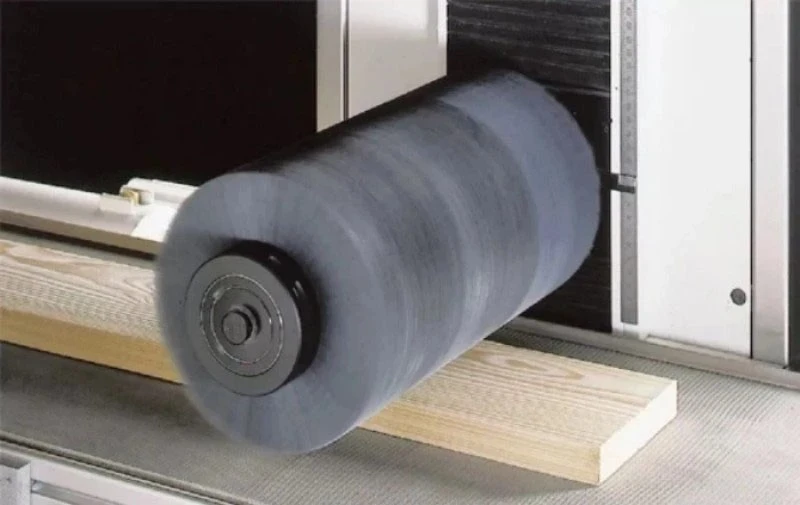
Stainless Steel vs. Carbon Steel: A Conditions-Dependent Verdict
Stainless steel wire cylinder brushes consistently outlast carbon steel alternatives in wet, humid, or chemically active environments, while carbon steel brushes deliver higher initial abrasion at a lower unit price but fail rapidly once moisture or corrosive media enter the equation. The “longer-lasting” answer depends entirely on whether your operating conditions punish corrosion more than they reward cutting aggressiveness.
This is not a tie. It is a conditions-dependent verdict that most shops get wrong because they compare sticker prices instead of total run hours.
What This Guide Covers: Material Science, Cost of Ownership, and Selection Rules
The sections that follow break down material science, rust resistance mechanisms, removal efficiency data, real cost-of-ownership math, and application-specific selection rules so that the next purchase order lands on the right filament.
What Are the Core Material Differences Between Stainless Steel and Carbon Steel Rust Remover Brushes
The Metallurgical Difference: Chromium Passivation vs. Iron-Carbon Hardness
Stainless steel wire contains at least 10.5% chromium by mass, which forms a self-repairing chromium oxide passive film on the filament surface. Carbon steel wire is an iron-carbon alloy with typically 0.6% to 1.0% carbon content, offering higher hardness and tensile strength but zero inherent corrosion resistance.
The metallurgical distinction drives every downstream performance characteristic. Chromium in stainless steel reacts with ambient oxygen to create a dense Cr₂O₃ layer only a few nanometers thick. When mechanical abrasion scratches through this passive film during rust removal, the exposed chromium immediately re-oxidizes, restoring protection within milliseconds. This self-healing passivation means that a stainless steel wire cylinder brush can sit idle in a humid factory bay over a weekend and come back ready to run on Monday without a single rust spot on its filaments.
Why Carbon Steel Wire Rusts from the Inside Out
Carbon steel has no such mechanism. Its hardness comes from the iron-carbon martensitic structure, which gives it excellent cutting bite against thick oxide scale. But that same structure is electrochemically active. Expose carbon steel wire to water, cutting fluid mist, or even ambient humidity above 60% RH for extended periods, and surface rust nucleates along grain boundaries within hours. Once rust starts on a carbon steel filament, it propagates inward, creating stress concentrators that cause individual wires to snap during rotation. High-density brush configurations mask this failure initially, but the decline accelerates once the first filaments break.
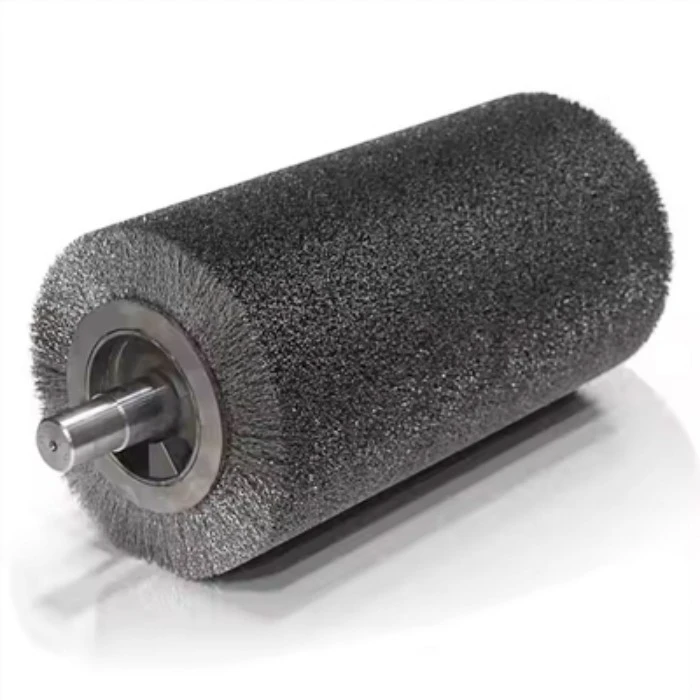
Wire diameter and fill density interact with material choice in ways that matter for brush longevity. A metal cylinder brush wound from 0.3 mm stainless steel wire at high fill density will maintain consistent contact pressure over thousands of cycles because the filaments resist both corrosion fatigue and mechanical set. The same configuration in carbon steel works well in dry, climate-controlled shops but degrades noticeably faster in any environment with moisture exposure.
How Does Corrosion Resistance Affect Long-Term Durability
Corrosion resistance is the single largest determinant of service life for a metal rust remover brush operating outside of strictly dry conditions. Stainless steel filaments routinely deliver two to three times the usable lifespan of carbon steel filaments when moisture, chemical agents, or outdoor storage are factors.
Consider the wet descaling lines common in steel mills and tube manufacturing. These systems combine high-pressure water jets with rotary brushing to remove mill scale before coating. The brush housing is perpetually damp. Cooling mist, condensation from temperature cycling, and trace acidic compounds from the descaling chemistry attack unprotected wire relentlessly. A carbon steel wire wound cylinder brush introduced into this environment will show filament rust within 48 to 72 hours. Once rust sets in, two things happen simultaneously: the oxide layer increases the effective wire diameter, altering brush balance and contact geometry, and the wire loses flexural strength, causing it to fracture under cyclic bending loads.
A stainless steel rust removal brush operating in the same wet line encounters none of these failure modes. The chromium oxide film remains intact, wire flexibility stays within specification, and the brush maintains its designed surface contact pattern until the filaments eventually wear down from pure mechanical abrasion — not from corrosion-assisted fatigue.
The durability gap matters most in applications with intermittent duty cycles. A carbon steel brush used once per shift and then stored in an unheated warehouse collects condensation during overnight temperature drops. Each morning, the operator starts with slightly degraded filaments. After two weeks of this cycle, the brush cuts at perhaps 60% of its original efficiency. By week four, the filaments are snapping off in clusters. Stainless steel brushes shrug off the same storage conditions entirely.
Facilities that have migrated from generic carbon steel brushes to application-matched stainless steel wire cylinder brush configurations report annual brush consumption dropping by 30% to 40% — not because stainless steel is inherently harder, but because corrosion is no longer silently destroying filaments between shifts.
Which Brush Delivers Better Rust Removal Efficiency
The Efficiency Curve: Why Carbon Steel Starts Faster but Slows Down
Carbon steel wire brushes remove heavy rust and thick mill scale faster on a per-pass basis due to higher filament hardness and more aggressive cutting geometry. Stainless steel brushes achieve comparable net throughput over a full production shift because they maintain consistent cutting performance without the progressive efficiency loss that corrosion and filament fracture impose on carbon steel.
The distinction matters because efficiency is not a single number. It is a curve over time.
A fresh carbon steel rust remover brush mounted on an automated line will chew through flaking oxide on cast iron or structural steel with impressive speed. The high-carbon wire, typically hardened to 55–60 HRC at the filament surface, bites deep into the rust layer and fractures it mechanically. For the first few hours of operation, carbon steel wins the rate comparison hands down.
The Carbon Steel Drop-Off: Fracture, Contamination, and Compensatory Pressure
Then the curve bends. Filament tips dull from impact fatigue. Wires that have absorbed even trace moisture during idle periods develop micro-cracks at grain boundaries. The brush begins shedding fragments onto the workpiece — fragments that, on stainless steel parts, nucleate galvanic corrosion cells that produce rust stains within days. The operator compensates by increasing contact pressure, which accelerates filament breakage. By the midpoint of the shift, removal rate has dropped measurably.
Stainless Steel: Slower Start, Flat Curve, and Contamination-Free Operation
A stainless steel brush starts slower. Its lower hardness — typically 25–35 HRC for annealed 304 stainless wire — means it abrades rust layers with less initial aggression. But it holds that removal rate nearly flat across the entire shift because the filaments do not corrode, do not shed contaminating particles, and do not progressively fracture. Over an eight-hour production window, the area-under-the-curve throughput for stainless steel often matches or exceeds carbon steel on stainless workpieces and aluminum alloys, where carbon contamination is unacceptable.
For heavy carbon steel processing where trace iron particle transfer is irrelevant — think structural I-beam descaling or ship hull plate preparation — carbon steel remains the faster choice per unit time, provided the line operates dry and brushes are replaced on a schedule that anticipates the efficiency drop-off.
When Does Total Cost of Ownership Favor One Material Over the Other
Stainless steel brushes carry a per-unit purchase price two to four times higher than carbon steel equivalents, but total annual spending on rust removal consumables frequently reverses this ratio once changeover labor, production downtime, and workpiece scrap from carbon contamination are factored in.
The math that matters is not on the purchase order. It is in the maintenance log.
A procurement team buying carbon steel wire wound cylinder brushes at $12 per piece and consuming 120 units per year spends $1,440 on brush hardware. Stainless steel alternatives at $35 per piece, lasting three times as long, require only 40 units per year for a hardware spend of $1,400. So far, they are roughly equal.
Now add the hidden line items. Each carbon steel brush changeover requires roughly 15 minutes of technician time on a typical conveyorized brushing station. At 120 changeovers per year, that is 30 hours of labor. If the line runs at a burdened rate of $200 per hour, changeover downtime adds $6,000 to the annual cost column for carbon steel. With stainless steel brushes requiring only 40 changeovers, downtime cost drops to $2,000 — a $4,000 annual saving that dwarfs the hardware price difference.
The largest cost swing comes from workpiece scrap. Carbon steel filaments leave microscopic iron particles embedded in the surface of stainless steel or aluminum parts. These particles oxidize rapidly, producing rust stains that quality inspectors flag as defects. One documented case study from a stainless steel pressure vessel manufacturer tracked a 3.7% return-and-rework rate traced to carbon brush contamination. After switching to stainless steel rust removal brushes, the return rate fell below 0.1%. The per-unit brush cost nearly tripled, but annual warranty and rework savings exceeded the brush budget increase by an order of magnitude.
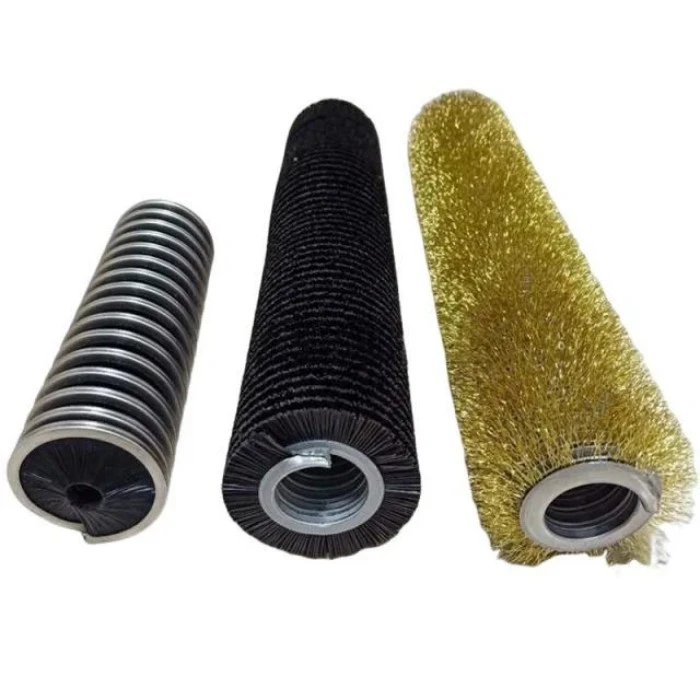
The total cost analysis framework is straightforward. For dry-process heavy carbon steel lines where parts are primed or coated immediately after brushing, carbon steel brushes are the economical default. For any environment with moisture, intermittent duty cycles, or workpieces that cannot tolerate iron contamination, stainless steel is cheaper in the only column that counts — the year-end total.
How Do Application Environments Determine the Right Choice
The operating environment overrides all other selection criteria. Wet processes, high-humidity storage, marine or chemical exposure, and any application involving stainless steel or aluminum workpieces mandate stainless steel wire. Dry, climate-controlled lines processing only carbon steel parts are the domain where carbon steel brushes remain cost-competitive.
The decision framework condenses into four environmental checkpoints.
First, moisture exposure. Any metal cylinder brush that operates in wet descaling, coolant-mist environments, or outdoor storage must use stainless steel. The chromium oxide passive film is the only reliable defense against filament rust. Even zinc-plated or copper-coated carbon steel wire eventually loses coating integrity at wear points, exposing the reactive iron core.
Second, workpiece material. Carbon steel brushes must never touch stainless steel, aluminum, brass, or copper surfaces that will not receive a heavy coating afterward. The iron particle transfer problem is well documented across the metal finishing industry. For shops that process mixed materials on the same line, the safe default is stainless steel across all brush stations.
Third, duty cycle. Continuous-operation lines that run brushes to mechanical end-of-life within a single shift see less corrosion penalty because the brushes never sit idle long enough to rust. Intermittent-use shops with brushes that may sit for days between runs should default to stainless steel, regardless of workpiece material. The overnight condensation damage to carbon steel filaments accumulates faster than most maintenance schedules anticipate.
Fourth, regulatory environment. Food processing equipment, pharmaceutical manufacturing, and medical device fabrication all require non-contaminating surface preparation tools. Stainless steel type 316 brushes, with their added molybdenum content for chloride resistance, meet FDA and EU hygiene standards. Carbon steel is categorically excluded from these environments.
The custom rust remover brush selection guide provides a more granular material-to-application matrix for shops with unusual part geometries or multi-metal processing requirements. The same selection principles that determine filament material also apply to wire diameter, fill density, and wound cylinder brush construction design.
Surface preparation outcomes depend on getting the pairing right. A brushed surface destined for high-adhesion epoxy coating needs uniform anchor profile depth, not maximum material removal speed. Stainless steel wire, with its consistent contact geometry across the full brush life, produces more repeatable surface roughness values than carbon steel wire, whose cutting characteristics degrade as filaments corrode and fracture. For critical coating applications, the brush material choice directly affects downstream coating adhesion test results.
Selecting the right metal rust remover brush is not a one-variable problem. It requires simultaneous evaluation of workpiece metallurgy, process moisture, duty cycle, and quality acceptance criteria. The shops that get the lowest annual cost are not the ones buying the cheapest brushes. They are the ones matching filament material to their actual operating conditions and measuring cost over thousands of run hours, not per-piece invoice price.
Making the Decision That Holds Up Over Time
The stainless versus carbon steel question resolves into a simple decision rule once the environmental variables are laid out clearly. If your process is wet, your storage is humid, your workpieces are stainless or aluminum, or your quality standards reject iron contamination, use stainless steel. If your line is dry, your parts are carbon steel receiving immediate coating, and your budget is constrained, carbon steel remains a defensible choice — provided you track replacement frequency and adjust procurement quantities to account for the shorter service life.
What trips up most buyers is the lag between the purchasing decision and the cost signal. Carbon steel looks cheaper on the invoice. Stainless steel proves cheaper on the P&L statement. The gap between those two numbers is where maintenance managers earn their salaries.
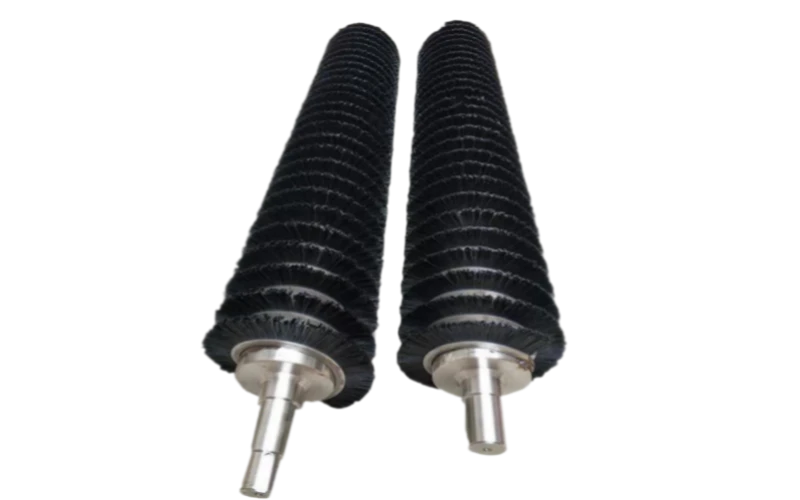
Understanding how filament metallurgy translates into production outcomes is the common thread across effective surface preparation programs. A thorough grasp of how metal cylinder brushes perform across different wire types and operating conditions lets engineers move beyond generic catalog selections and into application-tuned specifications that deliver measurable throughput and quality improvements.
Frequently Asked Questions
Can I use a carbon steel rust remover brush on stainless steel workpieces if I apply a protective coating immediately afterward?
No. The problem is not the rust that forms before coating. It is the microscopic carbon steel particles that embed into the stainless steel surface during brushing. These particles are ferritic and will corrode under the coating, creating blister points that eventually rupture the coating film. Even immediate coating cannot prevent this galvanic mechanism. Stainless steel workpieces require stainless steel brushes — there is no workaround.
What wire diameter should I specify for heavy rust versus light surface oxidation?
Heavy, flaking rust on thick structural steel calls for coarser wire, typically 0.5 mm to 0.8 mm in diameter, arranged at lower fill density to prevent debris clogging between filaments. Light surface oxidation or mill scale on thinner sheet metal works best with 0.2 mm to 0.3 mm wire at higher fill density for uniform contact. The rust thickness determines both wire gauge and density. Using fine wire on heavy rust wastes time; using coarse wire on light oxidation risks gouging the substrate.
How do I calculate the expected service life difference between stainless steel and carbon steel brushes for my specific line?
Track three data points on your current carbon steel brushes: average run hours per brush before replacement, number of changeovers per month, and any workpiece rejection rate attributable to surface contamination. Multiply your current brush consumption by the unit price to get baseline hardware cost. A stainless steel equivalent typically lasts 2 to 3 times longer in wet or humid conditions and about 1.5 times longer in dry conditions. Add changeover labor and downtime at your line’s hourly burdened rate. The result is a line-specific break-even analysis that almost always reveals stainless steel as the lower total-cost option when moisture or contamination risk is present.