
In many industrial lines, it is the surface preparation and finishing that will determine whether or not the downstream steps will run smoothly. A metal cylinder brush allows the team to take off burrs, scale, and residues while forming a more uniform surface. These cylinder formats keep contact pressure stable as compared to looser scrubbing methods, so the results stay repeatable.
The use of a metal cylinder brush in daily processing should lead to the expected benefits: improved surface consistency, more effective material removal, and improved integration with the existing brush stations.
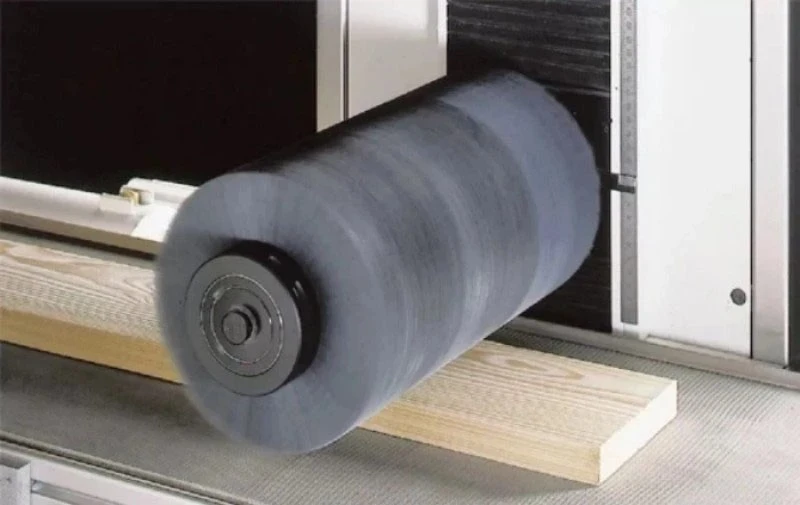
Strong, reliable contact for consistent results
The metal cylinder brush keeps an advantage of being able to maintain a consistent contact with the rotating surface. This is due to its design, where the cylinder wire tips are evenly distributed, allowing for uniform cleaning and finishing; even when parts have slight variations in diameter or run speed, support is maintained.
Improved field contact reduces streaking during polishing, reduces spots after deburring, and provides a more even surface for coating and bonding. The latter is one of the most direct forms of rework reduction; it also indirectly assists a quality team in making their acceptance criteria tighter.
Performance Tailored to the Job by Wire Material Options
Metal cylinder brushes do not function equally in all configurations. These and other properties – stiffness, flexibility, heat resistance, and cutting aggressiveness – change with wire material. Therefore, most production engineers choose based on the basis of substrate, target finish, and contamination type.
Common cylinder brush options include:
- Brass Wire Cylinder Brush — for light abrasive cleaning
- Brass Wire Wound Cylinder Brush — more aggressive action with stable brushing
- Stainless Steel Wire Cylinder Brush — for corrosion resistance in tough environments
Most of the time, this choice depends on whether the goal is cleaning, deburring, or light finishing.
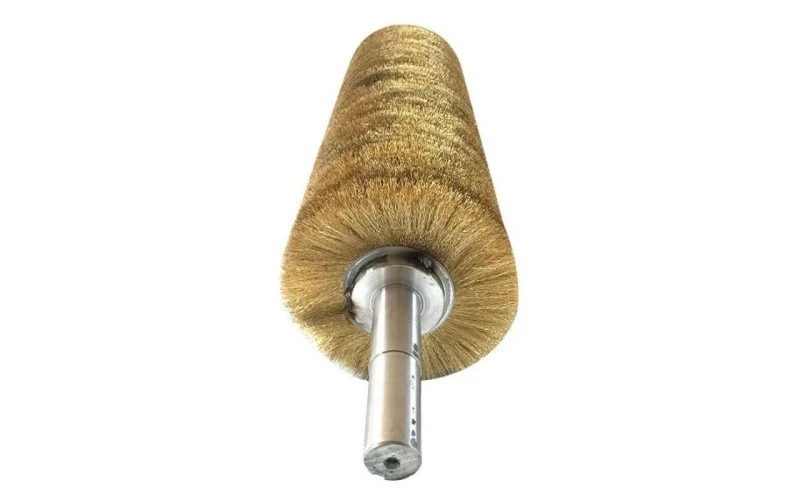
Faster Removal Rates
Get a good metal cylinder brush, and you make sure that the productivity is good because it removes scale or residues at a uniform rate. Results can be dialed in by the operator through speed, feed, and brush contact pressure. This is the kind of control that matters most in production — it helps cut surface defects by reducing over-aggressive brushing, which is one of the most common causes of surface defects.
Another advantage lies in the geometry of the brush. The use of cylinder forms eliminates the ‘wandering’ that is experienced with tools for cleaning at lower levels of structure, and therefore, there is less time that the production lines have to spend to readjust the setup each shift.
Improved wear behavior for stable long-term operation
In industrial maintenance, the timing of brush replacement directly affects cost and downtime. Most plants would like to use a metal cylinder brush because, under continuous rotation, rapid fatigue of the wire is not experienced.
Wire-wound designs and the management of wire density will enhance service life because the stability of the arrangement of the wires will ensure uniform brushing action over time. Stability, as a critical parameter, ensures that the results will be the same at any time.
Better incorporation into existing roller brush systems, which reduces the requirement for complete line redesigns. Cylinder brushes can be mounted directly on all roller brush mounts and rotary brush stations, as well as on conveyorized processing. This makes it simple to upgrade and keeps changes small.
This also supports optimization in small steps:
- keep the same part handling
- Change only the brush type and wire material, and
- Refine contact parameters for a better finish.
If production is mainly focused on parts that are cylinder-shaped, then a metal cylinder brush will often match the geometry naturally, so the level of integration effort required is low.
Quick comparison of wire types
| Wire Type | Typical strengths | Best-fit use cases |
| Brass Wire Cylinder Brush | gentle cleaning, fewer surface scuffs | light scale removal, and conditioning of most materials; sensitive finishes |
| Brass Wire Wound Cylinder Brush | more bristle action, more even brushing pressure | same deburring on hard-to-reach areas |
| Stainless Steel Wire Cylinder Brush | freedom from rust; long life in tough areas | oily sections and areas requiring frequent wash cycles |
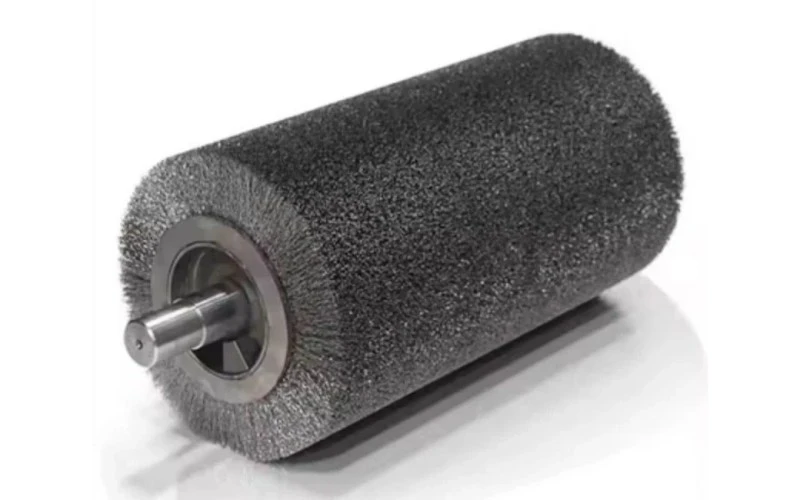
This table will assist production teams in zeroing in on the type of metal cylinder brush that meets their requirements.
Choose the Right Metal Cylinder Brush
Picking the right metal cylinder brush usually means going through these steps: identify the substrate, define the finish, and choose the wire material and configuration.
- Substrate (what type of metal it is, whether it has a coating, heat sensitivity)
- Defect type (scale, burrs, residue, oxide film)
- Required finish level (light cleaning as opposed to more aggressive deburring)
- Process environment (moisture, oils, chemical exposure)
- Pressure and Speed of Mounting (Ensures even contact)
The defects on the surfaces can differ; what works on one may not work on another.
Things Not to Do
Don’t pick the stiffness of the wire just because of the sensitivity of the surface. You’ve got to factor in things like the hardness of the substrate and its thermal limits, too.
- running at high contact pressures to “force” faster results,
- ignoring the corrosion risk in operations that involve wash-down or oils
The checklist ensures that the performance of the metal cylinder brush remains in line with real-world constraints.
It also helps to delve into related resources and selection principles when aiming at certain finishing goals. For example, our basic guide review will help clear core concepts and terminologies, while a dedicated selection article will provide the logic for different production goals. You can also read about the top three industrial applications where such a tool usually beats alternatives.
Materials that will assist in reinforcing how teams think about fit, wire type, and spec tailoring in their pursuit of reliable results.
FAQ
Which wire type is used for light surface cleaning of metals?
Most teams choose to start with a Brass Wire Cylinder Brush for light cleaning — not much scuffing — and adjust contact pressure based on the finish you can see.
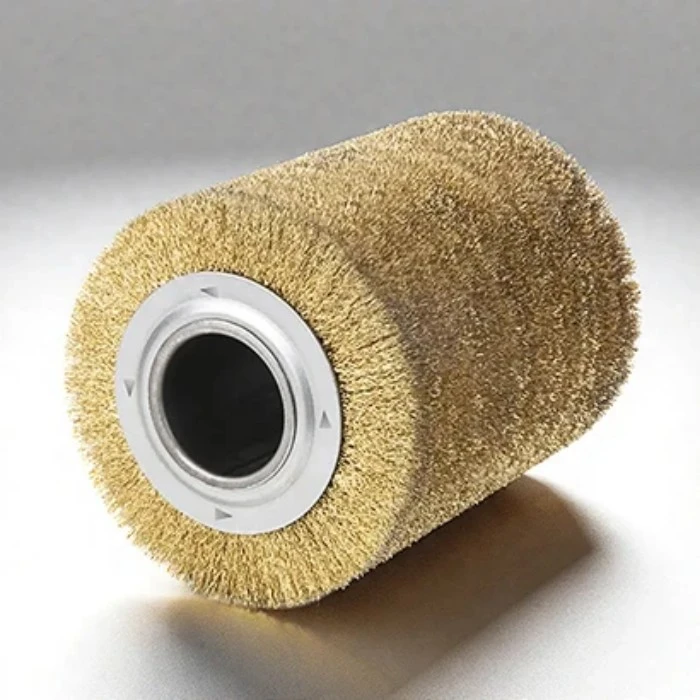
What is the performance difference of a Brass Wire Wound Cylinder Brush?
A Brass Wire Wound Cylinder Brush usually gives more active and steady contact, allowing the team to hold on to constant deburring and surface texture over several runs.
When should a Stainless Steel Wire Cylinder Brush be used?
Stainless Steel Wire Cylinder Brushes are intended for use in moist environments, oily conditions, or where brushes will be exposed to direct wash-down. This will help minimize corrosion and keep the brushing quality stable over time.