
A woodworking sanding brush makes edge and profile sanding more effective by allowing its abrasive strips to stay in flexible, controlled contact with uneven surfaces. Unlike rigid sanding tools, it can follow curves, grooves, corners, and molded details more easily. The result is a more consistent finish, with less manual work, reduced surface damage, and less unnecessary material removal.
In production settings, brush sanding is particularly useful for workpieces that cannot maintain full contact with a flat sanding belt. Cabinet doors, flooring components, furniture parts, moldings, and decorative panels are common examples. Depending on the grit, filament structure, and operating speed, the brush can efficiently perform intermediate sanding, denibbing, edge breaking, and surface preparation.
Key Challenges in Woodworking Sanding
Limitations in Sanding Complex Shapes
Flat sanding belts and discs work well across broad, even surfaces. Their rigid backing, though, makes recessed profiles, narrow grooves, rounded edges, and detailed carvings difficult to reach. Heavy pressure may flatten sharp features or remove too much material from raised areas.
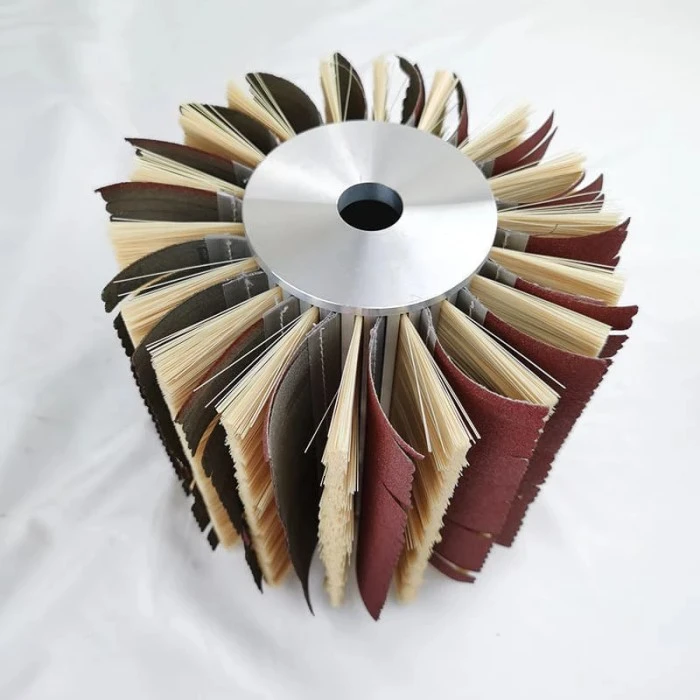
A sanding brush addresses the problem with abrasive filaments that flex independently. Bending around the workpiece lets them reach areas rigid tools might miss. When configured properly, a Sanding Brush for Wood — Sisal Roller Brush keeps steady contact along edges and contoured surfaces without substantially changing the original profile.
Brush construction remains significant. Longer filaments generally bend more easily, while shorter ones create a firmer sanding action. Manufacturers should first consider the part’s geometry, the finish they want, and the direction of feed before choosing the brush’s dimensions and density.
Inefficiency of Manual Sanding
Manual sanding lets operators adjust the process directly, but it can slow production. Results may vary from one shift to another since each person applies different pressure, follows a different sanding direction, and spends a different amount of time on the task. When the work is repeated by hand, labor demands increase and operators become fatigued.
When paired with suitable machinery, a woodworking sanding brush can process profiles at a steadier feed rate and deliver more uniform results. Operators still need to inspect the finish and adjust the machine settings, but they are not required to sand every detail by hand.
In production, that may result in:
● Faster processing of edges, profiles, grooves, and raised panels
● More consistent scratch patterns across repeated components
● Less dependence on intensive manual finishing
Improved control over edge rounding and material removal. Streamlined production planning for medium- and high-volume orders.
Manual touch-up may still be necessary in very deep corners or with unusual designs. Still, experienced finishers generally regard brush sanding as an effective way to cut down on the total amount of handwork.
Limited Tool Compatibility
Abrasive tools do not work equally well with every machine or material. Shaft size, brush diameter, rotation direction, maximum operating speed, and available mounting space can all affect safety and finish quality.
Industrial buyers should confirm the equipment specifications before ordering. A sandpaper brush for a sanding machine may be used with brush sanding machines, profile sanders, automatic production lines, or customized finishing systems, as long as its dimensions and mounting method match the equipment.
The workpiece itself also affects the process. Softwood, hardwood, veneer, MDF, primer, and metal components each respond differently to abrasion. By running trials first, production teams can establish suitable grit sequences and operating parameters before full-scale processing begins.
Woodworking Sanding Brush Solutions for Better Sanding
Flexible Contour-Following
Brush sanding’s main advantage is its ability to follow contours. As the roller rotates, the abrasive elements shift independently and meet the surface at varying levels. This lets the brush sand raised grain and profiled details without forcing a rigid tool against the workpiece.
Several factors determine how closely the brush follows contours:
- Filament length: Longer strips reach deeper details and make contact more softly.
- Brush density: With greater density, the brush creates more contact points, which helps produce a more uniform finish.
- Grit size: Coarse grit removes defects faster, while fine grit leaves the surface ready for coating.
- Rotation and feed speed: Finding the right balance helps prevent excess heat, uneven scratches, and premature wear.
Sanding pressure: Apply moderate pressure so the abrasive tips function correctly without bending them excessively.
For more reliable results, operators should begin with conservative settings and examine several test pieces. Gradual adjustments usually produce better outcomes than starting at maximum pressure or speed.
Compatibility with Diverse Materials
Manufacturers use Abrasive Wood Brushes for many finishing tasks, including sanding raw wood and sealers, deburring, light structuring, and surface preparation. The abrasive setup should be suited to the material’s hardness and the required finish.
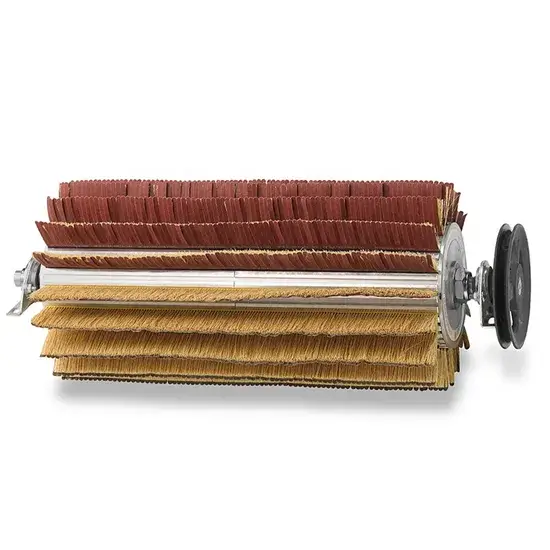
Some roller designs combine abrasive strips and sisal fibers. The sisal supports the abrasive, distributes contact over the surface, and may help keep sanding steady. For manufacturers handling different component types, an Abrasive Wood Brushes — Sisal Roller Brush for Wood & Metal setup may be suitable, provided the abrasive and machine settings are matched to each material.
| Application | Suggested Brush Characteristic | Primary Objective |
| Profiled hardwood | Medium-density, controlled flexibility | Smooth contours without losing detail |
| Softwood edges | Fine grit and moderate pressure | Limit over-sanding and prevent edge deformation |
| MDF or primer | Fine abrasive material arranged evenly | Produce a consistent surface for coating |
| Grooves and moldings | Longer, flexible filaments | Reach recessed and curved areas |
| Light metal finishing | Abrasive selected for the material | Remove minor marks and refine the surface |
Manufacturers should not use one setting for every substrate. A process that works well on oak could cut too deeply into pine or behave differently on primed surfaces.
High Wear Resistance and Low Material Loss
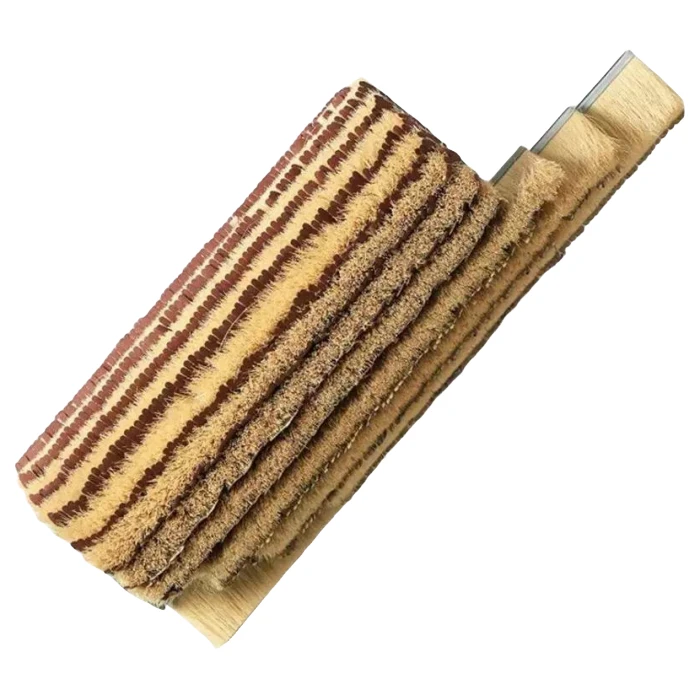
When chosen correctly, a woodworking sanding brush removes surface fibers, small defects, and coating irregularities while preserving the workpiece profile. That controlled action matters when dimensions and decorative details must stay consistent.
Wear resistance depends on the abrasiveness of the material, brush construction, operating speed, applied pressure, and the material being processed. Regular inspections help operators identify uneven wear, damaged strips, contamination, and reduced cutting performance. Clean dust-extraction systems and preventing resin buildup can also help the brushes maintain a more consistent service life.
For demanding production work, choosing a woodworking sanding brush for a brush sanding machine requires looking beyond the initial price. Procurement teams should assess the workload it must handle, its usable service life, finish consistency, replacement frequency, and the expense of rework.
Woodworking Sanding Brush vs. Traditional Sanding Tools
No single sanding tool works well for every job. Traditional belts and discs remain effective on broad, flat surfaces, especially when a substantial amount of material needs to be removed. For workpieces with profiles, edges, grooves, or other irregular forms, a brush sanding system is often the more suitable option.
| Tool | Best Application | Main Limitation |
| Sanding belt | Flat surfaces and rapid stock removal | Limited contact on complex profiles |
| Sanding disc | Localized sanding and edge work | May produce uneven results on detailed shapes |
| Hand sanding | Small batches and final touch-ups | Work is slow, and consistency varies with the operator |
| Sanding brush | Edges, contours, profiles, and deburring | Requires the right setup and grit selection |
Across many production lines, the two tools are most effective when used in sequence. The belt quickly covers broad surfaces, while the brush reaches into profiles and prepares the component for finishing. This staged approach increases throughput without sacrificing surface quality.
Frequently Asked Questions
How should a buyer choose the right brush grit?
The choice turns on several factors: how hard the material is, which defects it already has, the finish required, the coating process, and the machine’s speed. Buyers also need to determine whether the brush is intended for intermediate sanding or the final sanding stage.
Can one sanding brush process both wood and metal components?
Yes, but only if the brush is made for use on both materials. Separate brushes are usually the better choice, since they reduce the risk of contamination and let you match the abrasive specifications to the wood or metal being processed.
What information should a buyer provide before ordering?
Before placing an order, buyers should specify the machine model and shaft dimensions, along with the brush diameter, working width, operating speed, material type, profile shape, and desired surface finish.