
Rust spots on a car body are one of the most frustrating problems a vehicle owner can face. A tiny stone chip on the hood, a scratch on the door edge, or salt residue left on the fender after winter can turn into an orange bloom in a matter of months. Left alone, surface rust spreads under the clear coat and becomes a repair that costs far more than the few minutes it would have taken to fix the spot when it first appeared.
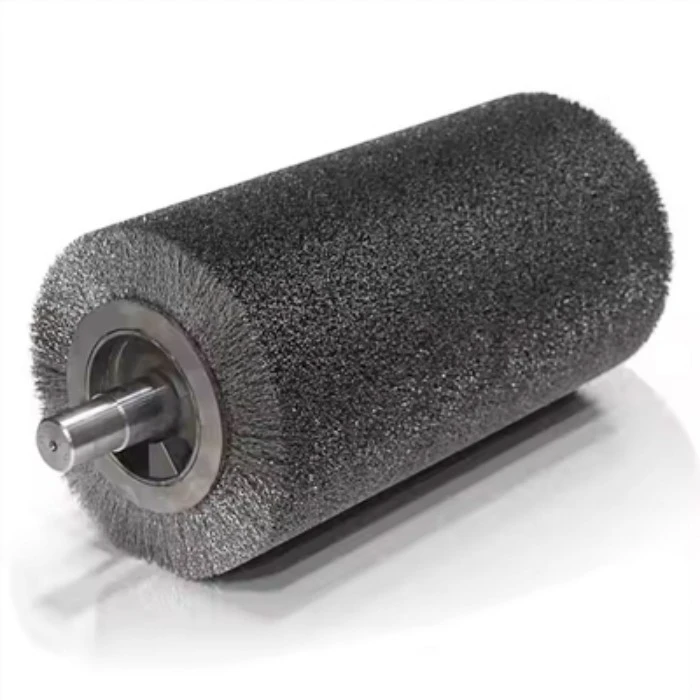
The instinct is to grab the most aggressive tool available and grind the rust away. That instinct is exactly what ruins paint. Most standard wire brushes are built for steel fabrication work, not automotive body panels. Their hardened bristles are harder than automotive clear coat, so the same stroke that strips rust also leaves behind fine scratches, swirl marks, and sometimes bare metal where the paint used to be.
A wire brush for car rust is paint-safe when its bristles are softer than the clear coat, the abrasive action is controlled, and the brush shape lets you work flat against the panel instead of gouging into it. Brass wire and abrasive-impregnated nylon brushes are the two materials that meet this test; plain steel wire brushes are not, because carbon steel bristles measure around 180 to 200 HV while automotive clear coat typically falls between 2H and 4H on the pencil hardness scale, making scratches almost guaranteed under normal pressure.
This guide breaks down exactly what to look for before you buy. You will learn how hardness determines whether a brush scratches, which bristle materials are safe, why abrasive nylon brushes have become the professional choice for paint-sensitive work, how brush shape affects results on curved panels, and how to match the tool to the severity of the rust. There is also a practical section on technique, because even the right brush can damage paint if you push too hard or run it too fast.
Why a Standard Wire Brush Scratches Automotive Paint
A standard steel wire brush scratches car paint because the bristles are physically harder than the clear coat, and hardness differences control which surface loses the fight.
Automotive clear coat is a two-part urethane finish with a pencil hardness in the 2H to 4H range on most factory paint jobs. Converted to the Mohs scale used for minerals, that puts clear coat at roughly 3 to 4. A carbon steel wire brush, by comparison, is around 4 to 4.5 on the same scale, and stainless steel bristles are harder still. When a material with a higher hardness rating is dragged across a softer surface, the softer surface gives way. That is a simple physical rule, and no amount of careful handling fully cancels it out.
The problem is made worse by the geometry of wire bristles. Wire filaments are drawn to a thin, round profile and usually cut at an angle, so the working end acts like a tiny chisel. Under pressure, those points dig into the clear coat, lift small flakes, and leave the hazy, spiderweb pattern that detailers call micro-marring. It is not visible from ten feet away, but it destroys gloss, and once the clear coat is breached, moisture reaches the base coat, and the rust cycle accelerates.
Speed multiplies the damage. A wire wheel spinning at 3,000 to 10,000 RPM turns each bristle into a series of small impacts rather than a single controlled stroke. Every impact that is harder than the paint removes a little material. For rust removal on structural steel, that behavior is exactly what you want; for a painted car panel it is the opposite. That is why the debate over stainless vs carbon steel brush matters in automotive work: both materials are harder than paint, and the choice between them only changes how fast the brush wears, not whether it scratches.
Bristle Material: Brass, Steel, and Nylon Compared
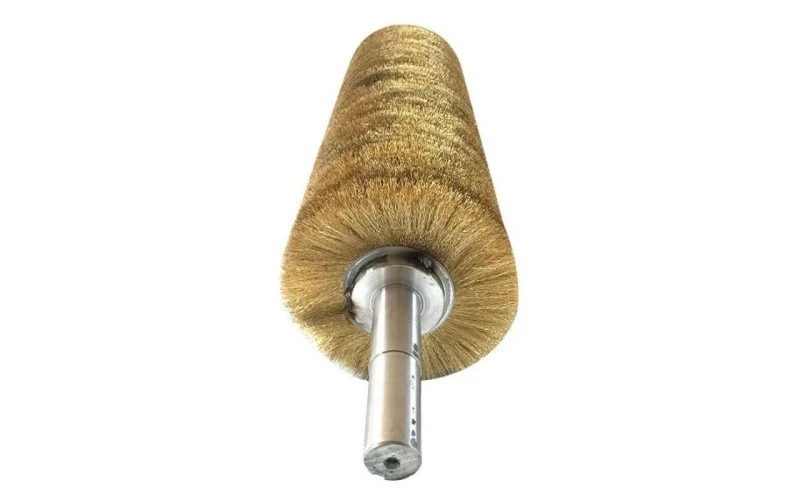
Brass wire is the traditional paint-safe choice because it sits at the edge of the hardness range, around 80 HV or roughly 3 to 3.5 on the Mohs scale, which lets it work on rust without cutting into clear coat when used with light pressure.
Brass bristles are soft enough to deform rather than bite into paint, which is why a brass wire rust brush has been a standard tool in body shops for decades. They knock down loose rust scale, surface bloom, and corrosion residue without the aggressive cutting action of steel. The trade-off is speed: brass wears faster and removes heavy rust more slowly than steel, so it is a maintenance tool more than a restoration tool.
Nylon bristles sit at the opposite end of the hardness scale. Plain nylon is far softer than paint and cannot scratch a clear coat even under heavy pressure, but it also lacks the cutting power to remove anything beyond loose dust. The useful version of nylon for rust work is abrasive-impregnated: nylon filaments loaded with hard mineral particles that do the cutting while the flexible carrier keeps pressure distributed across the surface.
The table makes the decision path clear. If the rust is on bare steel and paint protection does not matter, steel is the fastest tool. If the rust sits next to or underneath painted edges, brass or abrasive nylon is the responsible choice. The rest of this article focuses on those two paint-safe options and how to get professional results with them.
Abrasive-Impregnated Nylon Brushes: The Modern Paint-Safe Option
How Abrasive-Impregnated Nylon Works
Abrasive-impregnated nylon brushes solve the hardness problem by separating the brush structure from the cutting edge: the nylon carrier is soft and conforms to the panel, while embedded mineral grit like silicon carbide or aluminum oxide does the rust removal at a controlled depth.
Silicon carbide is one of the hardest common abrasives, measuring 9 to 9.5 on the Mohs scale, and aluminum oxide follows at about 8 to 9. Embedding that grit into nylon seems counterintuitive at first: why put the hardest abrasive available into a brush that is supposed to be gentle? The answer is in how the particles are exposed and how the brush is used. The grit sits in the nylon matrix with only a small portion exposed, so it cuts rust scale on contact but cannot plunge deep into the paint the way a sharp steel wire can. The nylon backing limits penetration depth and spreads the load.
Choosing the Right Grit Size
Grit size controls the finish. A silicon carbide nylon brush rated at 320 grit produces a fine, uniform cut that removes light to moderate rust while leaving the surrounding paint intact. Coarser grits in the 80 to 120 range cut faster but carry more risk on adjacent painted surfaces; finer grits above 400 are closer to polishing compounds and work best as a final pass. For most car body touch-ups, a 320-grit silicon carbide brush strikes a balance between speed and safety.
Better Geometry and Flexibility
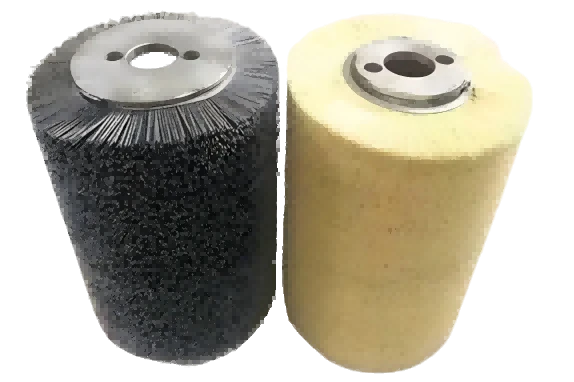
These brushes also handle geometry better than wire. Because nylon filaments flex, an abrasive nylon cylinder brush follows the curve of a fender, a door crease, or a wheel arch without lifting off the surface. Steel wires tend to skip and chatter on curved panels, concentrating force on high spots. The flexible carrier keeps the entire working face in contact, resulting in more consistent rust removal and fewer isolated gouges. For shops that repair rust on painted body panels day after day, this combination of soft carrier and controlled abrasive has largely replaced the old habit of reaching for a steel wire wheel.
Brush Shape and Density: Cylinder Brushes for Panels and Contours
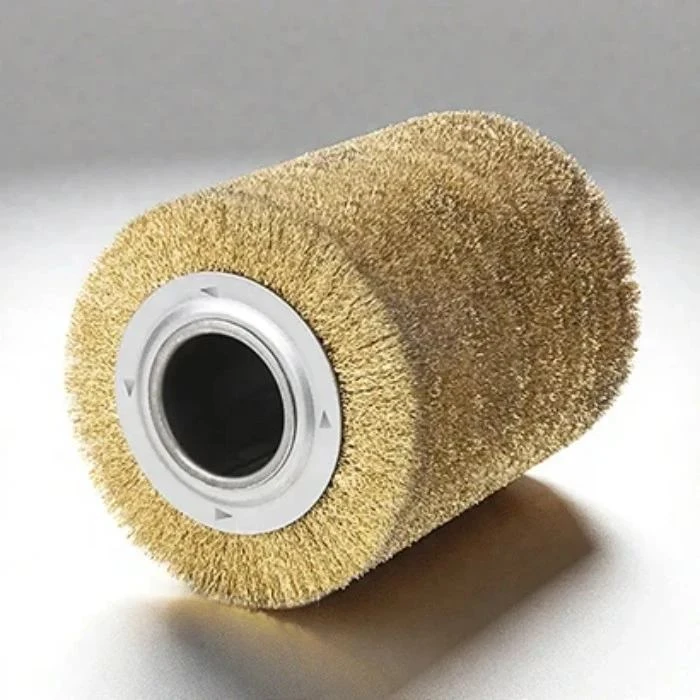
A cylinder brush is the best shape for automotive rust work because it presents a wide, uniform working face that can be rolled across flat panels and follows body contours without digging in.
Hand brushes have their place for tight spots like door hinges and badge recesses, but for the large surfaces where rust usually appears, a cylinder brush mounted on a drill or bench grinder covers area far faster and with more even pressure. The working principle is simple: the cylinder spins, the bristles wipe across the surface, and the depth of cut depends on bristle stiffness, brush density, and how hard you press.
Two construction details matter when selecting a cylinder brush for car work. The first is whether the filaments are wound or crimped. Crimped wire creates a more open, flexible face that works well on irregular surfaces; wound construction packs the filaments tighter and gives a firmer cut. For paint-adjacent work, a wound brass brush like a brass wire cylinder brush gives the predictable, low-aggression finish that bodywork needs. The second detail is trim length, the length of bristle protruding from the hub. Longer trim flexes more and is gentler on paint; shorter trim is stiffer and cuts faster but needs a steadier hand.
Brush density, measured by how tightly the filaments are packed, changes the feel dramatically. A dense brush with the same material and trim will remove rust faster because more filaments contact the work, but it also holds its shape under pressure, which raises the risk of scratching when the operator leans in. A less dense brush flexes more readily and is safer on painted edges. For car panels, choose a brush where the filaments bend noticeably when you press a finger into the face; if the face feels like a stiff pad, it is probably too aggressive for paint-sensitive work. The same geometry rules apply in industrial settings, and the principles behind rust and scale removal brushes are worth reading before you buy a wheel for automotive use.
How to Match the Brush to Rust Severity
Match the brush to the rust, not the other way around: light surface rust needs a fine abrasive nylon brush, medium rust needs brass wire or medium-grit nylon, and heavy scale on bare metal is the only case where steel wire is appropriate.
Choosing the right tool starts with an honest assessment of the rust. Poke the rust with a screwdriver or pick. If it flakes away easily and the metal underneath is still solid and gray, you are dealing with surface rust that a paint-safe brush can handle. If the metal underneath is dark, pitted, or soft, the rust has penetrated deeper, and no brush alone will save the panel; that area needs cutting out and welding.
For the most common automotive scenario, small rust spots on painted panels, the sequence is simple. Start with a 320-grit abrasive nylon brush to remove the rust layer, then switch to plain nylon or a fine abrasive to clean the edges, and finish by feathering the paint transition with fine sandpaper before priming. The goal is to remove the rust completely without widening the damaged area. A rust remover brush guide explains the wider category of tools available, but for car paint work the abrasive nylon family covers the majority of jobs safely.
One practical note on rust severity: never use a steel wire brush near intact paint, even for heavy rust. The correct approach is to brush only the bare rusted area, mask the surrounding paint with tape, and accept that some feathering will be needed. Trying to brush right up to a painted edge with steel wire almost always lifts the clear coat along that edge, turning a small rust spot into a much bigger paint repair.
Safe Technique: Pressure, Speed, and Angle
The Three Key Variables — Pressure, Speed, and Angle
Safe rust brushing comes down to three variables: light pressure, moderate speed, and a shallow angle that lets the bristles wipe instead of dig.
Mask the surrounding paint with automotive tape and plastic sheeting before you start. The brush will throw rust dust, and you want none of it landing on good paint.
Test on an inconspicuous area first. Run the brush on a spot of similar paint for ten seconds, wipe it clean, and inspect for hazing under direct light.
Hold the brush so the working face is nearly parallel to the panel, then let the brush do the work with the weight of the tool only. Do not lean into it.
Keep drill speed moderate, around 1,500 to 2,500 RPM for a cylinder brush on paint-adjacent work. High speed generates heat, flings bristles, and cuts faster than you can react.
Move steadily along the rusted area in one direction, overlapping passes by about half the brush width, and check progress every few seconds instead of grinding in one spot.
Stop the moment bare metal appears and clean the edge immediately with a rust inhibitor, primer, or the next step in your paint process.
Pressure — The Single Biggest Factor
Pressure is the single biggest factor. A brush that is safe under light pressure becomes a paint-damaging tool the moment you press harder, because the filaments bend sideways and their tips dig in. Think of the brush as wiping the rust off rather than grinding it away. If a spot does not clean up in a few passes with light pressure, the rust is deeper than the brush is designed to handle, not a sign that you should push harder.
Angle — Shallow Beats Perpendicular
Angle matters almost as much. When a brush hits the surface perpendicular, every bristle tip drives straight into the panel. When it works at a shallow angle, the bristles slide across the surface, and the cut is more controlled. Rotating cylinder brushes naturally run flat against the panel, which is one more reason they are preferred for car work over cup brushes that tend to ride on their edge.
Wire Brush vs. Sandpaper vs. Chemical Rust Removers
For rust on painted car panels, an abrasive nylon brush is usually the right first tool, but sandpaper and chemical rust removers each cover situations the brush handles poorly, and the best results often combine all three.
Sandpaper earns its place in the finishing stages. A brush can remove rust, but it cannot feather the transition between bare metal and intact paint the way 400 to 800 grit paper can. For a repair that will be painted, the brush removes the rust, and the sandpaper blends the edges. For bare metal that will be primed, sandpaper also leaves a better profile for primer adhesion than a smooth brushed surface.
Chemical rust removers are the best option in spots a brush physically cannot reach: tight seams, under trim, inside wheel wells, or around emblems. They also have a real advantage on thin rust, because they dissolve the corrosion without any mechanical contact, which means zero risk of scratching adjacent paint. The downsides are time, the need to rinse thoroughly, and the fact that many formulations can etch or discolor paint if left on too long. Use them where geometry forces the choice, not as a blanket replacement for brushing.
The practical workflow used by most collision repair technicians is a combination. Brush the rust off with the appropriate paint-safe brush, feather the edges with sandpaper, treat the bare metal with a rust inhibitor or primer, and then repaint. Each step covers the weakness of the others: the brush provides speed, the sandpaper provides edge control, and the chemical treatment buys the panel months of protection before it is painted.
FAQ
Can I use a wire wheel on a drill to remove rust from a car?
You can, provided the wheel is rated for drill speeds, and the bristle material is brass or abrasive nylon. Never use a plain steel wire wheel on a drill for painted body panels. Keep the drill speed moderate, around 1,500 to 2,500 RPM, and wear eye protection because bristles can shed and fly.
What should I apply after brushing rust off a car panel?
Clean the area with a wax and grease remover, then apply a rust inhibitor, etch primer, or self-etching primer within the same work session. Bare metal starts to oxidize quickly, and leaving it exposed overnight undoes most of the benefit of the brushing work.
Is it better to brush off rust or use a rust converter?
It depends on the rust depth. Brushing physically removes the corrosion, which is the correct approach for flaky or moderate rust. Rust converters chemically stabilize thin rust layers and work best on light surface rust or inside seams where a brush cannot reach. For the best result on car panels, brush the loose rust away first, then use a converter on any residual stain before priming.