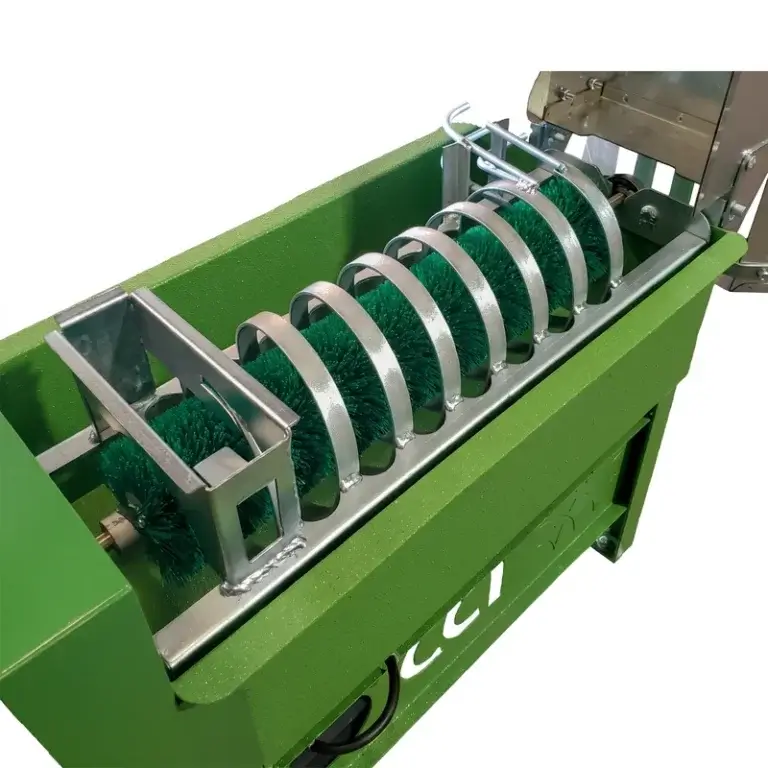
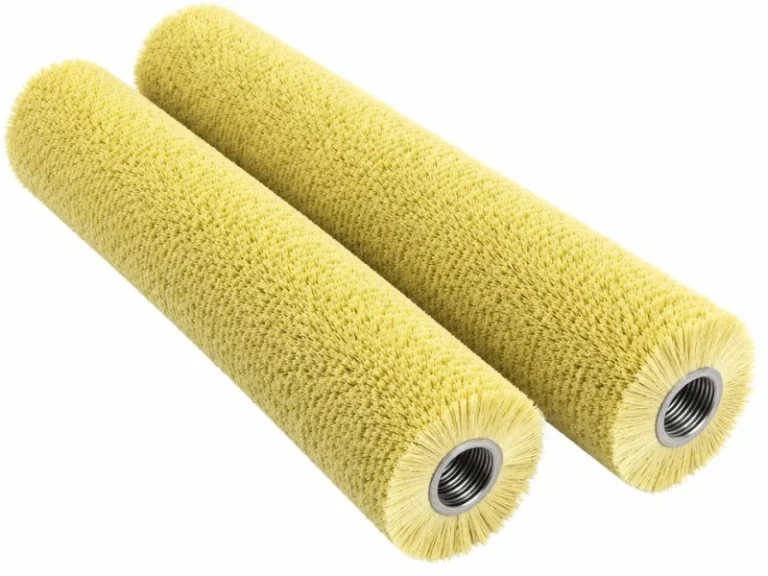
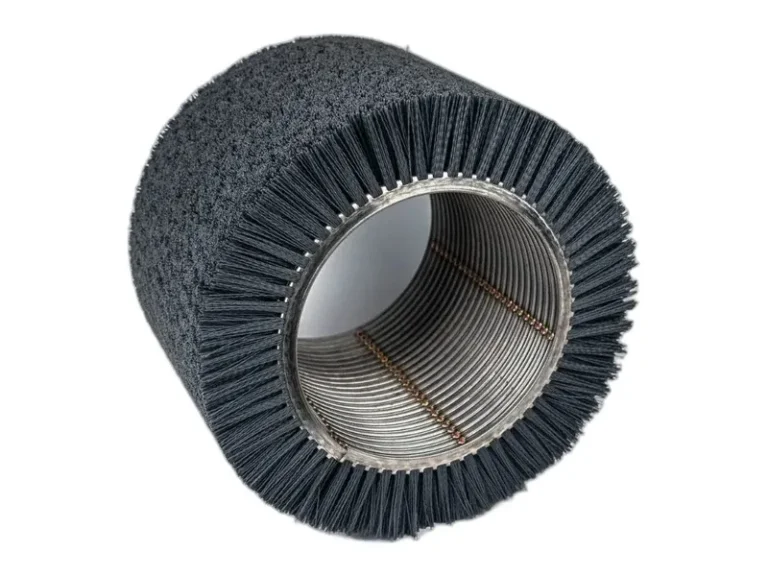
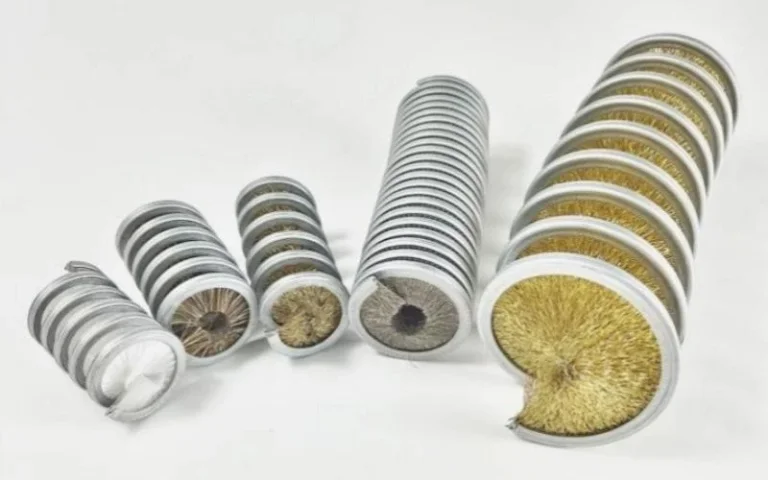
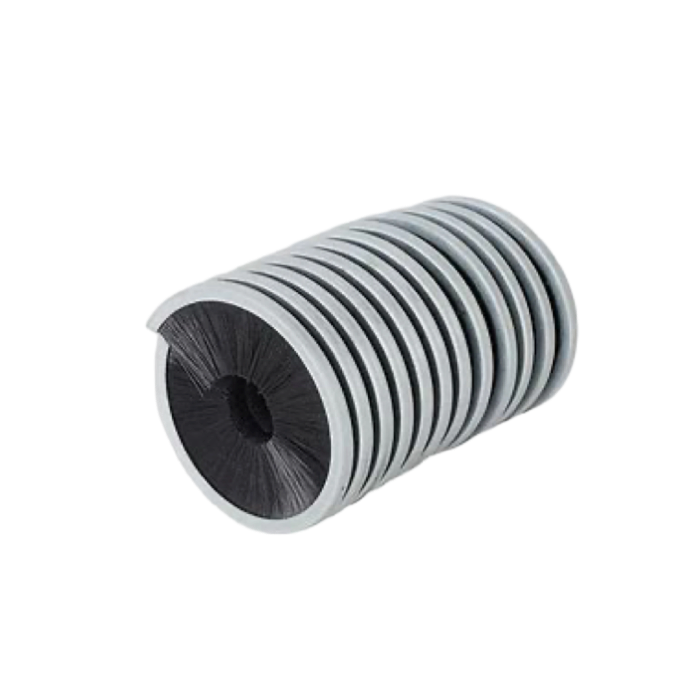
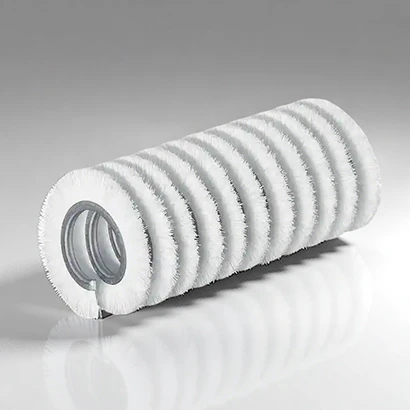
It is not a catalog item with one part number: a coil brush. It’s a long, continuous working element wound to fit a particular machine, and the equipment it runs on determines its pitch, winding direction, diameter, and filament. One parameter guessed instead of confirmed gives uneven cleaning, debris carried past the brush, vibration at speed, or premature filament loss.
The most important questions to ask before ordering from a custom industrial coil brush manufacturer can be grouped into these seven categories: construction and bristle orientation, dimensions with pitch and winding direction, filament materials and operating conditions, mounting with balance and safe speed, manufacturing capability and tooling ownership, sampling with inspection and certifications, and price with minimum order quantity, lead time, and lifecycle support. Used in this order, they produce a written specification that both parties can check against.
The sections below are a checklist following that sequence.

Why You Should Know Coil Brush Specifications Before You Order
A coil brush is running continuously, so a specification error is repeated over the whole working face and in each unit of the order. A fix by mail takes minutes; a fix after winding and freight takes weeks of downtime.
Three errors lead to most failures. The pitch is not matching the traps debris. The filament chosen by habit, not by chemistry, wears out soon. A spec that ignores balance and speed limits looks like vibration.
Questions Regarding Coil Brush Construction and Bristle Direction
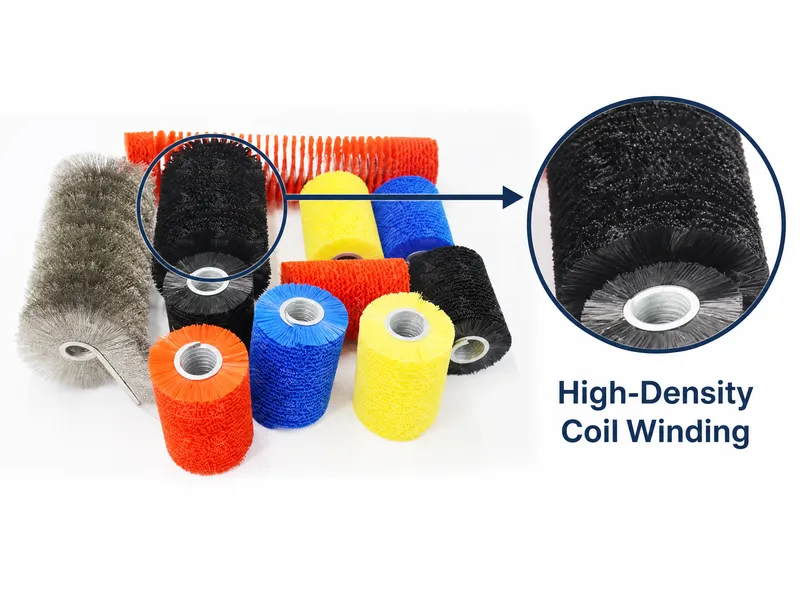
Ask which construction will be used, as a staple set spiral and a spiral wound strip brush behave and wear differently. Then confirm the bristle orientation, inward for cylindrical parts or outward for a roller face.
Spiral Wound Strip Construction: Staple Set vs. Spiral
| Construction | Production process | Strengths | Trade-offs |
| Set staple spiral | Filaments into a drilled core | High density, good balance | Brush threaded for the core |
| Spiral wound strip | Helically wound strip on a shaft | Adjustable pitch, easy clearance | Less rigid, lower density |
The spiral wound construction is the best for conveyor cleaning, wet lines, and long rollers where debris must fall through, and the core should last for several coil changes. You can assess the trade-off by understanding how the brush cores and filaments are combined.
Reverse and External Bristle Direction
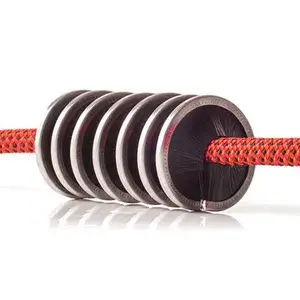
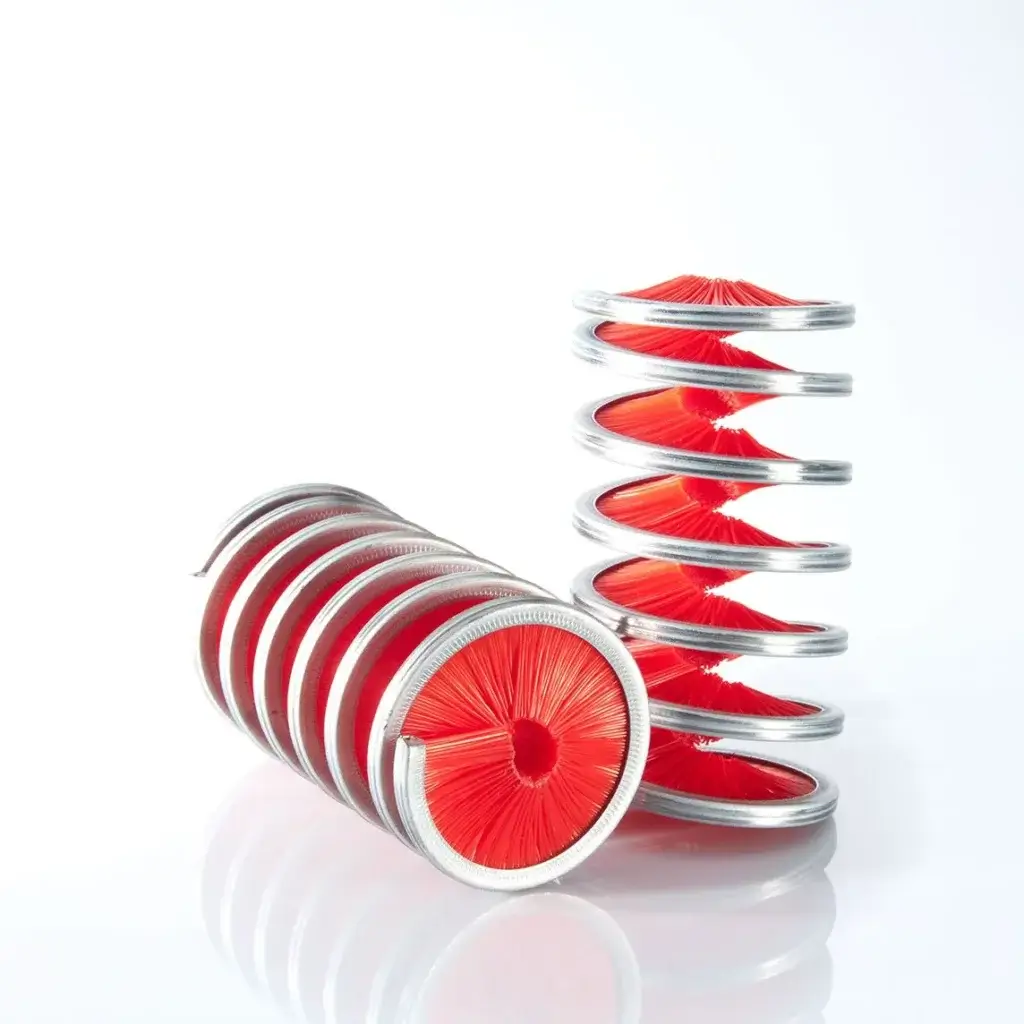
An inverted coil is threaded around rods, wires, and tubes as the product passes through, with filaments facing the center. An outer coil is exposed outwardly to form a roller face.
Questions about the size, the pitch, and the winding direction
You tell the outside diameter, the bore or shaft diameter, the face length, the pitch you want, and the direction of rotation. Ask what values the equipment will take and what has to be within tolerance. Pitch controls density and debris clearing.
Density, Pitch, and Removal of Debris
Pitch, or lead, is the distance between turns. The closed coil has the maximum number of contact points and surface; the open pitch has large gaps. Denser, the better? No, because it carries trapped debris back onto the product.
Diameters, Lengths, and Limits of Manufacture
| Parameter | Typical practical range | Why it restricts the order |
| Outer diameter | Up to approx. 1,000 mm | Winding choice limits |
| Shaft or inner diameter | From approx. 12 mm | Strip bend limited by small cores |
| Surface velocity | 15 m/s normal strip, 20 m/s high-speed strip | Filament loss above rating risks |
Ask for minimum winding diameter; the same strip cannot be bent as tightly on stainless steel backing as on galvanized. Make sure you verify the rotation direction (from the drive side). The helix hand must match machine rotation. Ask about the method of measuring diameters and applicable tolerances.
Material and Operating Conditions of the Filament—Questions
Filament choice should not be guided by habit operating conditions. Provide the maximum working temperature, chemicals present, surface being brushed, and whether the line runs wet or dry, then ask for a recommended filament and expected life.
Temperature, Chemistry, and Surface Filament Choice
| Filaments | Chemistry and temperature | Normal duty |
| Nylon | Heat resistant to moderate temperatures, abrasion resistant | Total cleaning |
| Polypropylene | Heat resistant, chemical limited | Washdown areas. |
| High-temperature polymers | Aggressive chemistry, constant heat | Hotlines |
| Abrasive nylon 1.0 mm | Grit fused into the filament | Blending & deburring |
| Stainless steel wire | Corrosion- and heat-resistant | Wet lines and food |
Two limits are of importance. Nylon becomes less stiff with temperature, so don’t use it near ovens, dryers, or hot metal. Wire filaments are cut aggressively but can shed fragments, so are ruled out where contamination is a concern.
Food Contact, Static, Cross Contamination
If the brush contacts food, pharmaceutical products, or packaging, check the filament and backing strip for food contact status and whether color-coded filaments separate hygiene zones. For dusty areas, verify the need for anti-static filaments.

Questions regarding mounting, balance, and safe operating speed
Please confirm how you will receive the coil and how it will be mounted. A loose coil, a coil on a reusable core, and a coil wound onto a shaft are three different products. Your mounting choice determines the balance you can expect at speed.
Core, Shaft & Supply Form
Coil can be supplied loose to fit to your own shaft, on a reusable core, or wound onto a dedicated shaft. The brush is tied to one shaft, but direct winding makes for better concentricity at higher RPM.
Dynamic Balance, Speed Limits, Runout
Balance and runout limit above a few hundred rpm. An unbalanced roller vibrates and wears filaments faster. Is the assembly dynamically balanced? What runout tolerance is specified? What maximum speed is guaranteed? ANSI B165.1 Safety Requirements for Power-Driven Brushing Tools Marked speed shall be equal to or greater than the machine rating.
Manufacturing Capability, Tooling, and Verification Questions
Ask what operations the manufacturer does in-house. Winding, drilling, filling, trimming, and balancing determine whether the finished coil is what the drawing shows, and a supplier who subcontracts them has no control over tolerances or dates.
In-House Operations, Tooling & Confidentiality
What is the monthly capacity for rollers of your diameter and length? What operations are subcontracted? Can the plant wind, straighten, and balance in one pass? If a supplier is talking about its machines and schedule, it’s acting like a manufacturer. If jigs or a dedicated mandrel are required, ask who owns the tooling and who maintains it. Membership in an industry body such as the American Brush Manufacturers Association reinforces verification but does not replace it.
Questions on Sampling, Inspection, and Certifications
Please ensure that a production run is not released without an approved sample and written inspection plan. Ask how many sample rounds are included, what they cost, and what acceptance criteria are used.
Prototypes and Acceptance Criteria
Ask about the prototype lead time, the ability to build the coil from a worn sample in the absence of a drawing, and the number of revision rounds included. Agree who runs the trial and which measurements decide approval and seal the sample; the brush coil must be tested under load.
Certifications, Documentation, and Inspection
Inquire what is being inspected for incoming material, during the process, and prior to shipment, and what sampling standard is being used. Dimensional reports, runout and balance measurements, filament retention tests, and strip tensile results are useful records. Certificates must have the site and materials used on your order.
Questions on Price, MOQ, Lead Time, and Life Cycle Support
The unit price is only meaningful with the minimum order quantity attached to it, the tooling charge, the trade term, and the lead time. Could you provide the total landed cost at your expected volumes and how the quote adjusts to changes in quantity or strip material?
| Cost or schedule driver | Why it moves the number |
| Minimum order quantity | Includes setup and material requirements |
| Support and strip width | Stainless steel is costlier |
| Length and Diameter | Big rollers need special attention |
| Season & capacity | Longer queues at peak times |
Determine if the MOQ is by design or by order and what the premium is for expedited winding. Then ask how often a core can be reused, what a recoil costs against a new unit, and how the coil will be packed so filaments arrive round.
FAQ
Three practical questions that make or break a custom order.
Q1: Can you supply a coil brush loose to fit an existing shaft?
Yes, and this scenario is common where the appropriate shaft hardware is already installed. A loose coil is easier and cheaper to ship, but it must be wound to the correct inside diameter and hand so it stays concentric.
Q2: Why does a coil brush show uneven wear or striping?
Striping is usually a sign of pitch rather than filament quality. Too wide a gap between turns for the contact pattern required means the surface is brushed in bands, not continuously. Same symptom—wrong helix hand or too much run-out.
Q3: How long do custom coil brushes last, and what reduces their lifespan?
Life is mostly about choosing the right filament, interference, and speed. Interference should be small, because filaments are best on the tip, not on the side. Packed debris and ignored balance also shorten life.