
Why Brush Design Matters in Produce Washing
Every day, food processing facilities process significant quantities of root vegetables, tubers, and soft fruits. Cleaning is an important part of this process. Cleaning is not only aesthetic but is also an integral factor in downstream processing efficiency, food safety compliance, or equipment longevity. For example, cleaning tools that are poorly specified may shed bristles and can damage fruit or vegetable skins, and they tend to break down shortly after prolonged use.
Vegetable Cleaning Brushes are viewed by procurement teams and line engineers to be more than just commodity consumables; they’re seen as precision-engineered components. The right filament material, core construction, and density to begin with will lower replacement frequency, minimize downtime, and maintain production damage rate within acceptable limits.
Core Brush Types for Vegetable Cleaning Applications
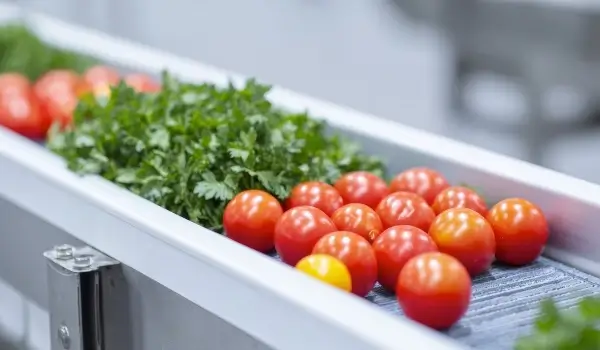
Each produce line is unique in how it processes produce. When selecting a brush, you will consider the type of produce being handled, the conveyor speed, the amount of water present on the produce and the desire for cleanliness. The two most common cylinder brush constructions used for food processing are nylon and tufted.
Nylon Cylinder Brush
Typically used for continuous wet-environment cleaning applications, nylon cylinder brush filaments are the preferred choice due to their resistance to moisture absorption, compatibility with food-grade sanitizers, and consistent levels of stiffness regardless of the temperature changes experienced by wash tunnels. When cleaning delicate items like tomatoes and/or mushrooms, soft nylon grades (PA6 or PA612) can effectively remove dirt without causing bruising.
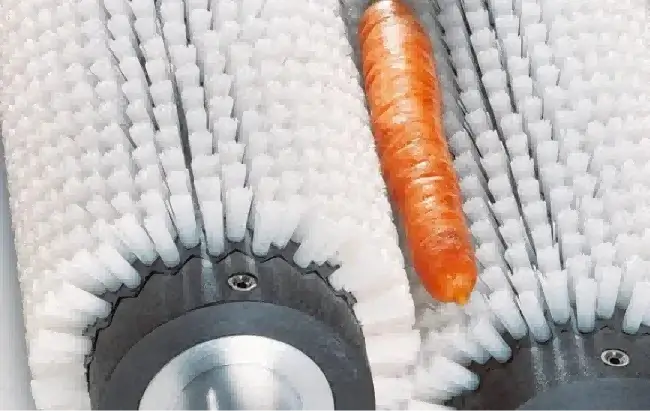
Tough root vegetables, such as carrots, potatoes, and beets, can be readily cleaned from soil and surface debris with the mechanical action of a higher durometer or abrasive-filled nylon filament.
Tufted Cylinder Brush
A tufted cylinder brush employs a pickleball-style filament bundle design, with filament bundles anchored to a drilled core to provide a denser and more aggressive contact surface than other designs. This design is best suited for cleaning products with irregular surface geometries (e.g., celeriac, ginger). To have a complete removal of the soil from the carpet requires a higher density of filaments on the brush. An operator would choose to spot-replace the individual worn-out areas as opposed to the whole brush.
A tufty type design allows for the use of various combinations of both stiff and soft tufts; and also provides greater control of how much cleaning action occurs depending upon the number of rows of either tuft type.
Custom Cylinder Brush: Key Specification Parameters
Before OEM buyers can source custom cylinder brushes for produce washing lines, they need to define a number of different parameters. The following table provides a summary of these important parameters and their typical food processing ranges.
| Parameter | Typical Range | Comments |
|---|---|---|
| Core Diameter | 30mm – 150mm | Must match the shaft or bearing specifications |
| Brush Length | 200mm – 2,500mm | Should be cut to the width of conveyor |
| Filament Material | Nylon PA6 / PA612 / Abrasive Nylon | Food grade, recommended degree |
| Filament Diameter | 0.3mm – 1.5mm | Use a thinner or fine filament for delicate produce |
| Filament Length | 15mm – 60mm | Use a longer filament to provide a deeper scrubbing action |
| Core Material | Stainless steel / Food-grade plastic | If it is a wet line, use stainless steel |
| Mounting | Keyed bore, hex shaft, custom end cap | Check with equipment OEM for confirmations |
Food Grade Compliance – Materials
One of the largest misunderstandings that first-time OEM purchasers face is selecting the appropriate materials. Any Vegetable Cleaning Brush that comes into contact with food must contain filaments and cores that comply with current regulations for food safety (FDA, EU 10/2011 or similar regional standards) based on your market of distribution.
Practical durability has an impact on performance that extends past compliance. In intermittent wet atmospheres, stainless steel cores out perform galvanised alternatives, and nylon filaments will outlast their natural fibre counterparts through repeated use in sanitiser rich wash cycles. Additionally, nylon filaments filled with silicon carbide will increase service intervals while maintaining the same level of cleaning effectiveness on lines undergoing abrasive cleaning processes.
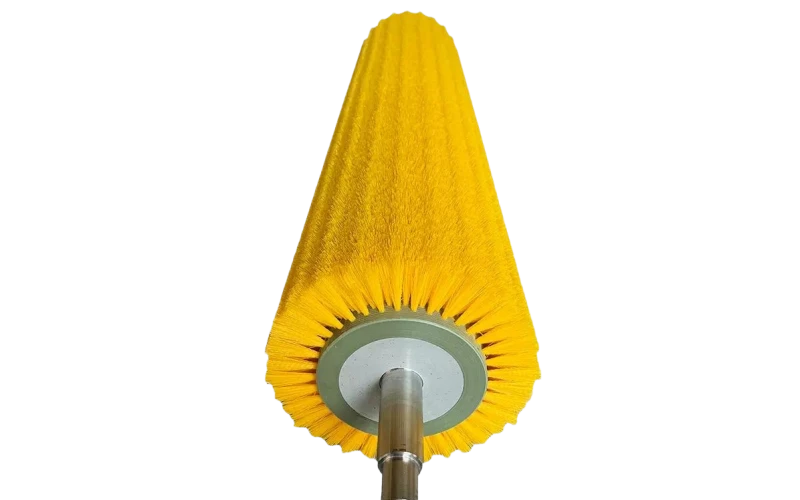
The growing interest for colored filament for brushes is due to the use of color-coded filaments as one of the simplest but most effective ways to identify contamination before it enters into the product during production. For example, a visual inspection can easily identify if filament came off the brush while on the production line.
OEM and Custom Brush Process
When developing a custom program with a brush manufacturer, there will be a typical/standard process to follow. The steps include:
- Define Brush Specifications – Must include core dimensions, filament type, brush length, and mounting.
- Obtain a sample to evaluate the performance of cleaning and how well the filament stays on the product.
- Within the approved production parameters, verify the tolerance limits and the packaging and labeling requirements for the product you are buying.
- Submit your order at the established MOQs standard for that construction or filament material.
- If you would like ongoing support, set up a blanket or scheduled delivery order for your product.
If you are new to purchasing cylinder brushes, you can narrow your search for specifications for specialty fruit and vegetable brush OEM solutions, then use the application-specified guide, to submit your first request for a sample.
The ability to buy nylon-style brushes and a variety of tuft (bristled) brushes from a single supplier reduces potential complications when using various types of brushes to clean the same product.
FAQ
Q1: Is there an MOQ (Minimum Order Quantity) associated with custom vegetable cleaning brushes?
MOQ for each construction type and type of filament vary from supplier to supplier. Most suppliers will provide small sample runs for qualification, while production MOQ usually range from 50 to 100 pieces depending on the supplier.
Q2: Can you make a cylinder brush for your existing conveyor equipment?
Yes. A reputable custom cylinder brush supplier can create cylinder brushes that will fit your shaft diameter, bore type, and length exactly to match your existing hardware.
Q3: How often should vegetable cleaning brushes be replaced?
Vegetable cleaning brushes on production lines should be replaced on a specific time frame (i.e., based on the number of hours they have been used) depending on how abrasive the produce is. Most companies will conduct their own inspections of their brushes on a monthly basis and will replace them between six and three months of use if the brush is in continuous operation.