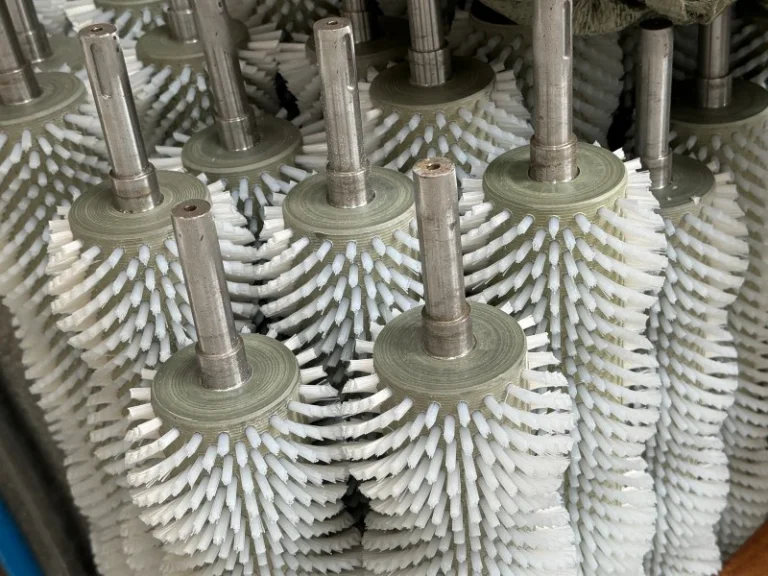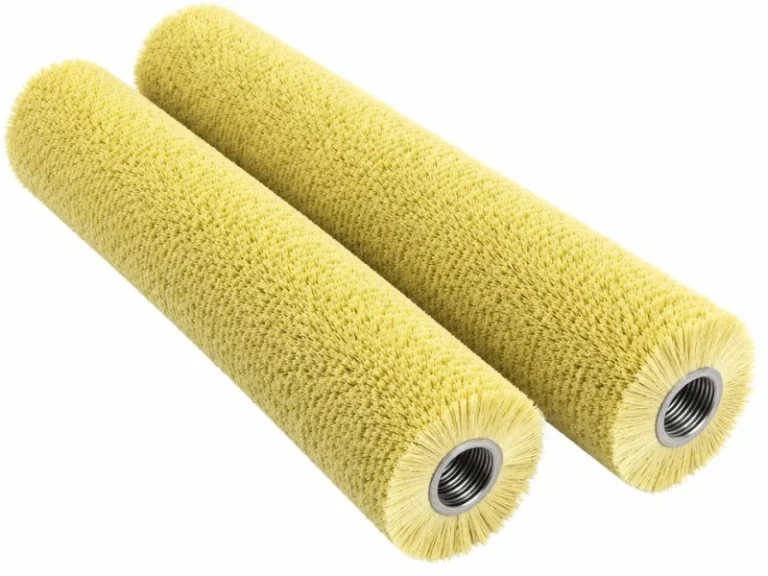
Walking through a modern industrial kitchen or a massive agricultural sorting facility, one might notice a constant, rhythmic whirring sound. It is the sound of thousands of tiny bristles working in unison. At the heart of this mechanical dance is the vegetable cleaning brush, a tool that—though simple in concept—is fundamentally responsible for the cleanliness and safety of the produce that eventually reaches the dinner table.
It seems that the days of manually scrubbing each potato or carrot in a bucket of water are long gone, at least for the scale required by today’s global food chain. The shift toward automation has made the food processing brush a critical component of the assembly line. There is a certain level of engineering hidden within these bristles that the average consumer rarely considers, yet it is what prevents soil-borne pathogens from hitching a ride into the supermarket.
The Anatomy of the Brush
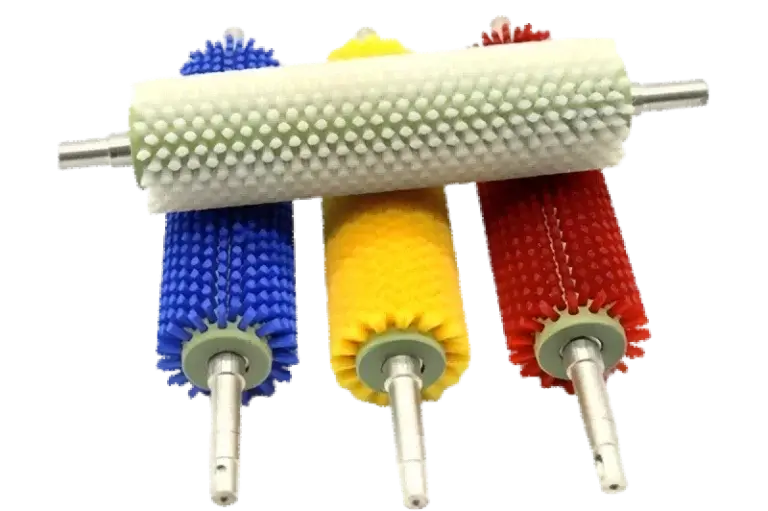
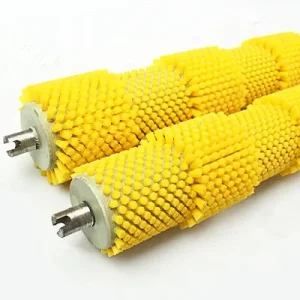
The design of a vegetable cleaning brush isn’t just about sticking some plastic hairs onto a stick. It’s far more calculated. Most industrial systems rely on a cylinder cleaning brush configuration. These are essentially long, rotating rollers covered in filaments.
The core, or the “axle” of the brush, is typically made from stainless steel or high-density plastics. This is because the environment is perpetually wet. A core that rusts is a core that contaminates, which is obviously a non-starter in any food-related scenario.
Stainless Steel Cores: Highly durable, resistant to heavy chemical cleaners.
Plastic/Polymer Cores: Lightweight, easier on the motors, and naturally corrosion-proof.
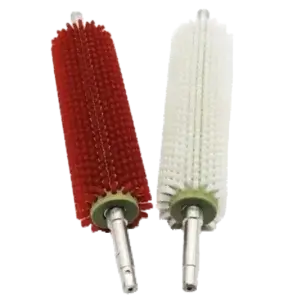
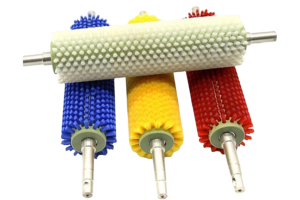
Segmented Designs: Sometimes, the brush is made of several small “donuts” of bristles slid onto a shaft. This is quite clever because if one section wears out, you don’t have to throw the whole thing away—just replace the damaged segment.
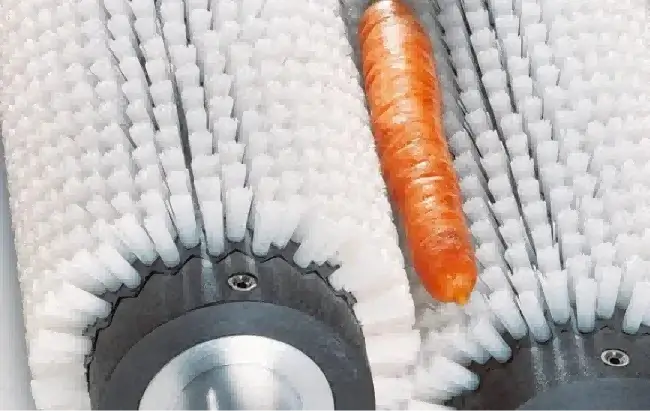
The choice of filament is perhaps the most subjective part of the whole setup. It depends entirely on what is being cleaned. A potato requires a stiff, aggressive nylon, whereas a peach or a tomato requires something much softer to avoid bruising the skin.
Why Use a Specialized Brush
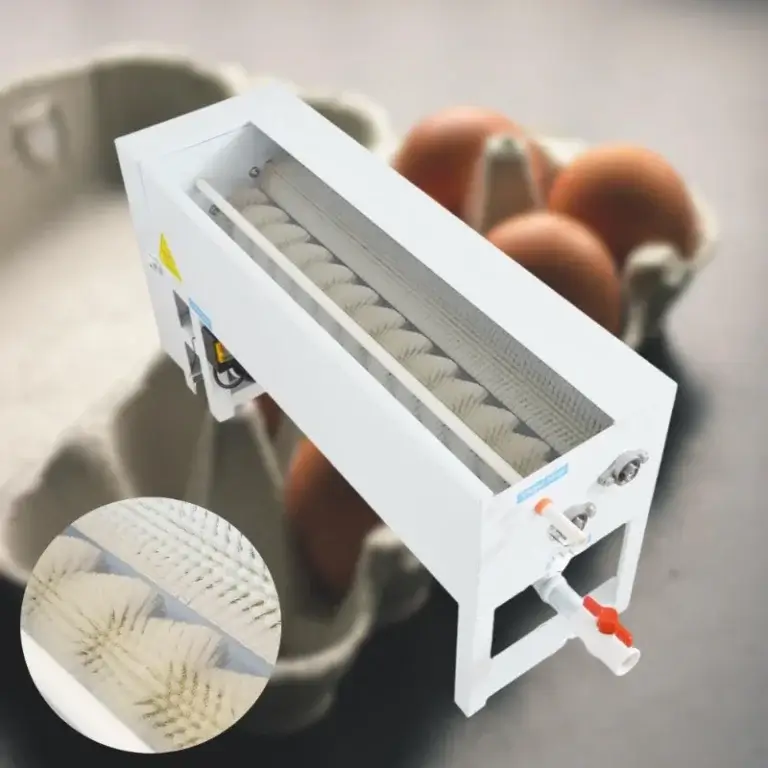
It is often observed that a simple water spray isn’t enough to remove stubborn clay or the waxy coatings applied to certain fruits. This is where the fruit cleaning brush comes into play. It provides the mechanical agitation necessary to “scrub” without “scarring.”
The Battle Against Carryback and Soil
In the industry, there’s this concept of “residue management.” If dirt isn’t removed early in the processing line, it moves downstream, clogging filters and potentially contaminating “clean” zones. The vegetable cleaning brush acts as the primary gatekeeper.
Key Benefits of Mechanical Brushing
Water Conservation: Believe it or not, a good brush can actually reduce the amount of water needed because the friction does the heavy lifting that high-pressure water would otherwise have to do.
Pesticide Removal: Many pesticides are oil-based or waxy. A gentle scrub from a fruit cleaning brush helps break that surface tension.
Aesthetic Appeal: Let’s be honest, people buy with their eyes. A polished apple sells faster than a dull one.
Technical Comparison: Bristle Types in Food Processing
Choosing the right material is a bit of a balancing act. You want durability, but you also need to meet strict FDA or local health regulations.
The Industrial Powerhouse: The Cylinder Cleaning Brush
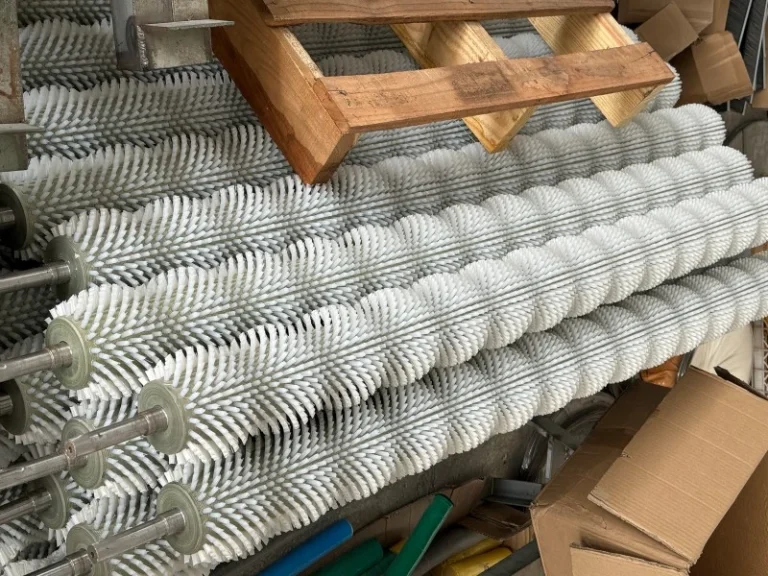
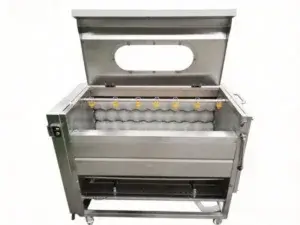
When scaling up to thousands of pounds of produce per hour, the cylinder cleaning brush is the only logical choice. These brushes are usually mounted in a series—sometimes called a “brush bed.” The produce rolls over the top of several rotating brushes while being sprayed from above.
Rotational Dynamics
The speed at which these brushes spin is a point of constant debate among maintenance engineers. Spin too fast, and you risk “batting” the vegetables off the line or causing friction burns on the skin. Spin too slowly, and the debris just settles back into the bristles.
Optimal RPM for Different Produce
Root Crops: 300–500 RPM
Citrus/Apples: 150–250 RPM
Leafy Greens: 50–100 RPM (very gentle agitation)
Maintenance: The Often Ignored Necessity
There is a vague sense of irony in the fact that a tool used for cleaning can become one of the dirtiest parts of a factory if not watched closely. A food processing brush is a magnet for organic buildup. If starches and sugars from broken produce are left in the roots of the bristles, bacteria will thrive.
Cleaning the Cleaner
Daily Rinse: After every shift, the brushes should be spun at high speed while being sprayed with a sanitizing solution.
Inspection for “Hooking”: Over time, the tips of the bristles might start to bend or “hook.” This reduces cleaning efficiency and can actually trap dirt against the vegetable.
Comb Out: Occasionally, long fibers (like corn silk or onion skins) get tangled in the cylinder cleaning brush. These must be manually removed to prevent the motor from straining.
When to Replace
A common mistake is waiting until the bristles are completely gone. In reality, once a vegetable cleaning brush loses about 20% of its bristle length, its “flick” action—the ability of the bristle to snap back—is significantly compromised. At this point, you’re just rubbing a limp plastic mat against your food.
The Subjective Side: Observations from the Field
The Visual Signature of Brush-Cleaned Produce
It’s quite fascinating to watch a well-tuned line. There’s a specific “look” to a vegetable that has been cleaned by a high-quality food processing brush. It has a matte-yet-clean finish that you just don’t get with chemicals alone.
Some might argue that we’ve become too obsessed with “perfect-looking” produce. However, from a safety perspective, the brush is non-negotiable. One could almost say the fruit cleaning brush is the unsung hero of the grocery store. Without it, the “fresh” section would look a lot more like a muddy field.
Does Bristle Color Matter
Oddly enough, yes. In most food plants, you’ll see bright blue bristles. Why? Because there are no naturally blue vegetables. If a bristle snaps off and ends up in a bag of salad, the consumer (or the optical sorter) can spot it instantly. It’s a simple, low-tech solution to a high-stakes problem.
Future Trends in Vegetable Cleaning
Technology doesn’t stand still, even for something as “old school” as a brush. We are starting to see “smart” brushes. These systems use sensors to detect the load on the motor; if the brushes are getting too clogged or if the produce is too soft, the system automatically adjusts the RPM or the water flow.
There is also a push toward more sustainable filament materials. While a nylon cylinder brush is the current king of the hill, researchers are looking into bio-based plastics that can withstand the rigors of industrial cleaning without leaving microplastic footprints. It’s a tough challenge—finding a material that is both biodegradable and tough enough to scrub a thousand tons of potatoes is no small feat.
Final Thoughts
The next time you bite into a crisp apple or peel a potato, take a second to think about the vegetable cleaning brush that likely touched it first. From the robust cylinder cleaning brush used in heavy-duty sorting to the delicate fruit cleaning brush used for summer berries, these tools are essential. They bridge the gap between the messy reality of farming and the sterile requirements of modern food consumption.
Whether you’re an engineer looking to optimize a line or just someone curious about where your food comes from, understanding the role of the food processing brush provides a window into the complex world of industrial hygiene. It’s a dirty job, but someone—or rather, some brush—has to do it.
FAQ
Q1: Can I use the same brush for vegetables and fruits?
No. Vegetables need stiff nylon for heavy soil; fruits need soft PBT or horsehair to avoid bruising. Using the wrong type reduces efficiency or damages produce.
Q2: When should I replace brushes to avoid wasting money or product?
Replace when bristle wear reaches about 20% — beyond that, brushes lose cleaning power and cause rework. Early replacement often pays off quickly.
Q3: Why do I see streaks or uneven cleaning?
Check uneven brush pressure, bent bristles (hooking), or misaligned water spray. Fix alignment, remove tangled fibers, and adjust nozzles. Replace the section if streaks persist.