The Business Case for Solar Washing Brushes in Cold-Climate PV Arrays
The Financial Impact of Snow Events on Solar Production
Solar farms in cold regions face a problem that has nothing to do with sunlight. A single overnight snowfall can bury hundreds of panels under several inches of frozen cover. When that snow refreezes into a crust of ice, the array stops producing power. For a 1 MW installation, each day of zero output translates to roughly $300 to $600 in lost revenue, depending on local electricity rates. Multiply that across a winter with 15 to 20 snow events, and the numbers start to hurt.
Why Standard Cleaning Tools Damage PV Glass and Reduce Long-Term Efficiency
The fix sounds simple: clean the panels. But the tool you use to do that cleaning determines whether you recover production or create a long-term problem. A stiff-bristled broom scratches the anti-reflective coating on the glass. A metal scraper leaves permanent micro-abrasions that degrade light transmittance by 2% to 5% over time. A cheap plastic brush turns brittle in sub-zero temperatures and snaps. The right choice is a solar washing brush built from materials that stay flexible and effective when the temperature drops.
The Engineered Solution: PA612 Filaments and Rotary Roller Design for Sub-Zero Operation
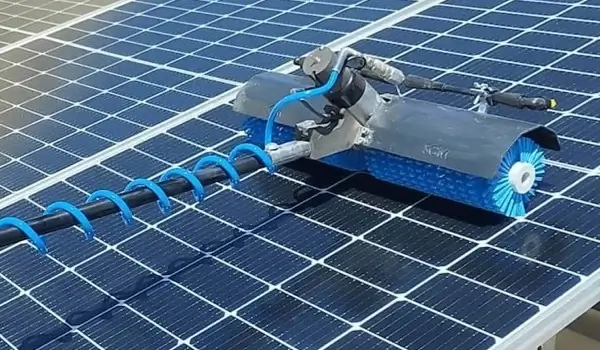
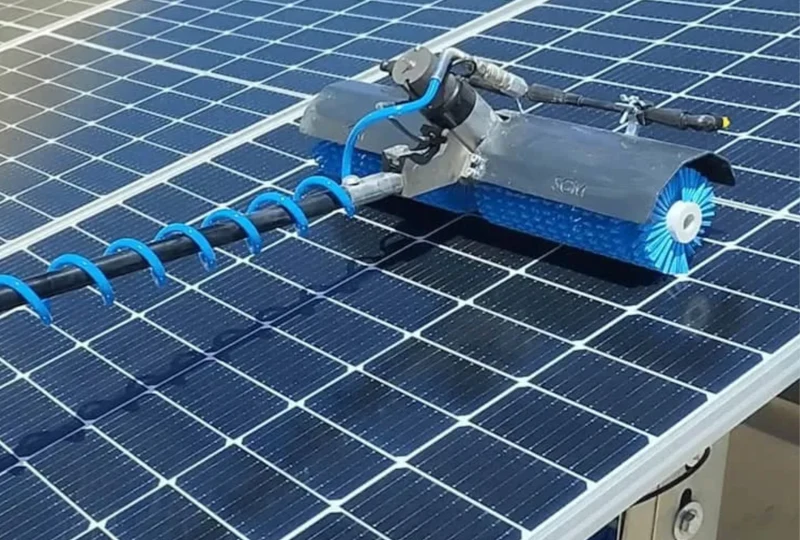
A properly designed solar washing brush uses PA612 nylon filaments and a rotary roller configuration to clear snow, frost, and ice from panel surfaces without scratching the glass, even at temperatures as low as -40°C. The brush material retains its elasticity in freezing conditions, while the roller design lets operators clear large arrays quickly from ground level using extendable poles and water-fed systems.
Most off-the-shelf cleaning tools are not engineered for photovoltaic glass. A snow rake from a hardware store has a metal edge that can catch on panel frames. A car snow brush has bristles that are too stiff for anti-reflective coatings. Industrial cleaning teams in Scandinavia, Canada, and the northern United States have moved toward specialized rotary brush systems for a reason: they work without leaving behind damage that compounds year after year.
This article looks at what makes a solar washing brush suitable for snow- and frost-prone regions. The discussion covers material selection, brush design features, selection criteria, cleaning frequency, and the cost of getting it wrong.
Why Standard Cleaning Tools Fail in Cold Climates
Standard brushes and scrapers fail in cold climates because their materials lose flexibility below freezing, their bristle tips are too sharp for coated glass, and their manual designs cannot clear large arrays efficiently before snow refreezes into ice.
The physics of cold-weather cleaning differs from that of warm-weather dust removal. At -10°C, nylon 6 (PA6) bristles stiffen to the point where they behave more like plastic rods than flexible filaments. Their water absorption rate of 8.5% under saturated conditions means they also absorb meltwater during cleaning and then freeze solid between passes. A brush that worked fine at 20°C becomes a hazard at -10°C.
Abrasion damage is the second failure mode. Solar panel glass has a thin anti-reflective coating. This layer is only a few microns thick. When a stiff or frozen bristle drags across it under pressure, the coating scratches. Once scratched, the glass traps dirt more easily and reflects more light. A 2023 study by the National Renewable Energy Laboratory found that scratched panels lose 1% to 3% of their rated efficiency per year, and the damage is cumulative. Five years of winter cleaning with the wrong brush can mean a permanent 10% efficiency loss.
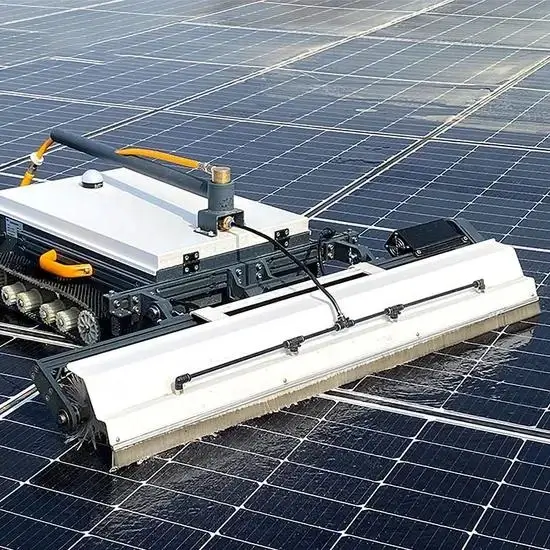
The third problem is speed. Handheld scrapers and small brushes clear maybe 2 to 3 square meters per minute. A 100 kW rooftop array covers roughly 500 square meters. That means one person needs over two hours to clear fresh snow, assuming no breaks and no refreezing. In practice, snow refreezes faster than one person can work. By the time the last row is clear, the first row has a new layer of ice. A solar panel cleaning brush with a wide rotary roller head clears 10 to 15 square meters per minute from ground level.
The Material Science Behind Cold-Weather Solar Washing Brushes
PA612 nylon is the best bristle material for solar washing brushes in cold regions. Its 0.6% water absorption rate, low-temperature toughness at -40°C, and 60 to 70 MPa tensile strength combine to produce bristles that remain flexible, resist freezing, and recover their shape after repeated bending.
Choosing a brush filament is not about picking the cheapest option. It is about matching material properties to operating conditions. The table below compares the four most common nylon grades used in industrial brush manufacturing:
PA6 and PA66 dominate the general-purpose industrial brush market. They are less expensive and perform well at room temperature. Their weakness is water absorption. In a snow-cleaning scenario, the bristles continuously contact melting snow. PA6 absorbs up to 8.5% of its weight in water, which causes the bristles to swell, soften, and lose their scrubbing ability. When the temperature drops again, that absorbed water freezes inside the filament structure.
PA612 solves this problem through molecular design. Its longer carbon chain between amide groups reduces the density of water-attracting sites. The result is 0.6% water absorption. Bristles stay dry, stay stiff, and stay effective across an entire cleaning shift.
Low-temperature toughness is the other critical property. PA612 retains ductility at -40°C. Independent material testing data show that its notched impact strength at -30°C is above 4 kJ/m². At the same temperature, PA66 drops below 2 kJ/m². The difference in notched impact strength determines whether bristles bend and recover or snap off when a rotating brush spins at 600 to 800 RPM and strikes frozen snow.
Bend recovery is relevant for brush life. A PA612 nylon rotary roller spins against the panel surface thousands of times per minute. If bristles take a permanent set after a few hours of use, the brush loses contact pressure and cleaning effectiveness. PA612 returns to its original shape after repeated compression cycles. Operators report that PA612 roller brushes last two to three times longer than PA6 equivalents in winter service.
Key Design Features of a Solar Washing Brush for Snow Removal
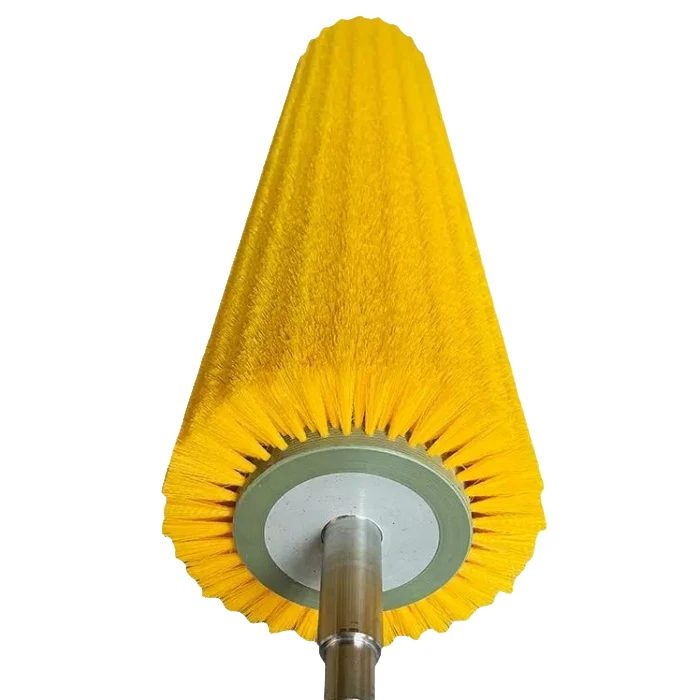
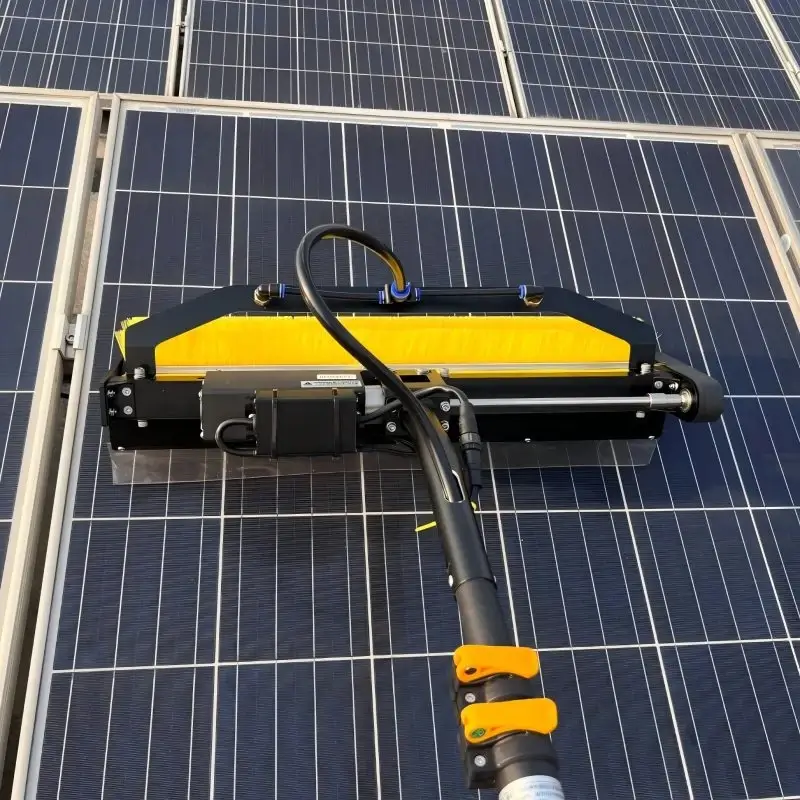
An effective solar washing brush for snow removal combines a rotary roller configuration, PA612 nylon bristles with a diameter of 0.3 to 0.5 mm, a brush width of at least 500 mm, water-fed compatibility, and an extendable pole system for ground-level operation.
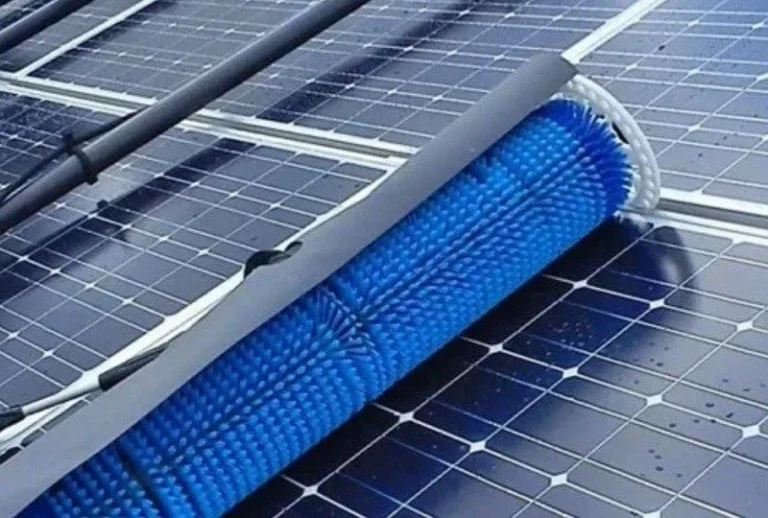
The brush head design determines how fast and how safely snow comes off the panels. Rotary roller configurations have become the standard for commercial-scale winter cleaning. A cylindrical brush spins as it moves across the panel surface. The rotation lifts snow rather than dragging it across the glass. This reduces contact pressure and scratch risk.
Bristle diameter is a specification that gets overlooked. Too thick, and the bristles act like individual scrapers. If the bristles are too thin, they lack the stiffness needed to push heavy, wet snow. For snow and frost removal, 0.3 to 0.5 mm is the sweet spot. Bristles in this range push snow effectively without concentrating pressure on the glass surface.
Brush width controls throughput. A 500 mm to 600 mm wide roller brush clears a standard residential panel in two passes. A 900 mm brush clears a standard residential panel in one pass. For ground-mounted utility arrays where panels sit in rows of 20 to 30 units, a wider brush reduces the number of passes and the total time the operator spends in the cold.
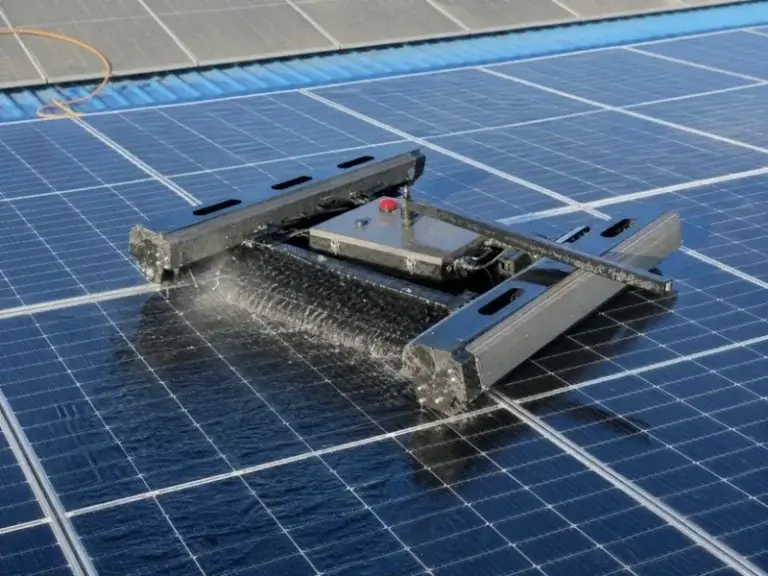
Water-fed pole systems deserve a mention here. They let operators spray purified water through the brush head while scrubbing. In temperatures above freezing, the water speeds up snow melting and flushes away residue. In sub-zero conditions, operators use the brush dry because water freezes on contact. The best systems let you switch between wet and dry mode without changing equipment. This flexibility matters for regions where morning frost gives way to afternoon thaw cycles. Seasonal maintenance frequency depends partly on whether you can clean during brief temperature windows.
The pole system itself needs to be lightweight and rigid. Carbon fiber poles weigh less than aluminum and transmit less vibration to the operator’s hands at the end of an 8-meter reach. Telescoping designs let one pole serve both low ground mounts and higher rooftop arrays.
How to Choose the Right Solar Panel Washing Brush for Frost-Prone Areas
Bristle Material and Low-Temperature Performance as the Primary Selection Criterion
Select a solar panel washing brush by evaluating bristle material first (PA612 for cold regions), then brush configuration (rotary roller for speed), then compatibility with your existing water-fed or manual pole system. Match the brush width to your array layout and verify the manufacturer provides low-temperature performance data.
Ask for the material datasheet. A supplier that cannot tell you which nylon grade is in the bristles is not a supplier you want for cold-climate equipment. Look for PA612 on the specification sheet. If the brush uses PA6 or PA66, confirm the operating temperature range. Most PA6 brushes are rated only to 0°C.
Bearing Quality, Mounting System, and Weight for Operator Efficiency
Check the roller bearing quality. A rotary brush that spins at 600 to 800 RPM puts constant stress on its bearings. In freezing conditions with meltwater present, cheap steel bearings rust and seize within weeks. Stainless steel sealed bearings add cost but prevent field failures. This detail separates a brush that lasts one winter from one that lasts five.
Consider the brush mounting system. Some rotary rollers use a quick-release mechanism that lets operators swap brush heads in under a minute. This is useful when one team manages multiple sites with different panel types. If the brush head requires tools and 10 minutes to change, crews will skip swapping and use the wrong brush on the wrong panel.
Dimensions and weight affect operator fatigue. A full assembly with an 8-meter carbon fiber pole, water-fed head, and 600 mm rotary brush should stay under 4 kg. Anything heavier becomes unmanageable after 30 minutes of overhead work. For rooftop arrays where operators work from the ground, extra weight at the end of a long pole multiplies the strain.
Compatibility with Existing Cleaning Infrastructure and Cost Efficiency
Also evaluate whether the brush works with your existing cleaning infrastructure. Many solar farms already have water purification and pumping systems for warm-weather dust cleaning. A winter brush that connects to the same pole and water system avoids duplicate equipment costs.
Price is a factor but not the only one. A PA612 rotary roller brush costs more than a basic PA6 manual brush. The higher upfront cost is justified by longer service life and by the avoided cost of panel damage. Using the wrong tool damages panels in ways that are not immediately visible but compound over years.
The table below summarizes the selection criteria:
Best Practices for Winter Solar Panel Cleaning
Snow Removal Timing and the Risk of Ice Dam Formation
Best practices for winter cleaning include clearing snow within 24 hours of snowfall, working during the warmest part of the day, using dry-mode brushing when temperatures are below freezing, and inspecting panels for ice dams and micro-cracks after each cleaning cycle.
Timing is more important in winter than in summer. Snow that sits on panels for more than 24 hours risks a partial melt-refreeze cycle. The bottom layer melts from panel heat, flows to the frame edge, and refreezes into an ice dam. Ice dams trap subsequent meltwater on the panel surface, creating a sheet of ice that is harder to remove than fresh snow. Clear panels as soon as it is safe to do so after a snow event.
Optimal Cleaning Windows and Dry-Mode Brushing Below Freezing
The warmest hours are usually between 10:00 and 14:00 in most winter climates. During this window, solar radiation and ambient temperature combine to soften the bond between snow and glass. Snow slides off with less resistance. Operators burn less energy, and the brush experiences less wear.
Dry-mode brushing is the only option below -2°C. Water freezes on contact and creates a layer of ice on the panel. Some crews preheat water in insulated tanks and use it only when the ambient temperature is above freezing. Others switch entirely to dry rotary brushing for the coldest months and reserve water-fed cleaning for spring and fall.
Post-Cleaning Inspections and Weather-Based Scheduling
Post-cleaning inspection should be part of every winter maintenance round. Look for ice buildup along the lower frame edge. Check for snow accumulation behind panels where drifts can block ventilation. Inspect panel surfaces for hairline cracks. The thermal stress of going from -20°C at night to +15°C in direct sun on a clear winter day can cause micro-fractures in panels that already had manufacturing defects. Catching these early prevents water ingress and electrical faults.
Track cleaning frequency against weather data. Sites that average 10 to 15 snow events per winter should budget for at least that many cleaning rounds, plus follow-up visits for drifting snow. Sites in mountain regions with 40+ snow days may need a dedicated winter cleaning schedule and on-call response.
Training operators is as important as the brush itself. Even the best brush can damage panels when used at the wrong angle or with too much pressure. The key brush features that prevent damage only work when operators understand how to hold the pole, maintain consistent speed, and monitor bristle condition.
A winter cleaning log should record the date, ambient temperature, snow type (dry powder vs. wet heavy), cleaning duration, panels cleaned, and any damage observed. Over two or three winters, this data reveals patterns. Maybe one section of the array consistently develops ice dams and needs a different tilting or drainage solution. Maybe cleaning takes longer in February than December because snow consistency changes. Data-driven adjustments to the cleaning schedule improve efficiency year over year.
Conclusion
Snow and frost do not have to mean zero production for a solar installation. A site in a cold region with 15 snow events per winter that uses PA612 rotary roller brushes can recover 95% or more of its theoretical winter output. The same site using hardware-store snow rakes might see a slow decline in panel efficiency that costs far more in lost generation than the price difference between a proper brush and a cheap alternative.
The core decisions are material selection and brush configuration. PA612 nylon bristles handle the cold without stiffening or absorbing water. Rotary roller heads clear snow faster and more gently than flat manual brushes. An extendable pole system keeps operators on the ground where they are safer. Water-fed compatibility adds flexibility for marginal-temperature days.
A solar panel washing brush is not a seasonal accessory. It is a production tool. The return on investment calculation is straightforward: each avoided day of snow-covered downtime pays back a fraction of the brush cost. Over a single winter, the brush pays for itself. Over five winters, the savings from avoided panel damage multiply the return.
FAQ
Q1: Can I use a regular car snow brush to clear my solar panels?
Car snow brushes usually have polyethylene bristles and a plastic scraper edge. Polyethylene bristles are too stiff for anti-reflective coated glass and can leave micro-scratches. The scraper edge is designed for automotive glass, which is chemically tempered differently from photovoltaic glass. Using a car brush on solar panels risks coating damage that permanently reduces light transmittance. A dedicated solar washing brush with soft nylon bristles is the safer choice.
Q2: How often should I replace the brush head on a rotary solar cleaning brush?
Brush head replacement depends on usage and conditions. For a PA612 rotary roller brush used on 20 to 30 cleaning days per winter, expect 3 to 5 years of service before bristle wear affects cleaning performance. Check bristle length against the manufacturer’s specification at the start of each winter. When bristles are worn to 60% of their original length, replace the brush head. Visual signs like bent or splayed bristles indicate the brush has lost its cleaning pattern and should be replaced sooner.
Q3: Do solar panels in snowy regions need special coatings in addition to a washing brush?
Hydrophobic nano-coatings can reduce snow adhesion and make cleaning faster. These coatings create a water-repellent surface that causes snow to slide off more easily during partial melting. They are a complementary measure, not a replacement for a proper brush. Coatings wear off over 3 to 5 years and need reapplication. In regions with frequent freeze-thaw cycles, hydrophobic coatings are most effective when combined with a rotary solar washing brush that clears the remaining snow the coating cannot shed on its own.