
Soft Bristle Glass Washing Brushes: Protecting Surfaces Through Engineered Filament Selection
The Hidden Risk: Why Glass Surfaces Are Vulnerable to Traditional Cleaning Tools
Glass surfaces in industrial manufacturing carry a hidden vulnerability that many production managers learn about the hard way. A single pass with the wrong brush can etch micro-scratches across an entire sheet, turning finished product into scrap in seconds. A properly specified glass washing brush eliminates this risk through engineered filament selection and precision brush construction. In precision-dependent industries like automotive glass fabrication, architectural glazing, and solar panel manufacturing, the cleaning stage represents a disproportionate share of surface defect origins. The problem is not that the glass is fragile. It is that traditional cleaning tools transfer concentrated force through bristle tips that are too stiff, too coarse, or arranged in patterns that create uneven pressure distribution.
The Balancing Act: Cleaning Effectiveness Without Surface Damage
The contradiction at the heart of glass washing is this: you need enough mechanical action to dislodge production residues, mineral deposits, and handling contaminants, but you cannot afford the microscopic surface damage that aggressive brushing causes. Production engineers have spent decades searching for cleaning tools that resolve this tension. The equipment that succeeds consistently at this balancing act shares a common design philosophy: soft bristle filaments arranged in a continuous cylinder configuration that spreads contact force over the widest possible area.
How Soft Bristle Brushes Protect Glass Through Deflection and Uniform Pressure
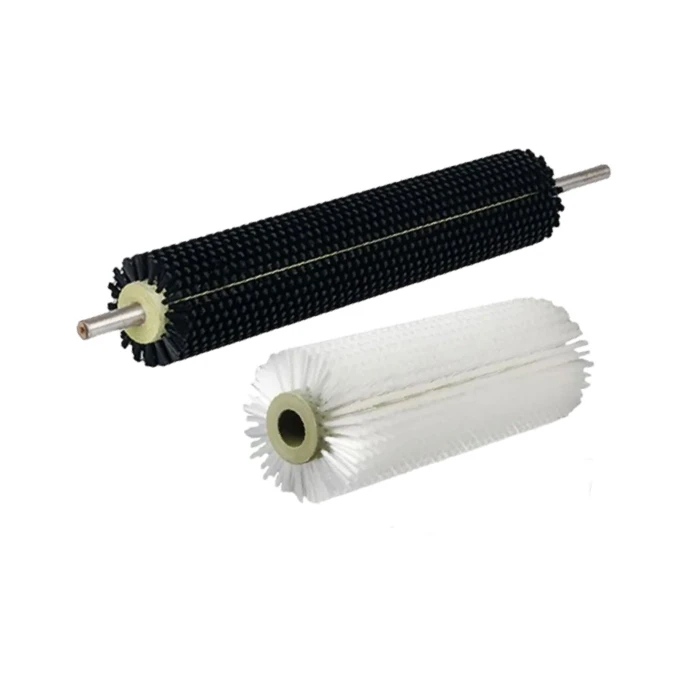
A soft bristle glass washing brush protects glass surfaces by using nylon filaments with diameters between 0.15mm and 0.40mm that deflect upon contact rather than dig into the substrate. When a soft filament tip meets glass, it bends and slides, converting a concentrated point load into distributed friction. This mechanical behavior, combined with the spiral-wound cylinder design that maintains uniform contact pressure across the full brush width, eliminates the pressure peaks that initiate micro-scratches, haze formation, and permanent surface marking during high-speed production washing.
Three Engineering Choices That Determine Cleaning vs. Damage
Whether you are running a single-shift architectural glass line or a 24-hour automotive glass operation, the brush you mount in your washing machine determines whether your finished product ships or gets rejected. The difference between a brush that cleans and a brush that damages lives in three engineering choices: bristle material, filament diameter, and the mechanical structure of the brush body itself. Each variable shapes how the brush interacts with glass at the microscopic level, where scratches begin.
The sections below break down the science behind soft bristle performance, compare nylon against alternative filament materials, explain how cylinder brush geometry improves washing consistency, and provide practical selection and maintenance guidance for production environments.
Why Soft Bristles Prevent Surface Damage on Glass
The Physics of Soft Bristle Deflection: Spreading Force to Prevent Scratching
Soft bristles work because their filaments have low bending stiffness. When a soft bristle tip contacts a glass surface, it deflects rather than transmitting the full force of the brush core into the substrate. This deflection spreads the applied force across a larger effective contact area, keeping local pressure below the threshold that initiates scratching on soda-lime glass.
The physics that governs surface scratching is intuitive once you isolate the variables. Glass has a Mohs hardness of 5.5 to 6.5, which puts it above most common contaminants but well below many industrial materials. The threat comes not from the overall brush pressure but from the localized stress at individual bristle tips. A single stiff filament with a blunt-cut tip and a diameter of 0.50mm or larger concentrates its share of the brush loading onto a contact patch measured in hundredths of a square millimeter. At production speeds of 3 to 12 meters per minute, that concentrated stress repeatedly sweeps across the glass surface. Over hundreds or thousands of cleaning cycles, the cumulative effect produces visible haze or patterned scratching.
Filament Diameter and Tip Finish: From Scraping to Wiping
Soft bristle filaments short-circuit this mechanism. Filaments in the 0.15mm to 0.40mm diameter range have bending rigidity low enough that they buckle slightly upon contact. That buckling converts what would be a scraping action into a wiping action. Instead of a rigid tip dragging across the glass, you get a flexible filament tip that rides over surface irregularities without gouging.
The tip finish also matters more than many buyers realize. Flagged filament tips, where the ends of individual nylon strands are mechanically split into finer fibrils, create a softer contact surface than blunt-cut tips. The split ends act like a micro-brush at each filament tip, increasing cleaning surface area while reducing the force per unit area. A glass washing brush with flagged tips removes particles through a combination of wiping and lifting rather than scraping.
Temperature Effects: How Heat Makes Nylon Even Gentler on Glass
Temperature introduces another variable that favors soft nylon. In heated washing stages that run between 40 and 65 degrees Celsius, filament stiffness decreases further. This thermal softening is actually beneficial for glass applications because it makes the bristle tips even gentler at the point of contact. The effect is predictable and consistent with nylon, unlike natural fibers that swell and lose mechanical integrity when wet.
Nylon and Alternative Bristle Materials for Glass Washing
Why Nylon Outperforms Natural Fibers and Commodity Plastics in Glass Washing
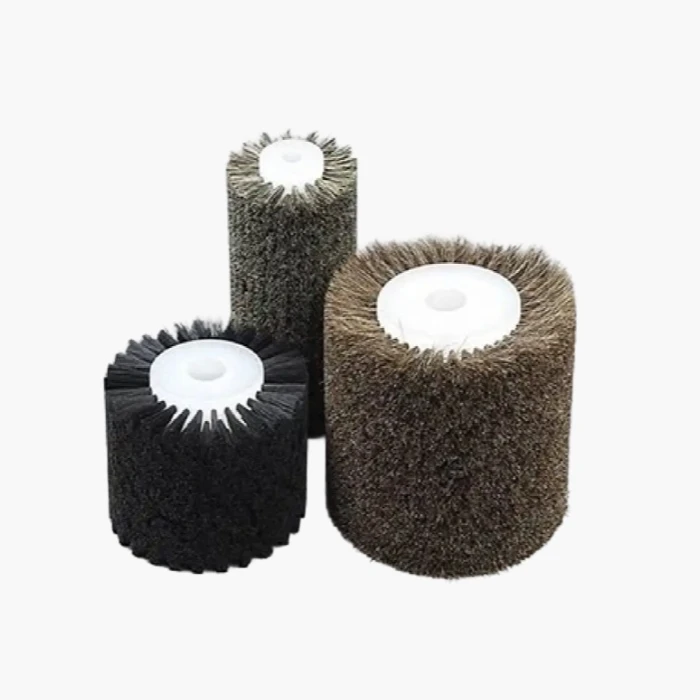
Nylon, particularly PA6 and PA612 grades, is the standard bristle material for industrial glass washing because it balances softness, chemical resistance, water stability, and mechanical durability in ways that no natural fiber or commodity plastic can match. Nylon filaments retain consistent flexibility across the temperature range found in glass washing lines and resist degradation from alkaline cleaning solutions.
The case for nylon over natural fibers like horsehair or tampico is built on measurable performance differences. Natural bristles are hygroscopic. They absorb water and cleaning chemicals during operation, which causes them to swell and change stiffness mid-process. A brush that starts a shift with one set of cleaning characteristics can behave differently an hour later, once the filaments have saturated. Natural fibers also shed organic debris as they wear, depositing particles on glass surfaces that should leave the washing stage cleaner than when they entered.
Nylon filaments are hydrophobic. They do not absorb water, so their mechanical properties stay stable regardless of how wet the brush gets or how long it runs. This consistency matters in automated lines where process parameters are calibrated to specific brush behavior, and operators cannot compensate for drifting performance.
PA6 vs. PA612: Moisture Absorption and Stiffness Stability
Within nylon grades, the choice between PA6 and PA612 affects how the brush performs in humid environments. PA612 absorbs roughly 60 percent less moisture than standard PA6. In washing machines where the brush operates in constant contact with water and cleaning solutions, the lower moisture absorption of PA612 translates to more stable filament stiffness over time. The practical result is more predictable cleaning quality and longer effective brush life because the filaments do not gradually soften as they absorb water over weeks of continuous operation.
PP and Abrasive Nylon: When Alternatives Are Appropriate and When They Are Not
PP filament is occasionally offered as a lower-cost alternative to nylon, but it introduces problems specific to glass washing. PP is stiffer than nylon at ambient temperature and softens significantly above 60 degrees Celsius. In heated washing stages, this thermal sensitivity causes the brush to behave differently as the machine warms up, introducing variability that shows up as inconsistent cleaning results between the first and last sheets of a production run.
For applications that also involve removing heavy residues before the final cleaning stage, abrasive nylon filaments exist. These incorporate silicon carbide or aluminum oxide particles into the nylon matrix. They have a legitimate role in upstream rough-cleaning positions where removing cured adhesive or heavy mineral scale is the priority. But these abrasive filaments must never contact finished glass. The rule for any glass-washing brush in a final-stage or finish-cleaning position is that the filament material must be pure, non-abrasive nylon.
Cylinder Brush Geometry and Glass Washing Performance
The Cylinder Brush Advantage: Seamless Cleaning Without Transition Zones
The cylinder brush form factor improves glass washing consistency by delivering the same bristle contact density and pressure at every point across the glass width. Unlike flat brushes or segmented pad systems that create transition zones where cleaning intensity changes, a continuous spiral-wound cylinder brush has no gaps, seams, or edges in its cleaning path.
The spiral-wound construction of a cylinder rotary brush solves a fundamental challenge that flat cleaning tools cannot address. When you clean a flat glass sheet with a flat brush, the edges of the brush create linear artifacts on the surface. These show up as visible streaks or bands where the cleaning intensity changes abruptly. A cylinder brush eliminates this problem because the filament strip is wound continuously around a core, creating a seamless helical cleaning surface. Every point on the glass encounters the same bristle configuration, the same contact angle, and the same pressure during each rotation.
Filament density, controlled by the winding tension during manufacturing, determines how many bristle tips contact each square centimeter of glass. A nylon cylinder brush wound to industrial specifications typically delivers 40 to 80 filament tips per square centimeter. Higher density improves cleaning thoroughness without increasing pressure on the glass because the total force is distributed across more contact points.
Core Construction and Diameter: Matching the Brush to the Machine Gap
Core construction is another variable that separates purpose-built glass washing cylinder brush designs from general-purpose industrial brushes. Steel and aluminum are both used as core materials. Steel cores provide higher rigidity and are preferred for wide-format glass washing machines where deflection across a 3-meter or wider brush span would cause uneven pressure. Aluminum cores work well for narrower machines and offer easier handling during brush changes.
The relationship between core diameter, filament length, and overall brush outer diameter determines whether the brush fits the washing machine correctly. A brush that is too small for the machine gap leaves clearance that allows contaminants to pass through unremoved. A brush that is too large compresses excessively against the glass, increasing contact pressure and the risk of surface marking. The correct specification is typically an outer diameter 2mm to 5mm larger than the machine gap setting, which provides enough interference for effective cleaning without over-compression.
The Flushing Effect: How Spiral Channels Prevent Embedded Debris
The spiral channels formed between adjacent filament rows serve a secondary function that affects washing quality. These helical gaps naturally direct water and cleaning solution across the glass surface, creating a flushing action that carries loosened debris away from the brush-glass interface. Without this channeling effect, particles accumulate in the bristles and can become embedded, turning the brush into an abrasive tool on subsequent rotations.
Selecting a Glass Washing Brush for Your Production Line
Four Key Parameters: Filament Diameter, Outer Diameter, Length, and Core Type
The right glass washing brush matches your glass type, washing machine specifications, and production requirements across four parameters: filament diameter, brush outer diameter and length, core type, and filament material grade. A brush configured for 3mm architectural float glass will damage coated automotive glass, and a brush for tempered glass will clean optical-grade glass inadequately.
Filament diameter is the first and most consequential selection. For coated glass, low-E glass, mirror glass, and optical-grade applications where surface quality requirements are most demanding, filaments in the 0.15mm to 0.25mm range are appropriate. These thin filaments maximize surface contact area while minimizing per-tip pressure. For standard float glass and architectural glazing, the 0.25mm to 0.35mm range provides effective cleaning with acceptable surface safety margins. For tempered glass and non-decorative applications where minor surface texture is tolerable, 0.35mm to 0.50mm filaments offer extended wear life at the cost of somewhat higher contact pressure.
Matching Brush Dimensions to Machine Gap and Glass Width
The brush outer diameter must be specified to match the washing machine. The correct diameter equals the machine gap setting plus 2mm to 5mm of interference. Too little interference and cleaning is incomplete. Too much and the brush over-compresses, which increases both the risk of glass damage and the rate of filament fatigue. Brush length should cover the full glass width plus 10mm to 20mm of overhang on each side. Edge effects are real in glass washing. Without overhang, the outermost filaments on each side compress differently than those in the center, producing streaking or uneven cleaning at the glass edges.
Dedicating Brushes to Specific Glass Types and Considering Mounting Systems
For manufacturers processing multiple glass types on a single production line, dedicating different glass cleaning brushes to different products often yields better quality outcomes than trying to find one brush that works adequately for everything. A separate brush for coated or high-value glass prevents cross-contamination from residues picked up during standard glass processing.
The mounting system affects how quickly brushes can be changed and how precisely they can be positioned. Quick-change couplings and modular segmented brush designs reduce the labor time needed for brush swaps and allow replacement of only the worn sections rather than the entire brush. This becomes increasingly valuable as production volumes grow and available maintenance windows shrink.
Maintaining Glass Washing Brushes for Extended Service Life
The Reactive Maintenance Trap: Why Waiting for Defects Costs More
Regular inspection, cleaning, and dimensional monitoring of glass washing brushes prevent the gradual degradation of cleaning quality that occurs as filaments mat, accumulate contaminants, and wear down. A structured maintenance program that catches wear before it causes glass surface defects costs far less than the scrap and rework that result from neglected brushes.
The most common pattern in glass washing maintenance is reactive. Operators run brushes until they see scratches or haze on the finished product, then scramble to identify and replace the worn brush. By the time surface defects are visible in quality inspection, the brush has typically been deteriorating for weeks. Filament wear is progressive and predictable. Tips gradually lose their flagged texture. Bristles begin to mat together, reducing effective filament density. The brush outer diameter slowly decreases as filament length shortens.
Weekly Cleaning: Removing Debris and Mineral Deposits from the Bristle Pack
Cleaning the brush itself should happen weekly at minimum. Glass particles, dried chemical residues, and mineral scale accumulate in the spaces between filaments at the base of the bristle pack. This accumulated material hardens over time, particularly if the washing line uses heated water that accelerates mineral deposition. Hardened debris embedded in the bristle base essentially converts sections of the brush into an abrasive tool. High-pressure water rinsing followed by compressed air drying removes these accumulations. The water should be clean and free of dissolved minerals that could add to the buildup problem.
Dimensional Monitoring and Uneven Wear Diagnosis for Timely Replacement
Dimensional measurement is the most reliable indicator of remaining brush life. Track the brush outer diameter at three to five points along the length using calipers or a go/no-go gauge. Record the measurements and compare them to the original specification and to previous readings. A diameter reduction of 1.5mm to 2mm typically signals that replacement should be scheduled. The rate of diameter loss, not just the absolute value, reveals whether the brush is wearing normally or whether something in the process has changed.
Uneven wear patterns deserve investigation. When one end of a brush loses diameter faster than the other, the root cause is usually a machine alignment issue, not a brush quality problem. Correcting the alignment prevents the new brush from developing the same uneven wear pattern. Rotating brushes between positions on multi-stage washing lines can equalize wear across the brush inventory. A brush that has reached the end of its useful life in a finish-cleaning position may still perform adequately if moved to a rough-cleaning or pre-wash position where the shorter filaments are sufficient.
Conclusion
Surface quality in glass manufacturing depends on cleaning tools that remove contaminants without leaving their own marks. A soft-bristle glass-washing brush with properly specified nylon filaments, mounted on a precision cylinder brush core, delivers the cleaning performance that production lines require while protecting glass from scratches, haze, and surface defects that cause rejection. The engineering priorities are straightforward: select the right filament material and diameter for the glass type, match brush dimensions to machine specifications, and follow a maintenance schedule that catches wear before it becomes damage. For operations that depend on high yield and consistent surface quality, the cost of properly engineered glass washing brushes is recovered through fewer rejected sheets and less unplanned downtime.
FAQ
Can a soft-bristle glass-washing brush handle adhesive residues left from protective films?
A soft-bristle brush can remove light adhesive residues when paired with appropriate cleaning chemistry. The detergent softens the adhesive while the brush filaments provide the mechanical action to lift it from the glass surface. For fully cured or heavily aged adhesives, a two-stage approach is more effective: an upstream position with a medium-grade brush handles the bulk residue removal, and a downstream soft-bristle brush cleans any remaining traces without scratching. Trying to remove stubborn adhesive with a soft brush alone forces operators to increase pressure or slow line speed, neither of which improves the outcome.
What determines how long a nylon cylinder brush lasts in a glass washing application?
Three factors control brush service life: filament quality, operating conditions, and maintenance practices. High-grade nylon filaments like PA612 outlast lower-grade materials by resisting chemical degradation and maintaining flexibility through more operating hours. Washing temperature, detergent concentration, and line speed all affect wear rate. Higher temperatures and stronger chemicals accelerate filament degradation. The single biggest variable under operator control is maintenance: brushes that are cleaned weekly and measured monthly typically last 20 to 30 percent longer than those run until failure.
Are there applications where soft bristles are not sufficient for glass cleaning?
Yes. Soft bristle brushes are designed for final-stage cleaning and finish-quality applications. In upstream positions where glass arrives with heavy contamination, including grinding swarf, ceramic ink residues, or thick cutting oil, medium-grade brushes with stiffer filaments handle the bulk cleaning load more effectively. The optimal configuration for a multi-stage washing line places medium brushes in early positions for heavy cleaning and soft brushes in later positions for finish quality. This staged approach gives each brush the right workload for its filament characteristics.