There are several factors to take into account when selecting the appropriate industrial glass washing brush for your processes. Any mistake will cause damage to the finish of the glass. Micro scratches left by incorrect bristle materials will reduce the optical clarity of your glass; on the other hand, brushes that are too soft won’t effectively remove coatings, residues and contamination from the glass.
Through years spent observing the industry, it is evident that in order for glass washing to be commercially viable, the brush specifications must be matched to the type of glass being washed, the type of soil being removed from the glass, and the speed of the production line. This document outlines the key elements influencing the ability of glass washing brushes to provide consistent, streak-free results in mass-scale glass washing operations.
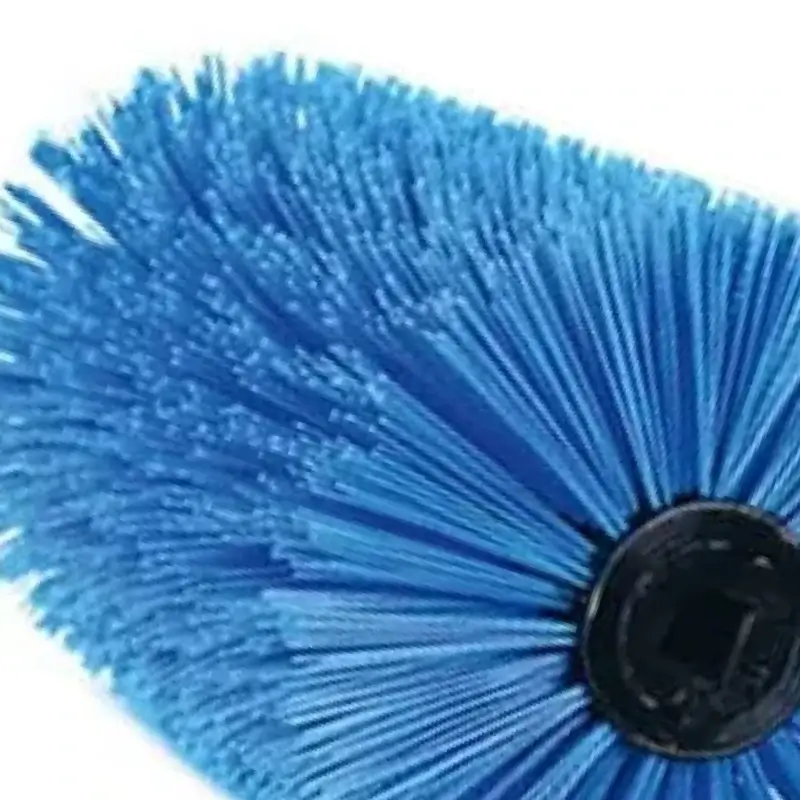
Why Brush Selection Matters for Glass Washing
Unlike many materials, glass surfaces require care that few materials demand. Minor wear will leave visible defects on glass surfaces, particularly those designed to be used optically (optical glass), as well as automotive glass (windshields) and architectural glass panels. Therefore, the process of washing industrial glass surfaces (removing oils from cutting, polishing materials from the glass surface, and dust and/or protective coatings) must remove these residues quickly and without any slowdown in production throughput.
Selecting a brush is crucial because you want to balance your cleaning (effectiveness) and how the surface is protected once cleaned (surface protection). The brush that provides perfect results when cleaning tempered architectural glass may not be the right option for cleaning very thin display panels or for solar glass substrates.
Types of Glass Washing Brushes
Cylinder Brushes
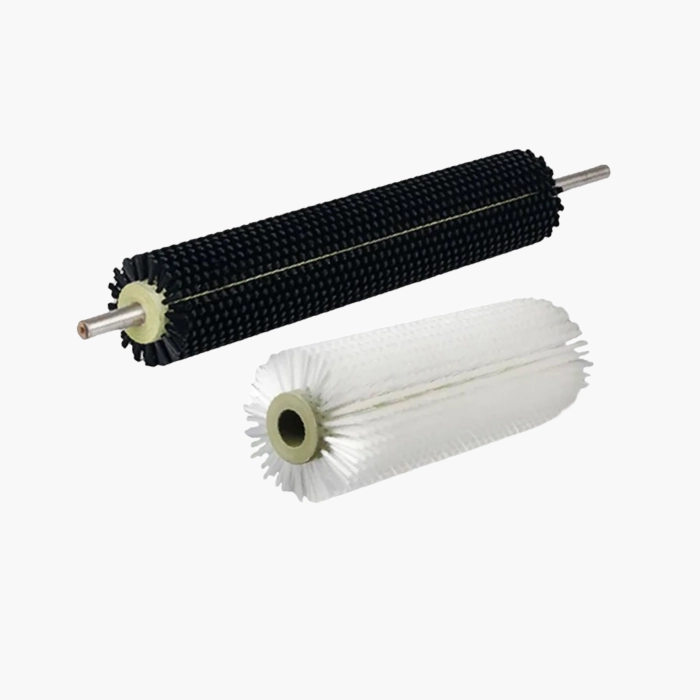
Cylinder brushes are the most common style utilized on automatic glass wash systems. They rotate both above and below the glass panel as it moves through the washing machine on a conveyor, providing full surface contact during the cleaning process. Cylinder brushes can be constructed in a spiral-wound pattern for uniform coverage, or in a tufted configuration where bristle clusters are inserted into a solid core. The tufted design creates channels between rows that allow water and debris to drain during operation, making it particularly effective for heavier deposits.
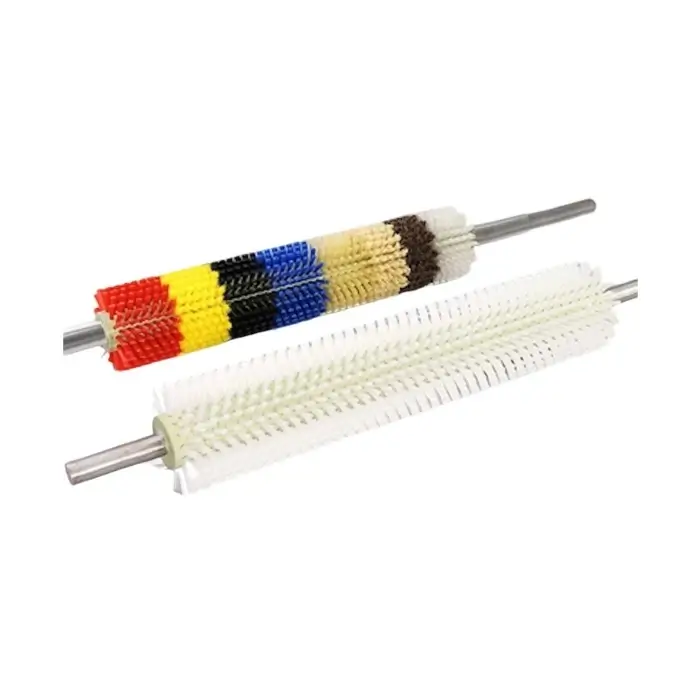
Within the cylinder brush category, material selection defines performance:
- Nylon cylinder brushes — The most widely used option for standard glass washing. Soft to medium nylon filaments clean effectively without scratching, resist chemical breakdown from detergents, and maintain consistent stiffness when wet. They suit display glass, automotive glass, and architectural panels depending on filament diameter.
- Abrasive cylinder brushes — Constructed with abrasive-impregnated nylon filaments, these brushes are designed for aggressive tasks such as coating removal, edge preparation, and stripping dried adhesives. They are not suitable for finished optical surfaces but perform well where material removal is the priority.
- Sisal cylinder brushes — Made from natural sisal fiber, these brushes offer medium-high stiffness for removing hardened residues like mineral scale or dried glue. They provide strong mechanical action but carry a moderate scratch risk, so they are typically reserved for heavy-duty cleaning stages rather than final wash passes.
- PBT polyester cylinder brushes — PBT filaments offer good chemical resistance and medium stiffness, making them a durable choice for architectural flat glass lines running at higher conveyor speeds.
Disc and Roller Brushes
Disc style brushes provide edge cleanup or specific areas of cleanup for use during the glass processing phase. Unlike cylinder brushes, disc brushes do not provide full surface coverage of the glass surface; however, they can be “targeted” for certain areas. Generally, overall, the cylinder-type brush is used as the primary cleaning mechanism on all high-volume glass washing lines.
Important Considerations for Selecting a Glass Washing Brush
Bristle Material
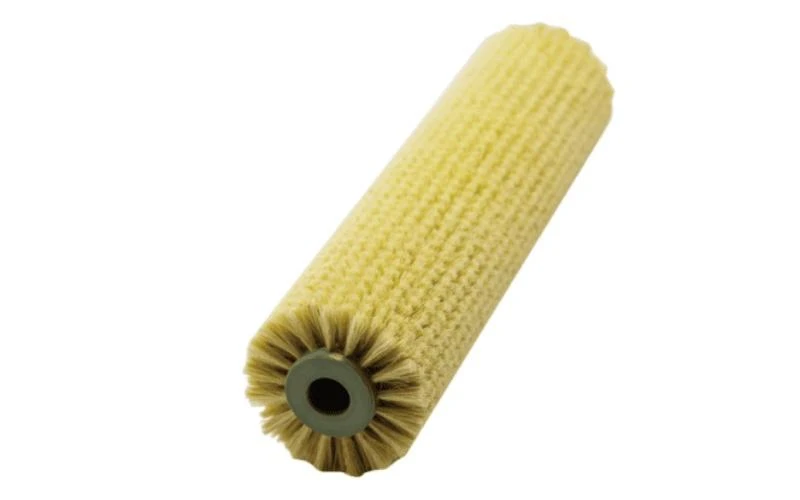
The bristle material used in the construction of glass washing brushes is the most important factor that affects their performance. The table below compares some of the more common bristle material types and their properties.
| Bristle Type | Stiffness | Scratch Risk | Best Application | Durability |
|---|---|---|---|---|
| Soft nylon (0.10–0.15mm) | Very low | Minimal | Display glass, optical panels | Moderate |
| Medium nylon (0.20–0.30mm) | Low-Medium | Low | Automotive glass, mirrors | High |
| PBT polyester | Medium | Low | Architectural flat glass | High |
| Sisal (natural fiber) | Medium-High | Moderate | Heavy residue removal | Moderate |
| Abrasive nylon | High | Elevated | Coating removal, edge prep | Very high |
In most cases, nylon cylinder brushes are used for standard glass washing applications as they offer the safest amount of cleaning power and are the most effective at protecting the surface. In addition to that, nylon filaments do not damage glass surfaces; they are resistant to chemical breakdown caused by detergents and will not change in their stiffness when wet.
Sisal-based brushes provide the power needed to clean heavily soiled materials (i.e., hardened glue, mineral deposits). See the Sisal Cylinder Brush Overview for more information about natural fiber choices.
Brush Size Specifications
The dimensions of the brush (its thickness, etc.) must meet the standards for glass wash machines and the thickness of glass being used. Primary factors include:
- Larger diameter brushes distribute force evenly over the entire surface of glass
- The weight of your brush will depend on its core material (aluminum, stainless steel, PVC) and how it is balanced, as well as the level of corrosion resistance of its core material
- The length of the brush should be at least as long as the maximum width of the glass that will be cleaned during production on the line
Filament Stiffness and Density
The stiffness and density of the fibers making up the brush filaments determine how well a brush will clean glass. For example:
- If you use higher density filaments, then you will have more contact points on a glass surface. This can mean greater cleaning force applied to a given area (surface pressure).
- If you use lower density filaments, then the filaments will provide better penetration into the water for rinsing.
- Filament diameter below 0.20mm is recommended for scratch-sensitive applications
Matching Brush Type to Glass Application
Brushes for brushing glass materials will differ depending upon what type of glass material is being brushed. An abrasive cylinder brush is good for preparing edges of glass materials; however, a brush that would be too soft for cleaning will not clean a construction-grade window effectively at all, nor would it be effective on a thin-film solar panel.
Specific recommendations for each application:
- For display and optical glass — Use very-soft nylon filaments (that measure 0.10 to 0.15 mm in diameter) that have a high mass and rotate at a low speed, which will not leave any surface markings.
- For automotive glass — Use medium-density nylon to effectively remove cutting oils and polishing residue without leaving any damage to the surface of the glass.
- For architectural flat glass — Use either PBT or medium-density nylon to handle dust, fingerprints, and light coatings while travelling at a higher speed on the conveyor.
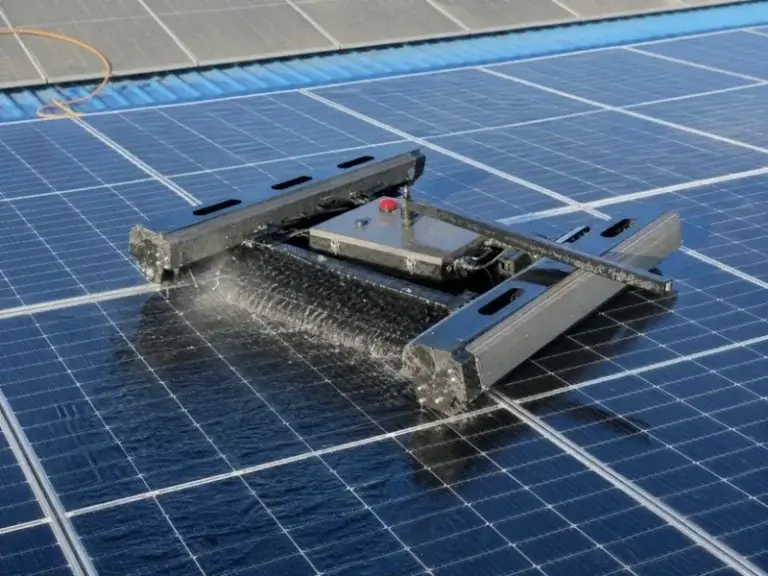
- For solar glass panels — Use soft nylon with anti-static properties, which will help to prevent any dust from re-attaching itself after washing.
- Heavy residue removal — Sisal or abrasive nylon for stripping protective films, dried adhesives, or mineral scale.
Quick-change brush systems are an asset for facilities where a number of glass styles are processed. To broaden your understanding of natural fiber brush applications and where they are used, look into sisal cylinder brushes for industrial purposes.
Customization for The Type of Brush Used to Wash Industrial Glass
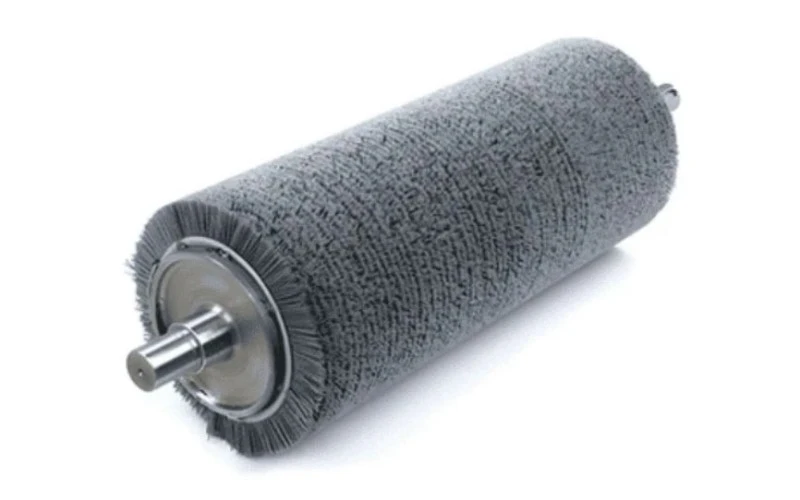
There are some standard brushes available to accommodate the basic needs of an application; however, most glass processing lines require custom specifications in order to achieve optimal results. When placing an order for a custom-made glass washing brush, the following information should be provided by the buyer:
- Make and model of glass washer and shaft sizes
- Type and thickness of glass
- Contaminants removed
- Line speeds and water temperatures
- Quality of surface finish (e.g., measured with scratch-dig specifications)
Manufacturers with significant experience customize the filament material used for the brushes (e.g., filament diameter, filament density, spiral angle, and core construction) so that they will meet these four parameters precisely. By eliminating compromise associated with using generic brushes, these companies can substantially improve cleaning consistency and extend the life of the brush.
If you are looking into nylon material as a substitute material for other industrial cleaning tasks, you may review nylon cylinder brush applications as examples of how nylon can be used in various cleaning applications.
Maintenance & Replacement Tips
When being used as a part of your glass washing operation, glass washing brushes require some maintenance to ensure that they provide consistent results. The recommended minimum maintenance routine is as follows:
- Daily — Clean brushes thoroughly, rinsing off all glass particles and detergent residue
- Weekly — Inspect bristles for any flattening, curling, or uneven wear patterns
- Monthly — Check brush balance and core structure for possible vibration issues
When you see permanent deformation of filament ends or an increase in non-uniformity when cleaning, this is when the brushes should be replaced. Good maintenance of your brush will increase its service life by 30 to 50 percent compared to continuing use of the same brush. Also, good maintenance will help you avoid gradual deterioration of cleaning quality, which could result in the rejection of glass passing through your plant.
Commonly Asked Questions
Q1: Is it possible to get brush configurations to match my washer model?
Yes. Manufacturers provide custom core diameters, brush lengths, brush filaments, and filament cluster patterns, as well as various mounting configurations specific to their equipment.
Q2: For Wholesale Glass Washing Brushes, What are the Typical Minimum Order Quantity?
Depending on your customization needs, the amount will vary for you to have a minimum order of wholesale Glass Washing Brushes. Standard configurations usually start with a minimum order of 10-20 brushes; however, custom brushes typically have a minimum order of 30-50 brushes per order.
Q3: Are Nylon Cylinder Brushes Safe to Use on All Types of Glass?
As long as the nylon filament diameter is compatible with your glass sensitivity, nylon cylinder brushes are generally considered safe to use on most types of glass. For example, ultra-soft nylon would be appropriate for use on optical glass; medium nylon would work best for automobile and architectural glass.