
Why Most Buyers Miss the Key to Brush Performance
The Overlooked Variable That Controls Contact Pressure
Surface finishing lines depend on rotary cylinder brushes for deburring, descaling, polishing, and cleaning across metalworking, woodworking, and food processing plants. Most buyers compare filament material and brush diameter first, then mount the brush and hope the process works. When the finish comes out too aggressive or too weak, the usual reaction is to change speed or swap the abrasive grit. Few teams look at the one dimension that has the strongest influence on contact pressure: trim length.
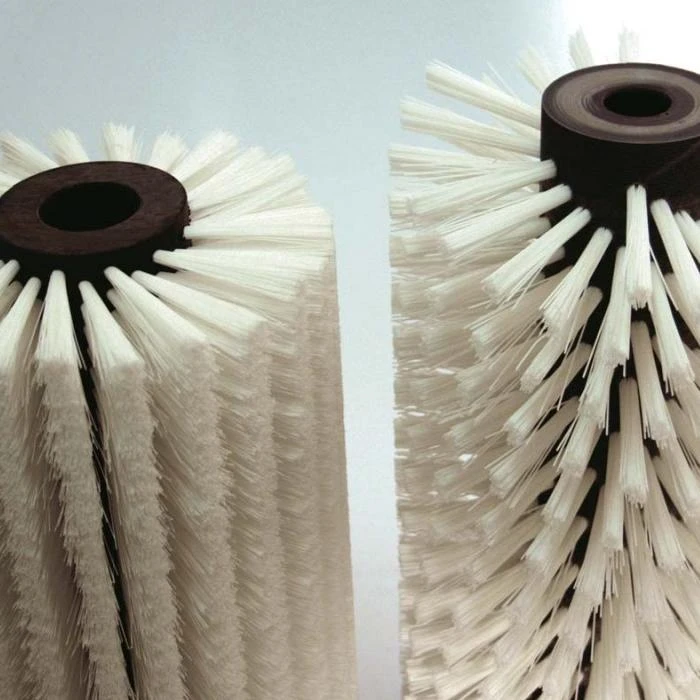
One Dimension, Two Outcomes: From Soft Finishing to Aggressive Cutting
Trim length, the distance the bristles extend beyond the brush core, decides how stiff every filament feels at the workpiece. It can turn the same brush from a soft finishing tool into an aggressive cutting tool without any change in material, grit, or speed. Understanding this single variable saves hours of trial and error and keeps a line running at consistent quality from batch to batch.
What This Article Covers
Trim length is the main control for cleaning aggressiveness in rotary cylinder brushes: shorter trim produces stiffer filaments and harder contact, while longer trim flexes more and delivers a gentler finish.
This article explains how trim length works, how it combines with filament diameter, and how to select the right range for common applications. It also covers material choices, including wire and nylon options, and explains when custom engineering is worth the investment.
What Is Trim Length in Rotary Cylinder Brushes
Definition and Construction: From Core to Tip
Trim length is the exposed length of filament from the brush core to the bristle tip, and it determines how much the filaments can flex during operation.
A rotary cylinder brush is built by installing filaments into a core, which can be a solid mandrel, a spiral-wound strip, or a machined hub. The filaments stand out from the core at a set distance, and that distance is the trim length. Together with the core diameter, it defines the overall working diameter of the brush: overall diameter equals core diameter plus two times the trim length.
Standard Ranges and Performance Impact
Trim length is specified in millimeters or inches depending on the supplier. Industrial brushes commonly run from about 5 mm to 100 mm of trim, but most production applications fall in a narrower band between 10 mm and 50 mm. Within that band, a difference of a few millimeters changes the brushing action noticeably, which is why the specification deserves as much attention as grit size or brush width.
Trim length also affects how the brush loads during operation. Short-trim brushes present a dense, stiff surface to the part and transfer motor torque into the workpiece with little deflection. Long-trim brushes store more energy in the filaments, which makes them tolerant of part variation and less likely to gouge soft material when the workpiece shifts.
How Trim Length Affects Cleaning Aggressiveness
The Cantilever Effect: Why Shorter Trim Means Harder Action
Shorter trim increases aggressiveness because each filament behaves like a stiffer cantilever, while longer trim softens the brushing action and spreads the contact force over a larger area.
Think of each filament as a small beam fixed at the core. A beam deflects more when the load is applied far from the fixed end. When the trim is short, the load point sits close to the core, so the filament resists bending and presses hard against the surface. When the trim is long, the same filament bends easily and wipes across the part instead of cutting into it.
Practical Examples: Wire vs. Nylon at Different Trim Lengths
This relationship is practical, not just theoretical. A short-trim wire brush can remove weld scale and heavy rust in a single pass. The same wire in a longer trim would bounce over the surface, wearing the tips without cleaning the base metal. On the other end, a long-trim nylon brush can brighten anodized aluminum or blend machining marks without disturbing tolerances, while a short-trim version of the same nylon would leave visible scratches.
Contact Band and Pressure Distribution
The operating window matters too. At a fixed speed, shorter trim produces a harder impact and a narrower contact band, which concentrates pressure on the surface. Longer trim produces a wider contact band and lower pressure per filament, which suits contour following and edge blending. Changing trim length is therefore the most direct way to tune force without touching speed settings or abrasive grade.
Trim Length vs. Filament Diameter: Two Levers, One Result
Trim length and filament diameter work together: diameter controls the strength of each filament, while trim length controls how that strength reaches the workpiece.
Filament diameter determines the bending stiffness of a single bristle. A thicker filament is harder to deflect regardless of trim. Trim length then scales that stiffness: a thick filament with short trim is extremely aggressive, while a thin filament with long trim is gentle. The two parameters form a matrix that process engineers can use to target a specific finish.
The table below shows how the two levers combine in practice:
These ranges are starting points, not fixed rules. Line speed, part geometry, and brush diameter all shift the optimum. A slow line can run a shorter trim because the filaments dwell longer on the surface; a fast line usually needs longer trim to avoid harsh impact and chatter.
Matching Brush Material and Trim Length
Material selection and trim length are inseparable: wire delivers aggressive cutting at short trim, while nylon and abrasive filaments give controlled finishing at longer trim.
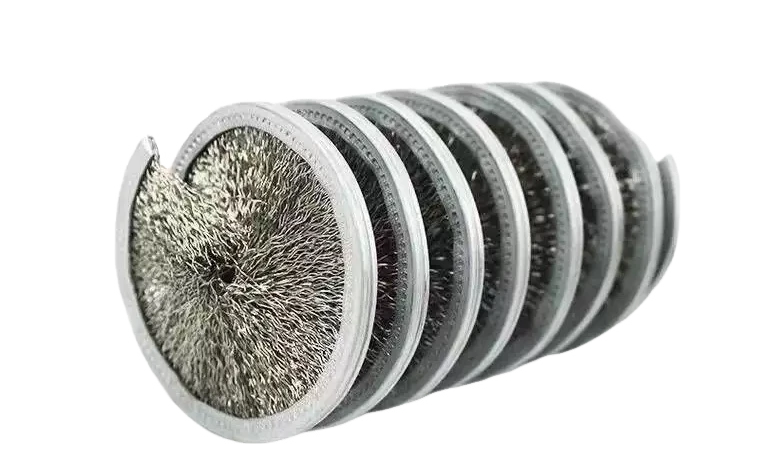
Steel wire is stiff and aggressive, and it is the right choice for rust, scale, and heavy burrs. A steel coil brush combines coiled wire construction with a compact profile, making it a common pick for metal polishing and cleaning where straight wire would be too harsh. On high-carbon steel and stainless parts, wire brushes with short trim remove material quickly, and hardened tips keep cutting through the shift.
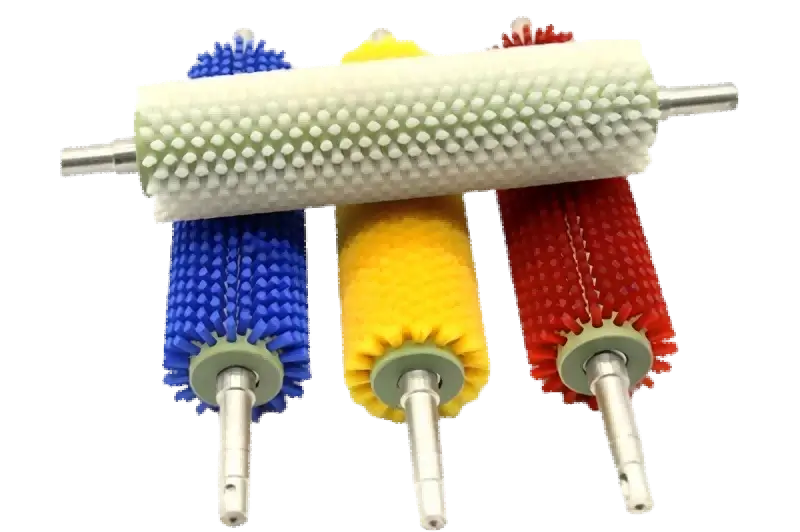
Nylon filaments behave differently. They flex more than wire at the same trim and can carry abrasive grain embedded in the filament, which makes them suitable for finishing and deburring without damaging the substrate. An abrasive nylon cylinder brush is widely used in wood finishing and light metalwork because it produces a consistent satin texture. For operations such as edge rounding on machined components, a nylon brush with medium trim balances material removal and surface quality.
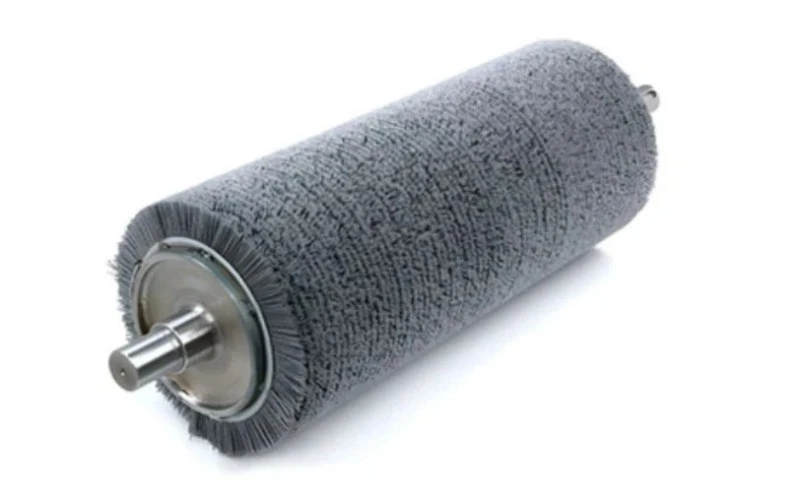
Woodworking deserves a special note. Drum sanding heads fitted with abrasive wire or nylon strips rely on trim length to control cut rate and surface temperature. A drum sander wire brush with shorter trim cuts faster but can burn thin veneers; a longer trim cools the action and leaves a smoother scratch pattern. Matching the brush to both the grit and the trim range is the difference between a clean feed line and constant rework.
The table below summarizes how material behavior changes at similar trim settings:
When to Consider Custom Rotary Brush Solutions
When standard trim lengths or core dimensions do not fit the process, a custom rotary brush with engineered trim length is the reliable way to hit both cleaning targets and line speed.
Catalog brushes cover a wide range, but production reality often falls outside it. Unusual part geometries, tight clearance between rollers, or a finish specification that sits between two standard trims are common reasons to go custom. A custom build also allows combinations that are hard to source off the shelf, such as variable trim across the face width or mixed filament materials in one brush.
The design process starts with the application data: part material, burr size, cycle time, and acceptable surface roughness. The manufacturer selects core style, filament type, and trim length together, then validates the geometry on a sample. For precision deburring jobs, custom rotary brush solutions are engineered around tolerances rather than generic cleaning, which reduces rejects and extends brush life.
Custom work is not only for complex cases. Even a modest change, such as a 3 mm shorter trim or a reinforced hub for higher speed, can stabilize a process that has been drifting. Documenting the trim length that works and repeating it across batches is the simplest quality control many shops can adopt.
FAQ
Can you shorten the trim length of an existing rotary cylinder brush?
Trimming an existing brush is possible, but it should be done by the manufacturer or with precision equipment. Cutting filaments unevenly creates imbalance and vibration at production speeds, and exposed anchor points can damage the workpiece. In most cases, ordering a replacement brush with the correct trim length is safer and cheaper than field modifications.
What trim length range is standard for rotary cylinder brushes?
Most industrial rotary cylinder brushes are supplied with trim between 10 mm and 60 mm, with 20–40 mm covering the majority of deburring and finishing applications. Heavy stock removal uses shorter trim, while gentle finishing and contour work use longer trim. Always confirm the range with the brush manufacturer because core design affects the effective stiffness.
Does trim length affect brush life or motor load?
Yes. Short-trim brushes wear faster because the filaments work harder and the usable length is smaller, but they also deliver more work per pass. Long-trim brushes flex more, which reduces tip wear but can increase drag and motor load at high speeds. Matching trim to the process balances brush life, energy consumption, and finish consistency.