Rust forms when iron, oxygen, and moisture collide. On structural steel or heavy machinery, aggressive abrasives get the job done without much thought. But when the same corrosion appears on a precision-machined mold, a thin-walled tube, or a plated component destined for a visible installation, the equation changes. Remove too much base material and the part is scrap. Use a tool that leaves deep scratches, and the surface finish goes with it.
A metal brush to remove rust works on delicate surfaces when the wire material, filament diameter, and brush configuration are matched to the substrate hardness and finish tolerance. Wire cylinder brushes made from brass or fine-gauge stainless steel can strip oxidation while preserving dimensional accuracy and surface integrity, provided the operator selects the correct fill density and rotational speed.
That statement sounds straightforward, but anyone who has watched a coarse steel brush chew through a soft aluminum housing in seconds knows the gap between theory and practice. The difference between a cleaned part and a ruined one often comes down to three variables: wire type, brush geometry, and process control. This article walks through each of those variables, explains when to choose brass over stainless steel, and outlines the operational parameters that keep a rust removal brushing operation safe for the substrate beneath the corrosion.
Why Standard Abrasives Fail on Delicate Surfaces
Standard abrasive methods remove rust by eroding the surface layer. On hardened steel, this is fine. On softer alloys, thin sections, or polished surfaces, the same approach removes base material faster than corrosion, changes part geometry, and leaves a surface that needs additional finishing steps.
Sandblasting with aluminum oxide or garnet media erodes everything in its path. Chemical rust removers based on phosphoric or oxalic acid convert iron oxide into a water-soluble compound that rinses away, but they require full immersion or extended dwell times that may not suit assembled components or large parts. Needle scalers and hammer-type descalers introduce impact stress that thin-walled or heat-treated parts cannot tolerate. Each of these methods has its place, but none offers the controlled, line-of-sight contact that a rust remover brush with rotating wire filaments provides.
Surface Damage Mechanisms
When an abrasive encounters a delicate surface, damage happens through several distinct mechanisms that compound one another:
A wire brush operates differently. Individual wire filaments act as flexible cutting tools. They deflect upon contact rather than digging in. This spring action limits the depth of engagement, which is why a properly selected wire brush can remove rust without measurable substrate loss. The keyword is “properly selected.” A stiff, large-diameter steel wire filament driven at high RPM behaves more like a cutting tool than a cleaning tool.
The Controlled Contact Advantage
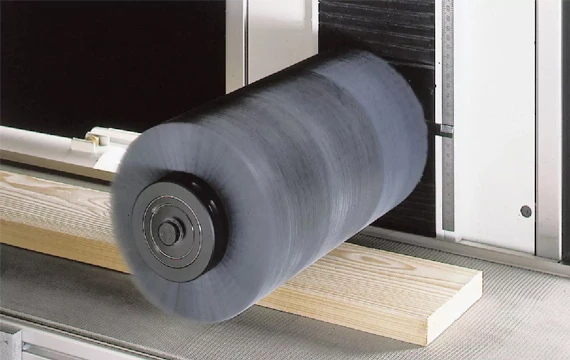
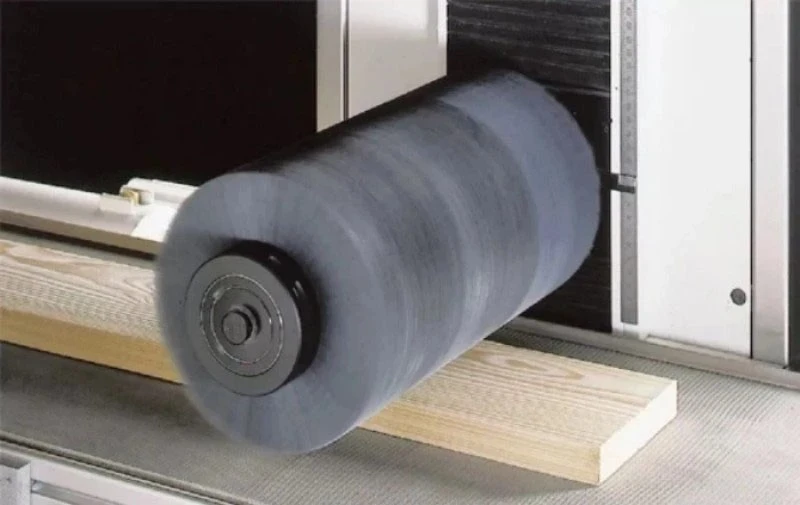
Wire cylinder brushes distribute contact force across thousands of individual filament tips. Each tip removes a microscopic amount of rust per rotation. The cumulative effect cleans the surface, but no single filament exerts enough pressure to gouge or deform the substrate. This distributed contact pattern also generates less frictional heat than a grinding wheel or abrasive disc. For heat-sensitive alloys or thin sections that warp under thermal stress, this matters.
Types of Metal Cylinder Brushes for Precision Rust Removal
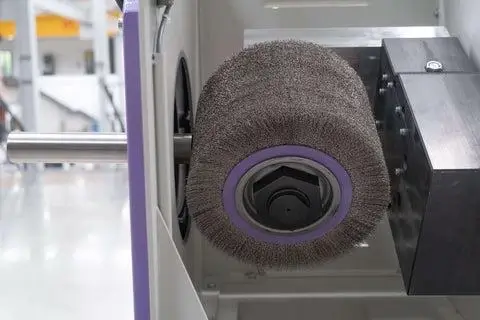
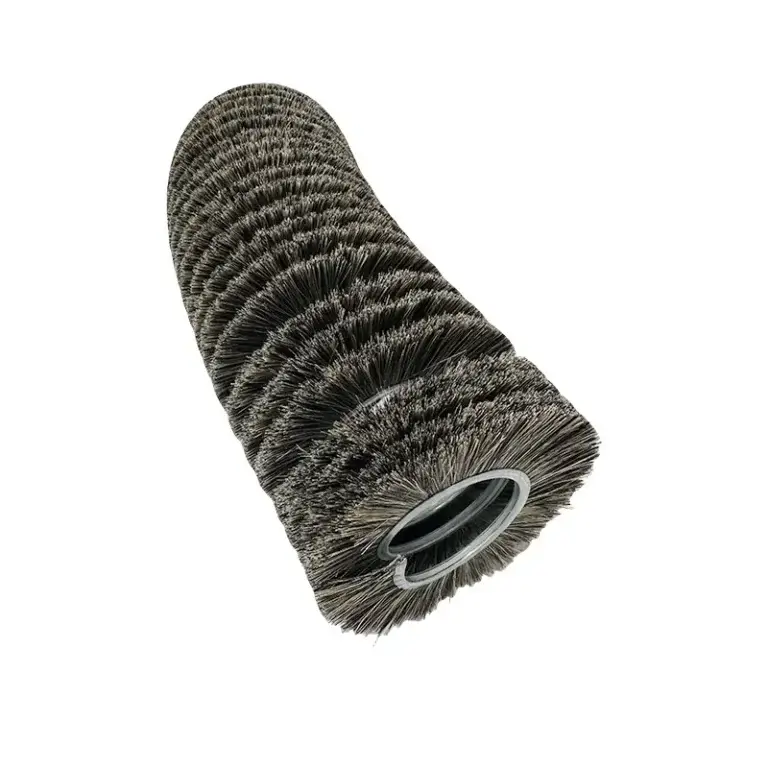
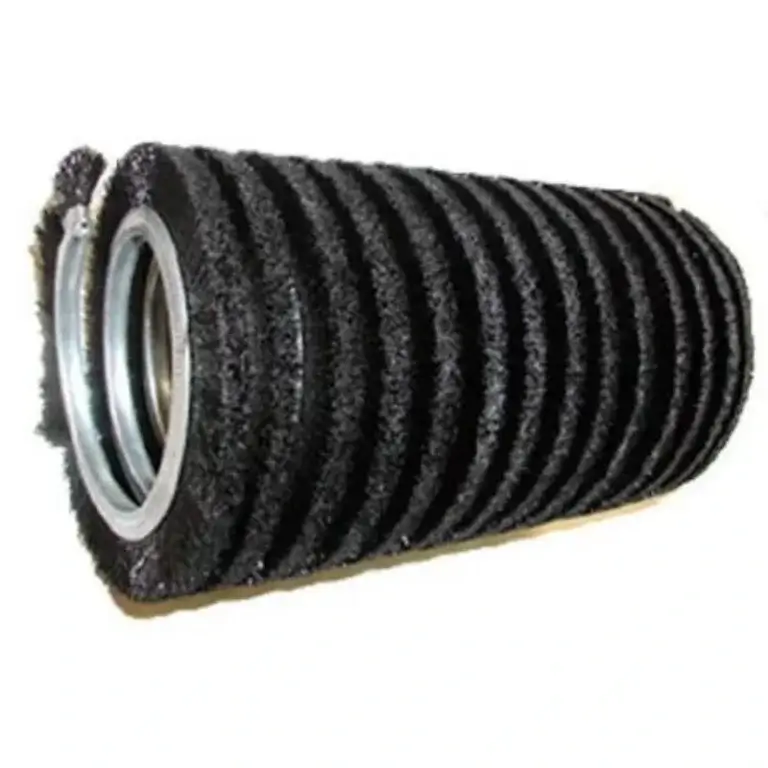
Metal cylinder brushes for rust removal fall into two broad construction categories: wound cylinder brushes and knot-type cylinder brushes. For delicate surface work, wound cylinder brushes with fine wire filaments offer the gentlest action because the filaments are individually held and flex independently. Knot-type brushes concentrate more force per filament cluster and suit heavier rust on more robust substrates.
The construction method determines how filaments behave under load. It also affects brush life, cleaning aggression, and the uniformity of the surface finish. Understanding the difference prevents selecting a brush that is either too aggressive for the workpiece or too soft to remove the rust within a practical cycle time.
Wound Cylinder Brushes
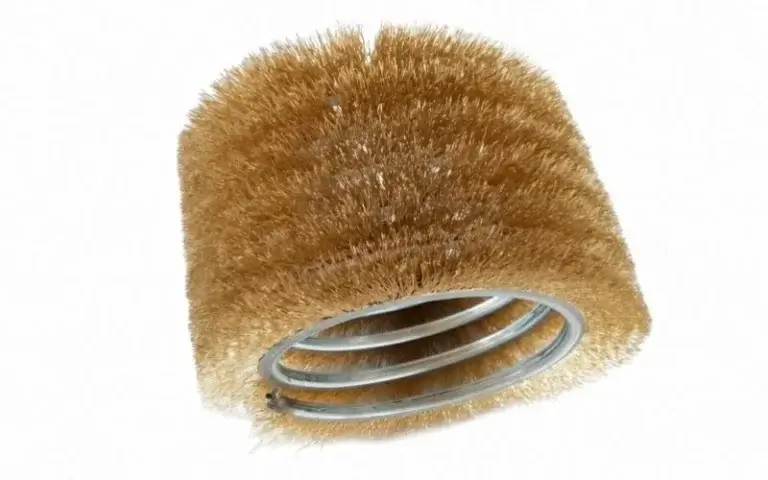
A wound cylinder brush is built by winding wire filaments between a series of stem wires around a central core. The filaments are captured at the base and flare outward. This gives each filament significant independent movement. When the brush contacts a workpiece, individual wires bend rather than forcing neighboring wires to move in lockstep.
This independent filament action is what makes a wound brush suitable for delicate surfaces. The brush conforms to minor surface irregularities without concentrating force on high spots. A brass wire wound cylinder brush is a common choice for non-ferrous substrates and thin-gauge steels precisely because each filament moves independently, limiting the force transmitted to any single point on the workpiece. Wound brushes are available in brass wire, stainless steel wire, carbon steel wire, and various synthetic filaments. Fill density can range from sparse for light cleaning to dense for longer brush life in continuous production.
Knot-Type Cylinder Brushes
Knot-type brushes twist wire filaments into cable-like bundles that are then secured into a central hub. The twisted construction makes each bundle act as a single, relatively stiff unit. Contact force concentrates into fewer, larger impact points compared to a wound brush.
These brushes remove heavy rust, thick scale, and weld spatter effectively on structural steel, heavy castings, and shipbuilding applications. They are generally too aggressive for thin-gauge metals, polished surfaces, or any application where surface finish matters. For the scope of this article, which focuses on delicate surface work, knot-type brushes serve as a reference point for what to avoid when precision matters.
Wire Material Selection: Brass vs. Stainless Steel
Choose brass wire when the substrate is softer than the wire or when preventing post-cleaning flash rust is not the primary concern. Choose stainless steel wire when the substrate is hardened steel, when corrosion resistance after cleaning matters, or when the brushing operation runs in a wet or humid environment. Neither material is universally better. The decision follows the substrate.
This is the question that determines whether a brushing operation succeeds or produces scrap: which wire material? The answer depends on the relative hardness of the wire and the workpiece, the operating environment, and the post-cleaning requirements for the part.
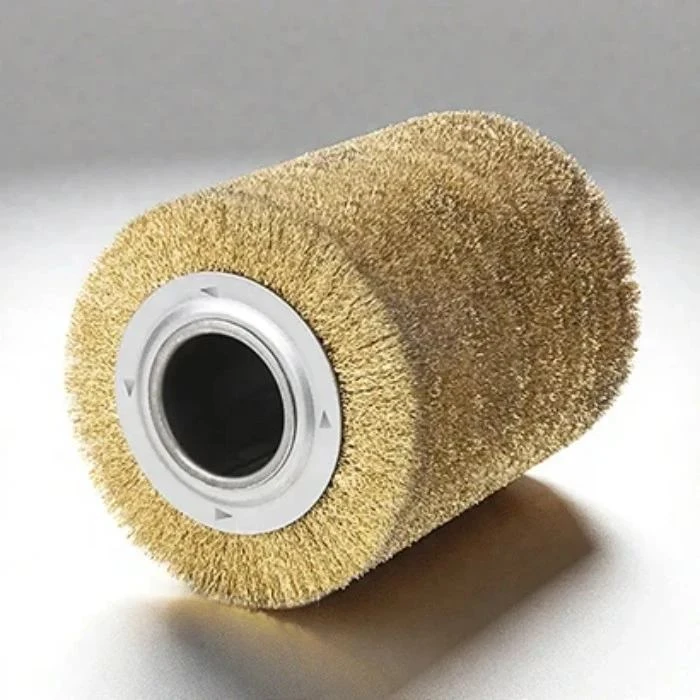
Brass Wire Wound Cylinder Brushes
Brass wire has a Mohs hardness of approximately 3.0 to 3.5. This places it below most steels and well below hardened tool steels. Because brass is softer than the substrate in most industrial rust removal applications, the wire wears instead of the workpiece. This self-sacrificing characteristic is the primary reason brass brushes are specified for delicate surface work.
Brass also does not spark when it contacts ferrous metals. In environments where flammable vapors or dust are present, this is a safety requirement, not a preference. The wire produces a bright, smooth finish on non-ferrous metals like copper, brass alloys, and aluminum, though for those materials the goal is usually oxide removal rather than iron rust removal.
The trade-off: brass wire wears faster than stainless steel. In a continuous production environment, this means more frequent brush changes. The cost per brush is lower, but the changeover labor may offset that depending on the production setup.
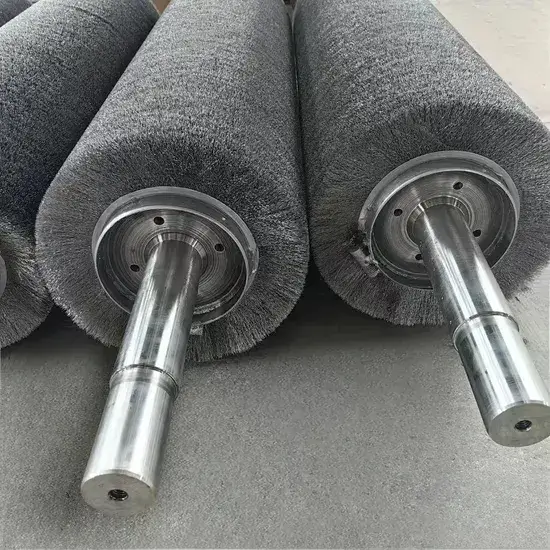
Stainless Steel Wire Cylinder Brushes
Stainless steel wire, typically type 304 or 316, sits at approximately 4.0 to 4.5 on the Mohs scale. This is hard enough to remove rust efficiently but, when used in fine filament diameters like 0.005 inch or 0.008 inch, flexible enough to avoid substrate damage on most steels.
The significant advantage of stainless steel is that it leaves no carbon steel residue on the workpiece surface. Carbon steel wire brushes deposit microscopic particles that initiate flash rust within hours if the part is not immediately coated. A stainless steel wire cylinder brush eliminates this contamination risk. For parts that go into food processing equipment, medical devices, or marine applications, this matters enough that stainless steel is often specified by the end customer.
Stainless steel also withstands wet brushing operations. If the process uses a rust removal solution or cutting fluid as a lubricant, stainless wire resists degradation far longer than carbon steel and longer than brass in most cases.
Selection Decision Matrix
The filament diameter column in the table above deserves particular attention. Many operators focus on wire material and overlook filament gauge. A 0.020-inch brass wire can be more aggressive than a 0.005-inch stainless wire. Filament diameter, more than material selection alone, determines how the brush interacts with the workpiece at the microscopic level. Thinner filaments flex more, penetrate less, and leave a finer surface finish. They also wear faster, so there is a trade-off between surface quality and brush life that must be evaluated for each production volume.
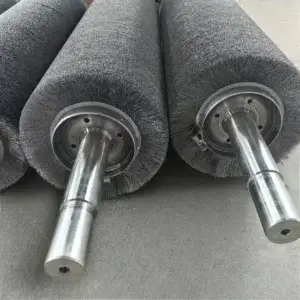
Key Factors in Selecting a Rust Remover Brush for Sensitive Applications
Selecting a metal brush to remove rust from delicate surfaces requires evaluating five interdependent parameters: wire material, filament diameter, brush rotational speed, fill density, and the geometry match between the brush and the workpiece. Changing any one of these changes the cleaning result, and the optimal combination is rarely the same for two different parts.
Brushing is a mechanical process, not a chemical one. Every variable affects the outcome. The following factors should be evaluated systematically, ideally through a small-batch trial before committing to a production parameter set.
Rotational Speed and Surface Speed
Wire cylinder brushes have an optimal operating speed range, typically printed on the brush or in the manufacturer’s datasheet. Running below the recommended speed range reduces cleaning effectiveness because the filaments do not generate enough impact energy to remove rust. Running above the range causes excessive filament breakage, heat buildup, and accelerated wear. It also stiffens the filament tips through centrifugal force, which turns a gentle cleaning action into an aggressive cutting action.
Surface speed, measured in surface feet per minute or meters per second, is calculated from the brush diameter and RPM. A 6-inch diameter brush at 2,000 RPM generates a surface speed of approximately 3,140 surface feet per minute. A 3-inch brush at the same RPM generates half that. When switching brush diameters, match surface speed rather than RPM to maintain consistent cleaning action.
Fill Density and Trim Length
Fill density refers to how many wire filaments are packed into a given area of the brush face. A dense fill provides more cutting points per rotation and longer brush life. It also generates more friction and heat. For delicate surfaces, a medium to sparse fill often produces better results because fewer filaments contact the workpiece at any moment, reducing the total friction and allowing the operator to run at a slightly higher surface speed without overheating the part.
Trim length, the exposed length of filament from the hub to the tip, affects filament flexibility. Longer trim produces more deflection and a gentler action. Shorter trim produces a stiffer brush. For delicate surface work, the longest practical trim length for the brush diameter is usually the right starting point.
Workpiece Geometry
Cylinder brushes clean line-of-sight surfaces effectively. Internal bores, blind holes, and deep recesses require a brush that physically fits into the cavity and maintains filament contact throughout the rotation. For complex geometries, a custom rust remover brush may be necessary to ensure the brush reaches all rusted areas without jamming or creating uneven wear patterns on the brush itself. Working with a manufacturer that offers made-to-order specifications avoids the compromise of using an off-the-shelf brush on a part it was never designed to fit.
Operational Best Practices for Surface-Safe Rust Removal
Surface-safe rust removal with a wire brush depends on four operational disciplines: speed control, feed rate consistency, brush conditioning, and regular inspection of both the brush and the cleaned parts. Operators who skip conditioning or push feed rates to reduce cycle time create more scrap than they save in throughput.
Even the best-matched brush selection fails if the operating parameters drift. The following practices come from production environments where the tolerance for surface damage is measured in microns.
Brush Conditioning Before First Use
A new wire brush straight from the package has sharp filament tips and uneven filament projection. Running it at full speed against the first workpiece guarantees an inconsistent finish. Proper conditioning involves running the brush at operating speed against a piece of scrap material or a dressing stone for 15 to 30 seconds. This breaks off over-long filaments, rounds the sharp tips slightly, and establishes a uniform working face. Conditioning should be repeated whenever a new brush is installed or when the existing brush shows uneven wear.
Feed Rate and Pass Direction
The brush should be fed into the workpiece at a rate that allows visible rust removal without generating excessive heat. A feed rate that is too slow overheats the part and accelerates wire wear. Too fast, the rust does not clear, leading the operator to compensate with higher RPM or more passes, both of which increase the risk of substrate damage.
Where possible, brush in the direction of existing surface grain or machine marks. Brushing perpendicular to the grain leaves a crosshatch pattern that may be unacceptable for visible surfaces. If the part has no directional grain, a single consistent direction across all parts maintains visual uniformity in production.
Inspection During Production
Inspection should check both the brush condition and the cleaned part surface at regular intervals. A brush that is shedding excessive filaments, showing uneven wear, or developing glazed areas needs to be reconditioned or replaced. A cleaned part that shows scratching, discoloration from heat, or residual rust indicates that one or more process parameters have drifted out of range. Catching these signs early prevents a full batch from being scrapped.
Post-Cleaning Surface Protection
A freshly brushed steel surface is chemically active and will begin to corrode again within hours if left unprotected. The appropriate next step depends on the part’s destination. For parts going to paint or powder coat, a light phosphate treatment or a compatible primer applied within the same shift prevents flash rust. For parts that must remain bare, a vapor corrosion inhibitor or controlled-humidity storage environment is the standard solution. The brushing operation should be scheduled so that the time between cleaning and coating is as short as practical.
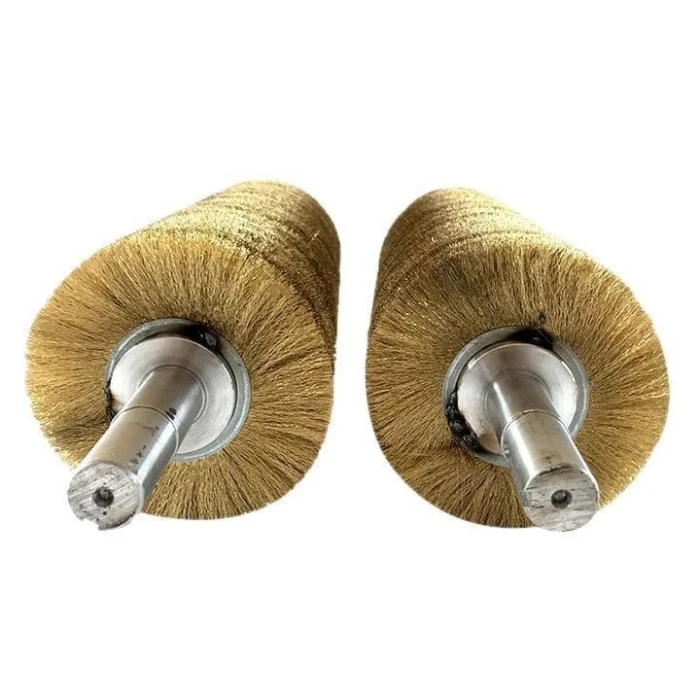
Industry Applications for Precision Rust Removal Brushes
Precision wire brushing for rust removal serves industries where surface finish, dimensional accuracy, and contamination control are production requirements rather than cosmetic preferences. Aerospace, mold and die manufacturing, medical device production, and automotive restoration each rely on controlled brushing processes to prepare surfaces without altering part geometry.
The following applications illustrate how different industries apply the principles discussed in the preceding sections. Each case involves a unique combination of substrate material, part geometry, and end-use requirement that drives brush selection and process parameters.
Aerospace Component Refurbishment
Aircraft landing gear components, engine mount brackets, and fastener bores accumulate corrosion during service. Replacement is expensive and not always necessary if the corrosion is superficial. Brushing with fine stainless steel wire removes the oxidation without changing the dimensional tolerances that keep these parts airworthy. The process must leave no embedded wire particles, which could act as stress risers or corrosion initiation sites under cyclic loading. For this reason, stainless steel rather than carbon steel wire is mandatory in most aerospace brushing specifications.
Mold and Die Maintenance
Injection molds accumulate rust on cooling channels, ejector pin bores, and parting line surfaces during storage or when processing hygroscopic resins that generate moisture. Sandblasting these precision surfaces changes the cavity dimensions. A brass wire cylinder brush cleans the rust while the brass, being softer than the hardened tool steel, sacrifices itself before it can cut into the mold surface. For molds with polished cavities, even a fine brass brush may alter the finish. In those cases, the brush is used only on non-cosmetic surfaces, and the polished areas are cleaned manually with a softer medium, sometimes transitioning to a dedicated metal polishing brush for the final surface refinement.
Medical Device Manufacturing
Surgical instruments, implant tooling, and sterilization trays are typically made from 300-series stainless steel. Any rust must be removed without introducing carbon steel contamination, which would compromise the corrosion resistance of the base material. Brushes used in these environments are often made from the same stainless alloy as the workpiece. The brushes themselves are tracked by lot number and replaced on a preventive schedule rather than waiting for visible wear. Cross-contamination from carbon steel tooling used elsewhere in the facility is a constant risk managed through segregated work areas and dedicated brushing equipment.
Automotive Restoration and Custom Fabrication
Restoration shops deal with thin-gauge body panels, chrome-plated trim, and die-cast components where aggressive rust removal methods cause irreversible damage. A wound cylinder brush with fine brass wire cleans rust from panel seams and mounting flanges without thinning the metal. On chrome-plated parts, the same brass brush removes surface rust spots while leaving the underlying chrome intact, provided the rust has not penetrated through to the base metal. For custom fabricators working with polished stainless steel exhaust components or intake manifolds, a fine stainless wire brush removes heat discoloration and light surface oxidation without dulling the polished finish.
Frequently Asked Questions
Q1: Can a wire brush remove rust without scratching the metal underneath?
Yes, when the wire material is softer than the substrate. A brass wire brush on steel removes rust without measurable substrate loss because the brass filaments wear before they can cut into the harder steel. For same-material brushing, such as stainless wire on stainless steel, the filament diameter must be fine enough that individual wire tips deflect before they can gouge. Testing on a sample piece before committing to production parameters is the only way to verify compatibility for a specific substrate and finish requirement.
Q2: How do I know when to replace a wire cylinder brush?
Replace the brush when filament length has worn down by approximately 30 percent from the original trim length. At that point, the shorter filaments are significantly stiffer, which changes the brushing action and increases the risk of surface damage. Other replacement triggers include uneven wear patterns that cause vibration, visible glazing or melting of filament tips, and any contamination that cannot be removed by conditioning. In regulated industries, brush replacement follows a fixed-interval schedule documented in the process control plan.
Q3: What is the difference between a wound brush and a knotted brush for rust removal?
A wound brush has individual wire filaments that flex independently, making it suitable for delicate surfaces and fine finishing. A knotted brush twists filaments into rigid cable-like bundles that concentrate impact force, making it suitable for heavy rust and scale on structural steel. For any application where surface finish or dimensional accuracy matters, a wound brush is the appropriate starting point. Knotted brushes should be reserved for heavy-section steel where the surface condition after cleaning is not a specification requirement.