
An improperly selected wood polishing brush will not only give poor performance but also damage the board and lead to expensive rework, all of which can be avoided. Unfortunately, in reality, most buyers still pick the brushes based on price, completely ignoring the technical aspects that really determine the results of polishing.
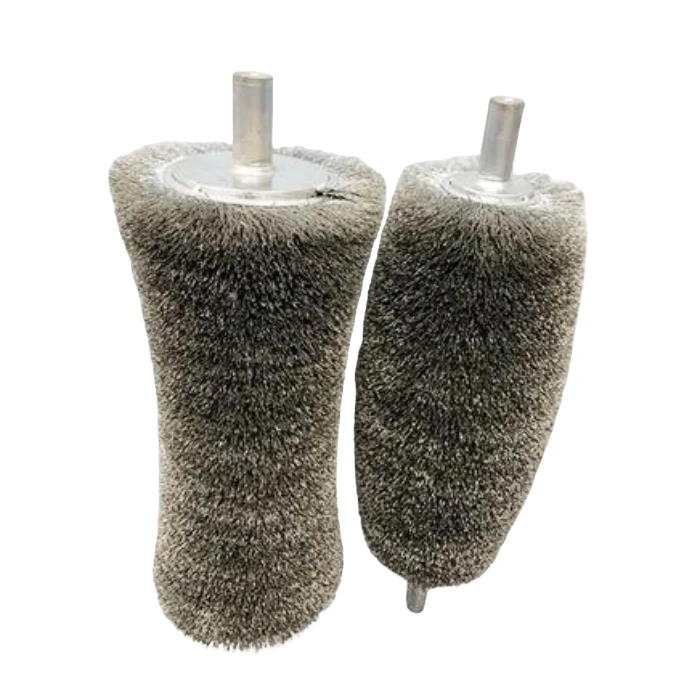
Factors Most People Overlook Yet Determine the Performance of a Polishing Brush in Wood
This article will discuss three factors that determine the performance of the brush, which most people overlook, and how each one influences the quality of the surface, life of the tool, and total cost in the workshop.
Most of the purchasing decisions are based on bristle material — that’s true, but not the whole story. Process matching, anchoring technology, and brush body precision play equally critical roles. Ignore any of these factors, and the output will be defective. [Learn more about our brush manufacturing process →]
Choose the Brush Type According To the Process
Wood polishing is not a single thing but a wide range of different processes. Each one would require a totally different specification for the wood polishing brush. Below are the most common ones, each requiring a specific brush specification:
- Primer sanding: Remove excess sealer and level the surface for the application of a topcoat.
- Fine Polishing: Making the surface of finished parts smooth and shiny at high gloss.
- Edge Deburring: Removing the sharp corners left on the material after it has been cut or routed.
- Wood Grain Brushing (Wire-Drawing): To bring out the natural texture on softwood panels.
The principle is to define the process first and then choose the type of brush. In most cases, errors in sourcing occur due to a reversal of this order.
For primer sanding, you should use an Abrasive Cylinder Brush with aluminum oxide or silicon carbide grit to get the aggressive cut that levels sealer coats uniformly. A soft brush here will result in uneven sanding — and after topcoat application, bubbles or peeling will occur. [Browse our Abrasive Cylinder Brush collection →]
In order to keep up with the mechanical demand and not have premature bristle fatigue, the texture brushing and heavy deburring require a Cylinder Rotary Brush with stiffer filaments. Fine polishing should be done with a soft nylon or Sisal Cylinder Brush to maintain gentle and constant surface contact. An abrasive brush at this stage will scratch the finish and spoil the uniformity of gloss.
Use our brush category overview to see the complete range and their specific applications, if this is your first time with wood polishing brush types.
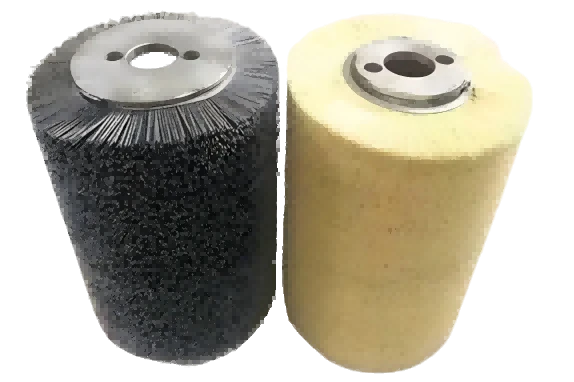
The Longevity of the Brush Depends on Bristle Anchoring Technology
Material buyers often think that bristle material alone will control the longevity of the brush. Actually, the bristle material contributes about 50% of the service life to any wood polishing brush; how the bristles are anchored into the brush body by the factory accounts for the other 50%.
Premium brushes differ from disposable ones based on two main anchoring details:
- Drilling Precision In the tuft hole, the precision is carried out with very high standards so that each bundle of filaments is held very tightly; this will totally rule out any chance of looseness, which can cause shedding at high rotation speeds.
- Epoxy Resin Anchoring. This is done with industrial-grade epoxy; the setting is permanent, which locks the bristle roots in place to ensure stability even under continuous RPM stress on polishing lines.
For instance, without the correct industrial-grade epoxy anchoring, wet sealer coats will receive filaments shedding from bristle roots. These embedded debris particles will require full re-sanding; thus, time and material are wasted.
A Wood Polishing Cylinder Brush with poor anchoring will shed filaments on wet sealer coats. This will embed debris and result in complete re-sanding. Proper anchoring will eliminate this failure mode entirely.
For manufacturers who need custom anchoring solutions at specified line speeds, check out our OEM wood polishing brush solutions — capabilities that standard catalog items can’t provide.
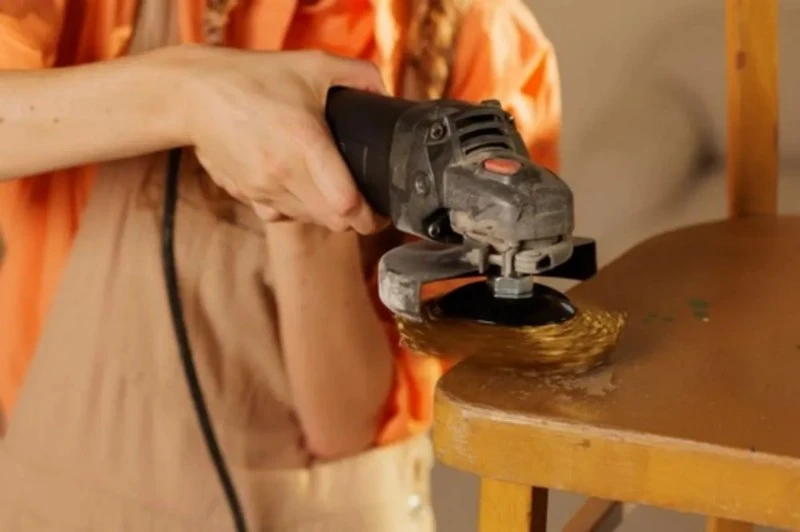
Hidden Costs Of Cheap Brushes
The Unit Price Trick. And the place most procurement teams get tripped up is buying on unit price. The numbers look good on the purchase order; they fall apart on the production floor.
Bristles in low-cost brushes are generally made of recycled or low-quality filaments that do not have much resilience. Quick loss of rebound by such bristles, which then flatten under load, results in quite visible wave patterns across the board surface. It’s like a ripple effect:
- Increased labor hours in secondary sanding
- Oversanding — brings the panel thickness under tolerance
- Changing brushes often increases the time when work cannot be done in each shift
A custom wood polishing brush with nylon bristles, matched to the specific hardness of the target board species, generally lasts two to three times longer than generic ones. This reduced frequency of changeovers directly results in lower total consumable cost per production cycle.
The savings of the low-quality option never really offset the hidden costs of scratched panels and rework labor.
For a more in-depth comparison of brush grades and their cost impact, refer to our full guide on selecting the right wood polishing brush for your line.
The Brush Body: A Point of Focus That Escapes Everyone’s Attention
Bristle material and anchoring play a role, but if the brush body isn’t up to the mark, nothing else can compensate for it.
Concentricity is how close to a perfect circle the brush core is in its center axis. Dynamic balance is having the weight spread out equally along the entire length of the brush. When one of these is not right:
- The brush will vibrate at the speed of operation.
- This, in return, will be transmitted directly to the surface of the board, hence creating high and low spots in an alternating pattern.
- These wavy patterns become visibly apparent, thereby destroying the finish.
A top-quality filament cannot compensate for a shaky body. Defects will appear on every panel processed by the Wood Polishing Cylinder Brush as long as it continues to vibrate.
The brush cores come from good makers on CNC equipment, and before shipment, balance testing (dynamic) is carried out. Surely, this adds to the cost of production, but it snuffs out the single most destructive of all quality failures in wood polishing — and one that’s least visible.
Examine the Abrasive Cylinder Brush and wound Cylinder Rotary Brush offerings to understand how precision-machined cores get paired with different types of filaments.
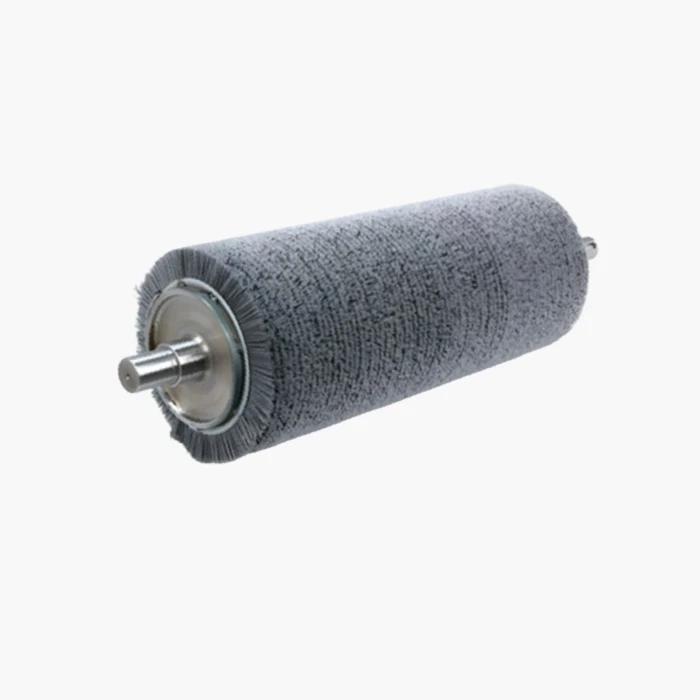
Contrast Premium Wood Polishing Brush with Low-Cost Alternatives
The table below gives a quick look at the main performance differences that directly affect production outcomes:
| Factor | Premium Brush | Low-Cost Alternative |
| Bristle resilience | High | Low |
| Anchoring method | Epoxy resin + precision-drilled holes | Press-fit or adhesive only |
| Brush body balance | CNC-machined, dynamic balancing | Rough-turned, no balance check |
| Surface finish quality | Uniform, without defects | Wave patterns, scratches |
| Average service life | 2–3 times more (quality Wood Polishing Cylinder Brush) | Baseline |
| Total cost per board | Lower | Higher |
Are you planning to upgrade your polishing line? Ask our engineering team for a recommendation specifically customized for your board species, line speed, and budget.
FAQs
What brush should be used for sanding over the primer on MDF panels?
An Abrasive Cylinder Brush with silicon carbide grit levels the primer uniformly on MDF without gouging the surface.
What’s the interval to replace the wood polishing brush on a continuous production line?
Replacement would be contingent on the wear of the filament and the condition of the balance. Check it once every month. Premium Wood Polishing Cylinder Brush units typically last two to three times longer than budget alternatives.
Can one brush take care of sanding and fine polishing?
No. Sanding and polishing require different filament stiffness and grit. Using one wood polishing brush for both would compromise the surface quality of each board. For sanding, choose an Abrasive Cylinder Brush — for fine polishing, a Sisal Cylinder Brush or its soft nylon variant will do.