
Choosing a sandpaper brush means considering more than diameter and grit number. Its outside diameter, working width, bore, keyway, construction, and rated speed must suit the machine. The right grit depends on the workpiece material, the condition of its surface, and the finish you want.
In production, dimensional compatibility usually comes first. A brush may have the appropriate abrasive grade, but it still will not deliver consistent results if it does not fit the shaft, exceeds the machine’s permitted diameter, or operates above its rated speed. Once those mechanical requirements are confirmed, buyers can turn to grit, brush density, and filament flexibility.
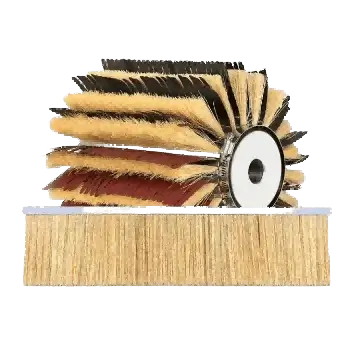
Key Challenges in Selecting Abrasive Filament Brushes
Dimensional Mismatches
Dimensional mismatches can cause vibration, uneven contact, installation delays, and safety risks. A small difference in bore size or keyway configuration may be enough to prevent the brush from mounting securely. And when the working width is excessive, the brush can interfere with guards or other nearby machine components.
Before ordering a sandpaper brush for a sanding machine, procurement and engineering teams should verify the following:
● Maximum permitted brush diameter
● Required working width and overall width
● Shaft or arbor diameter
● Keyway dimensions and mounting method
● Direction of rotation and operating speed
● Available clearance around the guards and extraction ports
● The machine manufacturer’s installation requirements
Buyers should check the equipment manual or a technical drawing to confirm these measurements, rather than relying only on an old brush. Wear, missing labels, or nonstandard modifications may affect a used brush, making it difficult to identify accurately.
Confusion Regarding Grit Selection
Grit affects cutting speed, scratch depth, surface smoothness, and processing time. Coarse abrasives remove fibers, machining marks, and coating defects more aggressively. Fine grit produces a smoother surface, but it may cut too slowly when the workpiece requires substantial correction.
The material itself also shapes abrasive performance. A grit that works well on hardwood may remove too much material from softwood. MDF, veneer, primer, paint, and metal surfaces each require controlled testing.
The table below offers general guidance for choosing a grit, rather than fixed specifications:
| Grit Range | Typical Application | Expected Result |
| Coarse | Removing visible defects or creating a more pronounced surface texture | Faster cutting with deeper scratches |
| Medium | Intermediate sanding and reducing machining marks | A balance between material removal and surface refinement |
| Fine | Sanding sealer, deburring, and preparing the finish | A smoother surface with limited material loss |
| Very fine | Light finishing between coating stages | Minimal cutting and subtle refinement |
Operators should test the chosen grit on parts that match the actual job. Its performance can vary between machines, since feed speed, brush speed, contact depth, and material hardness all influence how it behaves.
Imbalance in Selection Suitability
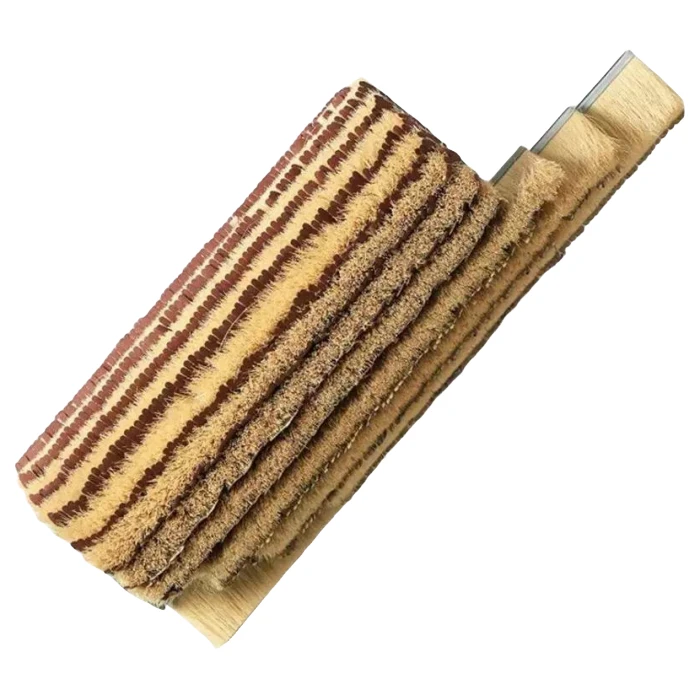
Some buyers focus heavily on grit while paying less attention to brush density or flexibility, which can result in an abrasive grade that does not suit the task. Dense brushes with short filaments usually create firmer contact. Longer abrasive strips, by contrast, conform more easily to deeper profiles.
The sandpaper brush needs to suit both the workpiece’s shape and the production goal. A flat panel will not call for the same construction as a narrow molding, rounded edge, recessed profile, or carved component.
For example, Abrasive Wood Brushes with flexible filaments are generally effective on profiled furniture components. When the surface is relatively flat, a denser configuration may deliver more even results. The best design depends on how reach and pressure must be balanced against cutting action and finish quality.
Sandpaper Brush Selection Solutions for Production
Standard Size Matching
A well-defined specification process reduces ordering errors and production interruptions. Buyers should first document machine compatibility, then outline the application’s requirements.
A practical selection sequence is:
- Identify the machine model and consult its technical manual.
- Measure the shaft, bore, keyway, available working space, and required brush width.
- Confirm the machine’s rotation direction and permitted speed range.
- Record the workpiece material, dimensions, profile depth, and existing finish.
- Define the required process, such as edge sanding, deburring, or coating preparation.
- Test the proposed brush under controlled production conditions.
During the processing of contoured wood parts, the sandpaper brush must track the profile without pressing heavily against raised details. Excessive penetration can cause the abrasive strips to bend too far, which generates additional heat, speeds wear, and rounds delicate edges.
Graded Grit Design
Using progressively finer grits usually gives more consistent results than using one brush for every sanding stage. Coarse or medium grit takes out the initial defects, while a finer grade prepares the surface for staining, painting, or coating.
For woodworking applications, the Sanding Brush for Wood — Sisal Roller Brush pairs abrasive cutting with the support provided by sisal fibers. By helping maintain steady contact, the fibers may also create a more consistent sanding action along edges and profiles.
Manufacturers should avoid making large jumps between grit grades. When the next grit is too fine, it may not remove the deep scratches left by the previous stage, so they remain visible. A gradual progression generally reduces rework and gives the final surface a more consistent appearance.
Adjusting to Specific Operating Conditions
The right dimensions and grit provide a starting point, but performance also depends on how the process is operated. Production teams should change one variable at a time and document the result.
The main variables are:
● Brush rotation speed
● Conveyor or manual feed speed
● Contact depth and pressure
● Number of sanding passes
● Dust extraction efficiency
● Workpiece grain direction
● Coating hardness and curing condition
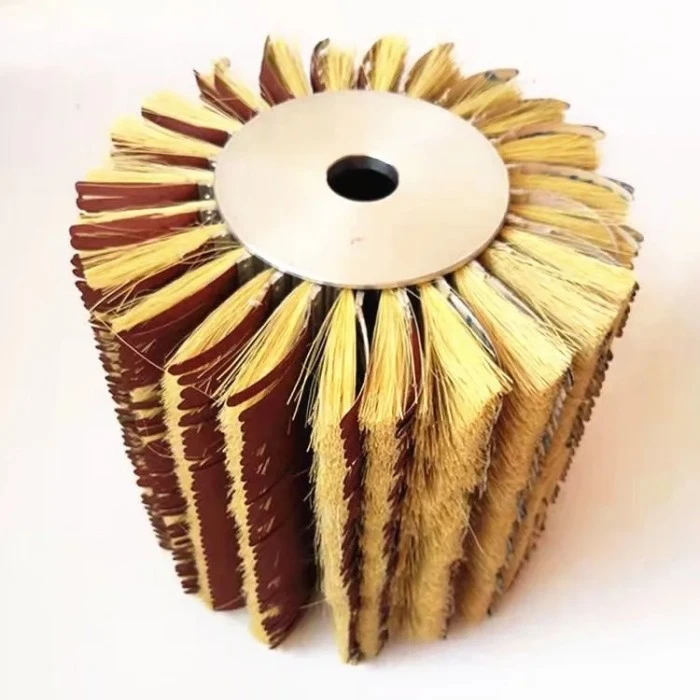
An Abrasive Wood Brush — Sisal Roller Brush for Wood & Metal configuration can suit different finishing applications, provided its abrasive material and construction are appropriate for the substrate. Manufacturers should generally use separate brushes for wood and metal to avoid transferring particles and contaminating the surface.
Operators must not run a brush above the maximum speed set by its manufacturer. Guards must be fitted, dust extraction must be used, and the equipment needs to be inspected. Operators also need proper training. A brush showing uneven wear, damaged segments, loose parts, or heavy contamination should be assessed without delay.
Sandpaper Brush vs. Traditional Sandpaper: Key Differences
Traditional sandpaper works well on flat surfaces, small batches, and localized corrections. It gives the operator direct control, but the manual finish may vary with the pressure applied, the direction of sanding, and the amount of time spent on the work.
A rotary sandpaper brush repeatedly conforms to edges, grooves, and profiles. Properly integrated into an industrial process, it can make production more consistent and reduce the need for hand sanding.
| Selection Factor | Sandpaper Brush | Traditional Sandpaper |
| Complex profiles | Conforms to curves and recessed areas | Must be folded or adjusted by hand |
| Production consistency | Allows repeatable machine settings | Relies heavily on operator technique |
| Throughput | Works well for continuous processing | More suitable for limited or corrective tasks |
| Material removal | Controlled by grit and contact depth | Depends largely on hand pressure |
| Setup requirements | Requires matching dimensions and speed | Needs minimal equipment preparation |
Neither option completely replaces the other. Many manufacturers use machine brushes for consistent production and turn to traditional sheets or pads for final touch-ups in hard-to-reach areas.
Frequently Asked Questions
What specifications should a buyer provide before requesting a quotation?
Before requesting a quotation, the buyer should provide the machine model, shaft diameter, keyway details, maximum brush diameter, working width, rotation speed, material, and target finish.
How should a production team determine the correct operating speed?
First, the team should review the speed limits set by the equipment manufacturer. It can then run controlled trials on representative production parts to confirm the appropriate contact pressure and feed rate.

Should a factory use the same brush for wood and metal?
Separate brushes are the better choice. Metal particles can contaminate wood surfaces, affect coatings, accelerate wear, and make a consistent finish more difficult to achieve.