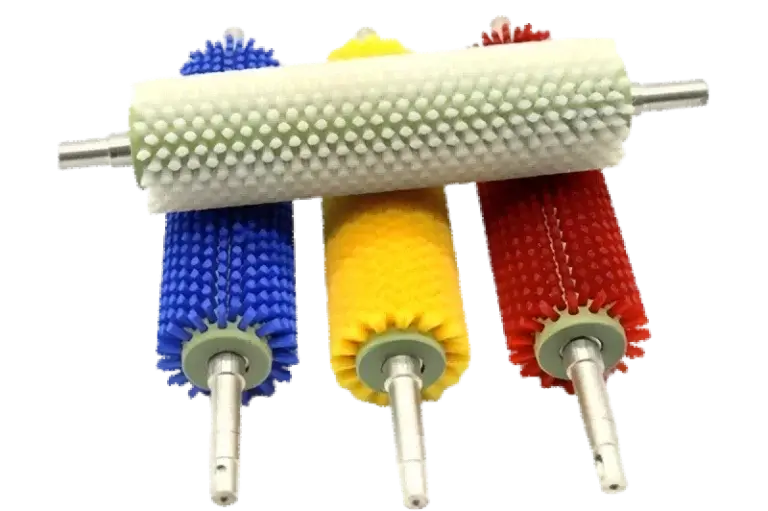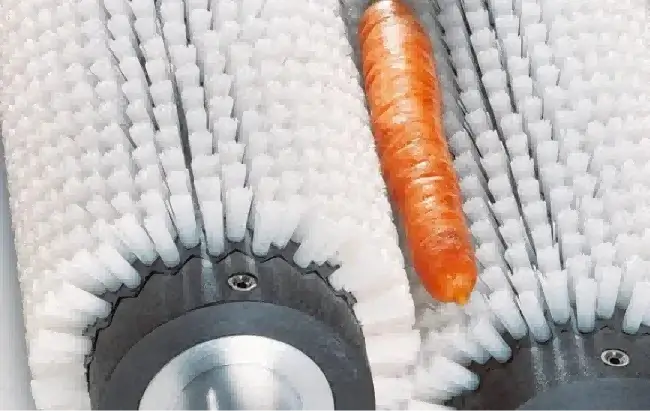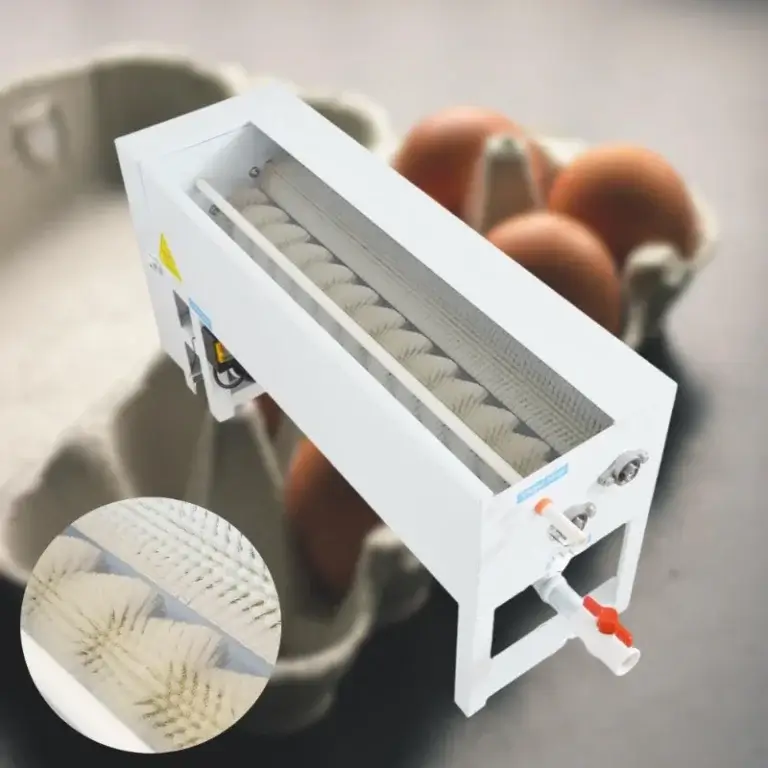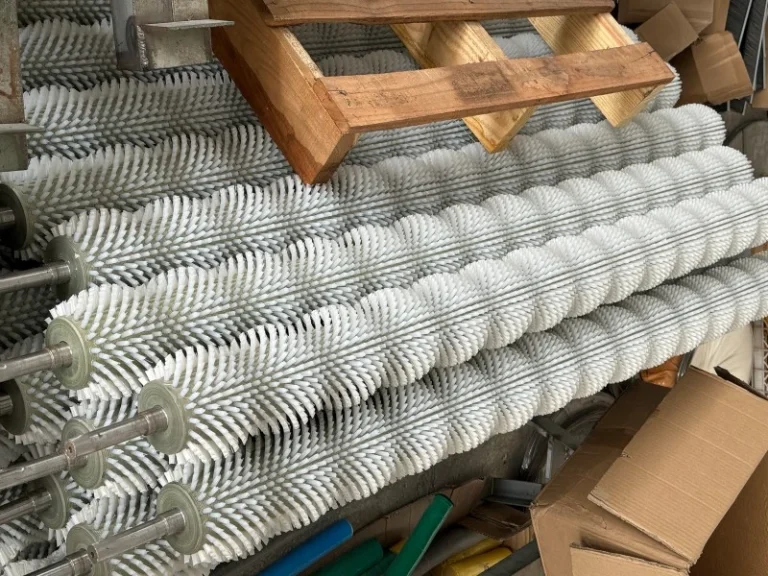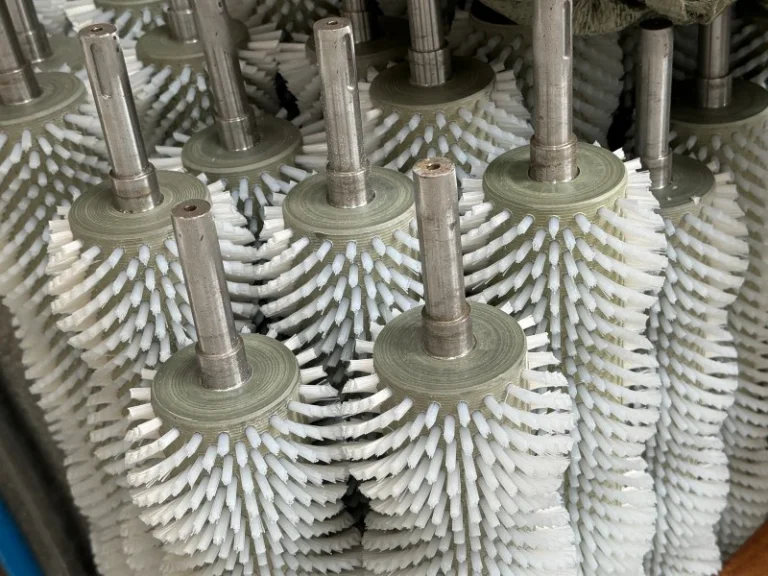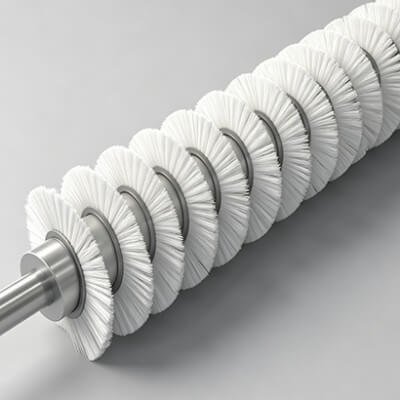
Ginger’s irregular shape, packed with knobs, deep folds, and fragile buds, makes it one of the most challenging root vegetables to clean on an industrial line. A standard roller brush leaves dirt stuck in the tight grooves and often strips away valuable flesh. The ginger washing cylinder brush has to be chosen right with due attention to bristle pattern, material, and customization specific to the equipment. This guide breaks the core selection criteria down so that the processors can achieve thorough cleaning without unnecessary loss of product.
Three Typical Pain Points in Washing Ginger with Regular Roller Brushes
Most ginger processing units begin with common brushes and quickly realize that they just do not work. The problems usually cluster into three areas.
Straight-Bristle Rollers Cannot Reach Deep Root Crevices
Conventional straight-filament brushes keep a uniform surface profile, and they work well with smooth produce such as potatoes or carrots. The ginger has deep folds, forked joints, and recessed pockets where clay and sand stick firmly. These straight bristles only glide over such areas, leaving residual soil; downstream quality and food safety standards would be compromised.
Wrong Bristle Material or Grit Scratches Buds and Flesh
Some people prefer harder bristles or abrasive rollers; however, this is not recommended because hard filaments will scratch tender buds, open surface wounds, and hasten spoilage in storage. Soft bristles do not remove caked dirt. The proper material and grit range are equally important, along with the correct brush geometry. In potato peeling loss, which is a significant problem for processors, it is the same issue—the balance between removal force and the preservation of the product.
Off-the-Shelf Brushes Fail to Match Specialized Equipment
In the industry, ginger washing machines vary greatly in roller diameters, shaft lengths, rotational speeds, and spacings. A generic catalog brush rarely provides the right contact pressure or coverage. Space gaps between the brush and the surface of the product will decrease the efficiency of cleaning; as such, too much compression will crush fragile buds.
This problem can be solved step by step in a logical sequence: first, choose the right bristle geometry; then, match the material to the task, and lastly, adjust dimensions to the production line.
Opt for Wave-Pattern Brushes Over Straight-Bristle Rollers
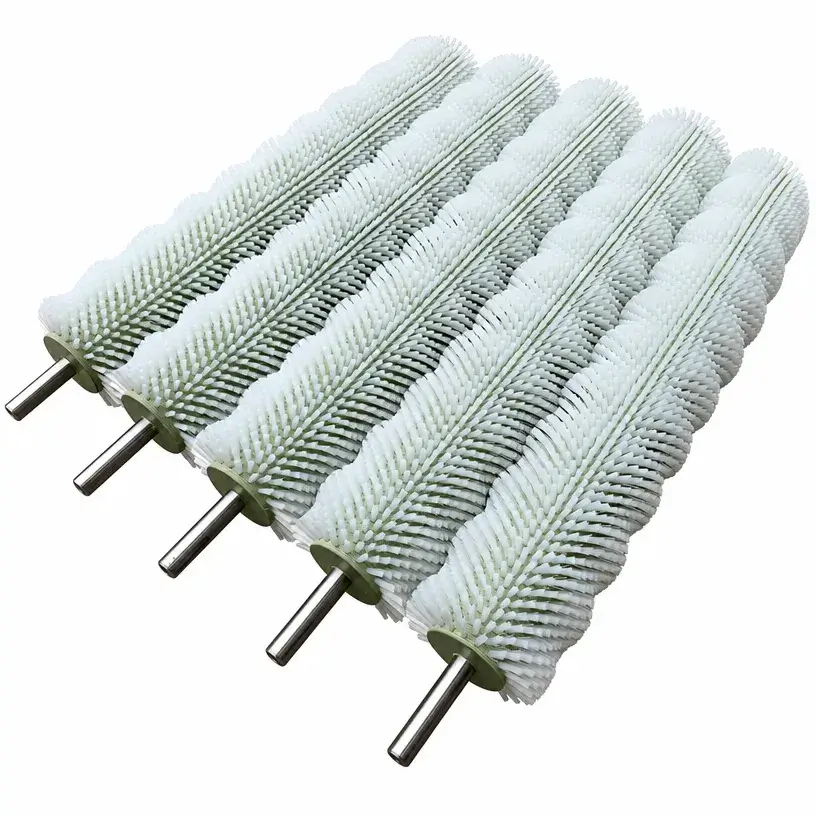
The main advantage is the high and low contact areas, which conform to the irregularities of ginger more closely than flat bristle rows. Other advantages include: The tips of the bristles can reach the recessed grooves and joint crevices where dirt is hidden. The varying pressures on the undulating surface are firm on ridges, soft in hollows, and reduce damage to buds. Improved water channels between the peaks of the waves will flush away the loosened debris faster.
A wave-pattern Vegetable Cleaning Brush is a quick win for better quality washing, the moment it replaces a straight filament roller in any root vegetable operation.
Choose Brush Material Based on Cleaning/Peeling Workflow
This is because the ginger and turmeric processes have been split into two separate operations: one workflow needs one set of brush specs, the other requires a different set.
For cleaning only (skin-on ginger):
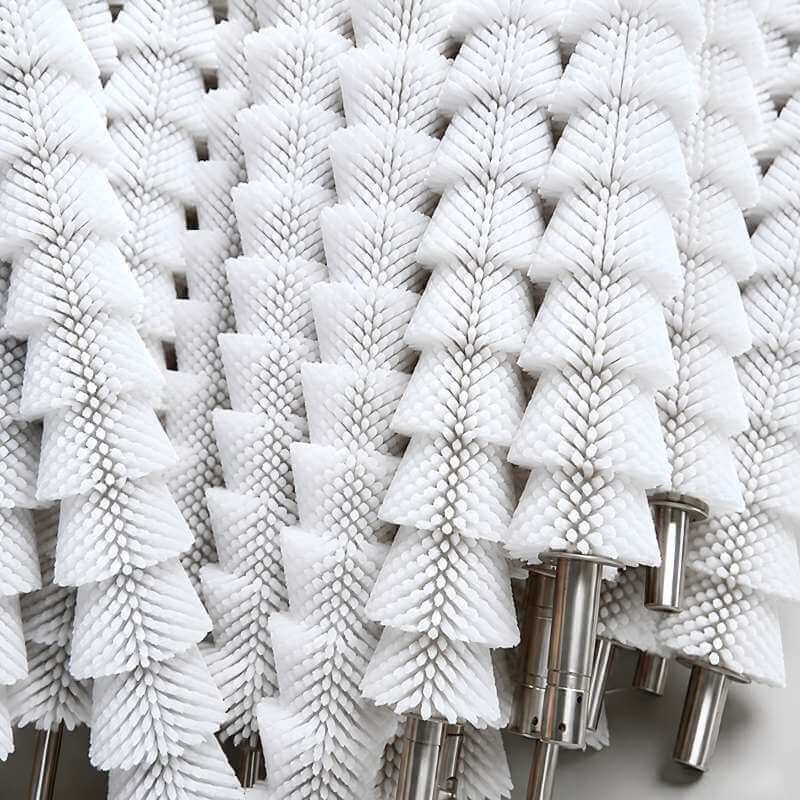
Opt for a high-density PA612 nylon wave-pattern roller, with filament diameters between 0.35 mm and 0.40 mm. PA612 offers good chemical resistance and high rebound elasticity. A stiff nylon cylinder brush in this range will effectively scrub away embedded soil while keeping the skin and buds intact.
For peeling (e.g., turmeric for curcumin extraction):
For example, turmeric for curcumin extraction. Select a 120 – 180 silicon carbide (SiC) abrasive roller brush. This grit range will scrape off the tough outer layer without making gashes in the inner flesh.
| Parameter | Cleaning Only (Skin-On) | Peeling (Skin Removal) |
| Recommended Material | PA612 Nylon | SiC Abrasive Nylon |
| Filament Diameter | 0.35 – 0.40 mm | 0.50 – 0.80 mm |
| Grit Range | N/A | 120# – 180# |
| Bristle Pattern | Wave-pattern, high density | Wave-pattern, medium density |
| Primary Goal | Remove the soil while keeping the skin intact | Remove the skin and keep the flesh intact |
| Example Application | Fresh ginger for retail | Turmeric for extract processing |
Processors looking at strong Vegetable Cleaning Brush options for wider root vegetable lines will find this material framework equally applicable.
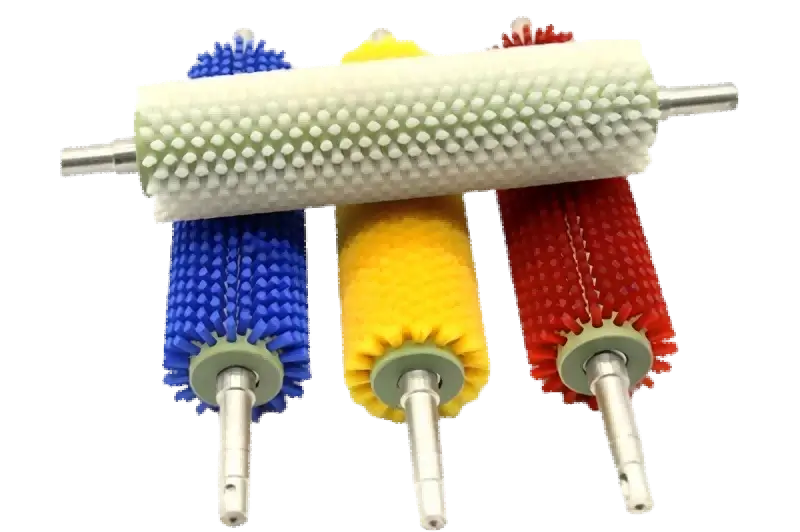
Custom-Order Wave Depth and Bristle Specs for Your Production Line
Even after selecting the right pattern and material, standard dimensions rarely deliver peak performance. The most effective approach involves partnering with a professional brush manufacturer to customize:
- Wave amplitude and pitch — to the mean depth of the crevice in the target ginger variety.
- Roller diameter and face length — to the cradle of the washer for even pressure contact.
- Bristle density and trim height — to the speed of the line and the volume of water.
This 1:1 customization ensures that each bristle row will intersect the product at the correct angle and with the appropriate force. Other plants that want to look into roller selection for other products should also go back to guidance on how to select the right fruit cleaning brush and how to choose a cylinder cleaning brush so that they can do the same thing across their lines.
Ginger Washing Cylinder Brush vs. Standard Straight-Bristle Vegetable Brush
| Feature | Wave-Pattern Ginger Brush | Standard Straight-Bristle Brush |
| Crevice Penetration | Deep—follows irregular contours | Shallow—skips recessed areas |
| Bud Damage Risk | Low—variable pressure zones | Higher—uniform rigid contact |
| First-Pass Soil Removal | 95%+ (typical) | 70-80%, often requires re-wash |
| Material Options | PA612 nylon / SiC abrasive | Generic PP or PBT |
| Customization Level | Full: wave depth, density, diameter | Limited: catalog sizes only |
| Best Suited For | Ginger, turmeric, galangal | Smooth-skinned root vegetables |
Processors with mixed product lines usually keep both types of rollers in their inventory and change sets according to the daily product run. However, for dedicated ginger or turmeric lines, the wave-pattern ginger washing cylinder brush proves much better.
Frequently Asked Questions
Q1: Can one brush roller do both ginger cleaning and peeling?
Not really. Cleaning requires soft PA612 nylon to keep the skin intact; peeling needs SiC abrasive grit. Use separate rollers for each job.
Q2: What is the typical replacement frequency for wave-pattern ginger brush rollers?
Answer: It depends on daily throughput and water quality. In general, most facilities would replace nylon cylinder brushes every three to six months.
Q3: What specifications should buyers provide when placing an order for custom ginger brush rollers?
What should be the diameter and face length of the supply rollers? What type of shaft, machine RPM, and target ginger variety should buyers specify? An excellent manufacturer will suggest the best wave depth and bristle parameters. When sourcing a stiff nylon cylinder brush for ginger processing, providing these details ensures optimal cleaning performance.