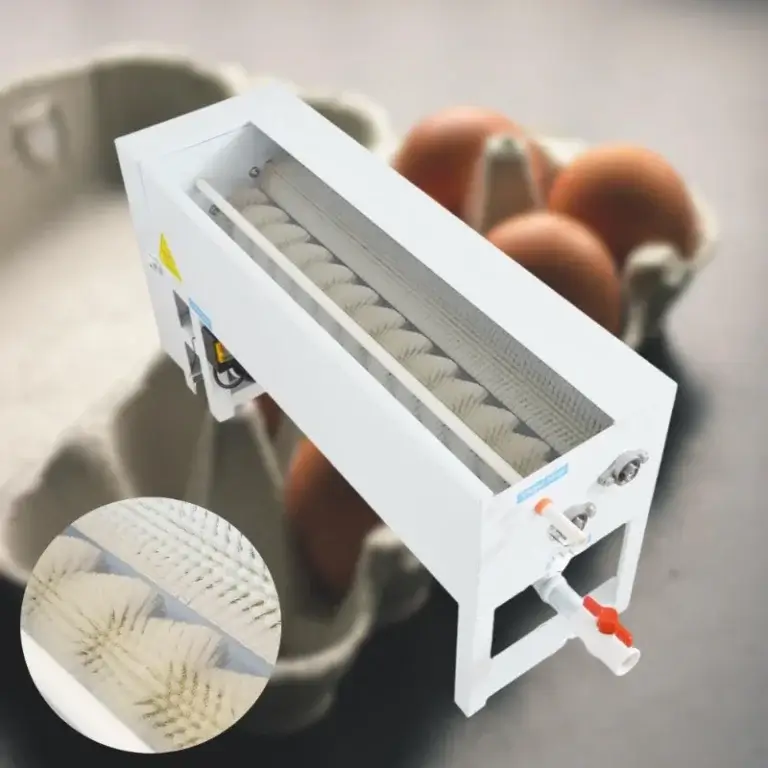
The High Stakes of Carrot Skin Integrity in Processing
In the fresh produce processing industry, carrots are among the most widely handled root vegetables, moving through washing lines at rates exceeding 10 tons per day in large-scale facilities. Despite their sturdy appearance, carrots possess a relatively thin outer skin layer that is highly susceptible to abrasion, scuffing, and peeling during mechanical washing. When this protective skin is compromised, the underlying flesh becomes exposed to air, leading to accelerated moisture loss, oxidative browning, and reduced shelf life. Processing plant managers and quality control teams consistently report that skin damage sustained during the washing stage is among the top three causes of product downgrades and customer rejections in the carrot supply chain. A well-designed washing system, equipped with an appropriate vegetable cleaning brush, can make the difference between premium-grade produce and significant financial loss.
How Soft Nylon Bristles Prevent Abrasion
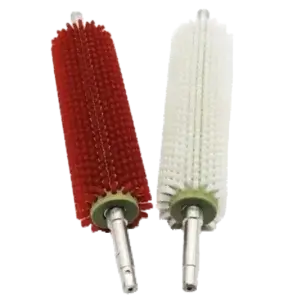
The softness of the bristles on a nylon roller brush is the single most critical factor in preventing carrot skin damage during mechanical washing because softer bristles, typically in the 50HA to 70HA Shore hardness range, flex upon contact with the carrot surface rather than scraping or gouging it. This flexibility allows the brush to remove soil, clay, and debris through a gentle wiping and flicking action while preserving the intact epidermis. When combined with proper water pressure and optimized roller speed, a soft-bristle vegetable cleaning brush achieves effective cleaning without the microabrasions that hard bristles inevitably cause on delicate root vegetable surfaces.
Balancing Soil Removal with Cosmetic Quality
Industrial carrot washing operations face a persistent challenge: achieving thorough soil removal while maintaining the cosmetic quality of the final product. The demand for visually perfect carrots in retail markets means that any visible scratch, nick, or peeled patch can relegate otherwise fresh produce to lower-priced processing grades. This quality pressure drives the need for precision-engineered cleaning solutions where bristle softness is carefully calibrated to match the specific characteristics of carrots. The following discussion examines the relationship between brush bristle properties and carrot skin preservation, exploring material science, operational parameters, and practical guidelines for selecting and maintaining the ideal nylon cylinder brush for root vegetable processing lines.
Understanding Bristle Softness and Carrot Skin Protection
The Science of Bristle Hardness and Epidermal Damage
Bristle softness directly determines the mechanical interaction between the brush and the carrot surface. Soft bristles with a Shore hardness rating of 50HA to 70HA deform on contact, distributing force across a larger surface area and preventing concentrated pressure points that would otherwise rupture the delicate epidermal cells. In contrast, hard bristles rated above 80HA maintain their rigidity and act like miniature scrapers, removing soil aggressively but simultaneously abrading the carrot skin.
Carrot skin is composed of a single layer of epidermal cells covered by a thin cuticle. This structure, while effective at retaining moisture and blocking pathogens in the field, measures only a few cell layers in thickness. When a stiff bristle tip strikes this surface at the rotational speeds typical of commercial washing drums, the impact force concentrates on an area smaller than a square millimeter. The result is a micro tear that may be invisible to the naked eye during processing but becomes apparent within hours as the exposed tissue oxidizes and darkens. Research conducted by food processing equipment engineers has demonstrated that soft bristle configurations reduce epidermal damage rates to below two percent, whereas hard bristle setups can cause visible skin loss on fifteen percent or more of the processed carrots.
The Gentle Flicking Mechanism of Soft Filaments
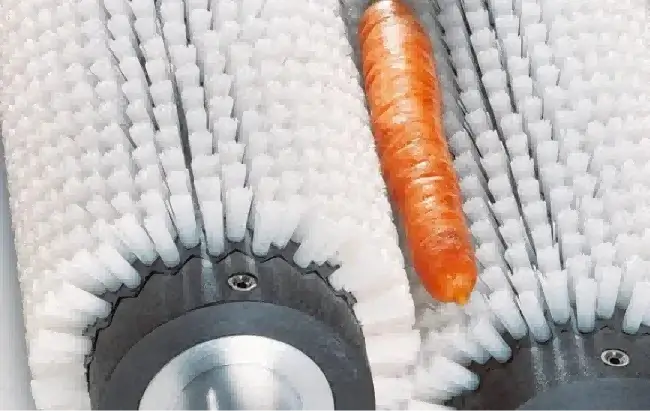
The mechanism by which soft bristles clean without damaging is fundamentally different from the abrasive action of hard bristles. Soft filaments bend backward as they encounter the carrot surface, then snap forward after passing over it. This flicking motion dislodges soil particles, clay clumps, and organic debris without the bristle tip ever dragging across the skin with significant force. The cleaning action becomes one of repeated gentle taps and sweeps rather than scraping. A nylon roller brush with properly selected softness parameters, therefore, acts as a high-speed cleaning device that respects the natural protective barrier of the vegetable. This principle applies equally to other delicate produce items, making a well-specified fruit cleaning brush versatile across multiple processing applications.
Operational ROI and Quality Improvements
The practical implications for processing facilities are substantial. Facilities that transition from hard to soft bristle configurations on their carrot washing lines typically report measurable improvements in several quality metrics. Pack-out rates for premium-grade carrots increase, moisture loss during storage decreases, and customer complaint rates related to appearance defects decline. These gains translate directly to improved profitability, as premium-grade carrots command significantly higher market prices than processing-grade produce. Investing in the correct vegetable cleaning brush specification represents one of the highest-return operational changes available to carrot processors.
The Science Behind Nylon Roller Brush Design for Root Vegetable Washing
Key Material Properties: Diameter, Length, and Composition
The design of an effective nylon roller brush for root vegetable washing balances three key material properties: filament diameter, bristle length, and polymer composition. Filament diameters between 0.15mm and 0.30mm provide the optimal combination of flexibility for skin protection and stiffness for soil removal. Longer bristles, typically 30mm to 50mm, offer greater deformation range and gentler contact, while the choice of nylon grade (PA6, PA66, or PA612) determines moisture absorption, wear resistance, and food safety compliance.
Why Nylon Dominates Food Processing Brushes
Nylon has become the dominant material for food processing brushes due to its unique combination of properties. Unlike natural fibers such as horsehair or tampico, nylon filaments do not absorb significant amounts of water during continuous wet operation. This dimensional stability ensures that bristle softness remains consistent throughout a production shift, rather than changing as fibers swell and soften with moisture uptake. Nylon PA6 offers good abrasion resistance at a moderate cost, making it suitable for standard vegetable washing applications. Nylon PA66 provides higher temperature tolerance, beneficial for facilities that use hot water sanitization cycles. Nylon PA612, sometimes sourced with FDA-compliant formulations, delivers the best moisture resistance and bending recovery among common nylon grades, maintaining its original stiffness even after millions of flex cycles in wet environments.
Core Construction and Filament Density
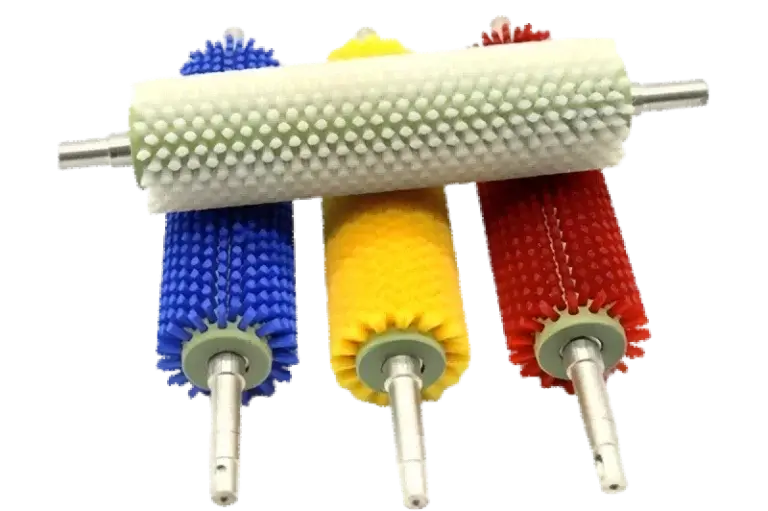
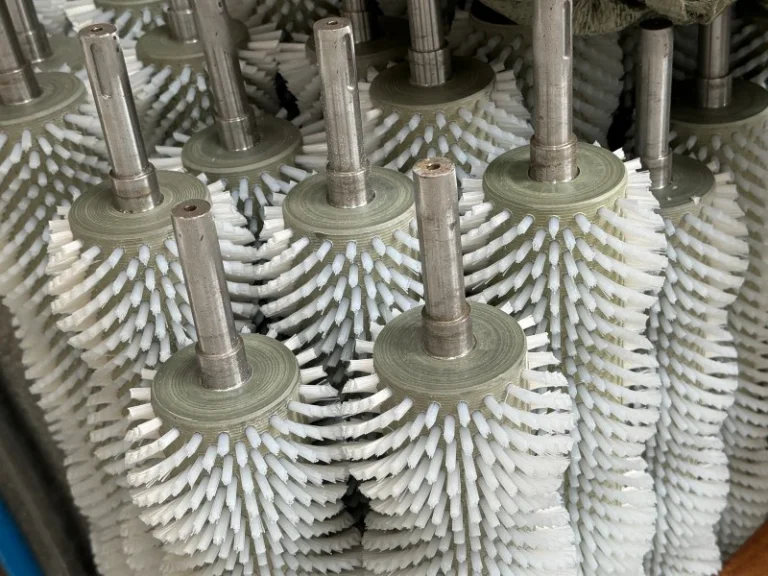
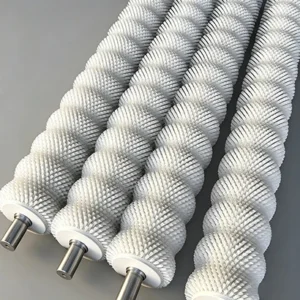
A nylon cylinder brush achieves its cleaning performance through the collective action of thousands of individual filaments arranged in a helical or straight pattern around a central core. The density of these filaments, measured as the number of bristles per square centimeter of core surface, determines both cleaning coverage and the force exerted on each carrot. Higher density configurations distribute the cleaning load more evenly, reducing the pressure any single bristle applies to the skin. Manufacturers can also produce brushes with crimped or wavy filaments, which create additional contact points and improve the capture and removal of fine soil particles. The core material, typically stainless steel or food-grade polymer, must resist corrosion from constant water exposure and cleaning chemicals while maintaining precise rotational balance at operating speeds.
Advanced Trim Patterns for Enhanced Performance
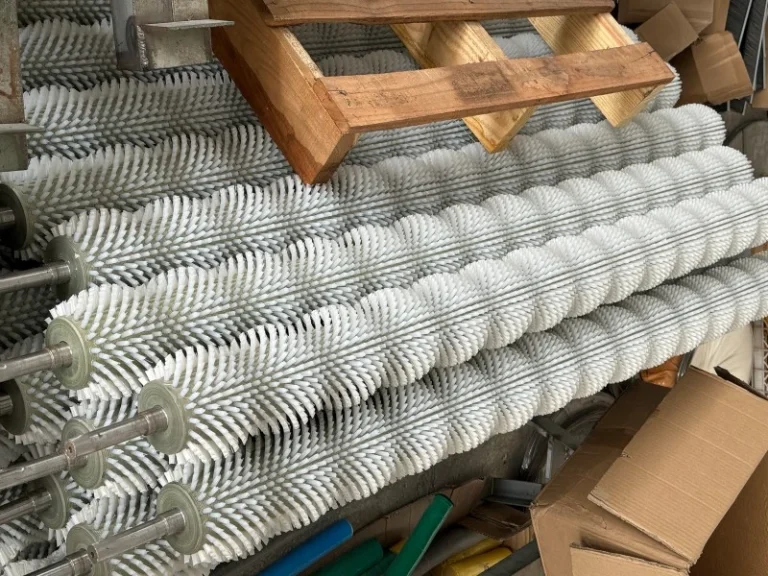
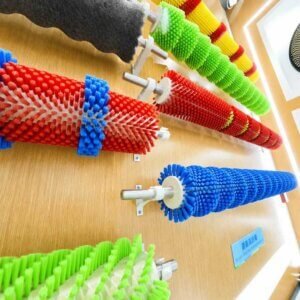
The engineering of a nylon cylinder brush extends beyond simple material selection. Bristle trim patterns affect how carrots move through the washing zone. Straight trim brushes provide uniform contact along the entire roller length, while spiral-trimmed brushes create a gentle conveying action that moves carrots forward through the machine without requiring aggressive mechanical pushers. Some advanced designs incorporate alternating rows of different filament diameters within the same brush, combining the deep cleaning capability of slightly thicker filaments with the surface-protecting properties of finer ones. This hybrid approach enables a single fruit cleaning brush to handle mixed produce loads where some items require more aggressive cleaning than others.
Selecting the Correct Bristle Hardness for Carrots and Similar Produce
For carrots specifically, medium soft bristles with a Shore hardness of approximately 60HA to 70HA represent the optimal specification. This hardness range provides sufficient mechanical energy to dislodge field soil, clay, and organic residues while remaining compliant enough to flex rather than scrape when contacting the carrot surface. Processors handling carrots destined for fresh market retail should bias toward the softer end of this range, while those processing carrots for further cutting or peeling operations can consider slightly firmer configurations.
The relationship between bristle hardness and product type follows well-established guidelines that processing engineers have refined through decades of operational experience. The following table summarizes recommended hardness ranges for common produce categories:
Modern carrot washing lines increasingly incorporate sensors and automated controls that adjust these parameters in real time based on incoming product conditions. Vision systems can assess soil load on entering carrots and modulate washing intensity accordingly, applying higher speeds or longer residence time only when necessary. This adaptive approach minimizes the total mechanical energy delivered to each carrot, preserving skin integrity while ensuring consistent cleaning outcomes across variable field conditions. Integrating such controls with a high-quality vegetable cleaning brush maximizes both product quality and operational efficiency.
Maintenance Practices for Long-Lasting Vegetable Cleaning Brush Performance
The Critical Link Between Maintenance and Skin Protection
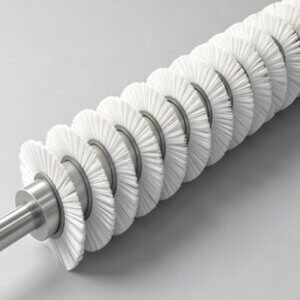
Regular inspection and maintenance of nylon roller brush assemblies directly affect both cleaning performance and carrot skin protection. Worn, matted, or contaminated bristles lose their designed flexibility and begin behaving like harder bristles, increasing skin damage risk. A structured maintenance program that includes daily visual inspection, weekly deep cleaning, and scheduled brush rotation or replacement ensures consistent bristle softness throughout the service life of the brush.
Recognizing Wear Patterns and Chemical Degradation
Bristle wear follows predictable patterns in carrot washing applications. The leading edges of filaments that first contact carrots experience the highest mechanical stress and show wear first. Over time, filament tips can develop microscopic fractures or flattening that reduces their ability to flick soil away effectively. More critically, worn bristles may develop a permanent set or bend in one direction, causing them to strike the carrot surface at a less favorable angle and increasing the effective contact pressure. Facilities should inspect a nylon cylinder brush weekly for signs of filament tip wear, matting, or uneven bristle distribution, replacing individual brushes or entire roller sets when wear exceeds acceptable thresholds.
Chemical factors also influence bristle longevity. Chlorine-based sanitizers, commonly used in food processing environments, can degrade nylon polymers over extended exposure. Acidic cleaning solutions may accelerate this degradation. After sanitization cycles, brushes should be thoroughly rinsed with clean water to remove residual chemicals. Storing brushes in a dry, well-ventilated area when not in use prevents mildew growth and extends filament life. Some facilities rotate multiple brush sets through their washing lines, allowing each set adequate drying time between uses.
A Systematic Maintenance Schedule for Optimal Performance
A systematic maintenance schedule for a fruit cleaning brush or vegetable cleaning brush includes the following checkpoints:
Daily inspections should verify that no foreign objects such as stones, metal fragments, or plant debris have become lodged between bristles. Operators should also confirm that all spray nozzles are clear and delivering water evenly across the brush surface. Weekly cleaning should use low-pressure water and soft brushes to remove accumulated soil and biofilm from between filaments, taking care not to bend or deform bristles during the process. Monthly measurements of bristle length at multiple points along each roller provide quantitative data for tracking wear rates and predicting replacement timing.
The Economic Case for Proactive Brush Maintenance
The economic case for proactive maintenance is compelling. A worn vegetable cleaning brush not only damages product but also consumes more water and energy as operators compensate for reduced cleaning efficiency with longer run times and higher pressures. Tracking the cost per ton of carrots processed through each brush set reveals the optimal replacement interval, which typically falls between 800 and 1500 operating hours depending on brush quality, soil conditions, and maintenance diligence. Facilities that implement structured maintenance programs consistently achieve longer brush service life, lower product damage rates, and reduced total cost of ownership for their washing equipment.
Conclusion
The relationship between bristle softness and carrot skin preservation in mechanical washing systems is both scientifically grounded and operationally proven. A properly specified nylon roller brush with soft to medium bristles in the 55HA to 70HA range protects the delicate carrot epidermis while achieving thorough soil removal, provided that complementary operational parameters, including roller speed, water pressure, and residence time, are correctly calibrated. The material properties of nylon filaments, particularly their moisture resistance and bending recovery characteristics, make them the preferred choice for vegetable and fruit cleaning applications where consistent performance and food safety compliance are non-negotiable requirements.
Processing facilities seeking to improve carrot quality outcomes should approach brush specification as a strategic decision rather than a commodity purchase. Evaluating bristle hardness against the specific requirements of each product type, investing in a high-quality nylon cylinder brush with appropriate filament diameter and density, and implementing structured maintenance programs all contribute to measurable improvements in product grade distribution and customer satisfaction. For carrots destined for premium fresh markets, the investment in the correct soft-bristle vegetable cleaning brush returns value many times over through reduced downgrades, extended shelf life, and stronger buyer relationships.
The principles discussed here extend naturally to other delicate produce items. A thoughtfully selected fruit cleaning brush applying the same softness principles protects apples, pears, citrus, and similar products from the cosmetic damage that erodes market value. As processing line speeds increase and quality expectations rise across the fresh produce industry, the role of precision-engineered nylon roller brush technology in delivering both cleaning efficacy and product protection will only grow in importance. Processing engineers and quality managers who master the interplay between bristle softness, machine parameters, and product characteristics position their operations for sustained success in an increasingly competitive market.
FAQ
Q1: How often should nylon roller brushes be replaced?
Replacement intervals depend on bristle quality, soil load, operating hours, and maintenance frequency. Generally, replacement is recommended every 800–1,500 operating hours. However, brushes should be replaced sooner if bristle tips show visible wear, matting, permanent bending, or reduced cleaning efficiency. Measuring bristle length monthly and tracking wear rates helps predict the optimal replacement time.
Q2: Are nylon brush filaments food-safe?
Yes. Nylon filaments used in food processing brushes typically need to comply with FDA or EU food-contact material regulations. PA612 grades are often available with FDA-compliant formulations and are suitable for direct food contact. When purchasing, request food-contact compliance certificates from suppliers and confirm the filaments are non-absorbent, shed-resistant, and resistant to cleaning chemicals.
Q3: Can soft nylon roller brushes clean other root vegetables?
Yes, but specifications should be adjusted based on skin hardness. For example, sweet potatoes recommend 60HA–70HA, while potatoes recommend 70HA–85HA. If one brush set handles multiple vegetables, a medium-soft brush around 65HA can serve as a compromise, though it won’t perform as well as a configuration optimized for a single crop. Keeping multiple brush sets with different hardness ratings and swapping them by production schedule is recommended.
Q4: How do I know if the bristle hardness suits my carrot variety?
Start by testing at the lower end of the recommended range, such as 55HA–60HA, and check for scratches, browning, or peeled patches after washing. If soil removal is insufficient, gradually increase hardness or adjust roller speed and water pressure. Carrot skin strength can vary by variety, origin, and season, so re-evaluating each season is advisable.
Q5: Can nylon roller brushes be repaired or re-trimmed?
Not recommended. Worn or deformed bristles cannot regain their original softness and flexibility through trimming. Re-trimming can cause uneven bristle length, disrupt balance, and even increase skin damage risk. Once bristle wear exceeds acceptable limits, replace individual brushes or the entire roller set to ensure consistent cleaning and product quality.