
In modern vegetable processing lines, the carrot washing stage plays a critical role in determining both product quality and operational efficiency. Carrots arrive from the field coated in soil, clay, and organic debris, and removing these contaminants without damaging the delicate skin of the root vegetable demands the right combination of water pressure, mechanical agitation, and brush material. Among the many design decisions that engineers and plant managers face when specifying or upgrading a carrot washing machine, one of the most consequential is the choice of bristle material for the roller brushes that make direct contact with the produce. The two most common options are polypropylene (PP) and nylon, and each brings a distinct set of physical properties, wear characteristics, and cost implications to the table.
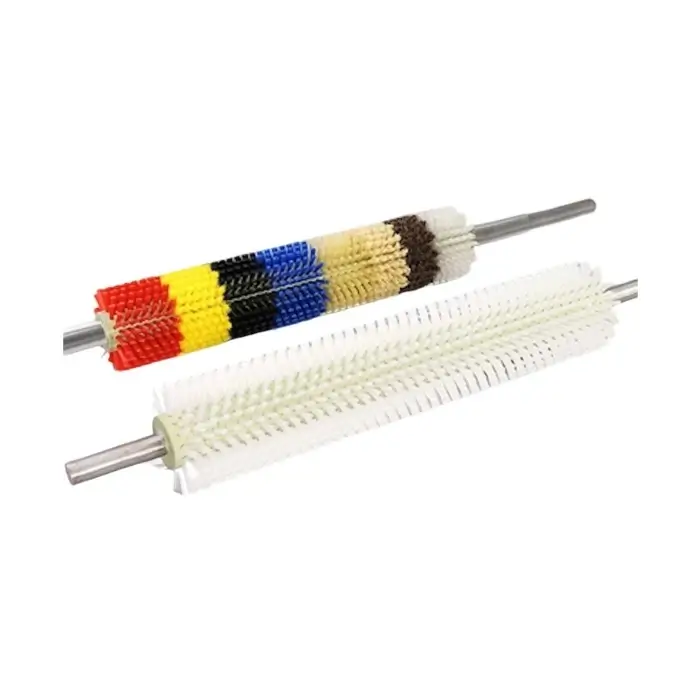
Industrial vegetable washing systems increasingly rely on high-performance nylon roller brush assemblies to achieve consistent cleaning results across high-volume production runs. For operations that process carrots alongside other produce items, the same brush selection criteria apply to any vegetable cleaning brush or fruit cleaning brush used in the line. In many integrated washing and grading systems, brushes are also deployed as conveyor belt cleaning brush components, making material compatibility a consideration that extends beyond the primary wash zone.
The short answer is that nylon bristles generally outperform PP bristles in carrot washing applications due to superior abrasion resistance, better water absorption characteristics, and longer service life under continuous wet operating conditions. However, PP bristles remain a viable choice for budget-conscious operations or lighter-duty washing tasks where replacement frequency is less of a concern.
Choosing the right brush material is not as simple as declaring one option universally better than the other. The optimal selection depends on factors such as washing throughput, water temperature, the presence of chemical cleaning agents, and the specific soil conditions of the incoming crop. In the following sections, we will examine the physical properties of both materials, compare their performance in wet food processing environments, analyze their cost profiles over a full lifecycle, and offer practical guidance for making the right decision for your specific operation. Whether you are designing a new wash line, retrofitting an existing system, or simply evaluating whether to switch from one material to another, this detailed comparison will provide the information you need.
Material Properties of PP and Nylon Bristles
Polypropylene bristles are lighter, more chemically resistant, and less expensive to manufacture, while nylon bristles offer greater tensile strength, higher heat tolerance, and superior fatigue resistance, making nylon the mechanically more durable option for continuous-use industrial applications.
Understanding the fundamental differences between PP and nylon begins with their molecular structures. Polypropylene is a thermoplastic polymer composed of propylene monomers, characterized by a semi-crystalline structure that gives it good chemical resistance and a low density of approximately 0.90 to 0.91 g per cubic centimeter. In brush filament form, PP bristles are typically stiffer than nylon bristles of the same diameter at room temperature, but this stiffness comes at the cost of reduced flexibility and lower resistance to repeated bending. PP bristles also exhibit a relatively low melting point of around 160 degrees Celsius, which is adequate for most ambient-temperature washing applications but can become a limiting factor if hot water or steam cleaning is part of the sanitation protocol.
Nylon, specifically Nylon 6 and Nylon 6/6 variants commonly used in industrial brush manufacturing, is a polyamide with a more ordered molecular structure that translates into higher tensile strength (typically 75 to 85 MPa for Nylon 6/6, compared to approximately 30 to 40 MPa for PP). Nylon bristles have a density of around 1.13 to 1.15 g per cubic centimeter, making them notably denser than PP filaments. This higher density contributes to greater wear resistance and better shape retention over extended use. Nylon also absorbs a small amount of water (typically 2 to 3 percent by weight at saturation for Nylon 6), which actually improves its flexibility and impact resistance in wet conditions. The table below summarizes the key physical property differences between these two brush filament materials.
The water absorption characteristic of nylon deserves special attention in the context of vegetable washing. Because a vegetable cleaning brush operates in a perpetually wet environment, the slight swelling of nylon filaments upon water uptake can actually be beneficial — it softens the bristle tips slightly, reducing the risk of surface abrasion on sensitive produce like carrots, while maintaining enough backbone to dislodge stubborn soil. PP, by contrast, absorbs virtually no water and maintains a consistent stiffness whether wet or dry, which can be either an advantage or a disadvantage depending on the specific cleaning requirement. For a fruit cleaning brush used on softer-skinned produce such as tomatoes or stone fruits, the water-softened nylon tips provide a gentler cleaning action that PP cannot replicate without reducing filament diameter, which in turn shortens brush life.
Performance Comparison in Wet Vegetable Washing Environments
In continuous wet operation, nylon roller brushes demonstrate 2 to 3 times longer service life than PP brushes of equivalent filament diameter and density, primarily due to nylon’s superior resistance to abrasive wear from soil particles and its better recovery from repeated bending deformation.
When evaluating brush performance in a carrot washing machine, the primary metrics are cleaning efficacy, produce damage rate, and service life. Field data from vegetable processing facilities indicates that a well-designed nylon roller brush assembly can effectively process carrots for 1,500 to 2,500 operating hours before filament wear reaches the point where cleaning performance degrades below acceptable levels. PP brushes performing the same task in identical conditions typically require replacement after 600 to 1,000 hours, representing a significant difference in operational uptime and maintenance labor.
The mechanism behind this difference is multifaceted. Abrasive soil particles, particularly silica-based sand and clay, act as a grinding medium between the brush filaments and the carrot surface. Nylon’s higher abrasion resistance means that filament diameter reduction occurs at a slower rate. Additionally, the brushing action in a roller system involves continuous flexing as filaments enter and exit the contact zone with the product. Nylon’s superior fatigue resistance means it can endure millions of these flex cycles without developing stress cracks that eventually lead to filament breakage. PP filaments, while initially stiff and effective, tend to lose their shape and resilience more quickly under these conditions.
The performance of a conveyor belt cleaning brush in the same processing line offers a useful parallel. These brushes, which are tasked with removing debris from the belt surface rather than cleaning produce directly, face similar abrasive conditions. Operators who have switched from PP to nylon for their belt cleaning applications frequently report extended maintenance intervals and more consistent cleaning performance throughout the brush life cycle. The lessons learned from belt cleaning applications reinforce the case for nylon in direct produce contact roles, though the specific filament diameter and trim length must be adjusted to suit each application.
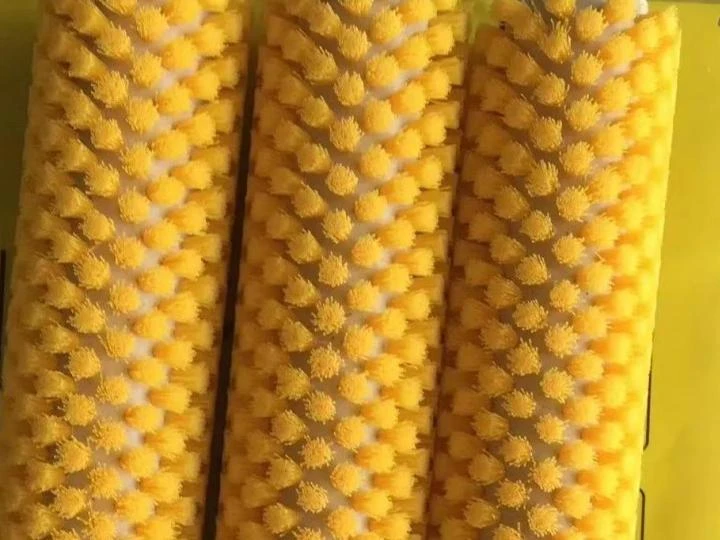
Cleaning efficacy itself is influenced by bristle stiffness, tip geometry, and the brush’s ability to maintain these characteristics over time. PP bristles, being stiffer when dry, may initially provide more aggressive scrubbing action, which could be an advantage for heavily soiled carrots. However, this initial advantage diminishes as the bristles wear and lose stiffness. Nylon bristles offer a more consistent cleaning performance curve, with gradual degradation rather than a sharp drop-off. For operations processing a mix of vegetables and fruits, a nylon-based fruit cleaning brush with appropriately selected filament properties can handle the range of produce types without requiring material changes between runs, simplifying inventory and maintenance.
Cost Analysis: Upfront Price vs Lifecycle Value
Although PP brushes cost 30 to 50 percent less per unit than equivalent nylon brushes, the total cost of ownership over 12 months typically favors nylon by 15 to 30 percent when factoring in replacement frequency, labor, and production downtime.
Procurement decisions in food processing are often driven by immediate budget constraints, which naturally draw attention to the lower unit price of PP brush rollers. A typical PP brush roller for a mid-sized carrot washing machine might cost anywhere from $40 to $120 per roller, depending on dimensions and filament specifications. An equivalent nylon roller brush could range from $70 to $200 per unit. On a line that requires 12 to 24 brush rollers, the upfront difference in capital outlay can be substantial, ranging from a few hundred to several thousand dollars. This price gap understandably makes PP an attractive option for new installations or when operating under tight capital expenditure limits.
However, a comprehensive lifecycle cost analysis tells a different story. Consider a hypothetical mid-volume carrot processing line operating 2,000 hours per year with 18 roller brushes. The following table compares the estimated annual costs for both materials.
The figures above are estimates and will vary based on specific operating conditions, labor rates, and production value. However, the pattern is consistent: the higher purchase price of nylon is more than offset by reduced replacement frequency and the associated savings in labor and downtime. For operations running at or near capacity, where every hour of unplanned downtime represents lost revenue, the reliability advantage of a nylon roller brush becomes even more pronounced. A single avoided line stoppage for brush replacement can justify the material premium for an entire set of nylon rollers.
Beyond the direct cost comparison, there is also the matter of cleaning consistency and its impact on product quality. Worn PP brushes that are nearing the end of their service life may leave residual soil on carrots, increasing the burden on downstream inspection and manual sorting. Inconsistent cleaning can lead to higher rejection rates or, worse, customer complaints. While difficult to quantify precisely, the quality assurance benefit of more consistent nylon brush performance should not be overlooked in the total value equation. For processors using the same equipment to handle multiple produce types, the reliability of a nylon-based vegetable cleaning brush across different crops further strengthens the economic argument.
Selecting the Right Brush for Your Carrot Washing Line
The optimal brush material selection depends primarily on three factors: your production throughput and duty cycle, the soil characteristics of your incoming crop, and whether your line processes produce items beyond carrots that may have different surface sensitivity profiles.
Making the right choice begins with a clear assessment of your specific operating conditions and priorities. The decision is not simply a binary choice between PP and nylon — filament diameter, trim length, brush density, and roller configuration all interact with the base material to determine final performance. The following decision framework can help guide the selection process.
First, evaluate your production volume and duty cycle. Operations running single shifts with intermittent use may find that PP brushes provide adequate service life at an attractive price point. The wear mechanisms that disadvantage PP in continuous operation are less severe when brushes have time to dry between shifts and when the total annual operating hours are lower. For facilities running 2,000 or more hours per year, the nylon case becomes progressively stronger.
Second, analyze the soil characteristics of your incoming carrots. Sandy soils with high silica content are particularly abrasive and will accelerate wear on any brush material, but the differential between PP and nylon becomes larger under these conditions. Heavy clay soils that adhere strongly to carrot surfaces may benefit from the initial stiffness of PP, though this can be compensated for in nylon by specifying a slightly larger filament diameter or a different trim profile.
Third, consider your full product mix. If your wash line handles carrots exclusively, you can optimize for that single crop. But many vegetable processors run multiple products through the same equipment. A line that handles carrots, potatoes, radishes, and even some fruits will benefit from the versatility of a nylon vegetable cleaning brush or fruit cleaning brush configuration that balances cleaning efficacy with surface protection across a range of produce types. The same consideration applies to the conveyor belt cleaning brush components in your system: nylon’s consistent performance across varying conditions reduces the need for material-specific adjustments.
Maintenance and Replacement Best Practices
Regardless of whether you choose PP or nylon brushes, establishing a preventive maintenance schedule that includes regular inspection of filament wear, bearing condition, and roller alignment will extend brush life by 20 to 40 percent and prevent unexpected failures during production runs.
Even the best brush material will underperform if not properly maintained. For both PP and nylon roller brushes, the key maintenance tasks are similar, though the recommended inspection intervals may differ based on the faster wear rate of PP. A well-designed maintenance program should include daily visual inspection of brush condition, weekly measurement of filament length at multiple points along each roller, and monthly checks of bearing lubrication and shaft alignment.
When inspecting a nylon roller brush, pay particular attention to the filament tips. Nylon filaments tend to develop a flagged or split tip structure as they wear, which can actually improve cleaning action in the intermediate wear stage before eventual performance decline. PP filaments, by contrast, tend to wear more uniformly, gradually becoming shorter and less stiff without significant tip morphology changes. This difference means that a nylon brush nearing the end of its life may still be identified by a technician during routine inspection, whereas a PP brush may appear acceptable until performance suddenly drops below acceptable thresholds.
Replacement timing is critical for maintaining consistent product quality. A practical approach is to establish a minimum filament length threshold based on the original specification and replace individual rollers or the full set when this threshold is reached. For operations that demand the highest levels of food safety and quality consistency, consider implementing a condition-based replacement protocol that tracks the hours of operation for each brush roller and triggers replacement based on predetermined intervals. Many processors find that the longer service life of nylon reduces the administrative burden of managing frequent PP replacements, particularly across large installations with dozens or hundreds of brush rollers.
Summary
The choice between PP and nylon bristles for carrot washing machine roller brushes is ultimately a decision about balancing short-term procurement costs against long-term operational value. Nylon bristles, with their superior abrasion resistance, better fatigue life, and adaptive wet-performance characteristics, represent the higher-performing option that typically delivers lower total cost of ownership in medium- to high-volume operations. PP bristles remain a legitimate choice for lower-duty applications where budget constraints dominate and replacement frequency is manageable.
For most commercial carrot washing operations, a nylon roller brush will provide more consistent cleaning results and fewer interruptions over the course of a production year. The same material logic extends to any vegetable cleaning brush, fruit cleaning brush, or conveyor belt cleaning brush deployed in food processing environments where wet abrasive conditions are the norm. By carefully assessing your specific throughput requirements, soil conditions, and product mix, you can make an informed material selection that supports both your operational goals and your bottom line.