Every drilling or milling pass leaves a burr where the cutting tool could not reach: the exit edge of a through hole, the intersection of two bores, the crest of a thread. Those internal burrs resist rigid deburring tools, so production often ends with an operator, a scraper, and a magnifier. Because a burr concentrates stress at the hole edge, it has to come out, and removing it by hand sets the pace of the cell.
A nylon spiral brush improves deburring efficiency by replacing a single hard cutting edge with thousands of flexible abrasive tips that conform to the geometry of the hole. Because the abrasive runs through each filament and the filament is wound into a helical core, the brush reaches cross holes, stepped bores, and thread crests that files and rigid cutters cannot touch, and it deburrs inside the machining cycle with edge quality that holds from the first part to the last.
The sections below cover the brush construction, its advantage over rigid tools, and the parameters that decide the result.
What a Nylon Spiral Brush Is and How It Cuts a Burr
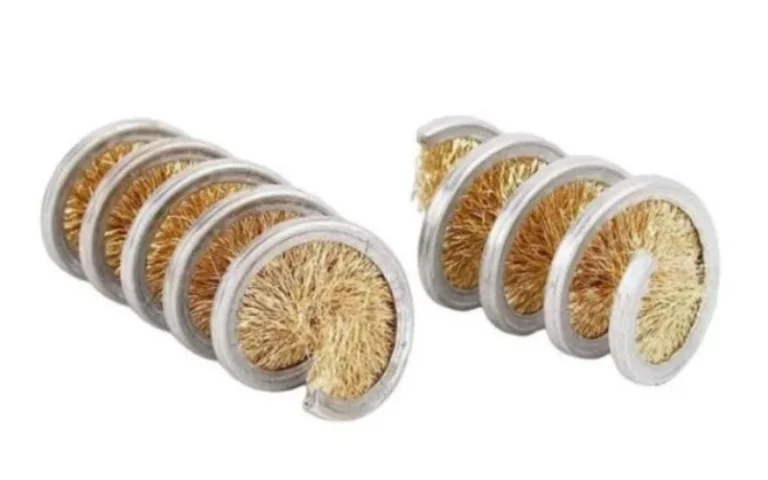
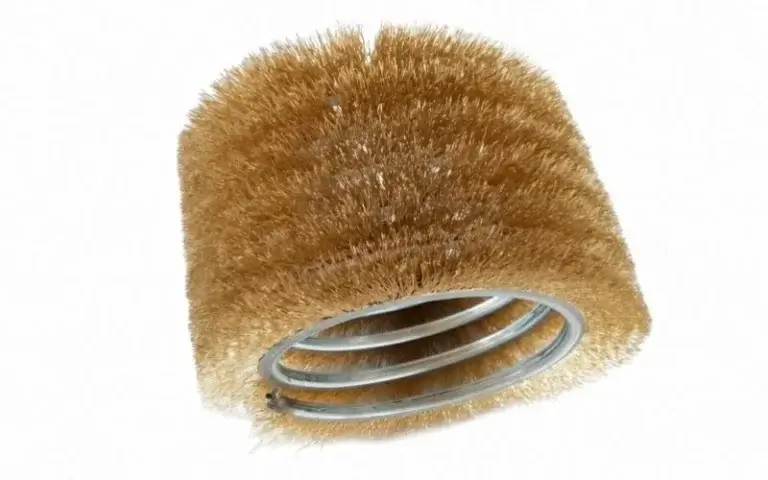
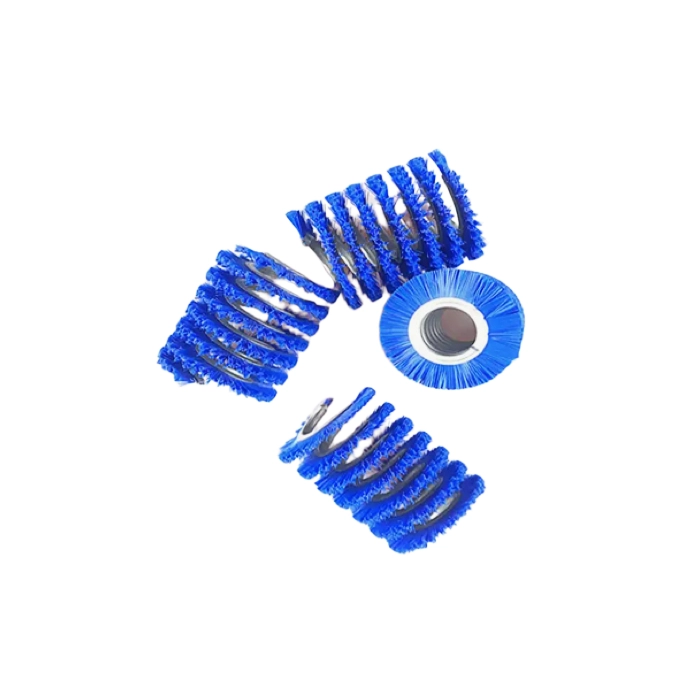
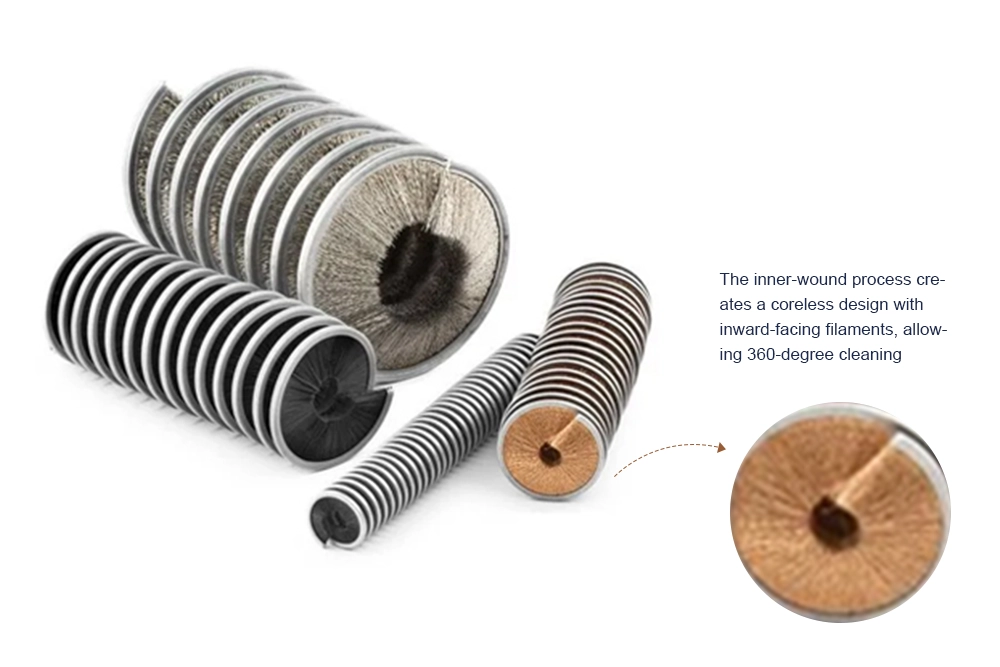
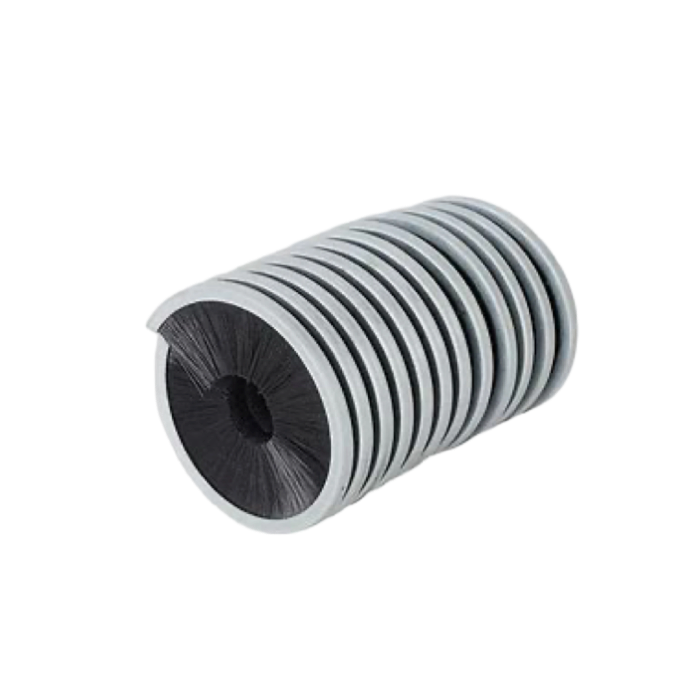
A nylon spiral brush is an internal brush of abrasive nylon filaments held inside a twisted wire core. Rotation presses those filaments against the bore wall, so the abrasive tips shear raised material along the full contact length instead of cutting at one point.
Twisted Core, Spiral Winding and Filament Exposure
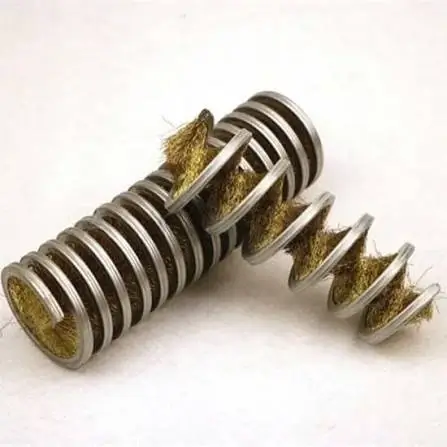
A length of wire is doubled over, the filament laid between the halves, and the wire twisted into a helix. The twist holds the filament so the brush cannot shed bristles at speed, and leaves a continuous spiral of abrasive tips along the working length. Because grit runs through the filament, fresh abrasive appears as the tips wear and the cut rate stays stable. The same construction underlies the spiral tube brush family, and burrs earn that attention because they concentrate stress at the hole edge and shorten fatigue life.
Comparison of Internal Deburring Brush Designs
| Brush design | Construction | Aggressiveness | Flexibility | Typical drive |
| Spiral wound | Wound into a wire core | Medium to high | Medium | Drill, CNC spindle |
| Twisted in wire | Clamped between twisted wires | Low to medium | High, springs back | Manual or light rotation |
| Head on shank | Fill on a rigid head | High, controlled | Low | Machine spindle |
Manual touch-up favours the twisted-in-wire brush, while the spiral wound format is built for rotation and automation.
Why Spiral Geometry Reaches Burrs That Rigid Tools Cannot
A rigid deburring tool contacts an edge at one point and needs a clear approach path. A flexible spiral brush deflects around what it meets, so its filaments fold into a cross hole, follow a stepped bore, and press into a thread crest without line of sight.
Cross Holes, Stepped Bores and Threaded Holes
The hardest burrs sit where two surfaces intersect. A drill breaking into an existing bore leaves a burr on the far wall that no rigid cutter can reach, and an interrupted cut at a step leaves a raised lip. Flexible filaments enter that intersection and shear the burr from both faces, which is why cross-hole deburring is where abrasive spiral brushes are least replaceable. Thread crests behave the same way, where a thread file removes the burr and flattens the profile with it.
Edge Preservation, Spring Back and Material Matching
A flexible brush removes a burr without destroying the edge carrying it, and the rule is that the fill should be no harder than the part. An abrasive nylon fill deburrs aluminium, brass, and stainless steel without scoring, while a steel spiral wire brush on soft metal leaves score marks that must be polished out. Wire remains right for heavy scale, and spring back keeps contact pressure even as filaments recover after each revolution.
The Parameters That Decide Deburring Efficiency
Four parameters decide whether a spiral brush deburrs efficiently or damages the part: grit and abrasive type, filament fill density, brush diameter relative to the bore, and rotational speed combined with feed rate. A correct grit with the wrong diameter or speed will leave the burr or open the bore beyond tolerance.
| Parameter | What it controls | Starting point |
| Grit | Cut rate and final finish | P120 to P180 burr removal, P320 to P400 blending |
| Abrasive type | Edge sharpness and grain life | Silicon carbide for hard material, aluminium oxide for general use |
| Fill density | Cutting force and heat | Medium fill |
| Diameter oversize | Contact pressure at the wall | 10 to 15 percent above bore |
| Rotational speed | Tip speed at the filament | 500 to 1500 RPM in small bores |
| Feed rate | Dwell and cycle time | Fast enough to avoid heat |
Grit, Abrasive Type, and Filament Fill Density
Grit behaves differently here than on a grinding wheel, because the abrasive wire cylinder brush uses abrasive nylon filament that cuts with thousands of tips rather than a bonded face. P80 to P180 removes the burr and leaves a matte texture, P180 to P240 covers general deburring, and P320 to P400 blends the edge to a satin condition. The scale is the P-marked one defined under the FEPA coated abrasive standard. Silicon carbide suits hard materials, and aluminium oxide lasts longer on mixed production, while fill density sets how hard the brush presses.
Brush-to-Bore Sizing, Speed and Feed
The brush should be oversized relative to the bore so the filaments load against the wall instead of trailing through the hole. An oversize of 10 to 15 percent is the usual start, and it must still insert freely, because lateral pressure buckles the twisted core. Speed is set by tip speed rather than RPM, so a small diameter needs a much higher RPM, and feed should be steady so every part of the bore gets the same number of filament contacts.
Measuring the Efficiency Gain
The gain shows up in three places: cycle time per hole, cost per part, and consistency across the batch. Deburring inside the machining cycle removes a secondary operation and its queue, and because the brush wears evenly, the first part and the thousandth receive the same edge treatment.
| Measure | Manual deburring | Abrasive spiral brush |
| Cycle time | Operator dependent | Programmed |
| Labor | Skilled hand time per part | Operator loads the tool only |
| Consistency | Depends on attention | Repeatable by parameter |
| Rework risk | High on intersecting edges | Low, edge is controlled |
Cycle Time and Cost Per Part
Deburring is not a minor line item. Published work on precision components reports that it can take a substantial share of manufacturing cost on small, complex parts, with figures ranging from a few percent up to around 30 percent. Most of that share is labour, which is what a brush inside the machine removes, so the comparison is operator time plus queue time against tool cost divided by service life plus added spindle time.
Repeatability, Scrap Reduction and Downstream Failures
Labour is the visible saving, and consistency is the larger one. A burr that survives inspection becomes a stress riser that shortens fatigue life, a fastener that will not seat, or a chip that contaminates a hydraulic circuit. Those failures surface after the part leaves the cell, so their cost arrives as a return rather than scrap.
Putting a Spiral Brush Into Production Without Damaging Parts
Tool holding and parameter control decide whether an abrasive spiral brush is a production tool or a source of scrap. The brush must sit on a straight shank at the correct oversize, run within its rated speed, and be supported by a program that respects the entry path and the part material.
Tool Holding, Automation and Machine Compatibility
Most spiral brushes come on a shank sized for a collet or standard tool holder, so they load into the same turret as cutting tools and run as a programmed operation. A turned-back end stops the tip from scratching the bore on entry and exit. Because internal bore deburring is usually the last operation in a cycle, coolant should still be flowing, both to clear chips the brush releases and to keep the filament cool.
Common Failure Modes and Corrections
| Symptom | Likely cause | Corrective action |
| Burr still present after the pass | Brush undersized, speed too low, feed too fast | Increase oversize, raise RPM, slow the feed |
| Sharp edge rounded over | Oversize too large, grit too coarse, excessive dwell | Reduce oversize, finer grit, shorter dwell |
| Bore measured oversize | Cutting pressure too high for wall thickness | Lower oversize and speed |
| Filament shed or core bent | Speed above rating, forced insertion | Confirm rated speed, insert without lateral pressure |
| Heat discolouration in the bore | RPM too high or feed too slow | Reduce RPM, raise feed, check coolant |
| Edge quality drifting across a batch | No replacement interval set | Track parts per brush, replace on a fixed count |
Coolant, Maintenance and Safe Operation
Abrasive nylon tolerates water-based coolant but softens at elevated temperatures, so the parameters that keep the bore cool also keep the brush alive. Between shifts, clear embedded chips from the filament because a loaded brush cuts with less force and more heat. Brittle, flattened, or shortened tips signal the end of service life. Never exceed the rated speed, clamp the workpiece, and use eye and mist protection.
FAQ
Q1: Will an abrasive brush round over a sharp edge that has to stay sharp?
It can, if the parameters are wrong. The mechanism that removes a burr also takes material from the edge carrying it, so an oversized brush, a coarse grit, or too much dwell turns a crisp edge into a radius. Where the edge condition matters, keep oversize low, use a finer grit, control dwell, and verify on a sample before releasing the program.
Q2: How long does a nylon spiral brush last, and when should it be replaced?
Track service life in parts rather than hours, because burr size, material, and grit all change how fast the filament wears. Set a fixed replacement count from a wear check on the first run. Two signals confirm it: tips shorten and lose their spiral shape, and the burr survives a pass while every other parameter is unchanged.
Q3: Can one spiral brush deburr and also finish the bore surface?
Partly, and the limit matters before you cut your tooling list. A medium grade removes the burr and leaves a usable matte finish, which is enough when the specification only calls for a deburred edge. Where the bore also has a roughness requirement, two steps are reliable: coarse for the burr, fine to blend the edge and condition the wall.