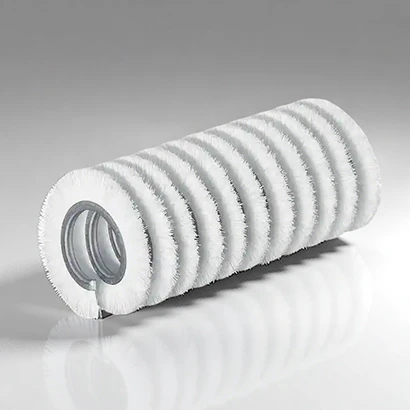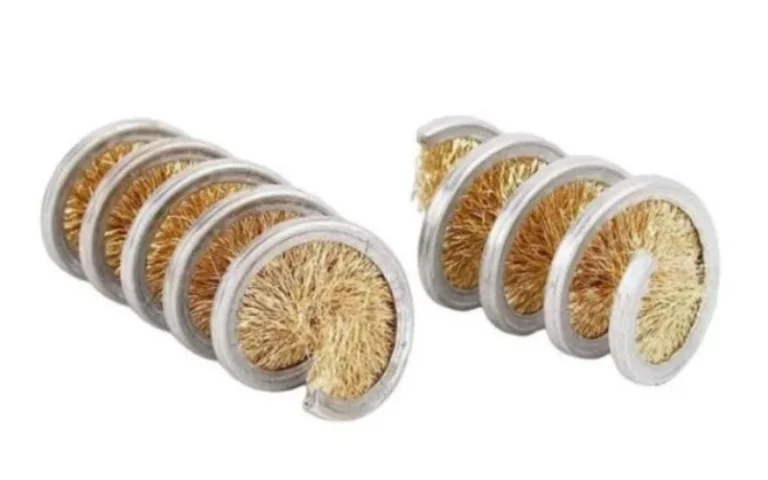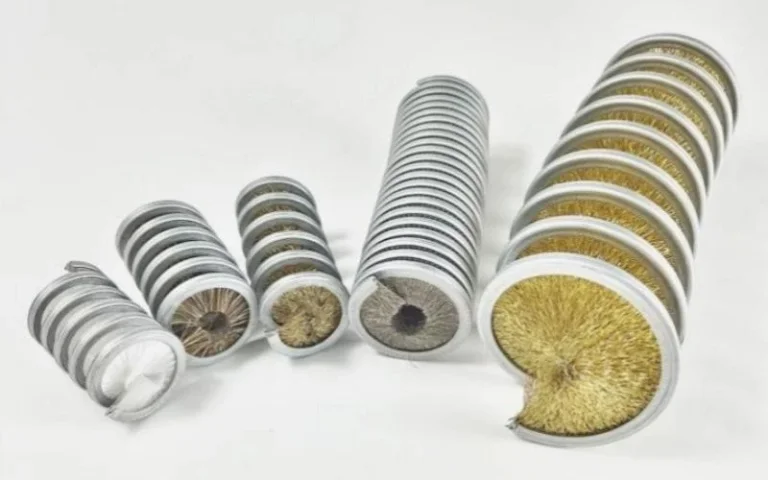
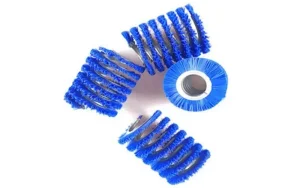
Every process plant faces the same maintenance problem. Scale, rust, carbon, and hard-water deposits slowly narrow the inside of pipes and tubes. Heat exchangers, condensers, boilers, and hydraulic lines all lose efficiency as fouling builds up. Heat transfer drops, pressure drop climbs, and energy costs follow. In severe cases, a blocked tube forces an entire unit offline. That is why the coil cleaning brush has become a standard tool in tube maintenance. It is a spiral-wound brush built around a twisted wire core, designed to scrub the full circumference of a bore in a single pass.
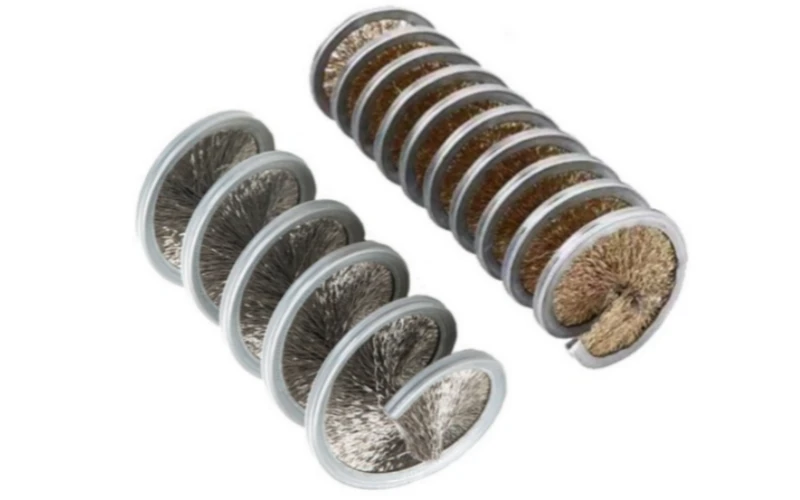
Choosing the right brush sounds straightforward, but the diameter decides everything. If it’s too small, the brush slides through without touching the wall. Too large and it jams halfway down the tube. Maintenance crews lose hours, damage tube surfaces, or snap drive shafts because of a sizing mistake that a few minutes of measurement would have prevented.
The correct coil cleaning brush diameter matches the actual inside diameter of your pipe or tube, plus a controlled oversize, normally about 1/8 inch (3 mm), so the brush maintains firm contact with the wall without binding. Size against the measured bore, never against the nominal pipe size.
The rest of this guide walks through the selection process step by step: how to measure the bore, how much oversize to allow, the difference between inside and outside coil brushes, and the fill materials that affect the final fit. You will also find the mistakes that cause most field failures, plus a checklist to confirm your order before you commit to the wrong brush.
Why Brush Diameter Matters
Brush diameter controls cleaning pressure, travel speed, and the risk of jamming. A small sizing error can turn routine maintenance into a seized tool or a scored tube.
The physics is simple. A coil brush cleans because the bristles press against the tube wall with enough force to break up the deposit. If the brush is undersized, that force never develops. The bristles float in the center of the bore, the deposit stays put, and the crew only discovers the problem after pushing the brush through the entire length. If the brush is oversized, friction climbs quickly. The drive motor stalls, the twisted core twists on itself, or the brush becomes stuck and has to be hammered out with a rod.
The spiral construction of a coil brush is what makes it forgiving within a reasonable range. As the brush advances, the helix helps it self-center in the bore, so the bristles wear evenly around the full circumference. That self-centering behavior only works when the diameter sits inside the correct window. Outside that window, the brush either skips across the deposit or locks against the wall. In demanding industrial surface cleaning applications, the diameter also determines how evenly the fill wears, which directly affects how many tubes one brush can clean before replacement.
How to Measure the Pipe or Tube Before You Order
Measure the actual inside diameter of the tube with a caliper or bore gauge before ordering, because nominal pipe size does not reflect the true cleaning bore.
Nominal pipe size is a label, not a measurement. A 2-inch schedule 40 pipe has a different inside diameter than a 2-inch schedule 80 pipe, and rolled or welded tubes carry their own tolerances. Tubes that have been in service are often out of round, slightly crushed at support points, or narrowed by thick scale. If you measure only the new-tube drawing, you will order a brush that cannot fit the real condition.
Why Nominal Pipe Size Is Not Enough
Nominal pipe size is a label, not a measurement. A 2-inch schedule 40 pipe has a different inside diameter than a 2-inch schedule 80 pipe, and rolled or welded tubes carry their own tolerances. Tubes that have been in service are often out of round, slightly crushed at support points, or narrowed by thick scale. If you measure only the new-tube drawing, you will order a brush that cannot fit the real condition.
Measurement Checklist for Accurate Bore Sizing
Use this measurement checklist before you select anything:
Measure the inside diameter at both ends and at the midpoint of the tube.
Use a telescoping gauge with a micrometer, or a digital caliper with depth rods for longer bores.
Record both the average reading and the smallest reading.
Check for ovality by measuring in two directions 90 degrees apart.
If the tube is fouled, note the remaining open diameter, not the original drawing dimension.
Repeat the measurement on several tubes in the same bundle, because manufacturing tolerances vary.
Using the Smallest Reading for Brush Selection
The smallest reliable reading is the number you should size from. That gives you the worst-case fit and keeps the brush from binding on the tightest tube in the batch.
Inside Coil Brush vs Outside Coil Brush
An inside coil brush cleans the bore of a pipe, while an outside coil brush cleans the outer surface. They are sized against different reference dimensions and cannot be interchanged.
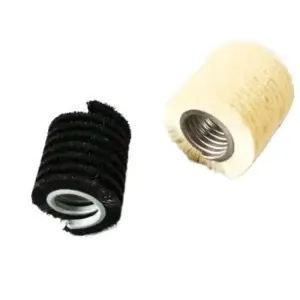
The two tools look similar at a glance, but their construction is reversed. An inside brush carries bristles that face outward from the central shaft, so the working diameter expands toward the tube wall. An outside brush carries bristles that face inward, so the working diameter contracts around a rod, bar, or shaft.
For cleaning the interior of pipes and tubes, an inside coil brush is the correct tool, and its diameter is derived from the measured bore. For finishing the outside of cylindrical parts, an outside coil brush is sized against the outside diameter instead. Mixing the two is one of the most common ordering errors, because a brush built for a 1-inch bore has almost nothing in common with a brush built for a 1-inch bar.
How Much Oversize Should You Allow
Start with a brush outside diameter about 1/8 inch (3 mm) larger than the tube ID, then adjust the margin for deposit hardness, tube material, and available drive torque.
A straight cylinder of bristles cannot fill the bore exactly, because manufacturing tolerances and tube tolerances never line up perfectly. The oversize provides the interference that creates cleaning pressure. Too little interference and the brush does not scrub; too much and it cannot move. The table below gives practical starting points:
Match the fill to both the deposit and the tube. A nylon brush on a heavily scaled steel tube will wear out quickly, while a steel wire brush on a thin aluminum tube will do damage that shows up as premature corrosion. The diameter rules stay the same, but the oversize for nylon can be slightly larger because the bristles deflect more easily.
Confirm Your Selection Before You Order
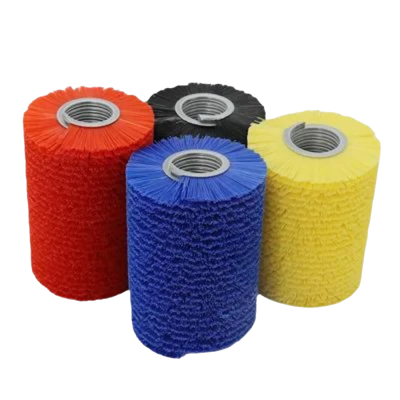
When standard sizes do not match your tube geometry, a custom coil brush built to your exact bore and length is the most dependable solution.
Most manufacturers stock common diameters, but production tubes rarely come in round numbers. You may have an odd bore, a long straight section, a stepped diameter, or a requirement for a specific fill and core combination. In that case, a custom coil brush removes the guesswork. Provide the supplier with the inside diameter, the working length, the fill material, the deposit type, and the drive method, and the brush comes back sized for your actual tube.
Before placing a large order, ask for a single sample and run it through one representative tube. Measure how much force the pass requires, inspect the cleaned surface, and check bristle wear. If the sample behaves well, the production run will behave the same way. If it does not, the sample gives you concrete data to adjust the diameter or the fill before you spend money at scale.
Putting It All Together
Selecting the right coil cleaning brush diameter is a measurement exercise, not a guessing game. Measure the true inside diameter of the tubes, add the oversize margin that fits the material and deposit, choose between an inside and outside configuration, and pick a fill that will not damage the surface you are cleaning.
A moderate oversize, typically 1/8 inch for steel tubes, gives the bristles enough interference to scrub without binding. Test one brush before buying in quantity, and rely on the smallest measured reading when tube tolerances vary. Follow that sequence and a coil brush becomes a fast, repeatable way to keep pipes and tubes flowing.
Frequently Asked Questions
Can one coil cleaning brush clean different pipe sizes?
A single brush is only reliable for tubes within a tight diameter range, usually about 1/16 to 1/8 inch of each other. Beyond that, the brush either loses contact pressure on the larger tube or jams in the smaller one. Group tubes by measured inside diameter and order per group if your system has mixed sizes.
How do I know when a coil cleaning brush needs to be replaced?
Replace the brush when the bristles no longer hold their outward shape, when the working diameter has shrunk noticeably, or when cleaning time doubles for the same tube. A worn fill also removes less deposit per pass, which pushes crews to push harder and risks bending the core. Inspect the brush after every few tubes and track how many tubes each brush cleans.
Should the brush be pushed straight through or rotated while cleaning?
Both methods work, but rotation is more effective for hard deposits. Rotating the brush while pushing it through lets the wire tips cut into the scale instead of just scraping it. For light fouling on straight tubes, a straight push-through pass is usually enough. Match the method to the deposit and keep the travel speed steady so the bristles do not skip.