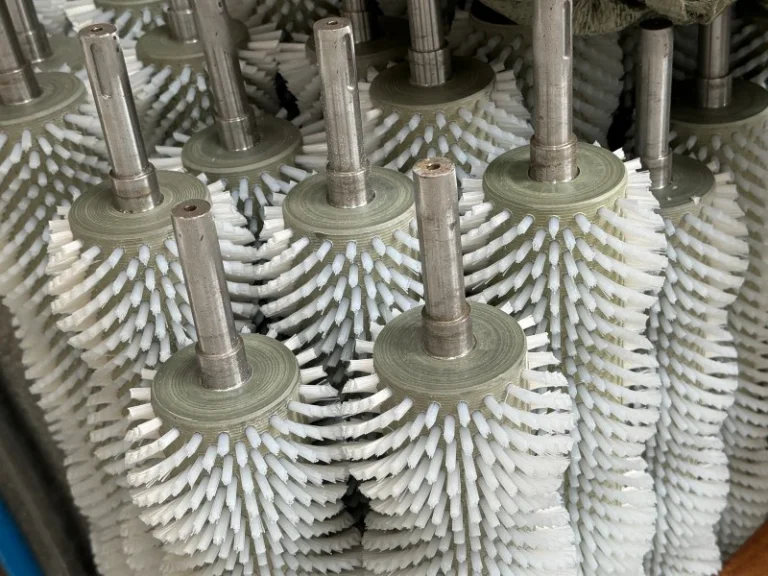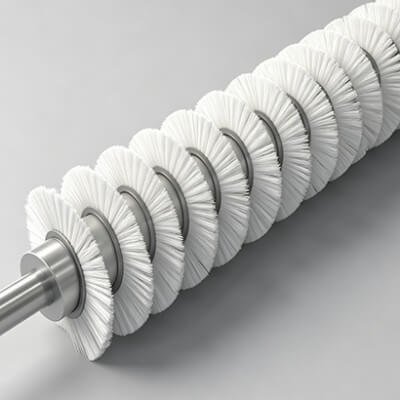
Selecting a suitable fruit cleaning brush is more than a matter of purchase — it affects cleaning efficiency, line speed, and quality of product. For food processing plants, packing houses, and manufacturers of equipment, the consequences of a bad selection could include inconsistent results, fruit damage, and expensive downtime. This guide will help ride through the intricate nature of selecting a brush. It looks at what distinguishes one brush from another, which specifications are critical, and how customisation options yield better production outputs.
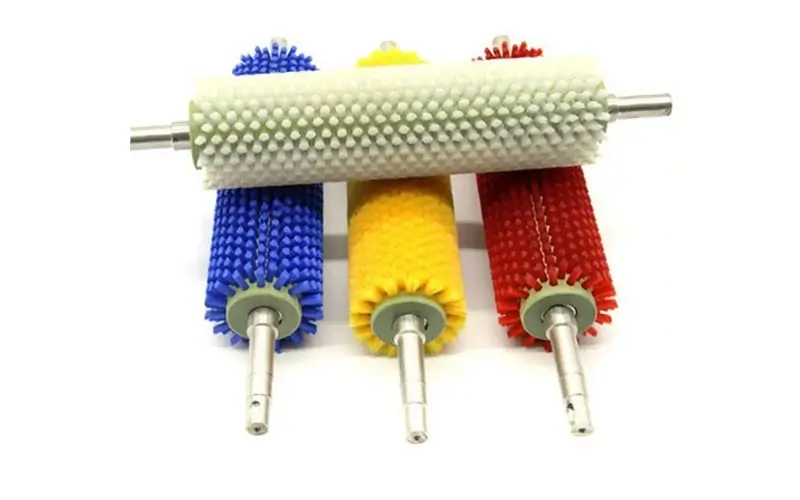
Brush Selection – More Important Than Most Buyers Anticipate
Brush selection for many consumers is a simple replacement process of the same dimension with the same fiber type; however, this is not the complete story. There are several factors upon which brush function relies, including: material used to make bristles, density of bristle fibers, diameter of rollers, compatibility with rotational speed, and surface quality/cure of the product through the use of the brush.
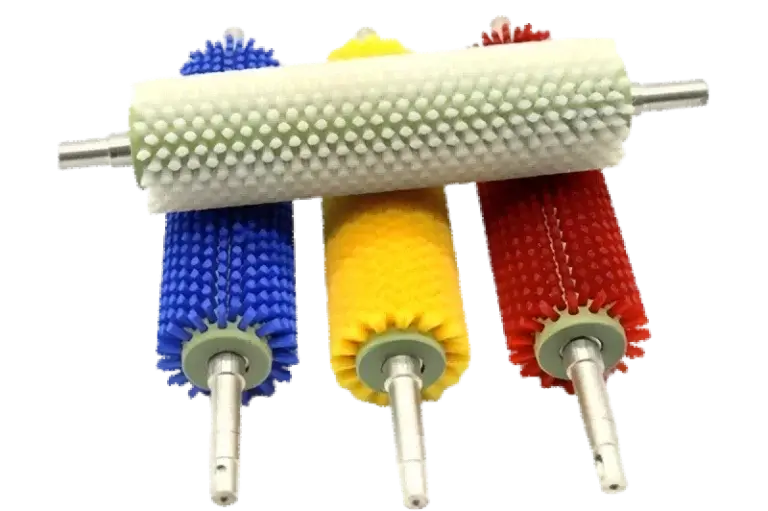
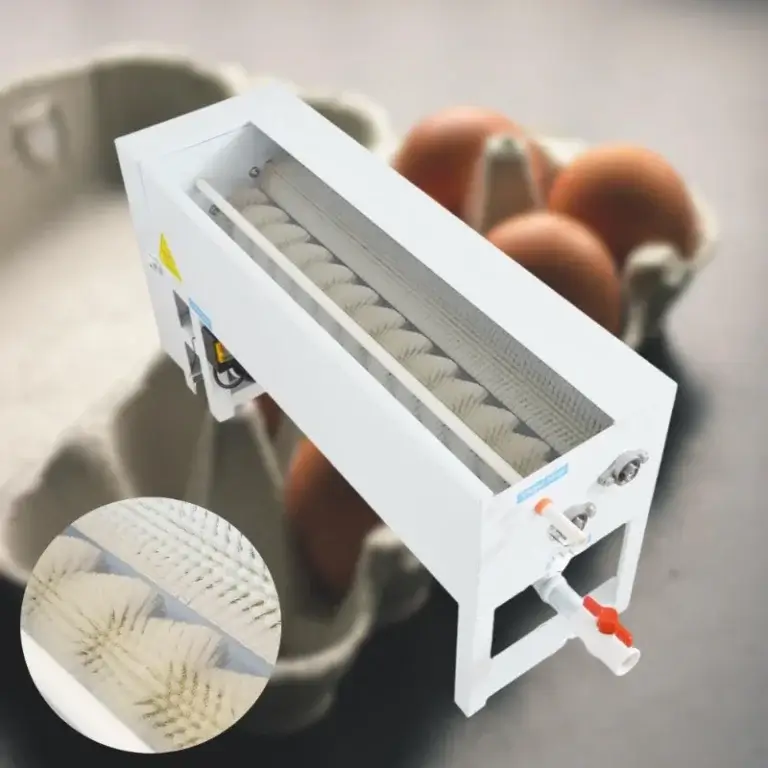
For anyone new to the category, understanding a fruit cleaning brush and how it works in an industrial context provides a useful starting point before diving into specifications. The product’s lifetime, production throughput, and appearance will all improve if you use a correctly matched brush versus a poorly matched one. A poor match will cause faster wear of the brush, will not provide an even surface for cleaning, and will likely bruise delicate fruit.
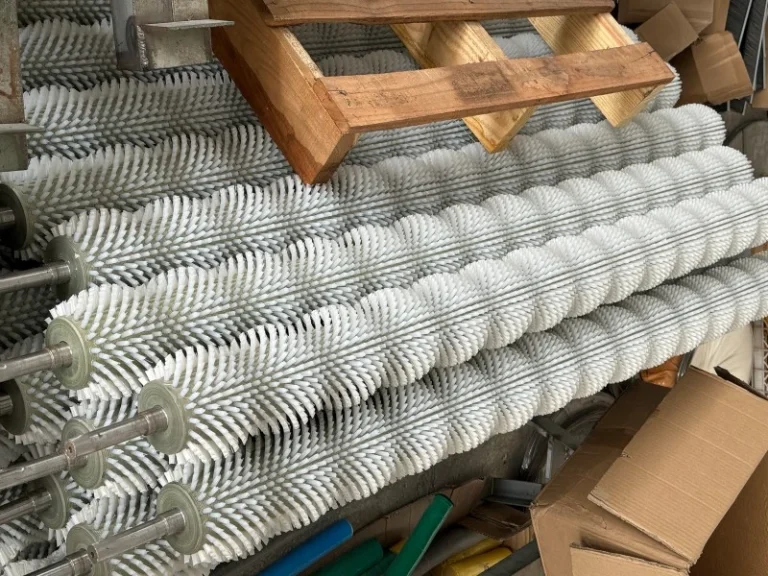
There are two main categories of fruit cleaning brushes: standard and custom. The vast majority of roller-style cylinder brushes installed on washing or polishing conveyor lines are used in standard configurations.
- Nylon — High durability, resistance to moisture, and available in various stiffness grades. A nylon cylinder brush is suitable for domestic use on most fruits and vegetables in practically all types of wet use.
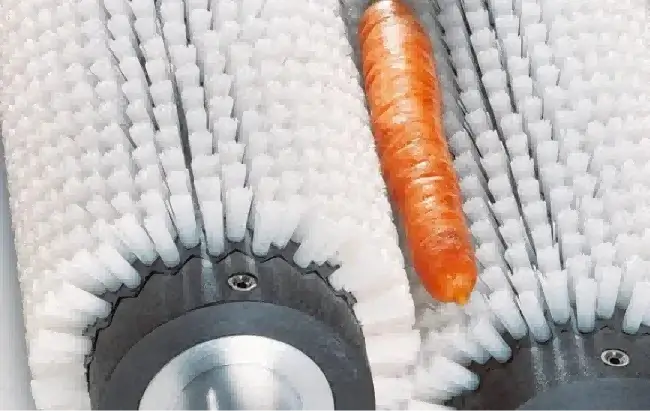
- PP (Polypropylene) — This type has higher flexural strength than nylon; being a more rigid material, it works best for cleaning root vegetables and produce with more heavily textured or tougher-skinned fruits/vegetables.
- Natural (sisal/tampico) — Can be gentler on soft-shelled fruit surfaces, and are mostly used as polishing brushes after washing.
- Combination fibers — A design approach that combines multiple types of fibers into a single component brush for cleaning and polishing in one pass.
Standard vs Custom Configurations
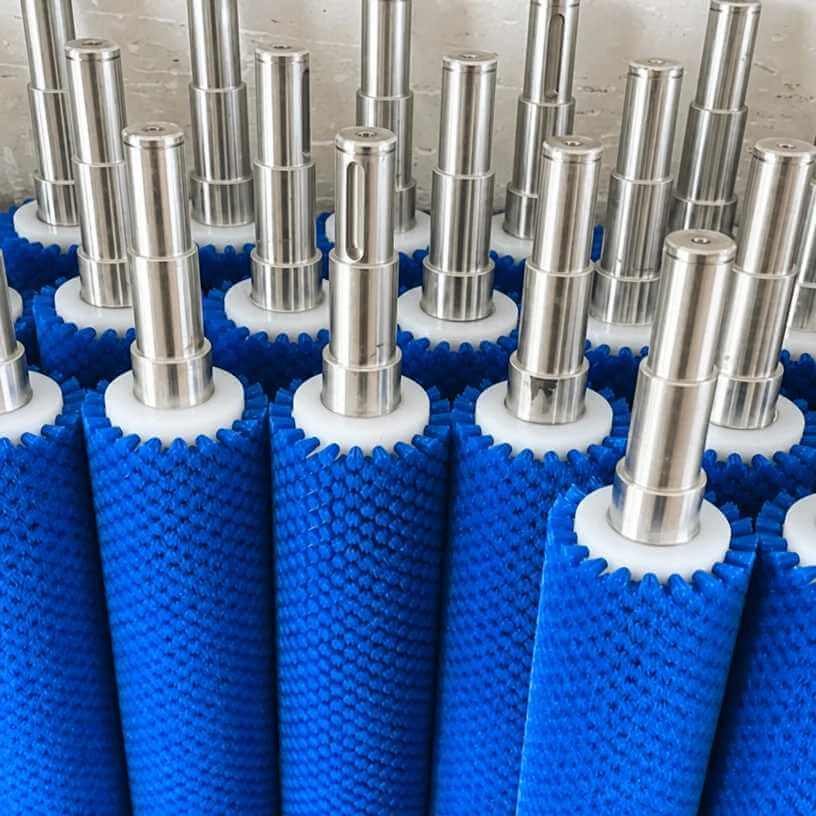
Standard configuration, commonly used for like sizes and common fibre types, will be sufficient for applications that use common roller dimensions. However, custom configurations will be required when:
- The conveyor system has been configured for use with non-standard shafts and shaft lengths.
- Produce types require a specific stiffness of fiber that is not normally stocked.
- The production environment uses material that is FDA compliant, or has specific chemical resistance.
Key Specification Comparison Chart
| Specifications | Soft Produce (Berries, Peaches) | Hard Produce (Potatoes, Carrots) | Mixed Produce |
|---|---|---|---|
| Type of Fiber/Material | Nylon (Soft) / Natural | Polypropylene / Hard Nylon | Combination Fiber |
| Bristle Stiffness | Soft to Medium | Medium to Hard | Medium |
| Surface Contact Characteristics | Gentle and Great Coverage | Firm and Uniform Pressure | Intermediate |
| Water Resistant | Yes | Yes | Yes |
| Brush Type Recommendation | Nylon Cylindrical Brush | Hard Nylon or Polypropylene Roller Brush | Custom Cylindrical Brush |
This comparison helps procurement teams narrow down specifications before requesting samples or quotes.
When to Consider a Custom Cylinder Brush
Brush catalogs typically have all the standard items that you need; however, custom brushes will enable you to solve a problem that a stock item cannot help with. If your operation has specialty produce to run, an unusual conveyor geometry, or has some type of strict hygienic certification, there are measurable benefits of using a custom cylinder brush instead of using an off-the-shelf product.
Reasons why customers request custom configurations are:
- Shaft bore or keyed connection that is not standard
- A brush length greater than the maximum length noted in the catalog
- Zoned fiber density with stiff sections for scrubbing and soft sections for polishing
- Colors coded as per HACCP, as per food-grade core materials
- For production environments with high hygiene levels, an anti-bacterial fiber treatment is available
To produce custom orders, we will typically need to have equally detailed technical drawings or brush samples before we can quote on your order. Due to the wide range and complexity of our products, lead times can vary significantly, so it is best to plan ahead of time for seasonal business cycles.
When using vegetable cleaning brushes, the texture of the produce may be very different (root vegetables vs. leafy greens); therefore, having custom fiber mapping throughout the length of the roller will often create better results than using just one single type of standard fiber.
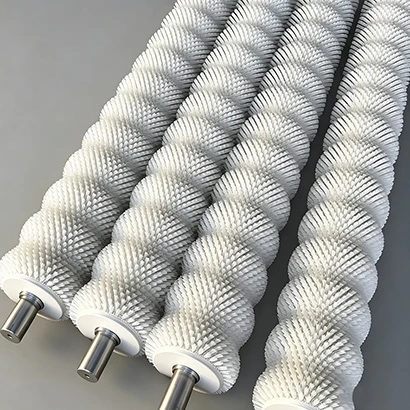
Brush Matching To Conveyor System
The brush’s material is not the only way to ensure performance; the physical compatibility of the brush to the conveyor system also determines if the brush performs as expected. The fit of the brush to the conveyor system/line can be determined by three dimensions:
- The outer diameter of the fruit cleaning brush has an impact on how much contact pressure and clearance there will be between the brushes in the brush bank.
- The core/bore dimensions of the fruit cleaning brush need to be a precise fit to the shaft specifications to avoid slippage or vibration.
- The length of the brush should be long enough to cover the entire width of the conveyor, with only a small amount of overhang.
If you’d like to go into greater detail on selecting fruit cleaning brushes, check out the Choose Fruit Cleaning Brushes guide, which reviews each variable in the selection process with industry-relevant examples.
Developing a Long-Term Brush Program
Intelligent purchasers will build a brush replacement program in addition to having a regular brush purchasing routine. By keeping track of brush wear rates, established rotation intervals, and how the brush performs against predetermined benchmarks, your operations team can help avoid unplanned downtime, especially during peak sales periods.
A dependable supplier of fruit cleaning brushes should provide:
- Consistent fiber specs each time.
- Technical support for integrating and troubleshooting new brushes into production processes.
- Ability to develop custom products as production processes change.
- Volume pricing for ongoing supply agreements
A brush manufacturer should have an OEM or wholesale relationship and will help large operators or machine manufacturers build brush washing units for large machinery. This creates an easier means to buy supplies for the brush and ensures that supplies remain available to the manufacturer.
Conclusion
When selecting a fruit cleaning brush, the most important aspects are the produce being washed, the production environment, and the conveyor system’s mechanical specifications. There are many different applications where a standard nylon cylinder brush will work. Where standard nylon cylinder brushes will not be used, custom configurations can be designed to work in precise applications.
When ordering custom cylinder brushes, it is crucial to take the necessary time to find the correct specification rather than just opting for the closest available size. Choosing the correct specification instead of settling for a default size will improve your overall performance and extend brush life, while providing you with clean product at an optimum level of quality.
FAQ
Q1: What is the minimum order quantity for custom cylinder brushes?
Minimum order quantities depend on both the manufacturer and the degree of complexity. In general, custom brush suppliers will have an MOQ of between 50 and 200 pieces based on specifications and expected lead time.
Q2: Can you use the same brush to wash and to polish the fruit?
In some situations, the combination of fiber products allows this type of brush to perform both stages, but usually using individual brushes at each stage produces better overall performance and longer life.
Q3: How can you confirm whether a nylon cylinder brush is food-grade compliant?
Reputable suppliers provide material certifications confirming FDA or EU food-contact compliance. Always request documentation before approving a brush for use in food production environments.