
In pharmaceutical manufacturing, the capsule filling process generates significant amounts of loose powder that clings to capsule surfaces. Even with advanced dust extraction systems, a fine layer of residual powder inevitably remains on filled capsules after they exit the filling station. This powder contamination not only compromises the visual appearance of the finished product but also poses compliance risks during quality inspection.
The challenge intensifies when static electricity enters the equation. As capsules tumble and slide through conveyors, hoppers, and sorting channels, triboelectric charging accumulates on capsule surfaces — particularly on gelatin and plant-based polymer shells. This static charge acts like a magnet, attracting airborne dust particles and causing them to re-adhere immediately after mechanical cleaning. The result is a persistent cycle of contamination that conventional wiping or vacuum-only systems struggle to break.
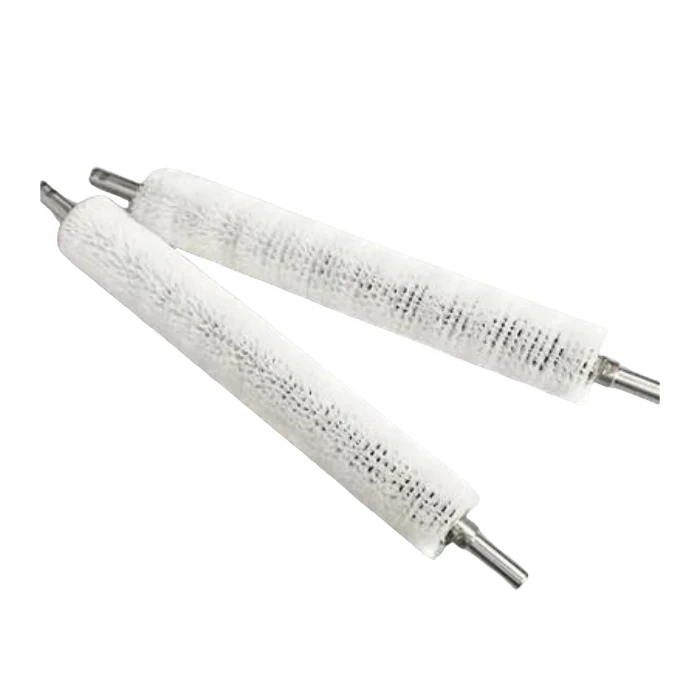
A capsule polishing brush solves static dust build-up by combining mechanical dust removal with a rotating helical brush design that simultaneously polishes capsule exteriors and dissipates surface static charges. When engineered with anti-static filament materials and integrated into a vacuum-assisted polishing chamber, this approach reduces dust re-adsorption rates by over 80% compared to passive cleaning methods — delivering capsules that meet both visual quality standards and regulatory requirements.
Understanding the full picture of how static dust forms and how a properly specified capsule polishing brush eliminates it is essential for production managers, quality engineers, and procurement teams tasked with maintaining output quality in high-volume capsule filling lines. This article examines the root causes of static dust accumulation, the mechanical principles behind effective polishing brush systems, material selection criteria, integration considerations, and maintenance practices that maximize brush service life.
The following sections provide a comprehensive analysis of capsule polishing brush technology and its role in pharmaceutical production quality assurance.
Understanding Static Dust in Capsule Polishing
Static dust in capsule polishing environments originates from triboelectric charging that occurs when capsules contact each other, conveyor surfaces, and filling machine components during high-speed production. This electrostatic charge attracts and binds powder particles to capsule exteriors with forces that simple air blowing or gravity-fed cleaning cannot overcome.
The triboelectric effect is fundamentally a contact-and-separation phenomenon. When two dissimilar materials make contact and then separate, electrons transfer from one surface to the other, leaving one positively charged and the other negatively charged. In a capsule filling line, capsules typically develop a negative surface charge as they interact with stainless steel machine components, polymer chutes, and even other capsules. The magnitude of this charge depends on several variables:
- Surface resistivity of the capsule shell material (gelatin, HPMC, pullulan, or starch-based)
- Ambient relative humidity in the production environment
- Speed of capsule transport and frequency of surface contacts
- Type of fill powder and its inherent triboelectric properties
Once charged, capsule surfaces attract oppositely charged dust particles through Coulomb attraction. The binding force between a charged capsule and a dust particle can exceed several micro-Newtons — sufficient to resist removal by gravity or low-velocity air currents. This explains why even capsules passing through a vacuum station may still exhibit visible dust contamination: the electrostatic adhesion force outcompetes the aerodynamic drag force at common vacuum pressures.
The problem compounds in low-humidity environments. When relative humidity drops below 40%, surface charge dissipation through moisture-assisted conduction slows dramatically. Pharmaceutical facilities operating in climate-controlled cleanrooms often maintain humidity at 35-45% to protect moisture-sensitive formulations, inadvertently creating ideal conditions for static build-up. Production lines running at speeds exceeding 100,000 capsules per hour face the most severe challenges, as higher throughput means more frequent contact events and less time for natural charge decay between the filling and inspection stages.
How a Capsule Polishing Brush Removes Dust and Neutralizes Static
A capsule polishing brush removes dust through the combined action of mechanical brushing, static charge dissipation, and vacuum extraction. The rotating brush filaments physically dislodge powder particles from capsule surfaces while simultaneously providing a conductive path for static charge to bleed away, and an integrated vacuum system immediately captures the liberated dust before it can re-settle.
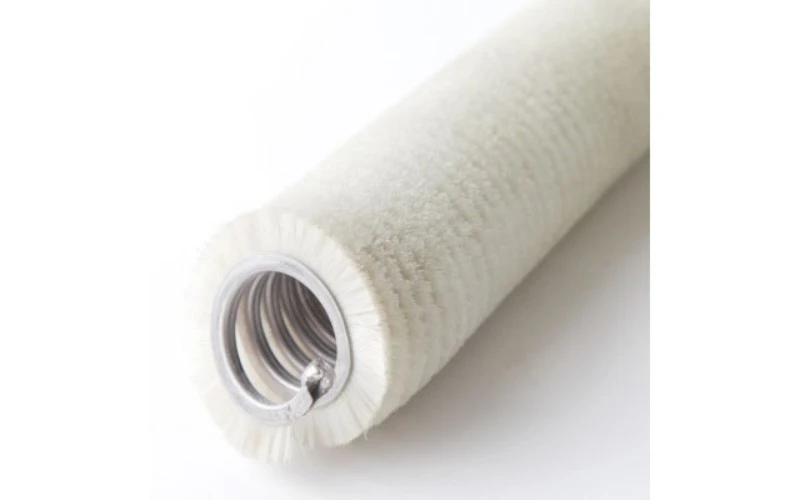
The mechanical cleaning action of a capsule polishing brush relies on the helical coil brush design. As capsules enter the polishing chamber, they come into contact with rotating brush elements that gently scrub all external surfaces. The continuous spiral winding pattern ensures that each capsule passes through multiple brush contact zones during its transit through the chamber, achieving thorough 360-degree surface coverage without requiring the capsule to be oriented in a specific direction.
Three key mechanisms work together to achieve effective dust removal:
Filament contact and particle dislodgement: Individual brush filaments penetrate the boundary layer around each capsule surface and physically scrape away adhered powder. Filament stiffness, diameter, and trim length determine the contact force and cleaning intensity.
Static charge neutralization: Conductive filament materials and anti-static brush core coatings provide a controlled path for accumulated surface charge to dissipate. When brush filaments make contact with charged capsule surfaces, electrons flow to equalize the potential difference, effectively grounding the static charge.
Vacuum-assisted dust capture: A negative-pressure chamber surrounding the brush assembly continuously extracts dislodged powder particles. Without active vacuum extraction, mechanically removed dust would simply re-settle on capsules as they exit the polishing zone.
The polishing chamber itself plays a critical role. Modern designs incorporate conductive interior coatings that prevent capsule adhesion to chamber walls and ensure that any charge remaining after brush contact continues to dissipate as capsules travel toward the exit. This multi-stage approach — mechanical brushing followed by passive charge dissipation in a controlled environment — achieves the sustained cleanliness that single-stage cleaning methods cannot match.
Why Nylon Filaments Are the Preferred Material for Capsule Polishing Brushes
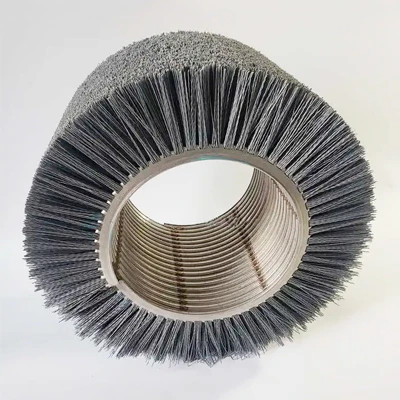
Nylon filaments provide the optimal balance of mechanical cleaning effectiveness, surface safety, chemical resistance, and static dissipation properties required for pharmaceutical capsule polishing applications. Their combination of bend recovery, moisture tolerance, and compatibility with FDA-compliant manufacturing environments makes nylon the material of choice for capsule polishing brush construction.
The selection of brush filament material directly impacts cleaning performance, capsule integrity, and maintenance costs. Among available filament materials, nylon consistently outperforms alternatives across the key performance dimensions that matter most in pharmaceutical production:
The helical winding structure of a nylon coil brush further enhances these material advantages. When nylon filaments are wound into a continuous spiral configuration, the resulting brush assembly flexes to accommodate capsules of different sizes while maintaining uniform contact pressure across the entire surface. This flexibility is essential in multi-product lines where the same polishing station must handle capsules ranging from size 00 to size 3 without adjustment.
For pharmaceutical applications specifically, FDA-compliant food-grade nylon filaments are available that meet regulatory requirements for incidental food contact. These filaments are non-toxic, non-absorbent, and resistant to the mild cleaning agents and sanitizers commonly used in pharmaceutical equipment washdown procedures.
An abrasive nylon variant offers additional versatility for lines that handle particularly tenacious powder formulations. These filaments are impregnated with silicon carbide or aluminum oxide particles that provide controlled light abrasion — sufficient to remove stubborn residue while remaining gentle enough to preserve capsule surface integrity and print quality.
Selecting the Right Capsule Polishing Brush for Your Production Line
Choosing the correct capsule polishing brush requires evaluating filament material and diameter, brush outer diameter and length, coil pitch density, and core material against your specific capsule type, production speed, fill powder characteristics, and cleaning performance targets. Matching these specifications to actual operating conditions prevents premature brush wear and ensures consistent polishing results.
The dimensional and material specifications of a capsule polishing brush must align with the physical parameters of your polishing machine and the operational demands of your production line. Four primary factors drive selection decisions:
Brush Dimensions and Configuration
The outer diameter of the brush assembly must match the polishing chamber clearance to ensure proper capsule contact without jamming or excessive compression. Overall brush length determines residence time — longer brushes allow more contact cycles per capsule, which benefits high-speed lines where transit time through the polishing zone may be as brief as two to three seconds. Core diameter affects both structural rigidity and the effective working diameter of the filament tips.
For outside coil brushes used in capsule polishing, the critical dimensions include overall length, outer diameter, inner core diameter, and filament trim length. An outside coil brush wraps filaments around the external surface of a cylindrical core, making it suitable for chambers where capsules pass around rather than through the brush element.
Filament Specifications
Filament diameter ranges typically from 0.15 mm to 0.50 mm for capsule polishing applications. Finer filaments provide gentler cleaning suitable for softgel capsules and printed gelatin shells, while thicker filaments deliver more aggressive dust removal for hard-shell capsules with heavy powder contamination. Filament density — controlled by the coil pitch during winding — determines the number of contact points per unit area. A tighter pitch with higher filament density provides more thorough surface coverage, while a wider pitch allows better debris clearance and prevents clogging in high-dust environments.
Coil Pitch and Density
The helical winding pitch directly influences both cleaning intensity and debris evacuation. Specifications for coil brushes include the pitch measurement, which sets the spacing between successive filament wraps. This parameter must be balanced against vacuum flow rate: a pitch that is too tight can restrict airflow through the brush assembly, reducing dust extraction efficiency. Conversely, a pitch that is too loose reduces the number of cleaning contacts per capsule transit.
Customization for Specific Applications
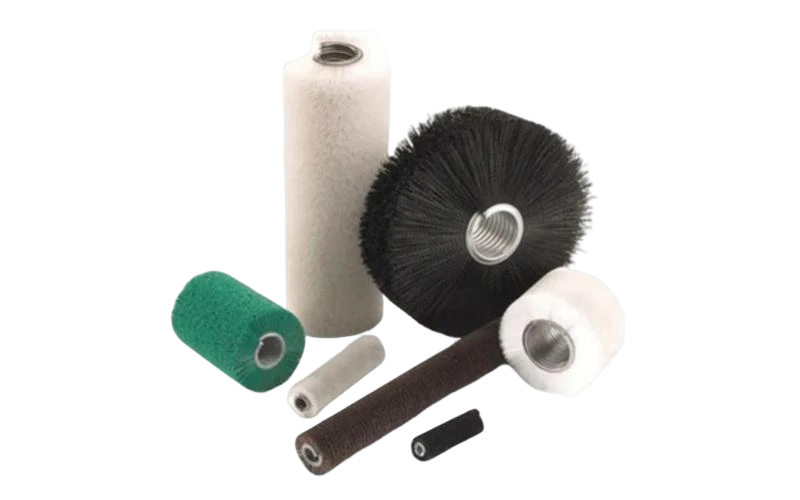
Production lines with unique requirements benefit from custom coil brush configurations. Custom specifications may include non-standard diameters, specialized filament blends, anti-static core treatments, or integration features for specific polishing machine models. When evaluating custom options, procurement teams should provide the following information to brush suppliers:
- Capsule type, size, and shell material
- Fill powder characteristics (particle size, adhesion tendency, static propensity)
- Production speed in capsules per hour
- Polishing chamber dimensions and mounting interface
- Cleaning frequency and washdown procedures
- Current defect rate and target cleanliness level
For step-by-step selection methodology, understanding how to choose nylon coil brushes helps procurement teams match brush specifications to production requirements with precision.
For detailed guidance on matching filament specifications to cleaning requirements, reviewing the key advantages of nylon coil brushes helps clarify how material properties translate into production-line performance benefits.
Maintenance Practices That Extend Capsule Polishing Brush Service Life
Regular inspection for filament wear and debris accumulation, scheduled cleaning with approved solvents, and periodic filament trimming extend capsule polishing brush service life by 30 to 50 percent while maintaining consistent cleaning performance across production runs. Preventive maintenance also prevents the gradual decline in polishing quality that often goes unnoticed until quality inspection rejects spike.
Capsule polishing brushes are consumable components that degrade predictably over time. However, implementing a structured maintenance program significantly extends the interval between replacements and prevents the mid-batch quality issues that arise from worn brushes.
Inspection Schedule and Criteria
Establish a visual inspection routine at the beginning of each shift or after every 100,000 capsules processed, whichever comes first. Key inspection points include:
- Filament condition: Check for bent, broken, or matted filaments that indicate excessive wear. Individual broken filaments are acceptable up to approximately 5 percent of total density; beyond this threshold, cleaning effectiveness declines measurably.
- Debris build-up: Inspect the gaps between filament wraps for accumulated powder residue. Compacted powder can harden over time, creating abrasive nodules that scratch capsule surfaces.
- Core integrity: Verify that the central core shows no signs of corrosion, deformation, or loosening at the mounting point. A damaged core can cause eccentric rotation, leading to uneven brush contact and vibration.
- Filament length consistency: Measure filament trim length at multiple points along the brush. Uneven wear indicates misalignment in the polishing chamber or an unbalanced brush assembly.
Cleaning and Washdown Procedures
Between production batches, clean the brush assembly using compressed air to blow out loose powder, followed by a solvent rinse appropriate for the fill powder chemistry. For water-soluble powder formulations, warm water with a mild detergent effectively removes residue. For lipid-based or waxy formulations, isopropyl alcohol or a compatible organic solvent may be necessary.
After cleaning, allow the brush to dry completely before reinstallation. Nylon filaments do not absorb water, but residual moisture in the coil structure can promote microbial growth in pharmaceutical environments. A dedicated drying station with forced warm air reduces turnaround time between batches.
Filament Trimming and Reconditioning
When filament tips show signs of mushrooming, splitting, or uneven wear, re-trimming the brush to restore a uniform working diameter extends useful life by one to two additional service intervals. This procedure requires mounting the brush in a lathe or dedicated trimming fixture and removing a small amount of material from the filament tips to create a fresh, uniform contact surface.
Replacement Planning
Maintain a usage log that tracks hours of operation, capsules processed, and cleaning cycles for each brush. This data enables predictive replacement scheduling rather than reactive replacement after quality issues emerge. A well-maintained capsule polishing brush operating under typical production conditions can process between 5 million and 10 million capsules before requiring replacement, though this range varies significantly with fill powder abrasiveness and cleaning frequency.
Static dust build-up on capsules after filling is a persistent challenge rooted in triboelectric charging physics. A properly specified capsule polishing brush addresses this challenge through the synergistic combination of mechanical brushing, static charge dissipation, and vacuum-assisted dust extraction. Nylon filaments emerge as the optimal material choice, offering the non-scratch surface safety, chemical resistance, and durability that pharmaceutical production demands.
Selection of the correct brush configuration — accounting for filament specifications, coil pitch, and dimensional compatibility — directly determines cleaning effectiveness and service life. Supporting this with structured inspection, cleaning, and replacement practices ensures consistent output quality while minimizing consumable costs over time.
Frequently Asked Questions
What is the difference between an inside coil brush and an outside coil brush for capsule polishing applications?
An outside coil brush has filaments wound around the exterior of a cylindrical core, making it suitable for polishing chambers where capsules pass around the brush and contact its outer surface. An inside coil brush wraps filaments inside a hollow tube, appropriate for applications where the product passes through the center. Most capsule polishing machines use the outside coil configuration because it allows capsules to tumble freely in the polishing chamber while making contact with multiple brush surfaces.
How does ambient humidity affect capsule polishing brush performance?
Low humidity below 40 percent RH increases static charge accumulation on capsule surfaces, making dust removal more difficult and requiring brushes with enhanced anti-static properties. Higher humidity above 60 percent reduces static but may cause hygroscopic capsule shells to soften, requiring gentler filament contact. The ideal range for most gelatin capsule operations is 45 to 55 percent RH, balancing static control with capsule integrity. In facilities that must operate below 40 percent RH, conductive filament treatments and ionizing air supplementation become essential complements to mechanical brushing.
Can a single capsule polishing brush handle multiple capsule sizes on the same production line?
Yes, the helical coil design inherently accommodates size variation because individual filaments flex independently. A brush specified for the mid-range capsule size on a given line typically handles one size up and one size down without adjustment. However, lines running a broad size range from 00 to 3 should consider quick-change brush mounting systems that allow operators to swap brush assemblies optimized for each size category, ensuring consistent cleaning performance across all products.