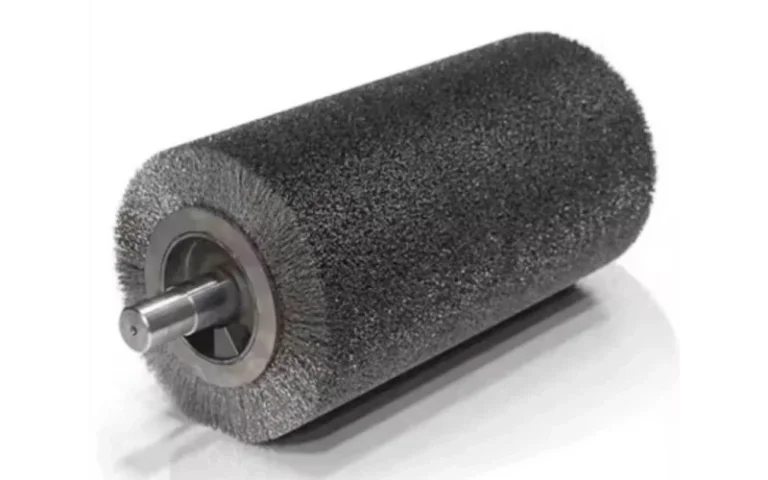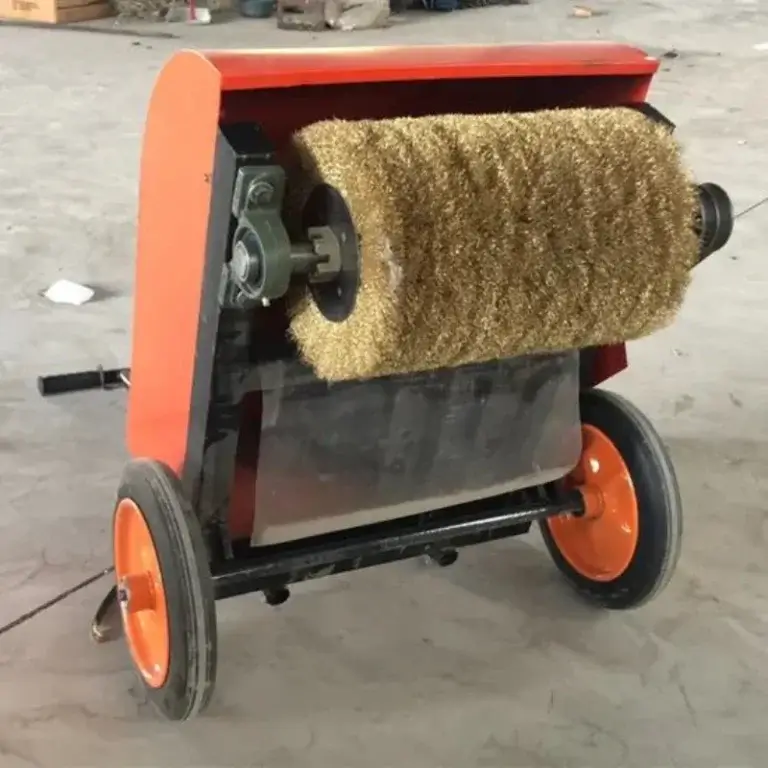
Burrs are an unavoidable byproduct of nearly every metal fabrication process. Whether a part comes off a CNC mill, a stamping press, or a laser cutter, it carries sharp edges, microscopic ridges, and raised material along its cut lines. These imperfections do more than create a handling hazard. Burrs interfere with part fit, compromise coating adhesion, and can seed stress fractures in load-bearing components. In precision industries like aerospace, automotive, and medical device manufacturing, an improperly deburred part is a rejected part.
The challenge has always been finding a deburring method that removes burrs completely without altering the base material. Chemical deburring and electropolishing work well for specific alloys but introduce process complexity and cost. Manual filing and sanding are labor-intensive and inconsistent. Vibratory finishing handles bulk parts but lacks the precision for selective edge work.
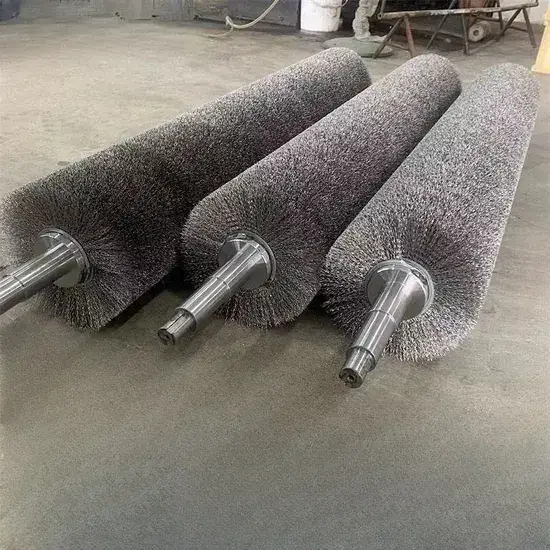
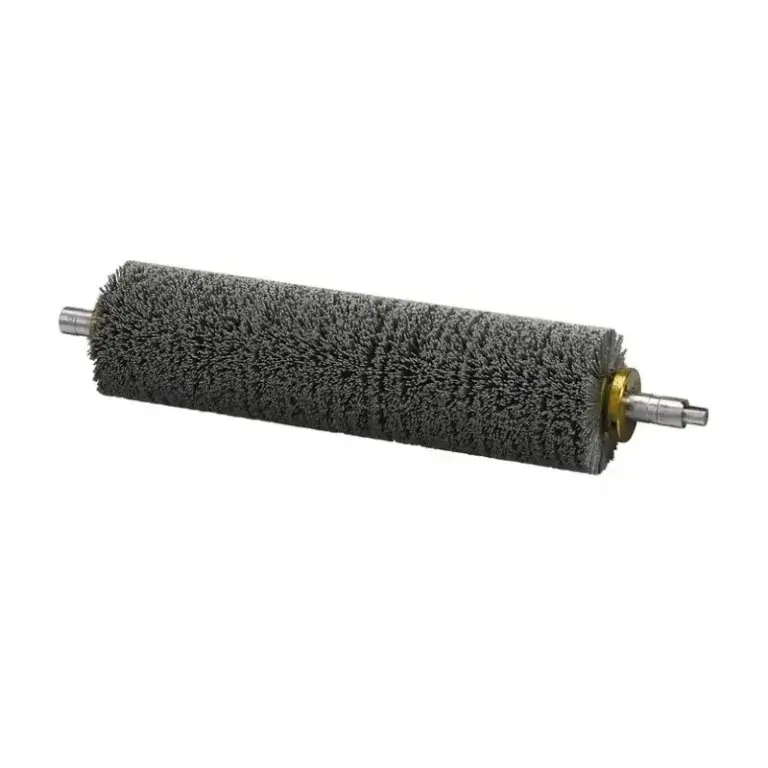
A cylindrical wire brush can deburr metal parts without damaging the surface when the wire material matches the workpiece, the wire diameter and configuration are selected for the desired finish level, and operating parameters such as RPM and feed pressure stay within recommended ranges. With correct specification, these brushes remove burrs while leaving dimensional tolerances and surface integrity intact.
This is not a matter of simply picking any brush off the shelf. The difference between a clean, burr-free edge and a gouged, dimensionally altered surface comes down to three variables: wire material selection, brush construction, and how the brush is run. Each of these factors interacts with the others, and a mismatch in any one of them can turn a deburring tool into a surface-damaging liability.
In the sections that follow, we will break down exactly how each variable affects the deburring outcome. We will cover why carbon steel and stainless steel wire brushes behave differently on different workpiece materials, how crimped and knotted wire configurations deliver different levels of cutting aggression, and what operating parameters produce consistent results without over-cutting.
How Does Wire Material Affect Deburring Results on Different Metals
Wire material determines whether a cylindrical wire brush deburrs cleanly or damages the workpiece surface. Carbon steel wire works best on ferrous metals like mild steel and cast iron. Stainless steel wire is required for stainless steel, aluminum, and non-ferrous alloys to prevent cross-contamination and after-rust. Matching brush filament to workpiece metal is the single most important specification decision in any deburring operation.
Carbon Steel Wire: The Ferrous Metal Workhorse
Carbon steel wire is the most widely used filament material in industrial deburring. High-carbon steel wire, typically with a carbon content between 0.50 and 0.80 percent, delivers tensile strength in the range of 200 to 275 kilograms per square millimeter. Wire diameters from 0.12 mm to 0.80 mm are commonly available, giving engineers a wide range of cutting aggression to choose from.
On mild steel and cast iron workpieces, carbon steel wire removes burrs efficiently. The wire hardness, typically HRC 40 to 45, provides enough cutting action to shear off raised burr material without deforming the wire tips. A 0.30 mm carbon steel filament running at moderate RPM strips burrs from stamped steel edges in a single pass while maintaining dimensional accuracy. For heavy burrs on structural steel, thicker 0.50 mm wire delivers faster material removal.
The cost advantage is significant. Carbon steel wire brushes are generally 30 to 40 percent less expensive than equivalent stainless steel brushes. For high-volume production shops processing ferrous parts exclusively, this translates to meaningful per-part cost reduction without sacrificing deburring quality. The wire brush cost factors pricing guide explains how volume orders of carbon steel brushes can reduce unit costs by 20 to 30 percent.
The limitation is clear: carbon steel wire must never touch stainless steel or aluminum workpieces. Microscopic carbon particles embed into the substrate surface. On stainless steel, these particles oxidize and create rust spots, a phenomenon the industry calls after-rust. A stainless steel part that passes through a carbon steel brush station comes out looking worse than when it went in.
Stainless Steel Wire: Contamination-Free Deburring
Stainless steel wire brushes, typically made from 302 or 304 grade stainless, are essential for deburring stainless steel, aluminum, copper, and other non-ferrous alloys. The wire delivers tensile strength around 160 to 180 kilograms per square millimeter, slightly lower than carbon steel but with the critical advantage of zero iron contamination risk.
For stainless steel fabrication, the argument is straightforward. A stainless steel part derives its corrosion resistance from a passive chromium oxide layer on the surface. Introducing carbon steel particles breaks this layer and creates initiation points for pitting corrosion. A stainless steel wire cylinder brush eliminates this risk. The same brush that deburrs a stainless steel weldment can also remove light surface oxidation without compromising the material’s metallurgical properties.
Aluminum parts present a different challenge. Aluminum is softer than steel, and a brush that is too aggressive gouges the surface rather than deburring it. Stainless steel wire in a fine diameter, typically 0.15 mm to 0.20 mm, provides enough stiffness to remove burrs while being flexible enough to ride over the base material without cutting into it. The result is a clean edge with no measurable change in part dimensions.
The Cross-Contamination Rule
Professional shops enforce a strict separation policy: one set of brushes for ferrous work, another set for stainless and non-ferrous. Mixing the two is never worth the risk. A single carbon steel brush used on a batch of stainless steel parts can ruin the entire production run. Color-coding brush storage racks and labeling each brush by material type is standard practice in aerospace and medical device manufacturing.
What Role Does Wire Configuration Play in Preventing Surface Damage
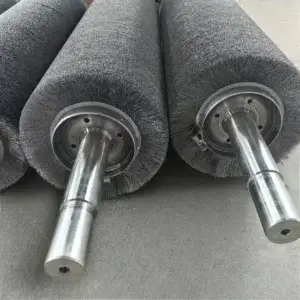
Wire configuration directly controls the aggressiveness of a cylindrical wire brush. Crimped wire provides a flexible, lighter cutting action suitable for fine deburring and surface blending without dimensional change. Knotted wire delivers high-impact, aggressive cutting for heavy burr and scale removal. Selecting the wrong configuration for the deburring task is a primary cause of surface damage.
Crimped Wire: Controlled, Flexible Cutting
Crimped wire filaments are individually formed with a wave pattern before being packed into the brush face. This crimp acts as a built-in flexibility mechanism. When the brush contacts the workpiece, each wire bends slightly, absorbing impact energy that would otherwise transfer directly into the metal surface.
The practical effect is that crimped wire brushes remove burrs through a shearing action rather than an impact action. The wire tips slide across the surface, catching raised burr edges and breaking them off without digging into the base material. On a stamped steel part with 0.1 mm to 0.3 mm burrs, a crimped brush running at moderate speed produces a clean edge with a surface roughness of approximately 25 to 50 micrometers Ra. The original part dimensions remain unchanged.
Crimped wire is the default choice for deburring parts that have already been machined to final tolerance. The gentler cutting action means the operator can run the brush across the entire edge profile without worrying about over-cutting corners or thinning thin-wall sections. For metal cylinder brush applications in automated deburring cells, crimped wire brushes provide consistent results over thousands of cycles because the wire fatigue life is higher than knotted configurations.
Knotted Wire: Heavy-Duty Material Removal
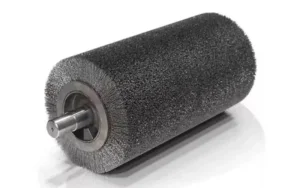
Knotted wire, also called twisted knot or cable twist, bundles multiple wire filaments into rigid rope-like segments. These knots protrude from the brush face with significantly less flexibility than individual crimped wires. The result is higher impact force per wire tip, which translates to faster material removal.
Knotted wire brushes are the right tool when burrs are heavy, when scale or heat tint must be removed along with the burr, or when processing speed takes priority over surface finish quality. On a structural steel fabrication with burrs exceeding 0.5 mm, a knotted brush running at 3,500 to 5,000 RPM clears edges in a fraction of the time a crimped brush would require.
The trade-off is control. A knotted brush operated with excessive pressure or dwell time will cut into the base material. On thin-gauge sheet metal, knotted wire can deform edges rather than clean them. The operator must maintain consistent travel speed and light contact pressure. Production environments that use knotted brushes for deburring typically fixture the part and control brush engagement depth mechanically rather than relying on operator feel.
Matching Configuration to Burr Severity
The decision between crimped and knotted starts with measuring the burr. A burr under 0.2 mm on a machined edge calls for crimped wire. A burr over 0.5 mm on a torch-cut or plasma-cut edge may require knotted wire, possibly followed by a second pass with crimped wire for surface refinement.
For mixed production lines where part types vary, many shops stock both configurations and change brushes based on the job. A steel wire cylinder brush with crimped wire handles the majority of deburring work. When a batch of heavily burred parts arrives, switching to a knotted brush keeps the line moving without compromising quality on either type of work.
What Operating Parameters Prevent Surface Damage During Deburring
Operating speed, feed pressure, and travel pace are the three parameters that determine whether a cylindrical wire brush deburrs cleanly or damages the workpiece. Running at 60 to 80 percent of the brush’s maximum rated RPM, applying light contact pressure that lets the wire tips do the work, and maintaining a consistent travel pace of 5 to 10 centimeters per second produce the best balance of deburring effectiveness and surface preservation.
Speed: The RPM Sweet Spot
Every cylindrical wire brush has a maximum safe operating speed printed on its packaging or core. This number exists for safety reasons, but it is not the recommended running speed for deburring. At maximum RPM, wire tips strike the workpiece with maximum kinetic energy, which increases cutting aggression and heat generation. For deburring without surface damage, the sweet spot is typically 60 to 80 percent of the rated maximum.
A brush rated for 6,000 RPM maximum performs best for deburring between 3,600 and 4,800 RPM. At these speeds, the wire tips have enough energy to shear burrs but flex upon contact rather than digging in. The brush also runs cooler, which extends filament life. Wire filaments that overheat lose their temper, becoming brittle and prone to fracture. A brush run at 80 percent of max RPM lasts significantly longer than one run flat-out.
For tube and bore deburring, where the brush is working inside a confined space, RPM control is even more important. A brush inside a 25 mm bore running at 800 to 1,200 RPM provides controlled deburring. Push that same brush to 2,500 RPM, and the centrifugal force flattens the wires against the bore wall, reducing contact quality and generating friction heat that can gall aluminum or stainless surfaces.
Pressure: Let the Wire Tips Work
The most common operator mistake in wire brush deburring is excessive pressure. Pushing a cylindrical wire brush hard against the workpiece does not make it cut faster. It bends the wire filaments past their elastic limit, causing permanent deformation. Once wires lose their spring shape, they stop cutting and start sliding. A deformed brush produces heat instead of deburring action.
The correct technique uses enough pressure to feel light resistance through the tool or fixture. The wire tips should make consistent contact across the brush face without visible deflection of the brush body. When the pressure is right, the operator hears a steady brushing sound, not a laboring motor or chattering vibration.
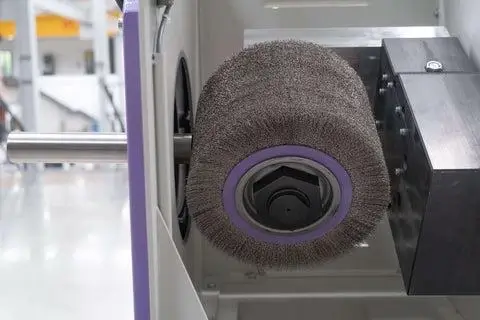
In automated deburring stations, brush engagement is set mechanically. A typical engagement depth for crimped wire deburring is 0.5 mm to 1.5 mm of interference between the brush outer diameter and the workpiece edge. This provides enough contact force to remove burrs without risk of dimensional change. The cylindrical wire brush selection guide for drill-mounted applications covers engagement depth recommendations in greater detail.
Travel Pace and Direction
Moving the brush too slowly concentrates heat and cutting action in one area, creating the risk of localized over-cutting. Moving too quickly means burrs survive the pass. A travel pace of 5 to 10 centimeters per second, roughly the speed of a slow hand sweep, provides a good starting point. The exact pace depends on burr severity, wire diameter, and workpiece hardness. Operators quickly develop a feel for the right speed through a few test passes on scrap material.
Direction matters for both safety and finish quality. The brush should rotate so that the top of the cylinder moves away from the operator, throwing debris forward and downward. On horizontal surfaces, work from the far edge toward yourself. This keeps the work area visible and prevents contaminants from being pulled upward toward the operator’s face.
Cool-Down Intervals for Long Runs
On high-volume production lines where brushes run continuously, heat buildup becomes a limiting factor. After 3 to 5 minutes of continuous operation, a 10- to 15-second free-spin interval allows air to flow through the filament bundle, cooling the wires and dislodging accumulated burr fragments. This simple practice regularly doubles the usable life of a brush in heavy deburring applications.
For production environments where downtime is not an option, alternating between two brushes so each one gets a cooling cycle during use maintains throughput without sacrificing brush longevity. The small upfront cost of a second brush is recovered many times over in extended brush life and consistent deburring quality.
How Do Brush Geometry and Core Construction Influence Deburring Quality
Brush diameter, face width, wire density, and core material all affect how a cylindrical wire brush performs during deburring. A brush diameter that is too small concentrates force on a narrow contact band. Core material determines the maximum operating speed and vibration characteristics. These mechanical factors are inseparable from the filament and configuration choices already discussed.
Diameter and Face Width
Brush diameter determines the contact patch size and the tip speed at a given RPM. A larger diameter brush covers more surface area per revolution but requires lower RPM to maintain the same tip speed. For deburring flat edges on sheet metal or plate, a brush diameter of 100 mm to 150 mm provides good coverage without requiring excessive machine speed.
Face width, the axial length of the wire-covered section, determines how much of the part edge the brush contacts in a single pass. Wider faces from 50 mm to 100 mm suit conveyorized deburring lines where parts pass under a stationary brush. Narrower faces from 15 mm to 30 mm provide more control for manual or robotic deburring of complex geometries.
Wire Fill Density
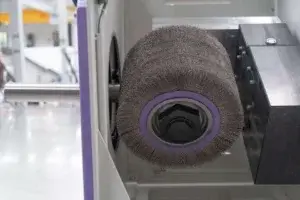
Wire fill density, measured as the number of filaments per unit area of the brush face, influences both cutting efficiency and debris clearance. A high-density brush with tightly packed filaments lasts longer and provides more consistent deburring across the full face width. A medium-density brush clears chips and burr fragments more effectively because there is space between the filaments for debris to escape.
For deburring operations that generate fine, powdery burr residue, medium to medium-high density provides the best balance. High-density brushes work better for coarse burrs that break off in larger fragments. The fill density specification should be discussed with the brush manufacturer based on the specific burr characteristics of the parts being processed.
Core Material and Speed Capability
The brush core is not just a mounting surface. It determines how fast the brush can run and how much vibration it generates.
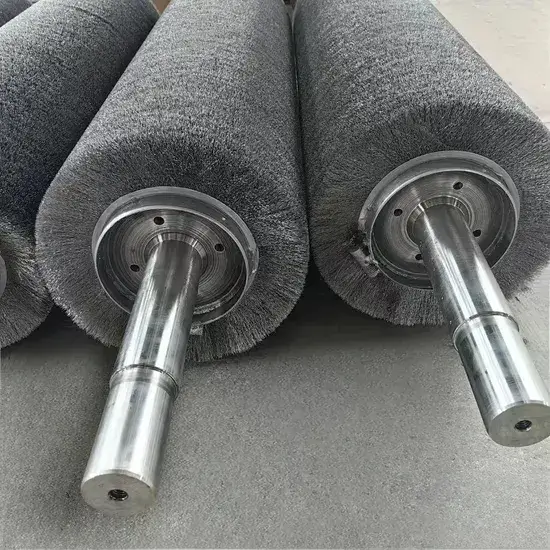
A wooden core costs the least but is limited to slow-speed applications. On a deburring station running at 3,500 RPM, a wooden core fails within hours. Steel tube cores handle moderate speeds and are the most common choice for general deburring work. Precision-machined aluminum cores with keyed bores handle the highest speeds and provide the best vibration characteristics, making them the standard choice for automated production lines where consistency and uptime matter most.
Dynamic balancing becomes necessary above approximately 500 RPM for larger diameter brushes. An unbalanced core generates vibration that translates into uneven deburring pressure across the brush face. The outer edges of the brush may cut more aggressively than the center, creating an inconsistent edge finish. Paying for a dynamically balanced core eliminates this variable.
Conclusion
The question of whether cylindrical wire brushes can deburr without damaging the surface has a clear answer. Yes, they can, and they do it every day in thousands of production environments. The outcome depends entirely on specification quality.
Match the wire material to the workpiece. Carbon steel for ferrous metals, stainless steel for non-ferrous metals. Select crimped wire for light deburring and surface blending, knotted wire for heavy burr removal. Run the brush at 60 to 80 percent of its maximum rated RPM with light contact pressure and a consistent travel pace. Choose a core material and diameter appropriate for the operating speed and part geometry.
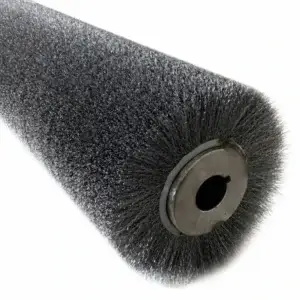
A cylindrical wire brush specified correctly removes burrs while leaving dimensional tolerances and surface finish intact. Specified incorrectly, the same brush type can gouge edges, contaminate surfaces, and scrap parts. The difference is in the details. Engineering teams that invest time in matching brush specifications to their specific deburring requirements get clean, burr-free parts without rework, without scrap, and without the downstream costs that bad deburring creates.
FAQ
What is the difference between a cylindrical wire brush and a cup brush for deburring?
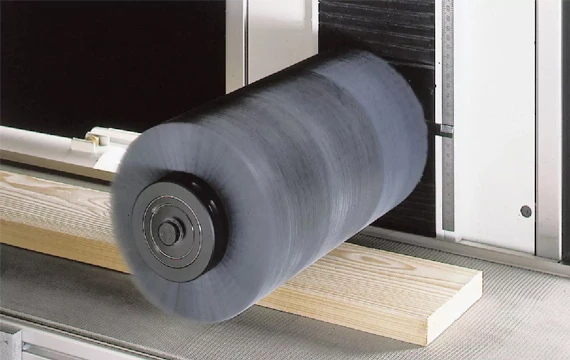
A cylindrical wire brush makes contact along its outer circumference, making it ideal for edge deburring, conveyorized processing, and parts with linear edges. A cup brush makes contact on its face, which is better for flat surface deburring and cleaning large horizontal areas. For edge deburring specifically, the cylindrical shape provides more consistent contact along the full edge profile.
How do I know when a cylindrical wire brush needs replacement?
A wire brush needs replacement when the filaments no longer make consistent contact with the workpiece. Signs include visible wire shortening of more than 30 percent from the original trim length, uneven wear creating a tapered brush profile, or the brush requiring excessive pressure to achieve the same deburring result. Operators should also replace brushes when wires begin breaking off, as loose wire fragments pose a safety hazard.
Can one cylindrical wire brush deburr both steel and aluminum parts?
No. A brush used on steel carries embedded carbon steel particles that will contaminate aluminum surfaces, causing galvanic corrosion and surface pitting. Separate brushes must be dedicated to ferrous and non-ferrous workpieces. Many shops color-code brushes or use dedicated brush storage racks to prevent accidental mixing. The cost of a second brush is negligible compared to the cost of scrapping a batch of contaminated aluminum parts.