
Polishing non-ferrous metals creates a problem that many fabricators only discover after a batch of finished parts gets rejected. Aluminum, copper, brass, and zinc are softer than carbon steel, so aggressive wire brushes can scratch them. Worse, steel filaments shed tiny ferrous particles that embed in the workpiece and rust weeks later, leaving red stains that no post-cleaning step can hide.
Manufacturers of window profiles, brass fittings, copper busbars, and furniture components keep coming back to the same question: how do you remove burrs, scale, and oxidation at production speed without damaging the surface or contaminating the metal?
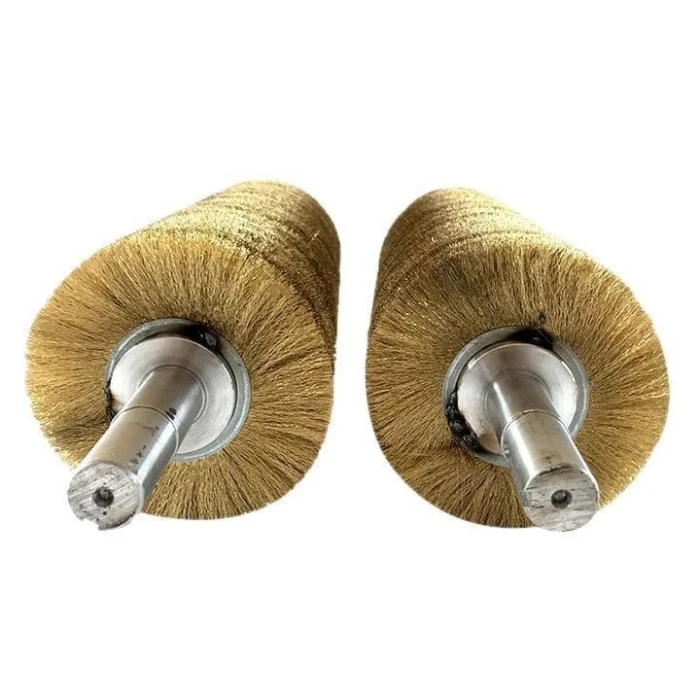
A brass rotary brush is the practical answer for non-ferrous metal polishing. Brass wire is softer than most workpiece alloys, yet hard enough to clean, deburr, and brighten surfaces without scratching the base material or leaving ferrous contamination behind. It produces a clean, consistent satin finish on aluminum, copper, brass, zinc, and even wood, which is why it remains a standard tool on finishing lines around the world.
This guide explains what a brass rotary brush is, why it outperforms steel on non-ferrous workpieces, and where it earns its keep in real production. It also covers the specifications that matter when you buy, the operating parameters that protect both brush and part, and the safety points that should never be skipped.
What Is a Brass Rotary Brush
A brass rotary brush is a power-driven cylindrical tool with brass wire filaments mounted around a metal core, built to clean, deburr, polish, and finish surfaces as the workpiece passes beneath or against the rotating brush.
Construction and Design
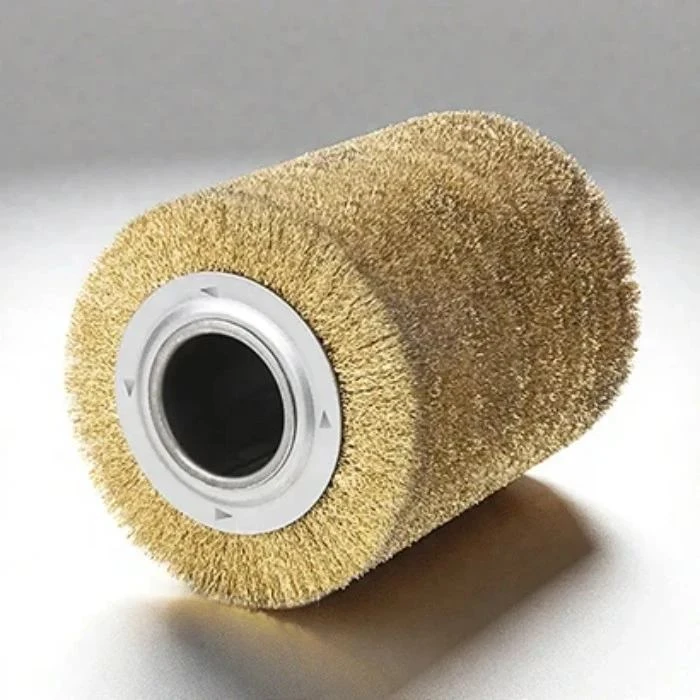
The construction is straightforward. A steel or aluminum hub carries filaments made from a copper-zinc alloy, usually crimped for a softer brushing action or twisted into a cable for heavier work. The whole assembly spins on a shaft, and the workpiece moves through the brush at a controlled feed rate. Because the contact area is a line rather than a point, a rotary brush treats every spot on the surface with the same pressure and speed, which is the main reason rotary designs beat manual and flat brushes for consistency. For a fuller introduction to how these tools work and where they are used, see our overview of the cylinder rotary brush.
Two Defining Features
Two features define a brass brush:
- Filament material: brass wire in diameters from 0.15 mm to 1.0 mm, crimped or twisted
- Core construction: machined hubs, stamped discs, or wound strip that hold the wire in a uniform pattern
Why Brass Resists Corrosion
Brass is an alloy of copper and zinc. The Copper Development Association notes that the ratio of the two metals sets the hardness and work-hardening behavior of the alloy, which is why brush makers select specific grades for specific jobs. Copper-zinc alloys resist oxidation better than steel and do not rust, so a brass brush keeps its working edge longer in humid finishing environments.
Why Use a Brass Rotary Brush on Non-Ferrous Metals
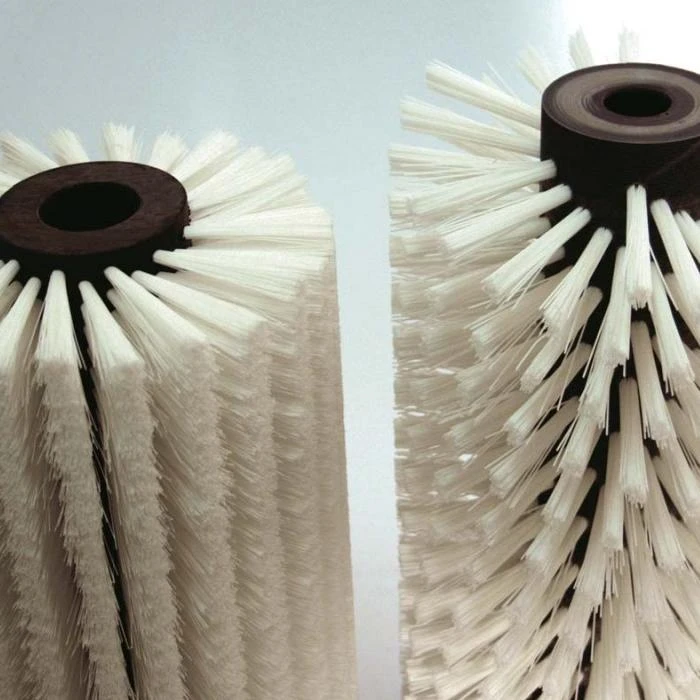
Brass wire prevents cross-contamination and surface damage on non-ferrous metals because it is softer than most workpiece alloys, which means it cleans without gouging and leaves no ferrous residue that can rust on the finished part.
The failure mode with steel wire is easy to describe. Carbon steel filaments are harder than aluminum and copper. They remove material fast, but they also leave microscopic iron particles behind. Those particles sit on the surface and oxidize, and a week later the customer sees rust-colored specks on a part that was supposed to ship clean. Brass eliminates that problem at the source. The wire is harder than surface oxides and light burrs, but soft enough that it gives way before the workpiece does.
The table above shows the trade-off clearly. Steel and stainless brushes have their place in heavy rust removal and aggressive deburring, but for finishing lines that process copper, aluminum, brass, and zinc, the safer default is brass. When you need one tool that covers both metal and softer substrates, the metal cylinder brush family includes steel, stainless, and brass wire options, so you can match the filament to each station.
Brass wire also cuts down on sparks in certain environments. Copper alloys do not spark the way carbon steel does when struck, which makes brass brushes a calmer choice in areas where ignition sources are a concern, though normal explosion-prevention rules still apply.
Key Applications of Brass Wire Cylinder Brushes
Brass wire cylinder brushes appear wherever the finish must stay clean and scratch-free: wood polishing, furniture finishing, aluminum profiles, copper strip, brass hardware, and zinc castings.
Four Main Use Cases
Fabricators choose brass wire in four main situations:
- Wood polishing: the soft wire lifts grain and smooths edges without burning the surface
- Furniture finishing: brass wire removes machining marks and evens the sheen before coating
- Aluminum and copper profiling: the brush deburrs cut edges and blends surface defects without iron contamination
- Mild rust and tarnish removal: brass wire scrubs light oxidation from hardware and castings
Wood and Furniture Finishing
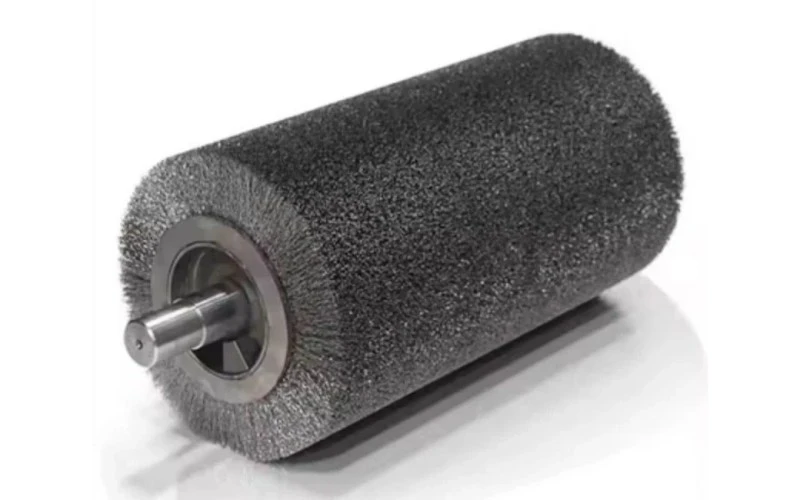
Wood and furniture are the classic brass jobs. The brass wire cylinder brush used in wood polishing rides along the grain and levels the surface while keeping the natural color, something steel wire cannot do without leaving dark streaks. On the furniture side, the same principle applies to chair parts, table edges, and cabinet components where the brushing step happens right before stain or lacquer. Our furniture polishing brush application page shows how the tool is set up on a finishing line.
Metal Profiling and Strip Finishing
For metal parts, the wins are quieter but just as valuable. A brass brush on an aluminum extrusion line removes the die lines and light burrs left by the saw, and the surface comes out uniform enough to anodize without a separate pre-treatment step. On copper strip, brass wire brightens the surface without the risk of embedded steel that would later show up as corrosion spots.
How to Choose the Right Brass Rotary Brush
Choosing the right brass rotary brush comes down to five specifications: filament diameter, trim length, brush density, core size, and operating speed, each one matched to the hardness of the workpiece and the finish you need.
Work From the Application Backward
Work from the application backward. A soft, bright finish on aluminum needs fine, crimped wire at low density. A stubborn burr on a brass casting needs thicker wire and a denser pack. The selection guide on our site walks through each parameter in detail, and it is worth reading before you commit to a spec: rotary brush selection covers filament materials, dimensions, and core types across the full brush range.
The Five Key Specifications
Here is the short version of the decision process:
- Filament diameter: 0.15 to 0.30 mm for finishing and polishing, 0.30 to 0.60 mm for general deburring, above 0.60 mm for heavy work
- Trim length: longer bristles give a softer action and conform to uneven parts; shorter bristles give a stiffer, more aggressive cut
- Density: dense packs remove more material but generate more heat; open packs finish faster and run cooler
- Core size and bore: match the shaft diameter and the clearance of your machine, and check the maximum RPM rating of the brush
- Operating speed: brass wire is heavier than nylon, so stay inside the speed window the manufacturer lists for the trim length you choose
A common mistake is to buy one brass brush for every station. The trim length that works on a flat panel will not follow the contour of a cast fitting, and a brush dense enough to deburr will overheat a thin aluminum sheet. Test one brush on the actual part before you order in volume, then scale the spec that passed.
Operating Parameters and Best Practices
Run most brass wire polishing jobs at a surface speed of 1,000 to 2,500 surface feet per minute, keep the interference light so only the bristle tips touch the part, and feed the workpiece against the brush rotation for the cleanest finish.
Surface Speed vs. RPM
Surface speed matters more than RPM. A small-diameter brush turning fast can still have a low surface speed, while a large brush at modest RPM can move very fast at the tip. Check the speed against the workpiece material, not against the motor. Aluminum and copper tolerate the lower end of the range; brass castings can take the higher end.
Operating Rules to Follow
The other operating rules are easy to remember:
- Keep interference at 1/8 inch or less. Burying the bristles into the part builds heat and shortens brush life
- Feed the workpiece against rotation so the wire does the cutting on the leading edge
- Use light, consistent pressure. Let the brush do the work
- Reverse the rotation direction periodically, if the machine allows it, to keep the bristles from taking a permanent set
- Clean the brush between shifts to remove embedded grit that would otherwise scratch the next part
Wear and Replacement Timing
Brass wire wears gradually, which is actually helpful. The surface speed stays stable as the brush wears down, and the finish quality holds until the trim length gets too short to reach into the part geometry. When that happens, replace the brush rather than pushing more pressure through it, because extra pressure on a short brush just burns the surface.
Safety and Workplace Considerations
Guarding, eye protection, and dust control are the three non-negotiables when running any rotary brush, because broken wire filaments and fine metal dust are real hazards at production speed.
OSHA Machine Guarding Requirements
Rotary brushes are spinning machinery, and the US Occupational Safety and Health Administration treats them as such. OSHA requires point-of-operation guards and anchor guards on rotating tools so that clothing, fingers, and loose material stay clear of the brush. See the OSHA guidance on machine guarding for the requirements that apply to your setup.
Personal Protection and Dust Control
Beyond guarding:
- Wear impact-rated eye protection. Brass filaments can snap and fly at high speed
- Control dust and ventilation. Copper-zinc dust accumulates, and heavy exposure to copper and zinc particulates has documented health effects, so local exhaust ventilation is the standard answer
- Inspect brushes regularly. Replace any brush with cracked hubs, loose wire, or bent sections
- Lock out and tag out before cleaning or changing brushes
Why This Matters on the Floor
None of this is complicated, but skipping it is how finishing lines get injuries. The brush itself is the cheapest component in the system; the operator is not.
Frequently Asked Questions
Can a brass rotary brush be used on steel parts?
Yes, for light work such as removing flash or blending welds, a brass brush will not damage steel because the brass is softer than the workpiece. The downside is speed. Brass wire wears faster on steel and removes heavy rust more slowly, so for aggressive rust removal on steel, a carbon steel or stainless brush is the better economic choice.
Will brass wire cause galvanic corrosion on aluminum parts?
Contact between brass and aluminum can create a galvanic couple in the presence of moisture, so rinse or dry parts after wet brushing and avoid leaving brass debris trapped in joints. In dry finishing lines, the risk is minimal, which is why brass brushes remain standard for aluminum profiles.
How long does a brass wire cylinder brush last?
Service life depends on trim length, speed, and how much interference you run. A brass brush run with 1/8 inch interference at moderate speed on aluminum typically handles several thousand linear feet of parts, and the finish degrades gradually rather than failing suddenly, so you can schedule replacements instead of reacting to them.