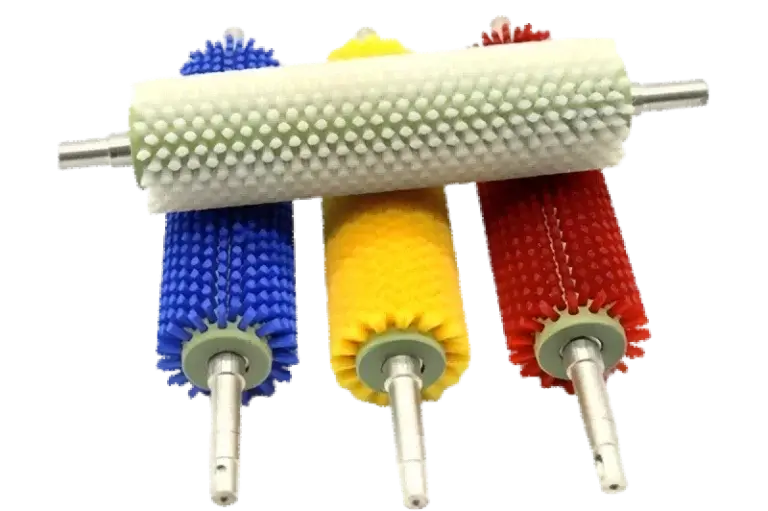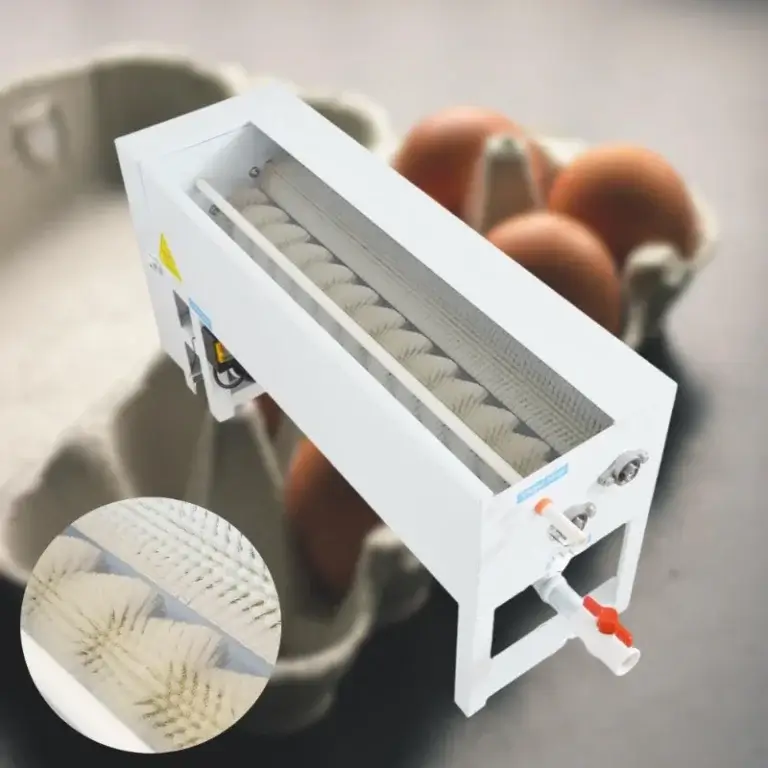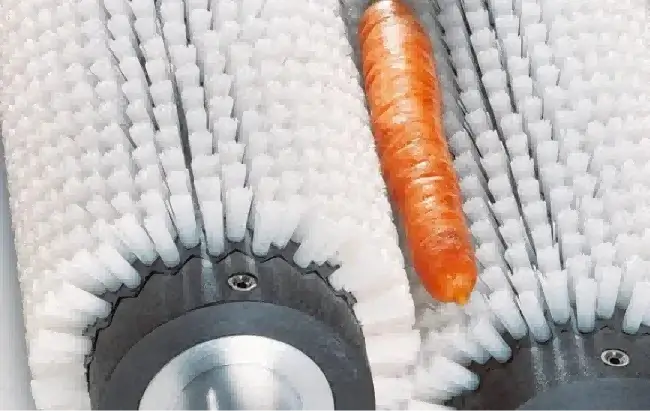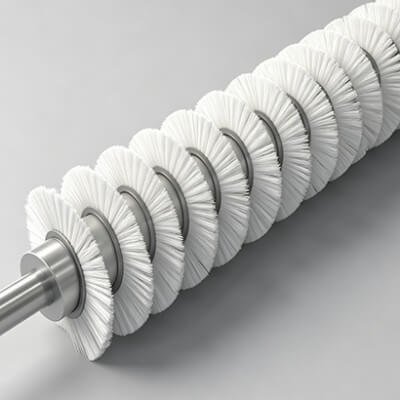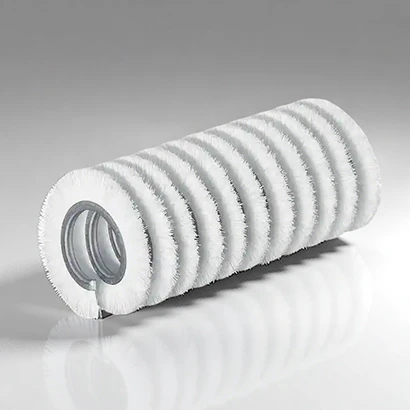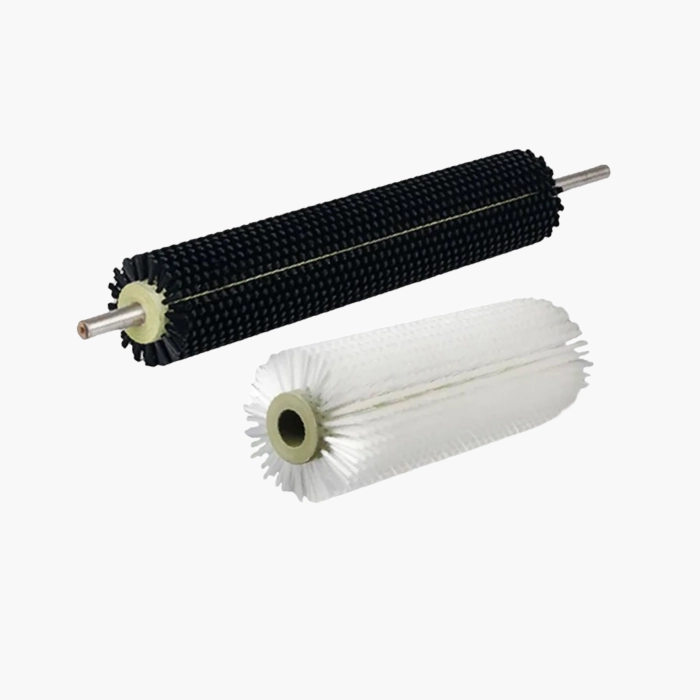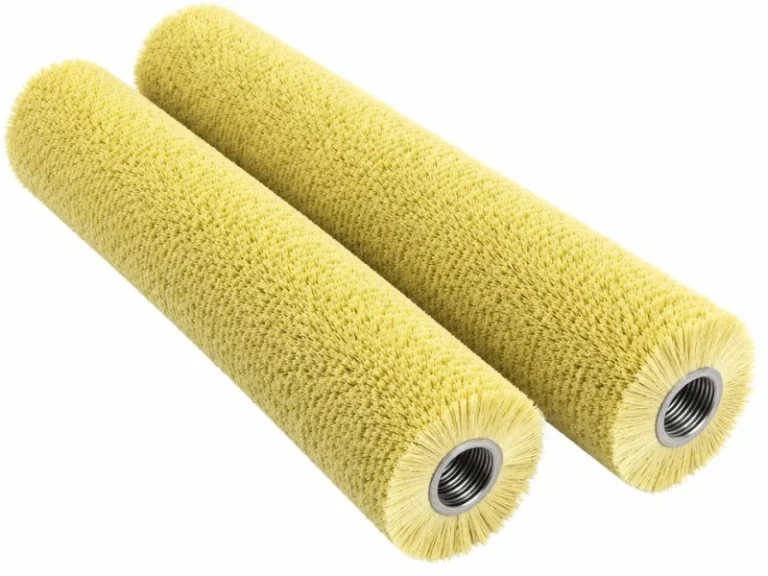
Strawberries and blueberries are the highest-profit fruits and also the most sensitive when it comes to handling. One single bruised berry that leaks its juice into a clamshell can contaminate the entire batch with mold, such that the whole batch will have to be rejected or sold at a lower price. And, in most cases, this entire problem is traced back to that single component that was overlooked: the Best Nylon Fruit Washing Brushes.
Most packers still use general-purpose cylindrical cleaning brushes, which were the original designs for root vegetables or citrus. They are fine on tough skins; they just act like sandpaper on delicate berry tissue. Properly specified nylon fruit washing brushes will eliminate most mechanical damage before it reaches the packing line. Such brushes should have the recommended filament diameter, density, and polymer grade.
This post will explain the three specification pillars that distinguish a berry-safe brush from a berry-destroying one.
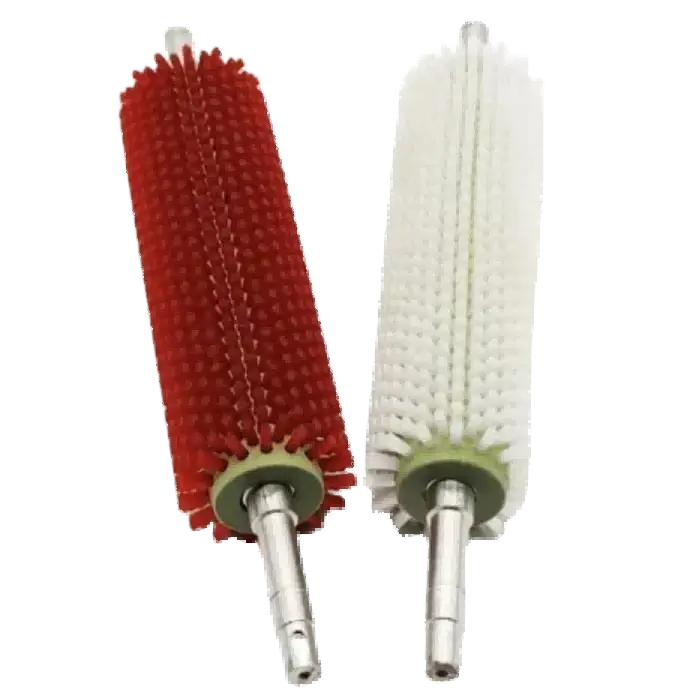
Standard Brushes Bruise Soft Berries
The problem is simple. Most fruit processing plants buy one style of brush roller and run it on every commodity. A standard cylindrical cleaning brush has nylon filaments in the range of 0.20 mm–0.30 mm in diameter. That stiffness works well with potatoes, apples, and carrots. Strawberries and blueberries, though, have cell walls about one-tenth the thickness of potato skin.
At high speed, the thick filaments focus force at small contact points. This is what results in micro-tears, bruising under the skin, and juice leakage, often not visible at the washer but fully apparent 24–48 hours later in cold storage.
Processors who have audited their post-wash damage rates often find that 1%–3% of berries show visible defects. This seemingly small percentage becomes a huge financial loss when retailers slap penalty clauses on them or refuse to take the delivery altogether.
The answer is not to slow the line. The answer is to upgrade three brush specs at the same time.
Ultra-Fine Soft Bristles Required
Filament diameter is the single most influential variable. For soft-skinned berries, the bristle wire diameter must fall between 0.06 mm and 0.10 mm — roughly one-third the thickness of a standard brush filament.
At this gauge, each single filament flexes on contact, rather than puncturing or dragging across the skin. Two materials meet this requirement:
- Food-grade ultra-fine PA612 nylon — the preferred synthetic for wet environments
- Premium natural horsehair — an organic-certified line
Any filament above 0.10 mm starts behaving like a rigid probe against the skin of the berries. Those who have switched from general-purpose filaments of 0.25 mm to soft PA612 filaments of 0.08 mm usually report bruise rates dropping below 0.3%.
For more on matching brush specs to different fruit types, check out the guide on choosing the right fruit cleaning brush — it covers the full commodity-by-commodity selection framework.
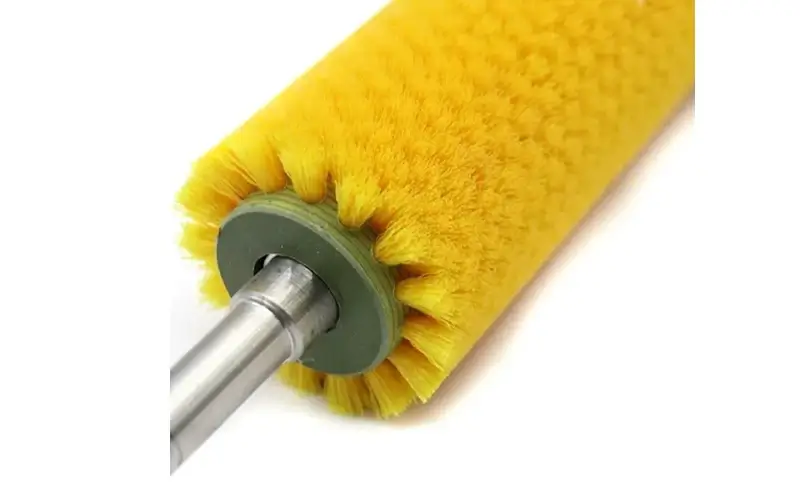
Dense Tufting Prevents Bruising
The answer lies in a gapless, cross-pattern, ultra-high-density tufting technology. With this arrangement:
- Each berry comes into contact with thousands of filament tips at the same time.
- The whole rolling force is distributed uniformly over the entire surface of the fruit.
Even ultra-fine filaments can harm berries if the tufting structure has gaps. Where the spaces between clusters of bristles are too big, individual berries drop into those spaces and get pressure from fewer tips.
No single point on the skin absorbs disproportionate pressure.
High-density tufting basically changes the brush surface from a series of isolated bristle clusters to one continuous soft pad. This difference matters most at commercial throughput speeds because the berries pass through the nylon fruit washing brushes in fractions of a second and have no time to self-adjust their position.
Elastic PA612 Reduces Friction Damage
Not all nylon is created equal, however. The lower-grade nylon filaments, especially PA6 or PA66, take in water very quickly, swell, and lose their elastic memory. After a few hours of continuous operation, they start to mat and clump. In this case, matted bristles create hard spots that scratch the surfaces of berries.
PA612 nylon is better than other grades in three important ways:
- It has low moisture absorption of about 1.5%, so the filament stiffness remains constant throughout a full production shift.
- It has high bending recovery: each filament returns to its original position after deflection, which means uniform contact can be maintained.
- It has superior chemical resistance: it withstands sanitizer solutions (chlorine, PAA) without degrading prematurely.
For high-value berries, PA612 is not an extra; it’s the basic requirement. Brush rollers made with PA612 filaments keep their cleaning geometry much longer, cutting both fruit damage and brush replacement frequency. Optional grades are not able to perform better in this case.
Processors comparing options of nylon cylinder brushes should ask the manufacturer for PA612 certification and test data before making a purchase.
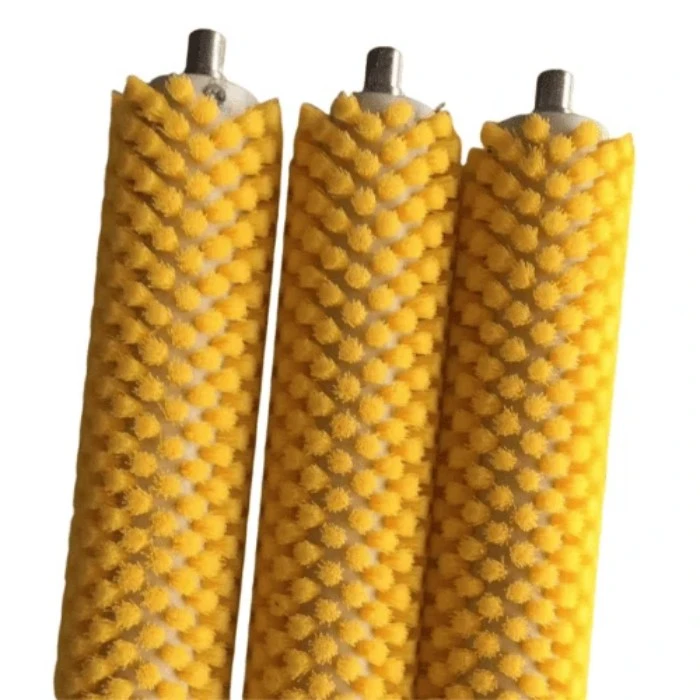
Standard vs Berry Washing Brushes
| Specification | Standard Brush Roller | Soft-Berry Dedicated Brush |
| Filament Diameter | 0.20 mm – 0.30 mm | 0.06 mm – 0.10 mm |
| Filament Material | PA6 / PA66 / PP | Food-grade PA612 or natural horsehair |
| Tufting Density | Standard spacing | Gap-free cross-pattern ultra-high density |
| Moisture Absorption | 6%–8% (PA6) | ~1.5% (PA612) |
| Bending Recovery | Moderate — filaments mat after hours | High — maintains shape across full shifts |
| Berry Bruise Rate | 1%–3%+ | < 0.3% |
| Suitable Fruits | Potatoes, apples, citrus | Strawberries, blueberries, raspberries |
This comparison makes it clear that one standard cannot work for everything. The difference in performance between these two brush types is directly related to packout yield and retailer acceptance rates.
FAQs
What is the minimum order quantity for custom soft-berry nylon fruit washing brushes?
The MOQ depends on roller dimensions and filament specs. Most manufacturers accept orders starting from 10-20 rollers for custom berry-grade builds.
How often should processors replace PA612 brush rollers on a berry washing line?
Under normal conditions, PA612 brush rollers should last for one to two complete seasons. Regular inspection every 200 operating hours helps to maintain optimal performance.
Will the same brush roller be able to clean strawberries as well as harder fruits like apples?
No. The ultra-fine 0.06-0.10 mm filaments do not have the stiffness for effective cleaning on hard-skinned fruits. Processors should dedicate separate cylindrical cleaning brushes per commodity group.