
Why Abrasive Brushes for Metal Are the Standard for Deburring
The Problem — Burrs Cause Costly Issues Downstream
Metal parts rarely leave a machining cell ready to ship. CNC milling, laser cutting, stamping, and grinding all leave burrs along edges and inside holes, and those thin metal projections cause real problems downstream: scratched coatings, jammed assemblies, rejected parts, and cuts during handling. Many fabricators still remove them by hand with files and scrapers, which is slow, inconsistent, and impossible to scale across a production line. That is why more shops are moving deburring into automated finishing with abrasive brushes for metal.
How Abrasive Brushes Work and the Grit Question
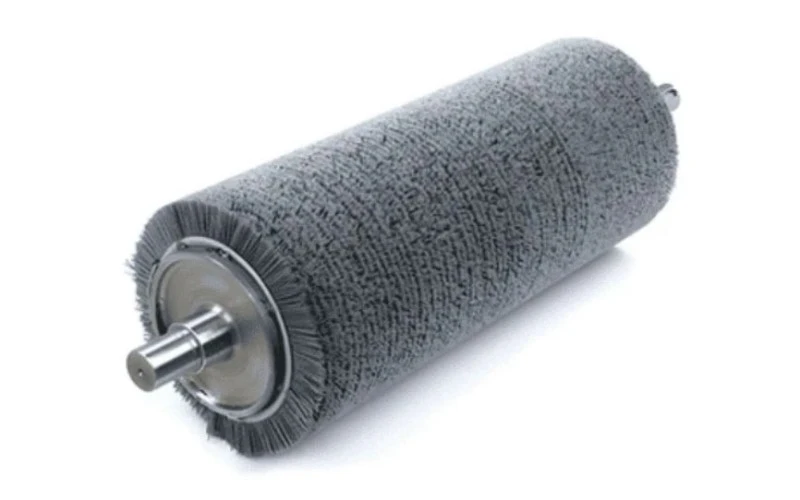
Abrasive brushes for metal work by rotating a dense bed of abrasive filaments across the workpiece edge, knocking down burrs at a controlled rate while blending the edge into a consistent radius. When a plant sets up this process for the first time, the most common question is not which brush brand to buy but which grit to run. For general metal deburring, start with a 120 grit abrasive nylon brush. Use 80 grit or coarser when burrs are heavy and weld scale is present, and step up to 180–240 grit when the goal is edge blending or a smoother finish before polishing. Grit selection is a direct trade-off between stock removal and surface finish, and the right number depends on the base metal, the burr size, and the finish your customer will accept.
What This Guide Covers
This guide explains how abrasive brush filaments cut burrs, how grit numbers map to cutting power, and which abrasive material fits different metals. It includes a grit selection chart for common workpieces, a comparison of silicon carbide, aluminum oxide, and steel wire options, and a checklist your production engineer can use on the shop floor. If you are specifying brushes for a new line, the page on custom brush specifications covers the diameter, trim length, and fill parameters you need to define before ordering.
How Abrasive Brushes for Metal Remove Burrs
How the Filaments Cut
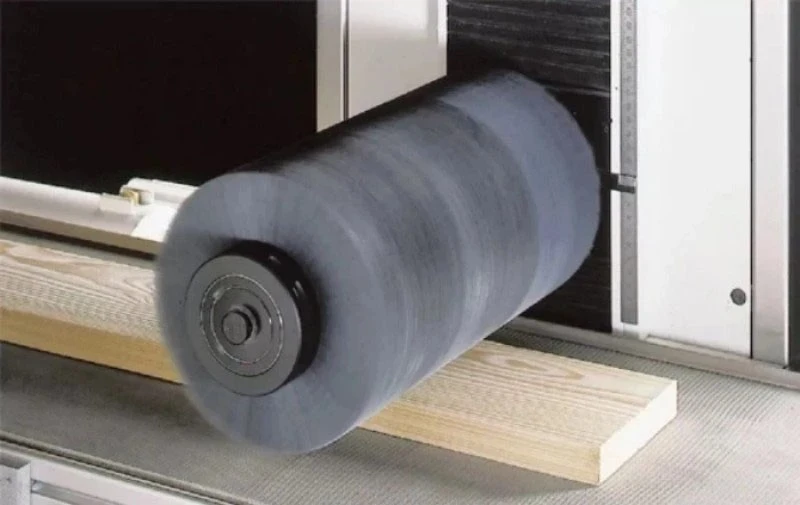
An abrasive brush removes a burr by pressing hundreds of flexible filaments against the edge at high speed, so each grit particle cuts a tiny chip while the nylon or wire carrier conforms to the part geometry.
The cutting action is different from a grinding wheel. A grinding wheel is rigid, so it removes material only where the wheel face meets the part, and it cannot follow complex contours without over-cutting. An abrasive brush is compliant, meaning the filaments bend around edges, into grooves, and across drilled holes. That compliance lets the brush reach burrs on irregular surfaces without changing the base dimension of the part. Burr height drops quickly because the filaments hit the thin, unsupported edge first, while the thicker body of the workpiece absorbs the same contact with little effect.
Two Key Variables — Filament Material and Grit Size
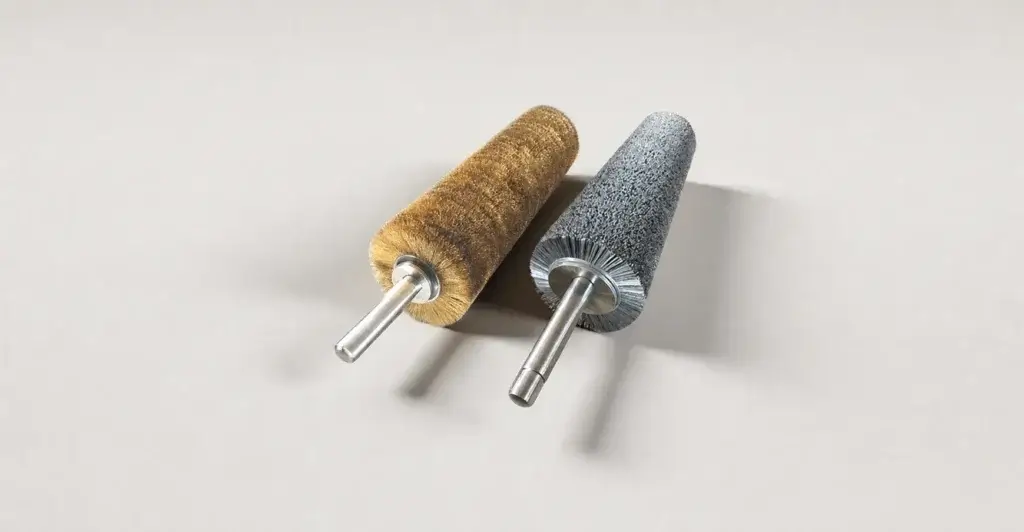
Two variables control how aggressive the brushing action is. The first is filament material: steel wire cuts fast and leaves a coarser texture, while abrasive nylon removes metal more gently and leaves a more uniform finish. The second is grit size, the particle size bonded into or onto the filament. Larger particles (lower grit numbers) cut deeper per pass, and smaller particles (higher grit numbers) refine the surface. A 60 grit brush can strip heavy burrs and weld spatter in seconds, but it leaves visible scratch marks. A 240 grit brush takes longer to remove the same burr and leaves a finish close to a fine sanding pass. Most deburring lines run two stages: a coarse brush to knock the burr down, then a finer brush to blend the edge.
Deburring in Practice
For a detailed look at the construction options behind this behavior, the article on abrasive wire cylinder brush design and fill patterns explains how trim length and filament density change the result.
Grit Selection Chart for Common Metals
For carbon steel and stainless steel parts, 120 grit silicon carbide abrasive nylon is the most reliable starting point; switch to 80 grit for heavy burrs and to 180–240 grit for aluminum, thin-wall parts, and pre-polish work.
Grit numbers follow a simple logic: lower numbers are coarser and cut faster, higher numbers are finer and leave a smoother surface. The table below is a practical reference used by finishing engineers when they set up deburring stations. It assumes a standard abrasive nylon brush with silicon carbide or aluminum oxide filaments running at the manufacturer’s recommended speed.
The practical rule is to match the brush material to the metal being processed. A line that deburrs mixed carbon steel and aluminum parts can often run one silicon carbide brush at 180 grit for both, because the abrasive particles are small enough that they do not gouge the aluminum. A line that only handles heavy structural steel may be better served by a steel wire cylinder brush, which stands up to repeated impact and does not load up with material the way nylon filaments can. For soft-metal finishing and polishing steps, aluminum oxide at 240 grit or finer gives the gentlest result without leaving stray wire marks.
Choosing Between Wire and Abrasive Nylon Brushes
Use abrasive nylon for deburring and edge blending on machined parts, and use wire brushes only for heavy contamination removal such as rust, paint, and weld slag where the final finish is secondary.
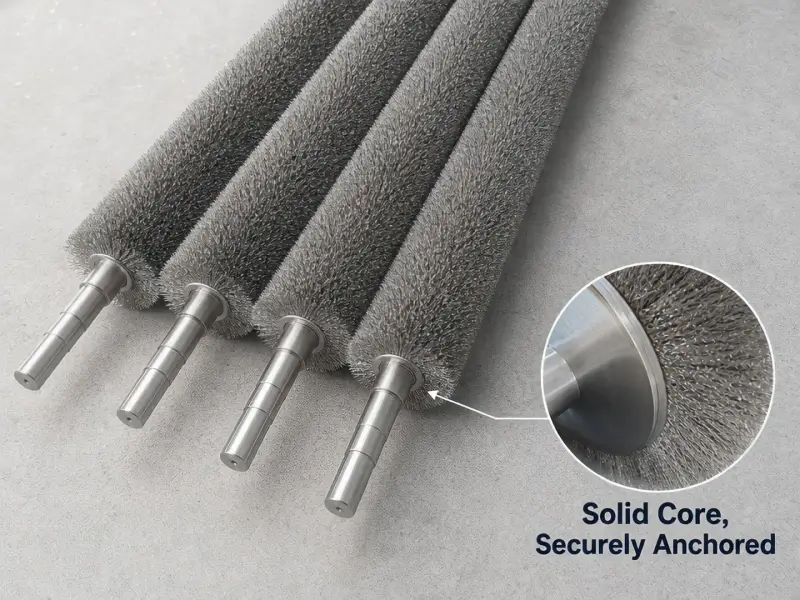
The difference comes down to how the brush interacts with the burr. Wire filaments are metal strands that strike the edge with mechanical force. They remove material fast, but they also hammer the surface, which can leave a directional scratch pattern and cause small vibrations on thin parts. Abrasive nylon filaments are nylon strands impregnated with grit. They act more like flexible sandpaper, cutting with the abrasive particles rather than with impact, so the result is more predictable and easier to control on automated equipment.
There is also a safety and maintenance angle. Wire filaments can break and throw at high speed, which is why wire brushes have strict maximum RPM limits and require guarding. Abrasive nylon is non-shedding and non-sparking, which makes it a safer fit for enclosed deburring machines and for work near flammable residues. Nylon also resists corrosion and does not rust, so brushes stored in humid shops stay usable longer. For edge breaking on drilled holes, laser-cut profiles, and machined pockets, abrasive nylon is the standard choice. For heavy scale removal on structural steel, wire remains the faster option. To see how these trade-offs play out in real production settings, the breakdown of industrial deburring applications walks through three typical installations and the brush type each one runs.
Practical Checklist for Choosing a Deburring Brush
Work through material, burr size, finish target, and machine speed in that order, and you will land on the right grit and brush style without trial and error.
- Identify the base metal and its hardness. Softer metals need finer grit and gentler filaments.
- Measure the burr. Heavy burrs and weld spatter call for 60–80 grit or a wire brush; standard machined burrs suit 120 grit.
- Set the finish target. If the part goes to polishing or anodizing, plan a second pass at 180–240 grit.
- Check the part geometry. Complex edges and internal holes need a flexible brush with shorter trim and higher density.
- Match the brush diameter and width to the available spindle and the part size, leaving overlap for uniform coverage.
- Confirm the maximum RPM rating on the brush exceeds your machine speed. Running past the rating risks filament throw and poor finish.
- Run a small sample batch first, then inspect edge radius and surface roughness before scaling to full production.
A common mistake is choosing a brush for the worst burr on the line and running it on everything. That over-cuts the easy parts and wears the filaments unevenly. The better approach is to separate deburring into stages and let each brush do one job. If you are still evaluating whether a rotary brush fits your process, the primer on wire cylinder brush design explains the basic structure, fill terminology, and speed guidelines you will encounter when talking to suppliers.
Frequently Asked Questions
Can one abrasive brush handle both deburring and polishing?
One brush can do both only if the burrs are light and the finish requirement is moderate. A single 180 grit brush will deburr and leave a semi-smooth edge, but a polished surface usually needs a second brush at 240 grit or finer. Running one brush for both tasks forces a compromise on either cutting speed or finish quality.
How long does an abrasive nylon brush last on a deburring line?
Brush life depends on grit, feed pressure, and burr severity. With normal machined burrs on steel, a 120 grit abrasive nylon brush typically lasts several shifts before the cutting rate drops, and it can often be rotated or trimmed to extend service. Heavy burrs and high feed rates wear filaments much faster, so monitoring surface finish is the most reliable indicator of when to replace it.
Do abrasive brushes remove burrs from inside holes and recesses?
Yes, but the brush must match the hole geometry. Cylinder brushes and abrasive nylon brushes with the right diameter and trim length can reach internal edges that wheels cannot. The filaments compress slightly on entry and spring back against the hole wall, which lets the brush deburr the entry, exit, and cross-hole edges in one pass.