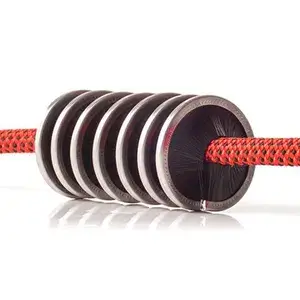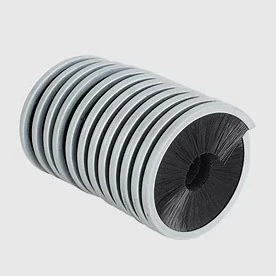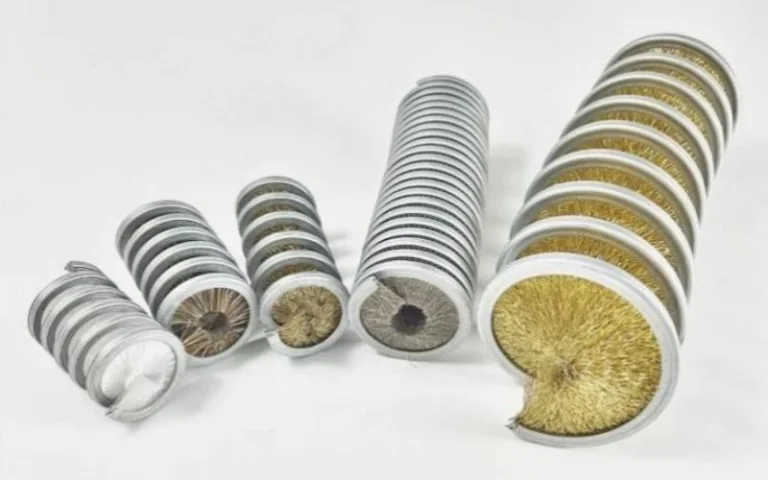
In cranes, hoists, winches, and offshore rigs, wire rope operates in dust, salt, and hardened lubricant. Contaminants that settle between outer strands act like grinding paste every time the rope bends under load, and they also hide broken wires, corrosion pits, and diameter loss during inspection. A wire rope cleaning brush is the fastest way to strip that buildup before relubrication or examination, yet many maintenance teams replace brushes far more often than they should, and some never achieve a genuinely clean rope.
Most wire rope cleaning brush failures come down to three causes: wire rope cleaning brush bristles that wear out or deform prematurely because the filament material does not match the contaminant and line speed; damage to the wire rope surface caused by overly aggressive fill or an incorrectly sized bore; and inefficient cleaning in complex rope structures when the spiral geometry does not match the rope’s lay direction and strand valleys. Each cause has a practical fix.
The sections below explain why each failure happens and how to correct it before your next cleaning pass.
Cause 1: Premature Bristle Loss and Deformation
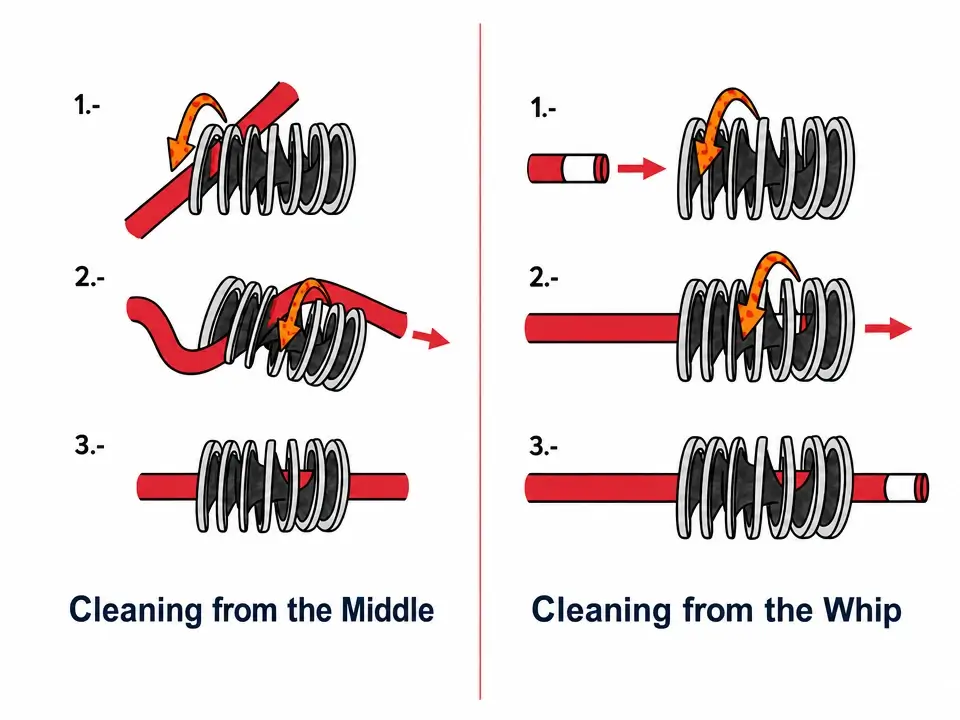
Wire rope cleaning brushes lose or bend their bristles early when the filament material doesn’t match the job, or when line speed and pressure generate heat that the bristles cannot recover from.
Why the Wrong Filament Material Wears Out Fast
| Filament | Best For | Limitation |
|---|---|---|
| Steel wire | Heavy rust, scale, dried lubricant | Can shed on soft zinc coatings; moderate corrosion resistance |
| Brass-coated wire | Heavy residue where scratching risk must stay low | Shorter life in abrasive dust; softer than steel |
| Abrasive nylon | Daily dust, salt, light residue | Struggles with hardened scale; temperature tolerance only around 120°C |
| Polypropylene | Gentle wiping, moisture removal | Not suited to embedded deposits |
Using abrasive nylon against hardened scale, or steel fill in a corrosive marine atmosphere, forces operators to press harder, and that extra pressure destroys bristles. Filament comparisons, such as the brush material guide, show that temperature tolerance and corrosion resistance can differ by more than a factor of three between materials.
How Line Speed and Pressure Deform Bristles
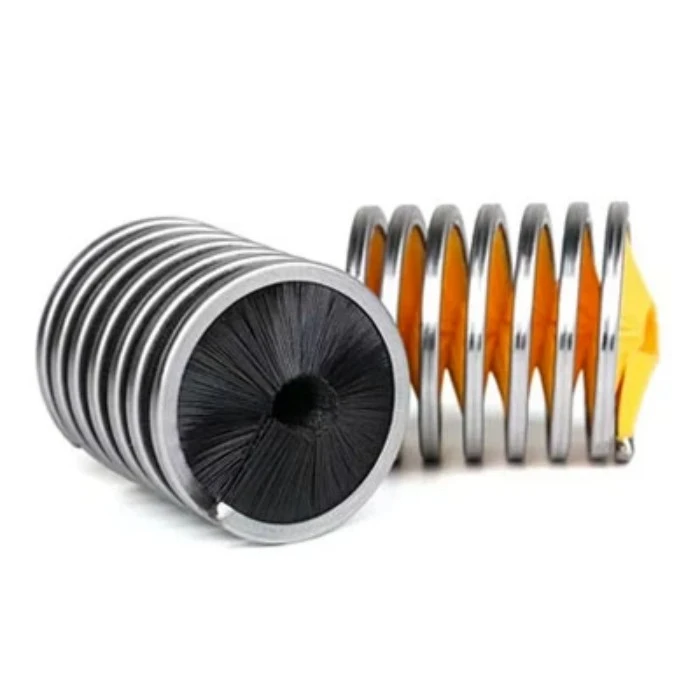
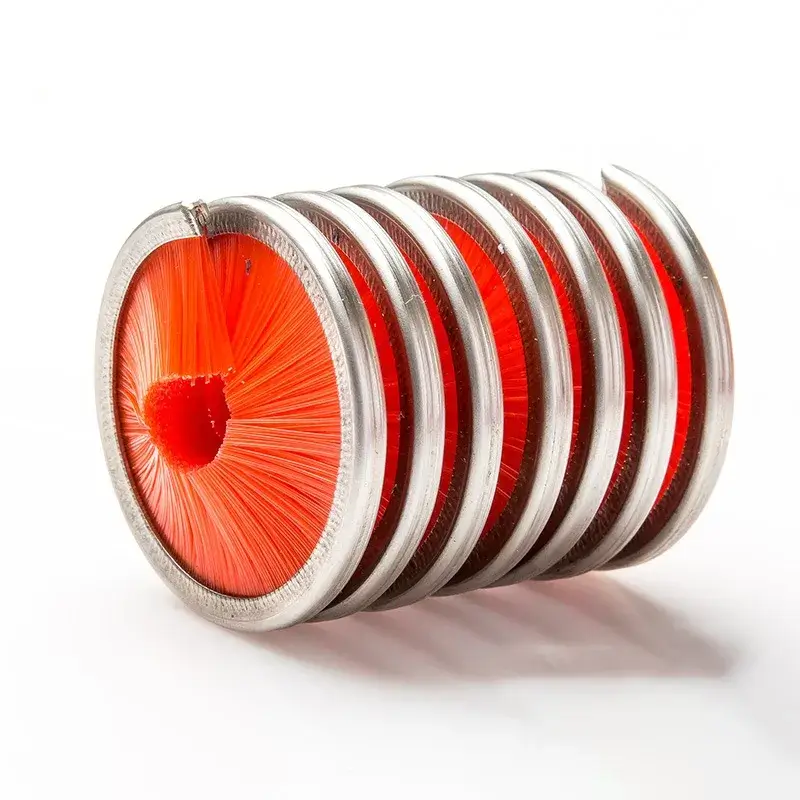
Dense fill improves fine cleaning but raises friction and heat at high rope speeds. Once filament temperature approaches its limit, bristles soften, bend, and stop recovering between contacts. A steel wire round brush specified too short for continuous operation suffers the same fate, because each bristle never gets time to shed its load.
The Fix: Match Filament and Spec to the Job
- Identify the dominant contaminant: loose dust, salt, dried mud, or scale.
- Choose filament from the table above, testing nylon or brass fill first on galvanized rope.
Confirm rope diameter, line speed, and stroke length before ordering, and specify a brush length that allows continuous contact.
Cause 2: Damage to the Wire Rope Surface
Scratching and coating loss usually come from fill that is too dense or aggressive, a bore that grips the rope too tightly, or steel filaments used on soft zinc coatings without testing.
What Actually Scratches the Rope
Damage is rarely caused by “nylon coil brush” as a category; it comes from spec errors. An internal diameter smaller than the nominal rope diameter forces bristles deep into the crown, overloading both filaments and outer wires. Overly dense fill multiplies contact points and pressure per strand. Instead of sweeping debris out, it pushes into the strand valleys and grinds the surface from within.
Why Galvanized and Coated Ropes Are Most at Risk
Zinc coatings are much softer than the underlying steel, so crimped stainless or carbon steel fill can strip them quickly. Nylon, brass-coated, or light stainless fill is safer, but pressure matters more than material: even stainless rope shows marking when fill density is excessive.
1. Match the bore to the actual measured rope diameter, not an estimate.
2. Start with the least aggressive filament that removes the residue.
3. Test on a short, non-critical section and inspect the surface before full-length cleaning.
4. Clean under light tension so bristles penetrate strand gaps instead of scraping the crowns.
Cause 3: Inefficient Cleaning in Complex Structures
Residue remains when the brush wrap direction does not match the rope lay, or when the spiral pitch and groove contact are incorrect for the strand count.
Why Residue Stays in Strand Valleys
Wire rope is helical: outer strands wind in either right-hand or left-hand lay. A brush wound against that lay pushes debris along the valleys rather than lifting it out, and a steep spiral clears loose dust quickly but cannot contact the bottom of tightly packed valleys. Partial-circumference contact leaves one side untouched entirely.
The Fix: Right Fill Density and a Gentle First Pass
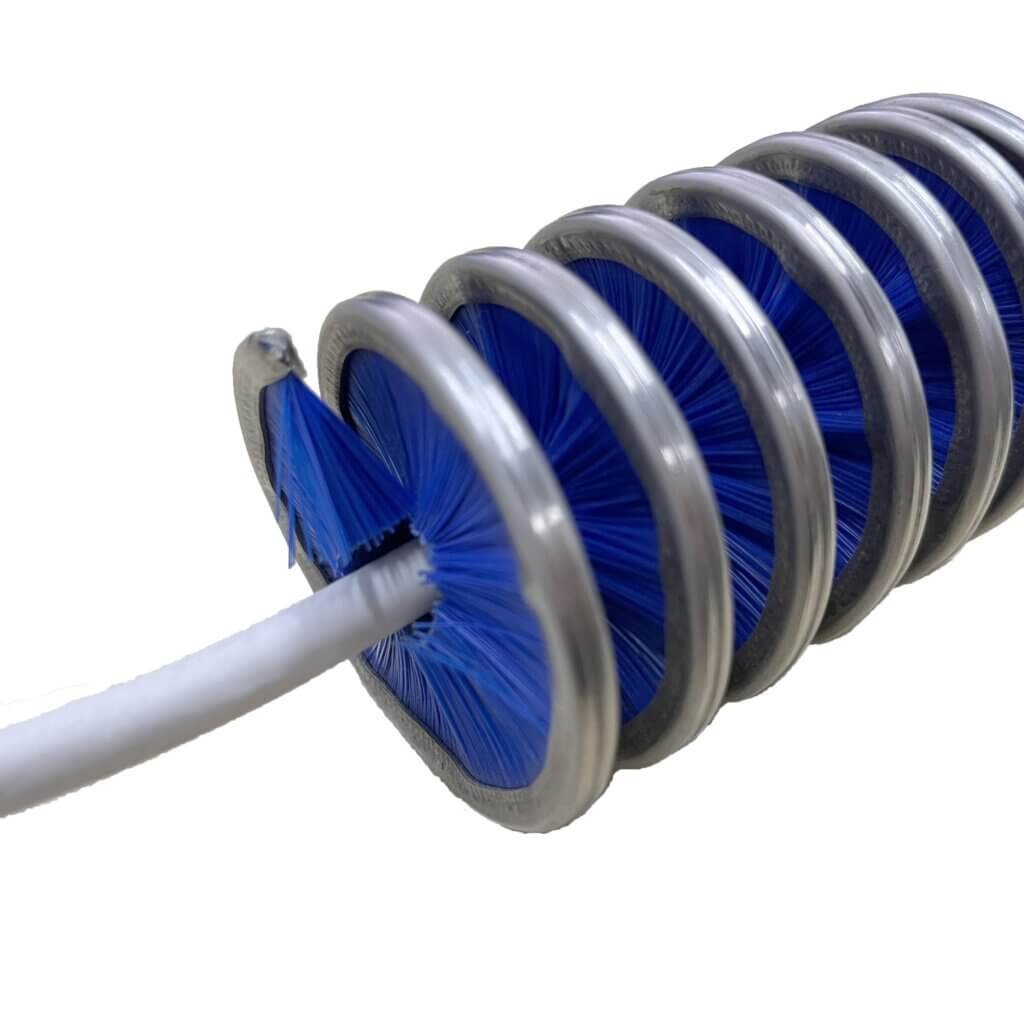
Groove-type cleaners must follow the rope’s exact helical contour, which is why suppliers such as Corelube build them to a specific diameter, strand count (3 to 18 outer strands), and lay direction. A round-strand cleaner will not fit triangular or swaged strand, and small-diameter ropes need correspondingly small bores, available from around 6 mm upward wire rope cleaning brushes.
The Fix: Match Wrap Direction and Cover the Full Circumference
- Confirm the rope’s lay direction and strand pattern before ordering.
- Use a spiral or groove brush wound to that lay, sized to the exact diameter.
- Rotate or double-pass so the full 360-degree surface is cleaned in each run.
Quick Checklist Before Your Next Cleaning Pass
- Verify filament material against contaminant, environment, and line speed.
- Match bore to measured rope diameter; never force an undersized brush.
- Test aggressive fill on a short section before full-length use.
- Confirm lay direction, strand count, and full-circumference contact.
- Re-lubricate immediately after cleaning to restore the protective film.
FAQs
Can I use one brush for different rope diameters?
Not effectively. A bore larger than the rope loses contact with the strand valleys, while an undersized bore damages filaments and outer wires. Match the brush bore to each rope’s measured diameter, or use adjustable systems designed for a diameter range.
How often should I replace the coil cleaning brush?
Inspect after roughly every 50 cleaning passes. If more than 30 percent of filament length is worn away, or bristles stay bent after use, replace the brush; a worn brush cleans poorly and forces harder, damaging pressure.
Should I clean the rope before applying lubricant?
Yes. Lubricant applied over grit and old grease seals in abrasive particles and blocks fresh oil from reaching the core. Clean first, let the rope dry, then apply lubricant while the surface is still exposed.