Industrial cleaning runs into a geometry problem. The surfaces that most often need attention, including heat exchanger tubes, hydraulic bores, conveyor rollers, chains, and wire rope, are round, curved, or recessed, while the tools sent after them are flat and rigid.
Spiral cleaning brushes stand out because their filaments are wound in a continuous helix rather than in a flat plane or a fixed tuft pattern. That helical wrap delivers full 360-degree contact along the working length, ejects debris rather than trapping it, and spreads pressure evenly, so filaments wear consistently. Coverage comes in one pass, with repeatable finish quality.
The sections below cover how these brushes are built, why the helix beats flat and cup tools, and how to specify one.
What Are Spiral Cleaning Brushes and How Are They Constructed?
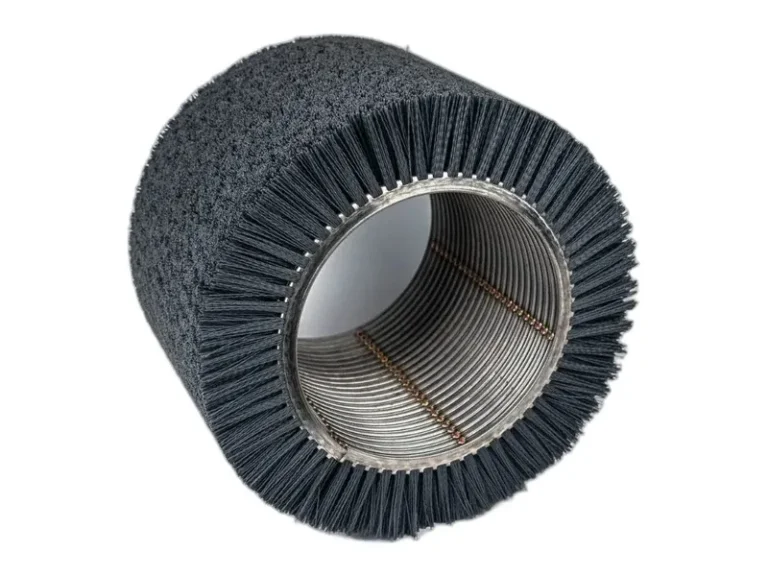
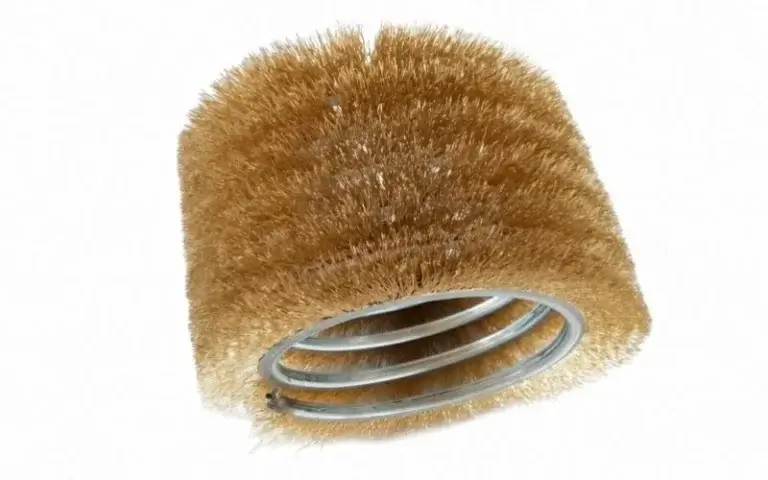
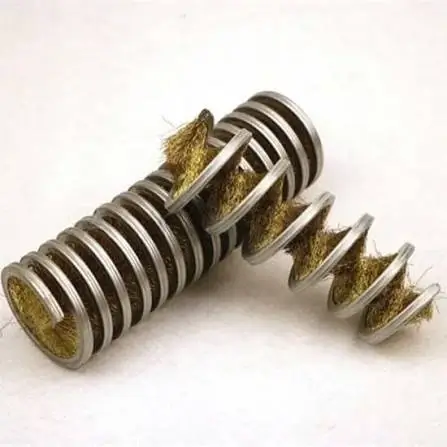
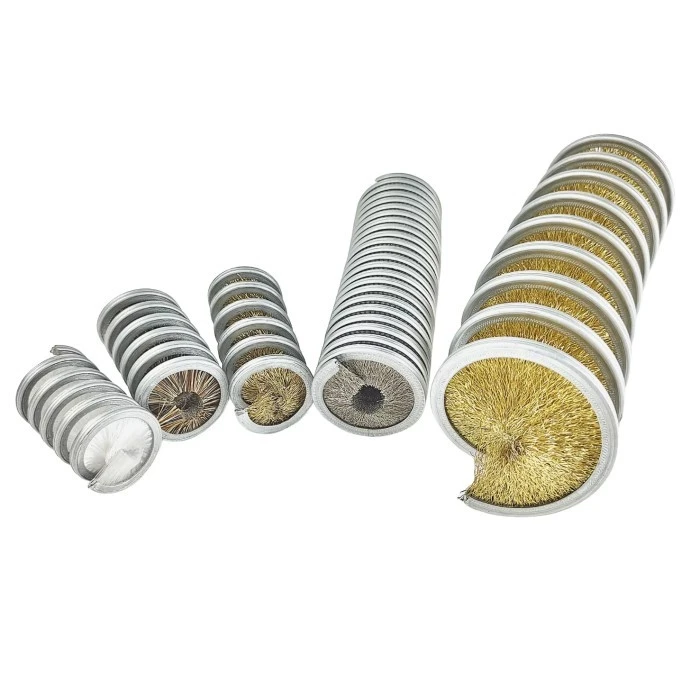
A spiral cleaning brush has bristles wound in a helical corkscrew pattern around a central core or along a doubled wire stem. The helix can sit inside a coil, outside a coil, or on a rigid shaft, with wire, nylon, abrasive nylon, or natural fibre fill. Helical winding over an open core separates it from a flat strip brush or a cup brush.
How the Helical Wound Geometry Is Formed
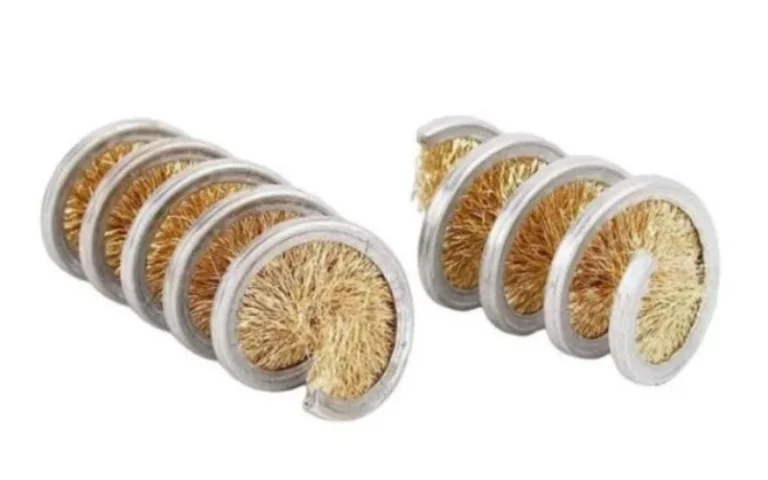
Two routes dominate production. In strip winding, a brush strip with outward-pointing filaments is wound around a cylindrical core, so the pitch, the gap between wraps, is fixed at that stage. In twisted construction, fill is laid between two wires that are then twisted, clamping filaments in a spiral along the stem. Both leave open space between filament rows and make core straightness critical at speed.
Core, Stem and Fill Variations
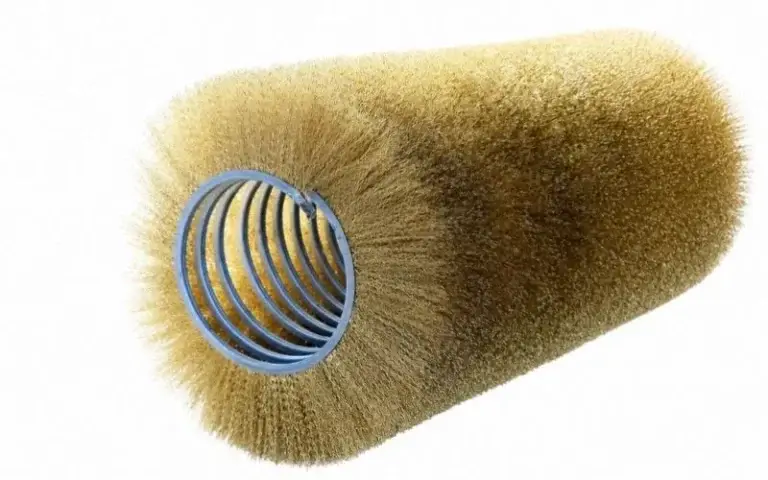
Single stem versions are lighter and suit hand work or light powered duty, while double stem versions carry a denser face and a heavier core for aggressive scrubbing. A coil brush on a flexible spring core follows bends a rigid shaft cannot. Inward wound designs turn filaments toward the helix centre, suiting rods, shafts and finished parts, while outward wound designs point them away from the core.
| Construction | Filament Path | Typical Role |
| Open wound coil | Strip wound around a channel or rod core | Wiping and sweeping across wide or cylindrical faces |
| Twisted wire tube | Fill clamped between two twisted wires | Internal cleaning of small bores, threads and keyways |
| Inward wound coil | Filaments turned toward the helix centre | Gentle cleaning of rods, shafts and finished parts |
| Spring or shaft mounted | Helix carried on a flexible or rigid shaft | Long, curved or hard to reach passages |
| Split core | Strips locked into a segmented core | Heavy debris removal on conveyors and wood lines |
Why Spiral Cleaning Brushes Outperform Flat, Cup and Hand Brushes
Spiral cleaning brushes outperform flat, cup, and hand brushes because the helix wraps the work surface instead of touching it at one tangent line. A flat brush contacts a cylinder along one narrow band, so coverage depends on perfect rotation of the tool or workpiece. A helical brush engages the full circumference in one sweep, removing debris faster with no missed strips.
Full 360 Degree Surface Contact
A flat-faced brush pressed against a round part touches along a line whose width is set by filament deflection. Everything outside that band stays untouched until the part is indexed, which is why hand cleaning leaves witness marks. A wound spiral roller brush contacts the entire circumference at once. Bores, tubing, slot edges, and coil fins all resist a flat tool, while a helix conforms to them at lower pressure.
Debris Ejection and Even Filament Wear
Rotation drives debris along the helical channels and out of the brush face instead of packing it into the core, so the tool does not blind over during a long run. On a conveyor line that axial movement carries dust and water to one side for collection. Even wear follows from the same geometry, since pressure is distributed along the working length and no single ring of filaments wears into a groove.
Matching the Filament to the Contaminant and the Substrate
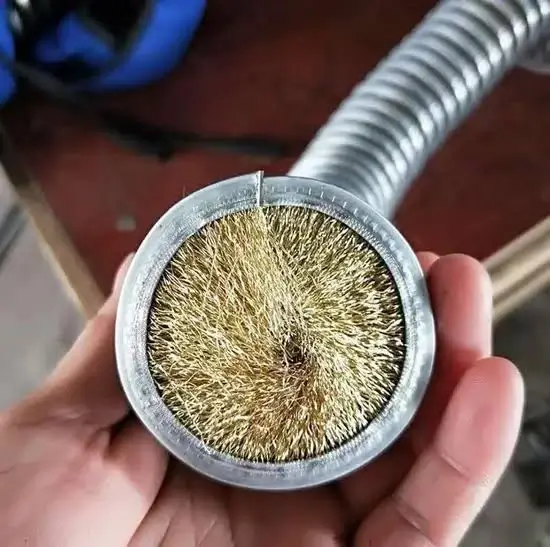
The correct filament is decided by three inputs: the contaminant, the substrate that must survive it, and the environment the brush runs in. A wire fill that strips heavy scale from carbon steel will destroy an aluminium surface, and plain nylon that washes a glass line will make no impression on mill scale. Selection is a trade between aggression, substrate safety, and chemical resistance.
Metal Wire Fills
Carbon steel wire gives the highest cutting aggression and suits rust, scale, and weld residue, but it corrodes when wet and deposits ferrous particles on stainless steel that later bloom into rust. Stainless steel wire removes that risk and suits corrosive or sanitary duty at some cost in cutting power. Brass and copper wire sit at the gentle end, producing a soft scratch pattern for softer metals. A spiral wire brush in the wrong grade causes exactly this problem.
Nylon and Abrasive Nylon Fills
Nylon is the default for wet washing, dusting, and gentle conditioning. Stiffness tracks diameter, so fine filaments flex away from soft surfaces while coarse filaments hold their cut. Nylon 6 and 6/12 tolerate water, mild acids, and most solvents, though strong acids soften them. A nylon spiral brush is the usual choice for food and laboratory washing, while an abrasive nylon spiral brush carries silicon carbide or aluminium oxide grain distributed through the filament rather than coated on it, exposing fresh cutting edges as it wears.
| Filament | Best For | Substrates | Watch Out For |
| Carbon steel wire | Rust, scale, weld residue | Carbon steel, cast iron | Contaminates stainless steel, corrodes when wet |
| Stainless steel wire | Sanitary and corrosive duty | Stainless steel, aluminium | Less aggressive than carbon steel |
| Brass or copper wire | Light polishing, non-sparking work | Soft metals, plated parts | Wears quickly under load |
| Nylon | Washing and gentle wiping | Plastics, glass, coated parts | Softens in solvents and heat |
| Abrasive nylon | Deburring and surface conditioning | Steel, aluminium, composites | Coarse grades round sharp edges |
| Natural fibre | Dry dust pickup | Delicate coatings, wood | Degrades when wet or oily |
Where Spiral Cleaning Brushes Are Used Across Industry
Spiral cleaning brushes are used wherever a round, curved, internal, or continuous surface has to be cleaned, deburred, or conditioned. The four families are tube and bore work, conveyor and roller cleaning, heat exchanger and HVAC coil maintenance, and hygienic cleaning in food, pharmaceutical, and laboratory settings. All four apply the same helical principle but differ in diameter, pitch, filament, and mounting.
Tubes, Pipes and Internal Bores
A spiral tube brush is the standard answer for internal work. Brush diameter should match the bore closely enough that filaments stay deflected, because an undersized brush polishes only the centre of the passage. Typical duty covers oxidation and machining debris in hydraulic and fuel lines, boiler tube descaling, threaded holes after tapping, and cross-drilled passages. Curved routes need a flexible core, and reinforced flexible cores handle bends of roughly three times the tube diameter.
Conveyors, Rollers and Belts
A conveyor cleaning brush runs as a wound roller spanning the full belt width, scraping carryback off the return side before the tail pulley. Pitch should follow the particle size carried: too tight a pitch blinds over on sticky loads, too open a pitch lets fines through. Chains need wrap-around contact rather than a flat pass, so a 360 chain brush cleans links, pins, and rollers in one rotation. Wire rope poses the same problem differently, since its strands form helical valleys a flat brush cannot enter, and a wire rope cleaning brush follows that lay to strip lubricant and grit.
Heat Exchangers, Condensers and HVAC Coils
Fouling in closed circuits is usually a layered mix of scale, carbon deposit, and biological film, and it costs energy long before it causes a failure. Long shaft coil brushes reach through tubes and ducts while keeping filaments against the wall. On finned coils, the priority changes, because fins are thin and easily bent once fouled, so the answer is deep, low-pressure access with a filament soft enough to leave them standing.
Food, Pharmaceutical and Laboratory Cleaning
Hygienic duty changes the rules. Cores should be stainless steel, and the fill should be nylon or abrasive nylon in a grade that will not shed filaments into the product stream or corrode under daily washdown. Clean-in-place circuits, filling lines, and laboratory glassware are the classic applications. A stainless steel spiral brush is specified where a carbon steel core would create a corrosion site, and moulded versions appear where no metal can touch the product.
| Application | Brush Form | Filament | Key Consideration |
| Tube and bore cleaning | Twisted wire tube brush | Carbon or stainless steel wire | Match diameter closely to the bore |
| Conveyor and roller cleaning | Wound or split core roller | Nylon or abrasive nylon | Set pitch to the particle size |
| Chain and cable cleaning | Tight pitch wrap around brush | Steel wire | Conform the helix to the strand lay |
| Heat exchanger and coil cleaning | Long shaft spring brush | Stainless steel or nylon | Avoid bending thin fins |
| Food and laboratory washing | Stainless core with nylon fill | Nylon or abrasive nylon | No shedding, no corrosion |
How to Specify the Right Brush for Your Process
Specifying comes down to four decisions taken in order: working diameter and length, pitch and filament density, filament material, and drive interface with its permissible speed. Diameter comes from the bore or workpiece, length from the depth to be reached, pitch and density from the contamination, and interface from the machine that will hold the brush. Taking them in sequence prevents the most common error: choosing material before geometry.
Sizing to the Bore or Workpiece
Working diameter should keep filaments deflected against the surface throughout rotation, which normally means a brush slightly larger than the bore. An undersized brush passes through without touching the walls, while an oversized one overloads the core and raises drive torque. Length is separate, since a longer brush face covers more bore per pass but draws more power and whips in deep passages. Trim length should absorb impact from uneven geometry.
Pitch, Density and Drive Interface
Pitch is the most misunderstood variable. A tight pitch creates a dense face that scrubs hard and moves material slowly, while a wide pitch lets debris pass through and reduces blinding. The right value follows the contamination rather than a preference for maximum density. The interface must match the machine: keyed and hex shafts transmit torque positively, plain bores rely on a grub screw, threaded nipples suit extension rods. A practical evaluation sequence looks like this:
- Establish the surface condition and contamination type before shortlisting any brush.
- Measure the bore, rope, or belt width the brush must cover.
- Record the operating environment, including temperature, moisture, chemicals, and speed.
- Choose the filament based on the aggression the substrate can tolerate.
- Confirm the drive interface and the maximum rated speed of the brush.
- Request a sample and run it in production before committing to volume.
Maintenance, Replacement and Safe Operation
Spiral cleaning brushes should be replaced once filaments have worn to roughly two-thirds of their original length, once shedding becomes visible, or once the core shows run-out or bending. Worn filaments lose their deflection and stop reaching the surface, so the brush keeps rotating while cleaning less and less. Inspection after every shift is the cheapest way to catch this.
Inspection and Replacement Triggers
Filament length across the full face shows whether wear is even or one band is carrying the load. Shedding shows up as loose filaments in the machine or on the product, which usually means the fill is fatigued or the wire grade is wrong. Core condition matters most at speed, since a bent core transfers vibration into the finish, so a run-out check is worthwhile above a few hundred revolutions per minute.
Cleaning, Storage and Safe Operation
Blow the brush out from the filament root outward, opposite to its travel direction, so packed material exits the way it came in. Dry wet brushes before storage, since moisture at the core corrodes carbon steel wire. Rotating brushes store energy, so eye protection is mandatory and gloves should be cut-resistant. Speed must never exceed the rating of the brush, its core, and its mounting, because overspeed breaks filaments off at the root.
FAQ
Q1: Can spiral cleaning brushes be used on soft metals such as aluminium or brass?
Yes, provided the filament matches the material. Brass, copper, and nylon fills are the usual choices for aluminium, copper alloys, and plated parts, since they remove contamination without cutting the surface. Carbon steel wire should be avoided on soft metals, since it tears the surface and embeds ferrous particles that later corrode.
Q2: Do spiral brushes polish or burnish a surface instead of cleaning it?
They can do either, and the difference is speed, pressure, and filament choice. At low speed and light pressure with brass wire or fine abrasive nylon, the helix polishes and blends edges. At high speed and excessive pressure, even a mild filament glazes the surface, generating heat and a damaged layer that harms coating adhesion.
Q3: How do I choose a brush diameter if my bore is not perfectly round?
Measure the bore at several points and across two axes, then select against the smallest reading, adding an allowance so filaments stay deflected in the tightest section. An out-of-round or tapered bore needs a flexible core, which lets filaments follow the changing wall rather than binding.