
An old potato peeler brush does more than just extend the line of laundry; it increases product losses, the reject rate, and operating costs. For a processor running lines of multi-ton per hour, the replacement brush roller should be a purchasing decision. It directly impacts uniformity of peeling, raw material yield, and maintenance intervals. The best replacement brush would feature a shaft in heavy-wall stainless steel, corrosion-proof, with high bending rigidity. Bristle material should be correctly matched, and tufting high density is the fourth consideration, which, if not observed by a facility, will most likely result in recurring breakdowns and inconsistent quality of finished product.
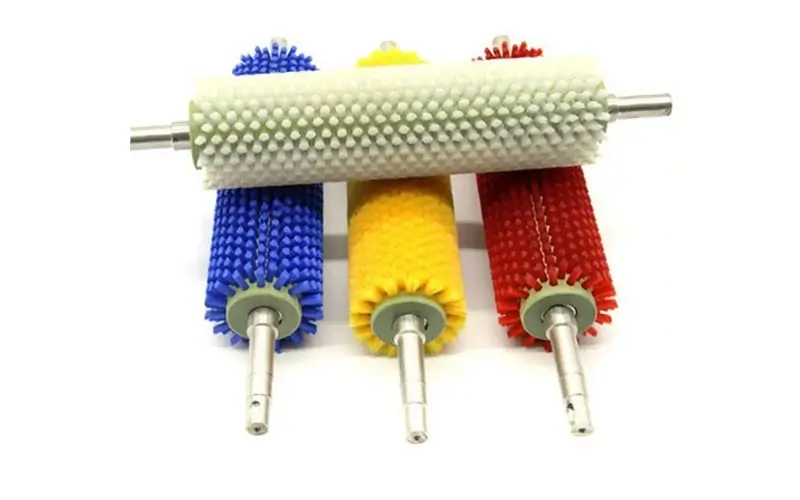
4 Core Selection Criteria for Industrial Potato Peeling Replacement Brushes
The washing line in the industry is exposed to a tough set of conditions—heavy loads, constant water exposure, and mud and sand, which are abrasive, along with continuous high-speed rotation. A new brush for peeling potatoes has to face all four at once. Here are the four must-have criteria that expert line managers focus on.
Choose Thick-Wall SUS304 Stainless Steel Shafts to Prevent Internal Corrosion
The shaft carries all brush rollers. Wastewater from the washing areas of potatoes comes with high levels of sand particles, organic residues, and microorganisms. This aggressive mix attacks the metal surfaces with a vengeance.
Regular carbon steel shafts look good during installation, but a few months later, they start to rust—from the inside out. The surface of the shaft starts flaking — instantly, the stainless steel anchor wire, which holds each bristle cluster, is loosened. The bristle strips will break away, the roller becomes unbalanced, and the entire brush will fail prematurely.
These risks are eliminated by shafts of SUS304 stainless steel with thick walls. In sand-laden wastewaters, the wire anchor will always stay in place throughout the lifespan of the brush since it does not corrode chemically or mechanically abrade with the wire anchor. Material of the shaft should always be the first checkpoint for those processors that are seeking a reliable vegetable cleaning brush.
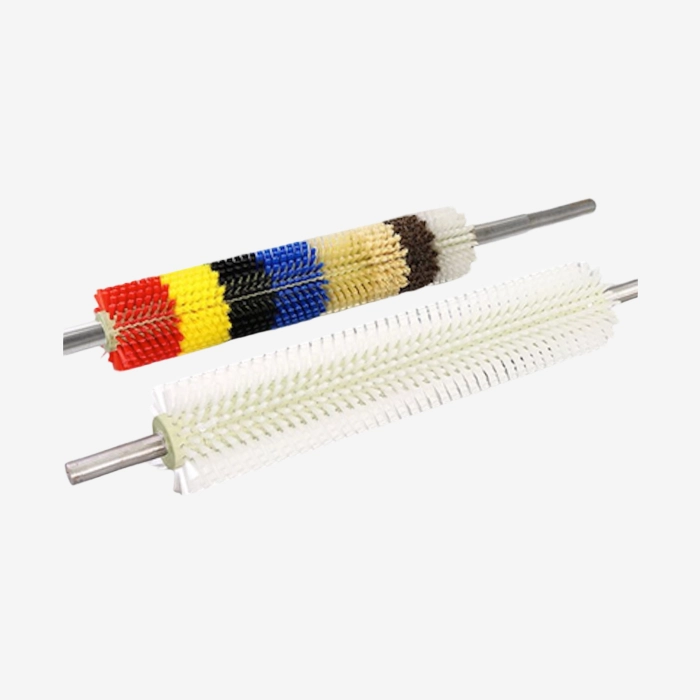
Select High-Rigidity Anti-Deflection Shafts to Ensure Even Peeling
Industrial potato peeling machines can often handle several tons per hour. This would put each brush roller through a major bending force, especially at the midpoint of the shaft. The downward pressure and friction from all that produce.
On the other hand, if the manufacturer saves money by using a low-grade steel or thin-wall shaft, the result will be a slight mid-span deflection that builds up gradually under sustained cyclic loading. The effects are both fast and expensive:
- Roller ends: Too much pressure grinds or peels the potatoes, so material wastage goes up.
- Roller centers: Not enough contact leads to mud and skin waste, so quality gets rejected.
It’s this ‘over-peel at the edges, under-peel in the middle’ setup that wreaks havoc with yields on high-throughput lines. A thick-wall, high-rigidity SUS304 shaft keeps not just straight over thousands of operating hours but contact pressure, too — uniform from end to end. This is how you choose a vegetable cleaning brush with the right shaft spec — and avoid that all too common, very pricey problem!
Match Bristle Material and Diameter to Washing and Peeling Stages
This is because not all positions in a potato washing line do the same job. The brushes in the pre-washing section would require very different specifications from those in the peeling section. A single type of bristle for both stages would lead to inadequate cleaning or excessive peeling loss.
| Stage | Bristle Material | Wire Diameter | Function |
| Mud/Sand Removal | Wavy nylon (PA6 or PA612) | 0.5-0.8 mm | Flexible scrubbing to dirt off without harming skin |
| Hard Peeling | Abrasive filament (silicon carbide grit) | 0.8-1.2 mm | Aggressive grinding to strip the outer skin at high speed |
Fine particles of silicon carbide stick to the ends of the bristles. These bristles will provide the required high rigidity and cutting power — when used with a thick wire diameter of 0.8–1.2 mm — for effective removal of potato skin at full line speed. A pre-wash stage works fine with a good nylon cylinder brush, while abrasive rollers should be used for the peeling stage.
High-Density Tufted Brush Rollers for Uniform Peeling Depth
With the right bristle material, sparse tufting allows an uneven pattern of contact. Potatoes that go through low-density rollers get peeling that’s irregular, too — some spots get peeled too deeply, others hardly get touched.
High-density tufting maximizes three key benefits that can be measured:
- It maximizes the contact of the bristle with the surface over the full width of the roller.
- It ensures that force is uniformly applied over the area during peeling, getting rid of over-cutting in some localized areas.
- It gives a finer surface on each potato, lessening the work of cutting at the end.
Companies that need special tufting patterns or specific roller sizes may look for OEM solutions for vegetable cleaning brushes to match the brushes exactly with their line layout.
Replacement Brushes That Won’t Break The Bank VS Potato Peeling Brushes Built For The Long Haul
Most procurement teams feel the squeeze to shave costs on consumable parts. The head-to-head below shows why quick gains almost always come back to bite you.
| Feature | Budget Replacement Brush | Industrial-Grade Potato Peeling Brush |
| Shaft Material | Carbon steel or thin-wall stainless | Thick-wall SUS304 stainless steel |
| Shaft Rigidity | Prone to mid-span deflection | Straight over full service life |
| Bristle (Peeling Stage) | Generic nylon, single diameter | Abrasive grit filament, 0.8-1.2 mm |
| Tufting Density | Standard or low | High density with an even pattern |
| Typical Service Life | 2-4 months | 6-12 months or more |
| Peeling Uniformity | Uneven – high waste and rejects | Consistent – lower loss, fewer rejects |
Cheap brush rollers mean more waste of potatoes, more stoppages of the line, and more work for laborers to trim by hand. Brushes of industrial quality give a much lower total cost of ownership over a complete season of production. All the details on types and uses of roller brushes are in the guide called ” What’s a Vegetable Cleaning Brush.
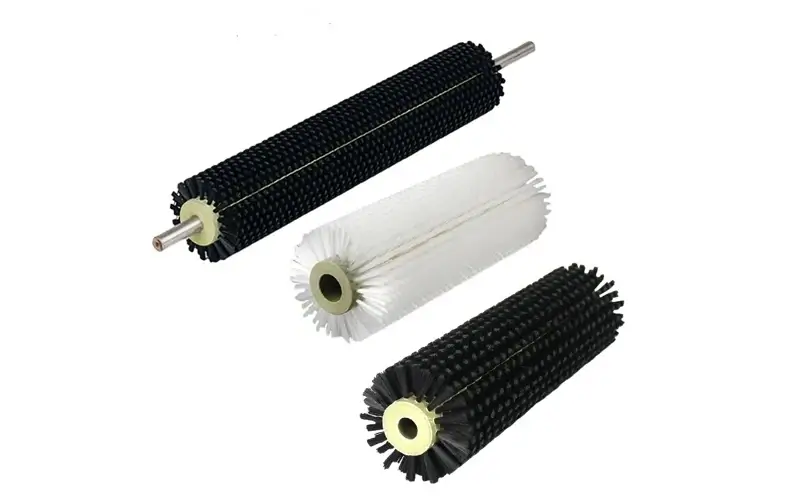
FAQ
What is the replacement frequency of the potato peeling brush for a high-volume line in a factory?
Most high-volume lines replace peeling brushes every 6 to 12 months. Actual intervals depend on daily throughput, the grade of abrasive grit, and the variety of potatoes being processed.
Is it possible to use one brush type for both washing and peeling stages?
No, it can’t. Washing needs soft nylon bristles to remove the soil gently; peeling needs abrasive grit filaments. Combining the two would compromise the quality of either cleaning or the yield.
What Is The Minimum Order For Custom Potato Peeling Brush Rollers?
MOQ varies from supplier to supplier. Most industrial brush manufacturers will take orders of 10 to 50 pieces for standard sizes. It may be slightly higher for custom specifications.