
The right bristle material of your Textile Processing Brush will depend on three factors that include anti-static control, fiber compatibility, and heat resistance on your production line.
Incorrect bristle material will result in fabric damage, excessive downtime, and costly waste. The right material for a Textile Processing Brush saves money and protects product quality at every stage of production.
Most procurement teams are focused on the shape and size of the brushes. They are missing the bristle material, which is the single factor that most impacts brush performance. Here is a guide breaking down three key material considerations all buyers should assess before placing an order.
Bristle Material Choice Comes Down to Three Main Factors: Static, Material & Heat Resistance
At the end of the day, there are three primary factors that material selection comes down to. Each one directly impacts the quality of production, the safety of equipment, and the total cost of ownership. Whether you are selecting a standard Industrial Textile Processing Brush or a custom solution, these three factors apply equally.
Anti-Static Brushes: The Hidden Must-Have
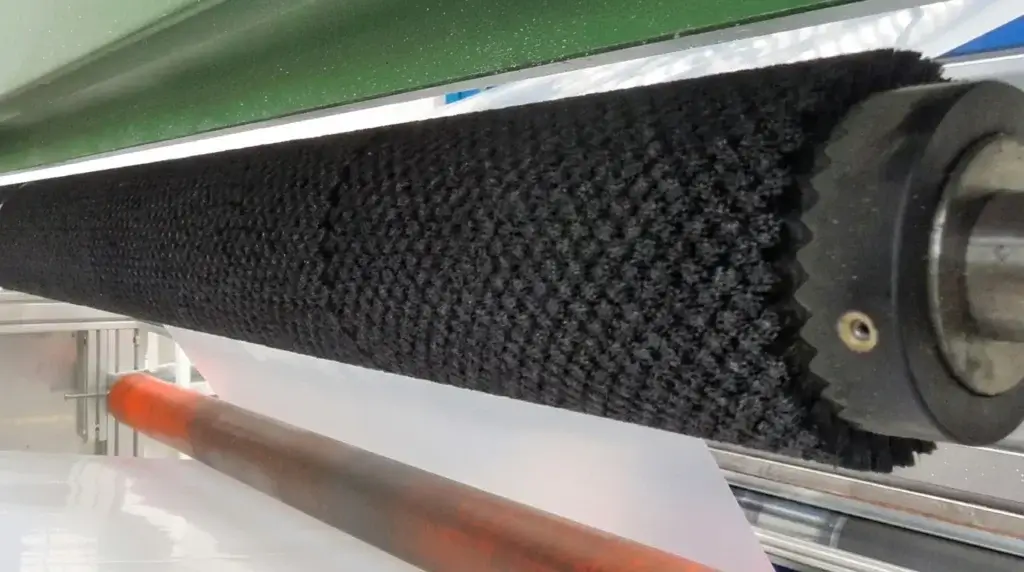
The processing of textiles involves serious but not yet fully understood problems with static electricity. Most people observe it as a defect in the fabric, since dust and dirt are attracted by static onto the surface of textiles. Another more serious effect is that the static causes the fibers to be attracted to rollers and other parts of the machinery, resulting in blockages and stoppages of the line. In very dusty environments, static electricity can even cause fires.
Yet most buyers never consider static when specifying brushes. This is a costly oversight.
Carbon fiber and conductive nylon bristles remove static charges when they touch the fabric. Buying bristle options for an anti-static Textile Processing Brush is a small investment, and you will not lose entire batches due to surface contamination. For people running synthetic fabrics such as polyester, nylon blends, or microfiber, the anti-static bristle option should be a standard, not something to add later.
The Lifespan and Performance of Bristle Material
Bristle fiber type controls wear resistance, cleaning effectiveness, and fabric safety directly. The two main categories are natural fibers and synthetic fibers, each with its distinct role in textile applications. This choice becomes even more important when selecting an Industrial Textile Processing Brush.
| Property | Natural Fiber (Palmyra / Horsehair) | Synthetic Fiber (Nylon / Polyester) |
| Wear Resistance | Moderate | High |
| Fabric Safety | Excellent—soft, non-scratching | Good—varies by diameter |
| Elasticity/Recovery | Low to moderate | High |
| Heat Tolerance | Low (degrades above 200°F) | Moderate to high |
| Cost | Higher (raw material dependent) | Lower and more consistent |
| Best Use Case | Delicate fabrics, finishing | General cleaning, heavy-duty lines |
Horsehair and palmyra are very good at working with delicate woven fabrics—they clean gently without snagging threads or leaving marks. For this reason, many finishing operations still rely on them.
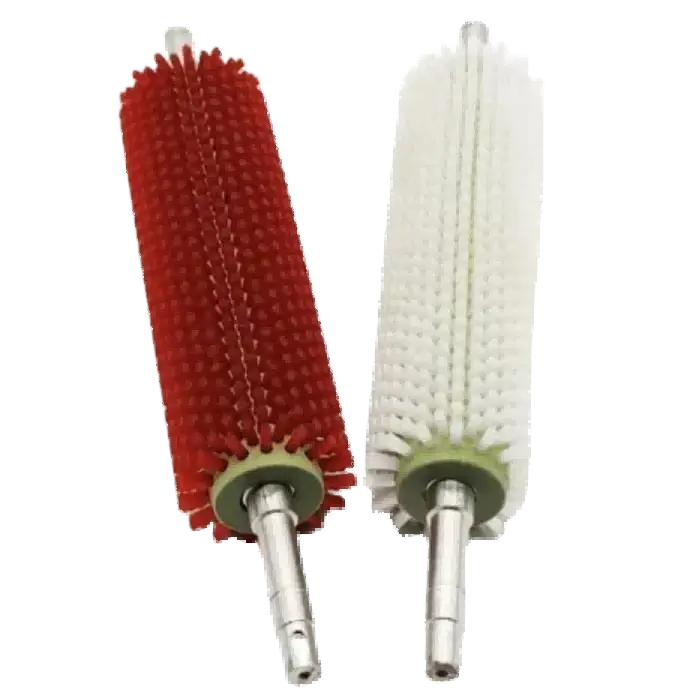
Nylon 6.6 and PET, in particular, provide longer wear life and more consistent performance on high-speed lines. A tufted cylinder brush with nylon bristles gives aggressive cleaning and lint removal over thousands of operating hours.
Buyers interested in getting an idea of the complete range of brush types used in this industry can refer to the guide on Textile Processing Brush — it covers each category in detail.
Demand for High-Temperature Production Lines — Heat-Resistant Bristles
The normal operating temperature is above 200°F in the stenter frames, heat-setting machines, and industrial dryers. At such temperatures, within some days, the standard synthetic bristles will soften, deform, and lose their cleaning ability.
Material grade counts for this application:
- Polyester (PET) — softening point around 240°F. Good for moderate-heat areas and drying stages.
- Nylon 6.6 — softening point near 280°F. The industry standard for textile equipment — and the most cost-effective one for heat-setting and finishing equipment, too.
- PEEK / PPS fibers — withstand temperatures above 400°F. Reserved for extreme thermal environments.
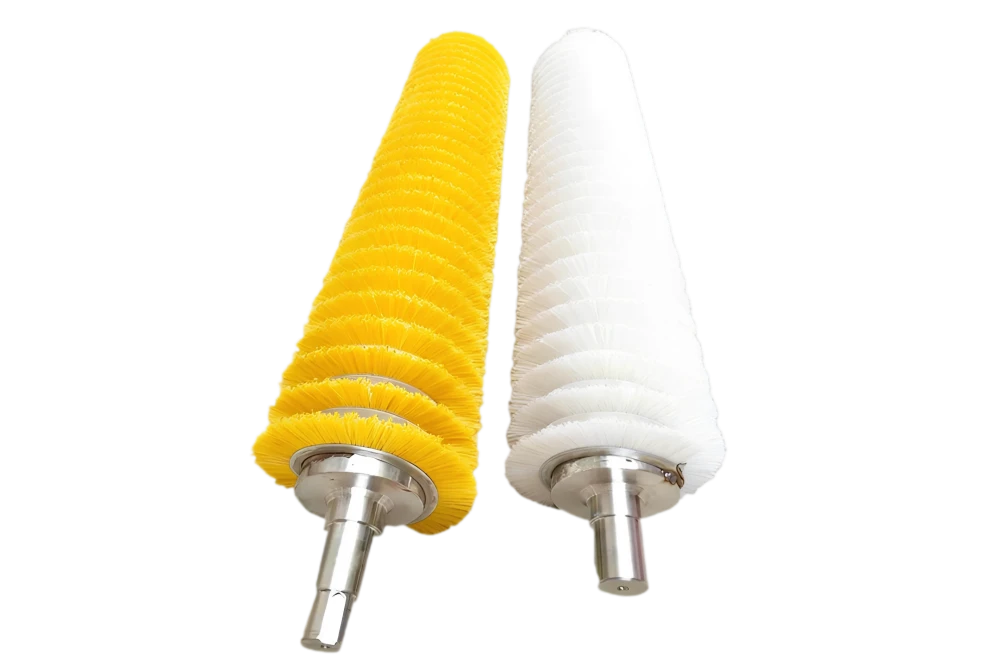
Most of the textile plants will agree that nylon 6.6 is the best at the balance of heat resistance, strength, and cost. A wound cylinder brush with bristles of nylon 6.6 will make sure that the contact pressure stays constant even after long exposure to heat, so it can be used for applications in the stenter frames.
Buyers sourcing brushes for thermal processing must always verify the specific bristle softening point against their machine’s operating temperature. A safety margin of 20°F would prevent premature deformation.
Quality Textile Processing Brush vs. Low-Cost Alternatives
Buying on price often leads to higher costs in the long term. What normally separates a quality Industrial Textile Processing Brush from a low-cost substitute:
- Bristle retention: The best brushes use precision-drilled cores and secure anchoring methods. Cheap ones shed bristles onto fabric.
- Trim consistency: Even bristle height ensures uniform contact with the fabric. Uneven trim results in streaks and missed areas.
- Material traceability: Good manufacturers will let you know the exact grades of bristles, for example, nylon 6.6, as opposed to generic nylon. Low-cost vendors almost never reveal material specifications.
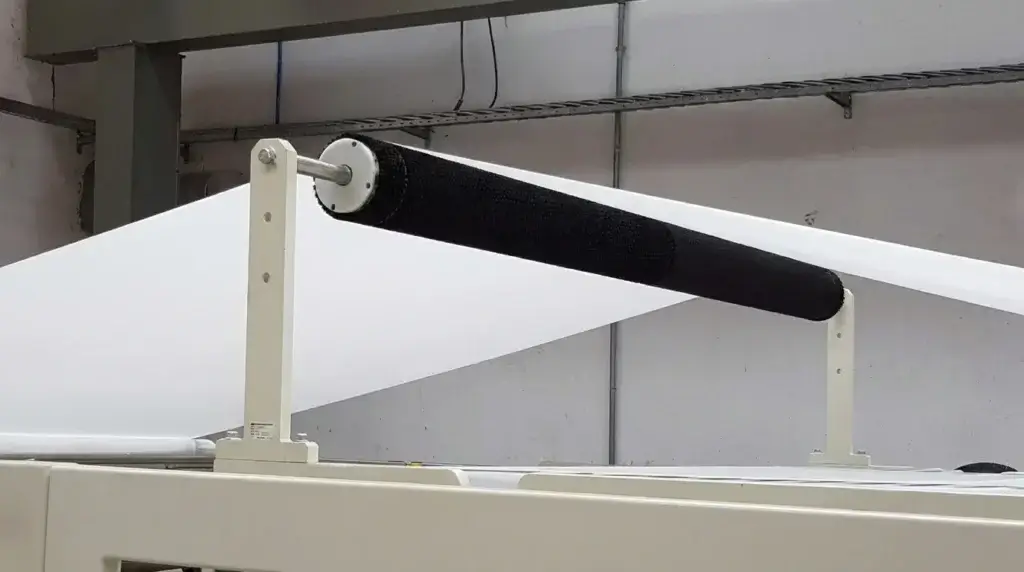
- Balance and runout: A good roller brush should also be well balanced so that it can run perfectly even at high RPM; poorly balanced brushes will cause both vibration and uneven wear and can damage the fabric as well.
Typically, such a well-engineered Textile Processing Brush may cost 15-20% more, but it often pays for itself through longer service life (2-3 times), reduced downtime, and no claims on defective fabric.
Check out How to Choose Textile Processing Brush for a detailed framework on selection criteria that go beyond material.
When buying Textile Processing Brush solutions, procurement teams should consider the total cost of ownership and not just the unit price to realize better production results — more on that in the next section.
FAQ
Can one type of brush material be used for all textile processes?
No, different stages need different bristle properties. Heat-setting, finishing, and cleaning each require specific material grades to execute the process in a safe and effective manner. For cleaning, a tufted cylinder brush may be good, while for heat-setting applications, a wound cylinder brush is often better.
How frequently should textile processing brushes be changed?
The replacement frequency depends on the material used for the bristles, the operating speed, and the temperature. Generally, nylon brushes at high-speed lines should be replaced every 3-6 months. A high-quality Industrial Textile Processing Brush usually outlasts a low-cost alternative.
Do you supply custom bristle materials for specific textile applications?
Yes, reputable manufacturers make custom brushes using bristle materials, diameters, and core configurations that match the application and are designed to fit the specific requirements of the production line. You want a tufted cylinder brush? Or a wound cylinder brush? Custom solutions — both are in the cards.