Selecting a coil brush may seem simple until you have to choose which winding direction to use. An outside winding and an inside winding are two very different designs that, if you select the wrong one, could result in improper contact, early failure of parts, and/or inconsistent output from your production line.
When purchasing brushes for cleaning, deburring, or preparing surfaces, the winding direction is an important consideration for engineers and procurement teams. The winding direction affects how the filaments will interact with a workpiece, which will affect how well the brush works in performing its expected function. This guide explains the differences so that the purchasing decision is easier to make.
How a Nylon Coil Brush Is Made
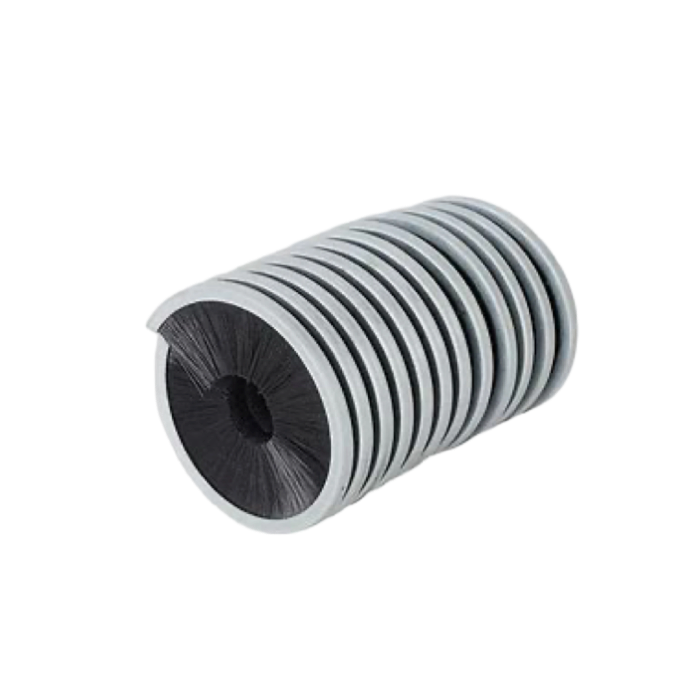
A nylon coil brush begins with a flat strip of brush, composed of nylon filaments set into a metal channel. The strip is then wound in a helical, cylindrical shape. The direction in which the strip is wound will determine whether the filaments will face outward from, or inward toward the center of, the coil.
The coil pitch, width of strip, diameter of core, and length of filament trim can be varied to suit each application or use. Polyamide (PA) nylon is the most used filler material for general use because it provides a balance between flexibility and resistance to abrasion and chemical compatibility. The metal channel is either stainless or galvanized steel, depending on your operating environment.
Outside Winding vs. Inside Winding: Key Differences
Outside Winding
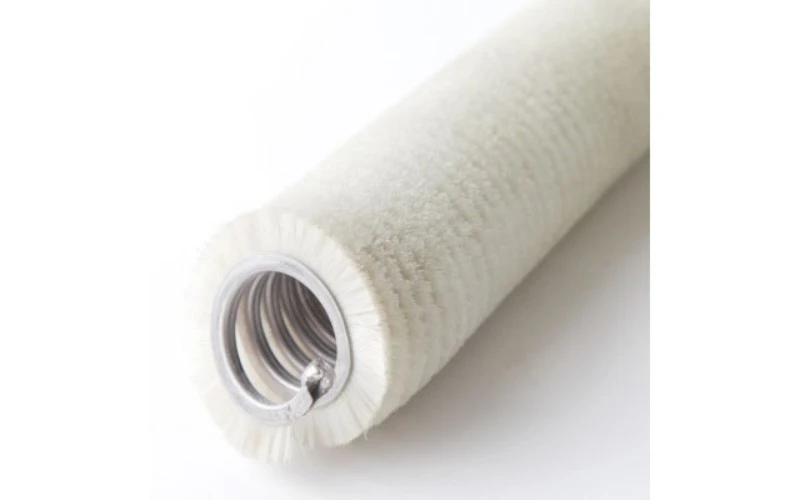
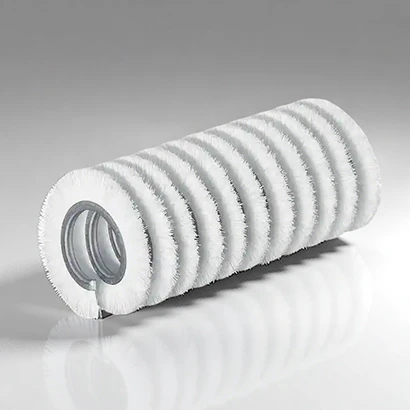
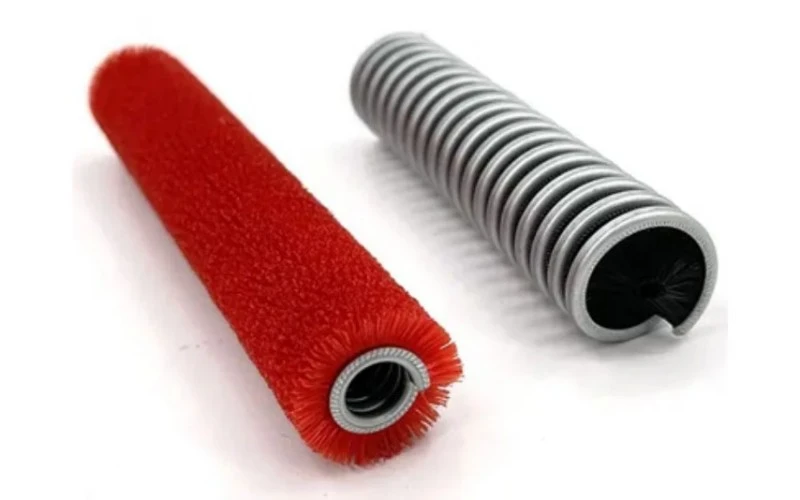
In an outer-wound coil brush, the brush filaments extend radially outward from the coil face and are typically mounted on a mandrel or shaft and rotated against an external workpiece surface. This is the most common configuration found in cleaning and finishing applications performed on external surfaces.
A brush using a coil design on the outside of an object will perform well on a flat, convex, or any type of easily accessible outer surface. The outside coil brush is commonly used in conveyor systems, roller systems, and stand-alone brush stations where a workpiece passes through the outside diameter of the brush.
Inside Winding
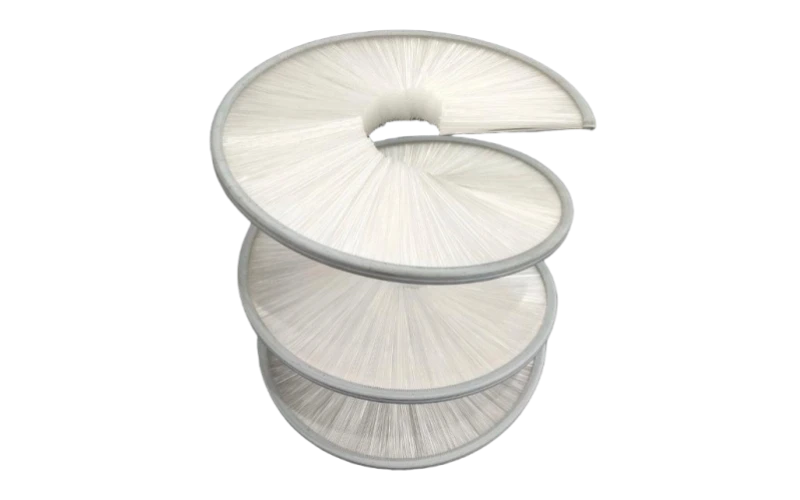
An inside-wound brush has filaments that point inwards, towards the center of the coil. The unique construction is specifically designed to clean the internal surfaces of pipes, tubing, bores, and other cylindrical cavities.
The inside spiral brush is pushed (or pulled) through the bore (hole), and the inner (filament) ends contact the complete circumference of the inner wall so there is always the same amount of cleaning pressure across the entire inner surface. The cleaning pressure is generally not uniform all the way down the length of straight tube brushes.
Comparison of Features
| Feature | Outside Wind | Inside Wind |
|---|---|---|
| Direction of Filaments | Outwards from the center | Inwards toward the center |
| Type of Surface to Clean | External (flat/convex) | Internal (hole/tube/pipe) |
| Mounting Type | Driven by rotating shaft or mandrel | Pulled or pushed through the center |
| Type of Movement | Rotating | Linear or rotating |
| Contact Area | Total of outside diameter | Total of inside circumference |
| Typical Industries | Metal finishing, packaging, printing | Hydraulic, automotive, plumbing |
How to Choose an Outside Wound Brush for Your Application
When Do You Want to Use an Outside Wound Brush
Standard use of brush-type coils made from nylon wound outside of a metal surface. Typical uses of outside wound brushes are:
- Removing dust and/or light materials from sheet metal before application of coating
- Cleaning conveyor belts and rollers in packaging lines
- Applying or distributing lubricant evenly across flat stock
- Light deburring on stamped or laser-cut parts
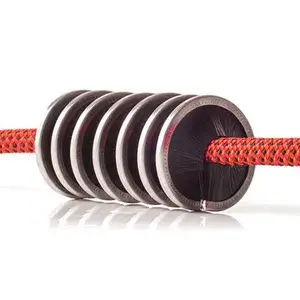
Wire processing is one industry that benefits greatly from the implementation of outside winding. A typical example would be a wire rope cleaning brush, which is attached to a wire line and uses its outward-facing filaments to clean the lubricants off the wire as the wire passes through the center of the brush. Because the brush is of helical coil design, it provides continuous, uniform, and wrap-around contact with the wire; something that flat-style brushes cannot provide.
Inside Winding Brushes
Inside winding brushes are also useful for other types of applications but with limited uses. They can be used for:
- Cleaning hydraulic cylinder bores after being machined
- Removing scale/oxidation from inside pipes
- Preparing surfaces of tubing to be bonded or welded
- Deburring cross-drilled holes in an engine part
In these instances, the inward-facing bristles will conform to the bore wall and exert force evenly during the stroke. The coil form is particularly useful for cleaning longer tubing and/or piping because the helical pitch can be changed to allow for cleaning aggressively or easily inserting the brush into the tubing.
Factors Affecting the Selection of Brushes
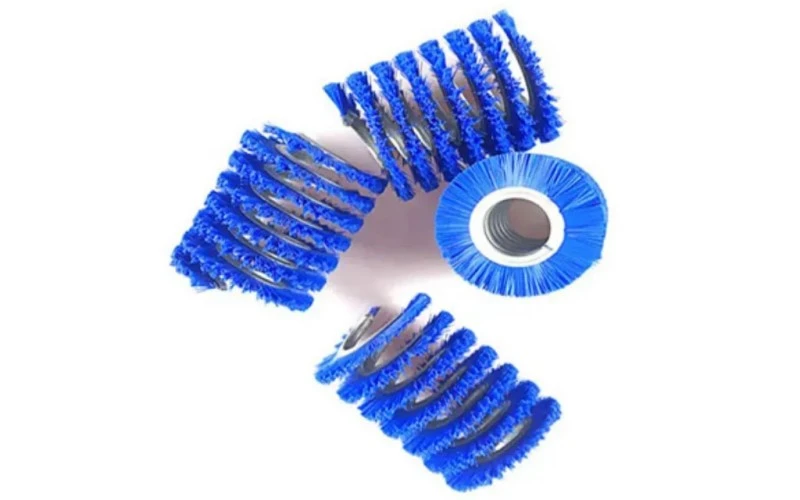
In addition to winding direction, there are many additional factors affecting performance that engineers must take into account when making their selection. Some specific criteria include:
- Filament Diameter — Thicker filaments (like nylon) will provide more aggressive action, while thinner filaments (e.g., nylon) will be gentler on polished surfaces.
- Coil Pitch — A tighter coil pitch will give you more density of filaments, and therefore greater intensity of cleaning, while using a larger pitch will provide increased ability for debris to escape during cleaning due to less drag.
- Core Diameter — Core diameter must be compatible with either bore size (inside winding) or mandrel diameter (outside winding). If there is an extra trim at either end of the brush, you can have a longer or shorter length to work with. A longer trim will provide you with more versatility/range of motion, while a shorter trim will give you a stiffer/firmer connection.
For additional assistance, the guide that covers how to select nylon coil brushes goes into more detail regarding specification variations such as material selection, dimensional tolerances, and application matching, amongst others.
Why Nylon Remains the Preferred Filament
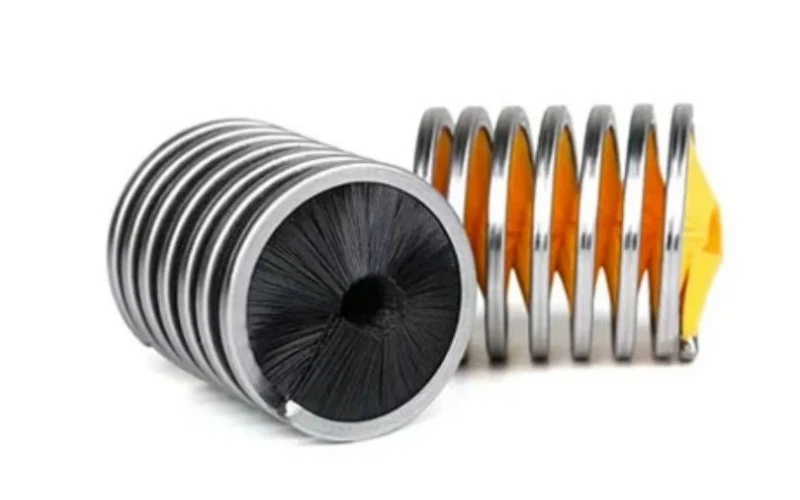
Multiple factors cause nylon coil brushes to be the preferred choice for industrial cleaning applications; nylon bristles can withstand many commonly used chemicals. Additionally, the nylon filaments will return to their original position once stress is removed from them and will not mark softer metals such as aluminum and copper. Also, nylon filaments perform consistently through a broad range of temperatures, making them suitable for wet and dry applications.
Aggression and abrasion exist in two very different ways: by means of a) aggressive impregnation into nylon or b) design as stiff polypropylene filament. For a wide variety of applications—such as most cleaning, wiping, and light finishing tasks—standard nylon will provide you with an effective and economically viable cleaning solution.
FAQ
Q1: Can I order nylon coil brushes custom-made to my machine dimensions?
Absolutely! Customization options include the following: coil diameter, coil pitch, trim length, and core/shaft size—all can be manufactured to match your product specifications by the brush manufacturer.
Q2: Do I qualify to receive a quantity discount on my nylon coil brush purchases?
For quantity discounts to be available to a buyer, the buyer’s order must be placed as a single order and shall be subject to the minimum order quantities established by the supplier.
Q3: How do I contact you to place an order for nylon coil brushes?
Simply visit our website or contact us via email or phone. We will respond to your request as soon as possible.