
Torn lettuce, bruised spinach, shredded bok choi—not a day goes by in the life of a fresh-produce processor that doesn’t, at some point, find leaf damage during mechanical washing costing real money in downgraded product and rejected batches. Soil and insect removal in the washer line almost always depends on the same three cylinder cleaning brush specs: bristle material, filament density, and shaft concentricity. Get them right, and the line will not tear a single leaf.
Check parameter details, common failures of most stock brushes, and requirements for ordering a cylinder rotary brush for a leafy vegetable line in this guide.
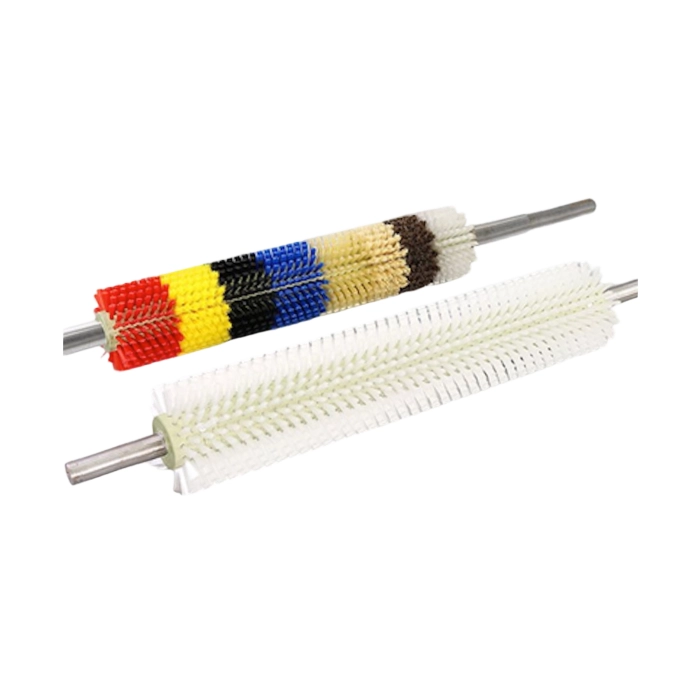
Three Specifications That Prevent Tearing Leaves:
Leaf tearing is where the force is localized and exceeds the tensile strength of the walls of the plant cells. At the brush level, three factors determine this force: the stiffness of each filament when wet, the number of filaments sharing the load, and how smoothly the roller spins. Anyone lacking a basic understanding of roller terminology can start by reading the explainer on “what is a cylinder cleaning brush” before going through this specification.
Low-Water-Absorb PA610/PA612 Bristles Stop Soaking Softening
Most cheap brushes use PA6 or PA66 nylon filaments. These materials absorb 2.5%–3.5% moisture at equilibrium in environments wherein wet washing is applied. Once saturated, the bristles lose stiffness dramatically—they sag, clump, and create uneven contact patches that concentrate force on individual leaves.
PA612 nylon absorbs only about 0.6% moisture. Such low rates of absorption keep each filament rigid and elastic through thousands of hours of continuous water exposure. The tip of the bristle rebounds at the same frequency and with the same force in every cycle, so no operator shall ever have to curse that unpredictable “soft-then-hard” behavior which tears delicate greens.
When buying Nylon Cylinder Brushes for wet vegetable processing, make sure to verify the polyamide grade on the datasheet. Just naming a brush “nylon” does not speak for its water resistance.
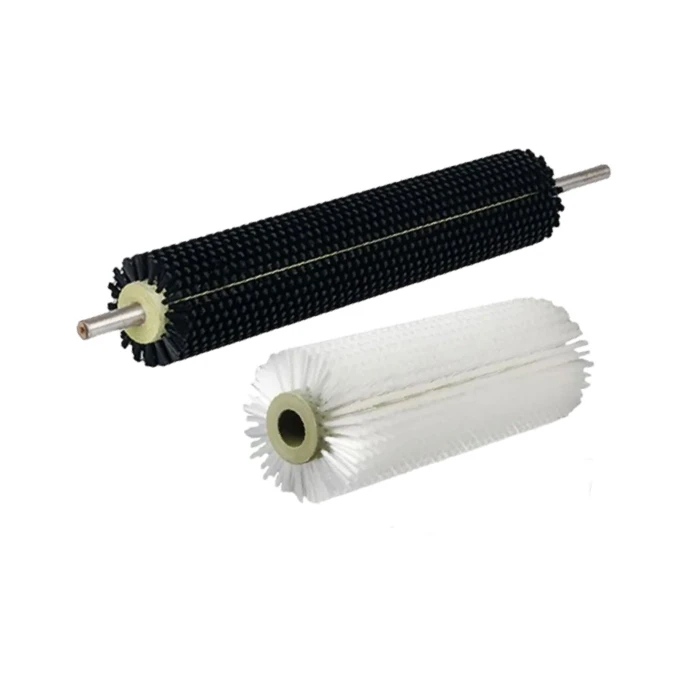
Ultra-Dense Filaments Deliver Balanced Contact Force
Even if the best bristle material in the world were used, failure would be inevitable if too little filament made contact with the surface at any given instant. In a low-density brush, the entire roller energy is focused through just a few contact points; each point pushes into the leaf like a needle.
High-density planting solves this. Two systems are particularly good for planting leafy lines:
- Precision-tufted ultra-high-density patterns—rows of tufts with minimal gaps, maximizing bristle count per square centimeter.
- Full-wrap spiral strip brush construction – Bristles that form a continuous strip, wrapped completely around the core with no gaps between turns.
Both designs ensure that when a leaf touches the roller, hundreds of filaments will come into play at the same time. The force of impact is spread over a big area, and each bristle exerts only a fraction of the total energy — effective removal of dirt without mechanical damage.
Take the example of density requirements for processors that handle leafy vegetables and those who do it for both types of produce on the same line. Normally, a dedicated fruit cleaning brush roller for root vegetables should use coarser and sparser filaments, never the same as those for leafy greens. Information on how to match bristle specifications for different types of produce can be found in the guide on how to choose a cylinder cleaning brush; it covers additional selection criteria.
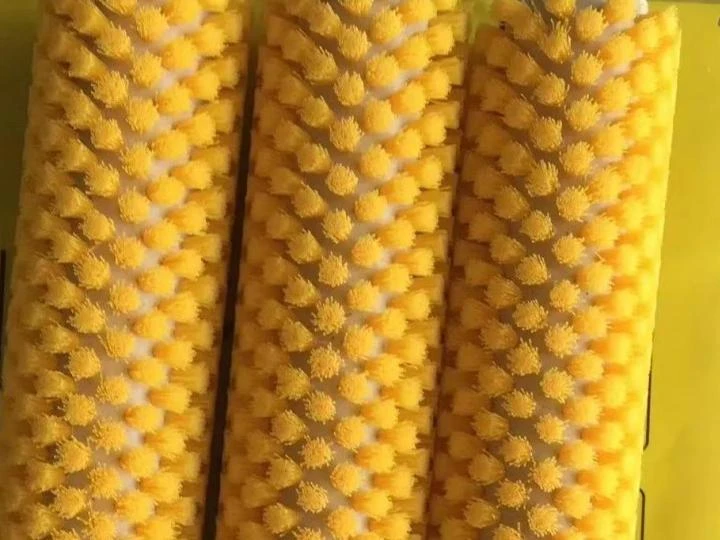
Stainless Steel Shafts Reduce High-Speed Vibration
The leaves will still tear even if you have the perfect bristle roller, in case the shaft beneath it vibrates. Here, vibrations at random high frequencies introduce force spikes, which no density of filament can ever compensate for.
The two sources of vibration are:
- Poor concentricity — the shaft was machined too loosely, so it wobbles off-center as it rotates.
- Dynamic imbalance — Filament mass is not evenly distributed; this pulls the roller sideways when it’s up to speed.
Shafts are fabricated from stainless steel grades 304 and 316, the food grades. They provide the necessary rigidity so as not to bend under continuous high-frequency loads. Machining is by CNC, after which it is dynamically balanced following planting. These last two processes eliminate the apparent “shimmy” and, therefore, no more unexpected tearing. A team that looks at shaft rigidity in various applications will find that it gives them a broad picture of how different industries use a cylinder polishing brush.
Generic vs Leaf-Specific Cylinder Brush Spec Comparison
The table below shows a comparison of the specifications between a generic off-the-shelf roller and a brush designed specifically for leafy vegetables:
| Parameter | Generic Cylinder Brush | Leaf-Specific Anti-Tear Brush |
| Bristle Material | PA6/PA66 | PA610/PA612 |
| Moisture Absorption | 2.5%-3.5% | ≤0.6% |
| Filament Density | Standard tufting with visible gaps | Ultra-high-density or spiral-wrap with zero gaps |
| Shaft Material | Carbon steel or aluminum | SUS304/SUS316 stainless steel |
| Concentricity Tolerance | ±0.3 mm or not specified | ≤±0.05 mm |
| Dynamic Balancing | Not carried out | Balanced after the planting of filaments |
| Typical Leaf Damage Rate | 8%-15% and more | Less than 2% |
Each row relates directly to a mechanism of tearing. Processors who upgrade even one parameter — for example, switching bristle material alone — often see measurable damage reduction. Upgrading all three almost eliminates the problem.
Leaf Washer Rotary Brush Procurement Specs
Points to verify by procurement and engineering teams before the RFQ is released for a cylinder rotary brush for a leafy vegetable washer:
- See that the bristle material is specified as PA610 or PA612 and not just general “nylon”.
- Ask for the shaft material to be SUS304/316 and the concentricity tolerance documented to be ≤ ±0.05 mm.
- Make dynamic balancing after planting and a test report as a rule.
- Ask for a certificate of compliance with food safety regulations for both bristle and shaft materials.
These five checks take only a few minutes during sourcing but save thousands in rejected produce later on. For teams that are also sourcing rollers for polishing or surface-finishing tasks, the guide on how to choose a cylinder polishing brush will explain how these specifications shift for harder substrates.
FAQ
Will one cylinder cleaning brush for leafy greens and root vegetables suffice?
No, it will not. The line of leafy greens needs ultra-high-density fine-filament rollers; the line of root vegetables needs stiffer, coarser bristles. One brush for both would either damage the leaves or clean poorly.
At what intervals should a vegetable-washing brush roller be dynamically rebalanced?
Every 800-1,000 hours of operation or whenever you notice an increase in vibration, you should check it. The balance should be checked and adjusted because worn filaments change the distribution of mass gradually from the original factory balance.
Does bristle diameter affect leaf tearing as much as filament density?
The diameter of the bristles is as important in leaf tearing as the density of the filaments. Thinner filaments (0.15-0.20 mm) would indeed diminish the point-contact force to a large extent. The best would be to combine fine diameter with high-density planting for the gentlest possible cleaning action on delicate leaves.