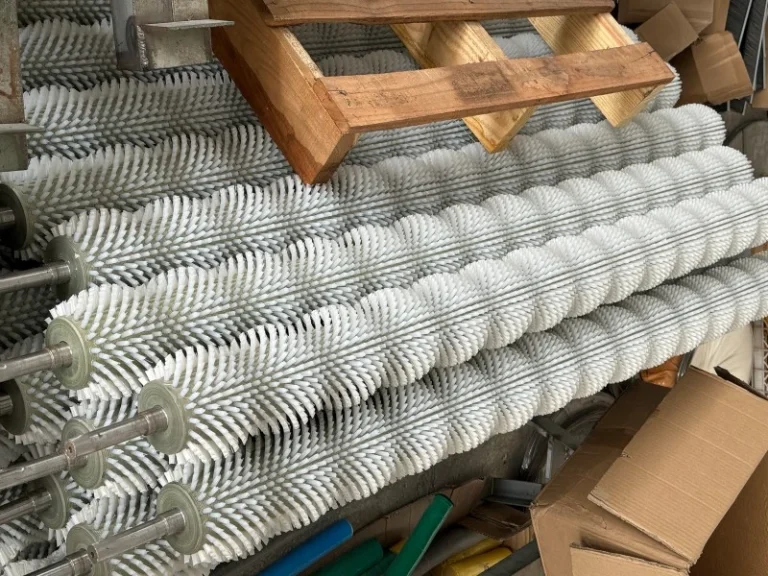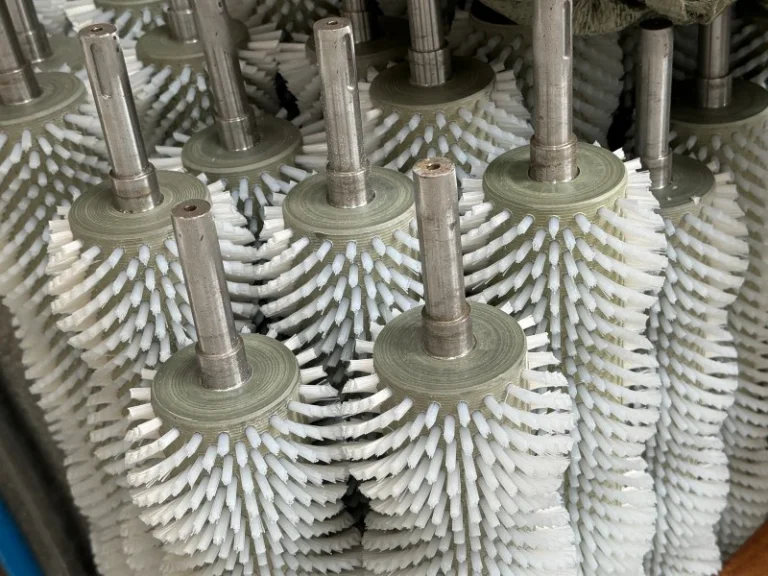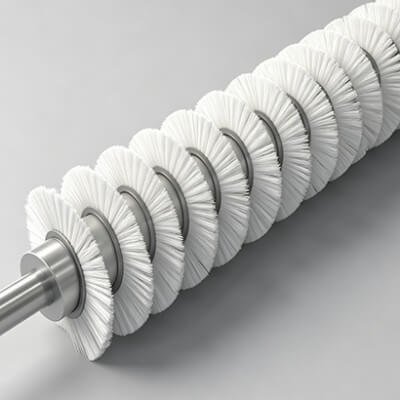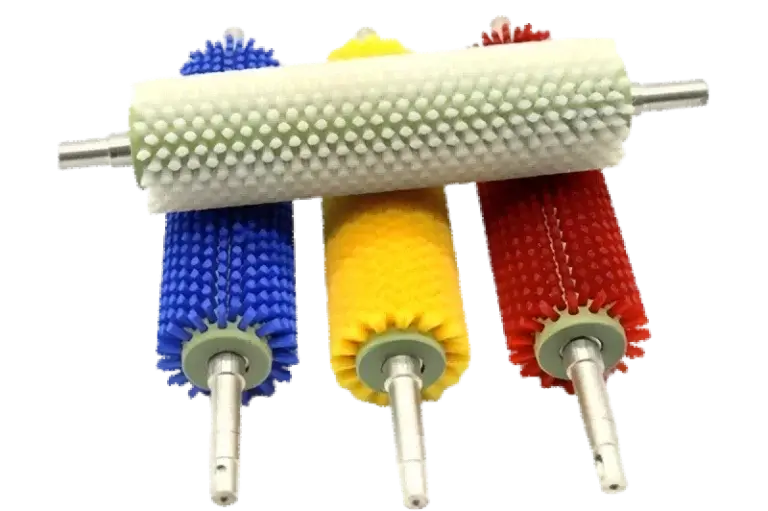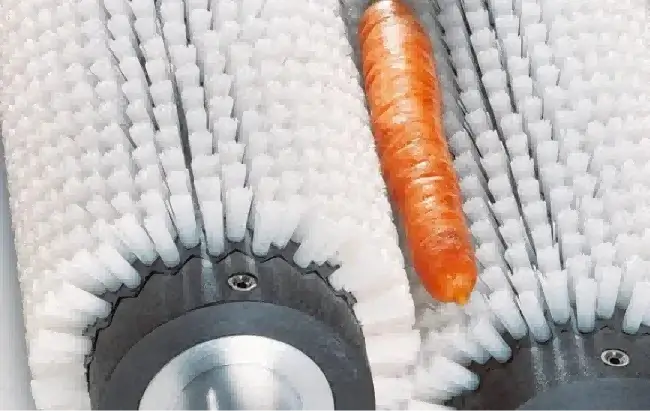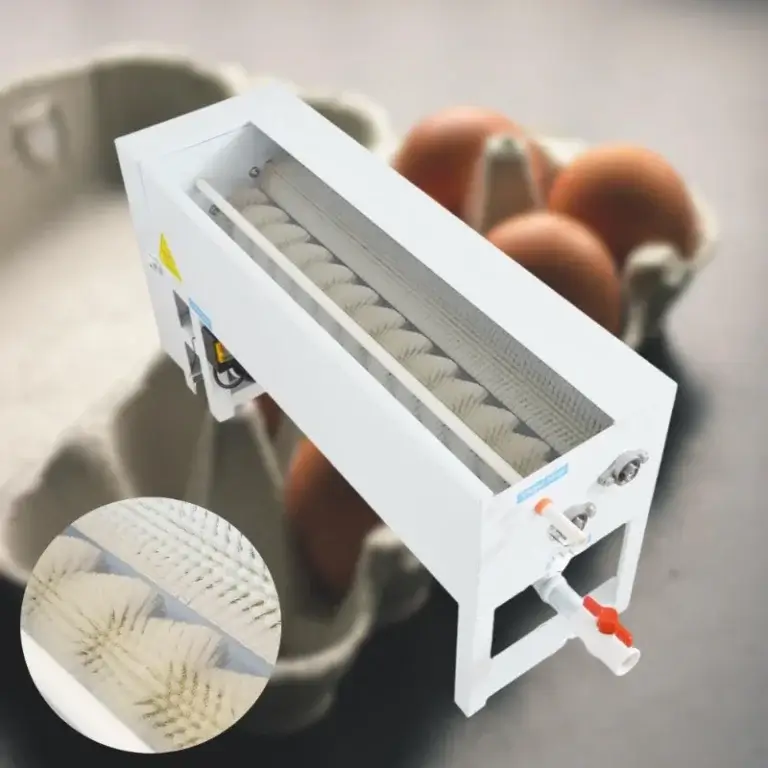
Most potato processors accept peeling loss as an inherent part of their cost of doing business. This is a costly—and wrong—assumption. In high-volume operations that handle 10 tons of potatoes per day, even 5% more flesh unnecessarily removed would mean 500 kg (1,100 lbs) of product wasted daily. The real source of too much potato peeling loss is usually in three equipment decisions that are overlooked, rather than the potato itself: how rigid the shaft is, what size abrasive grit to use, and how to match speed with that of the product.
A larger capital budget is not the answer to getting these three factors right. What is needed is a more intelligent specification at the selection stage—before a single potato hits the line.
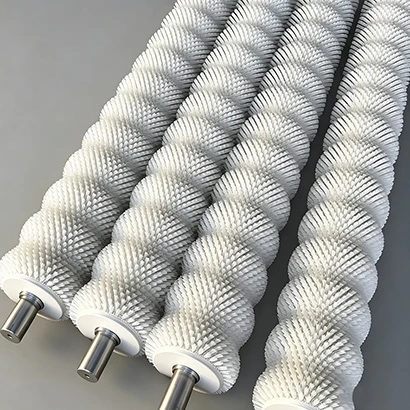
Three Core Standards for Minimizing Losses in Potato Peeling
Potato peeling loss is, in other words, the management of the mechanical engagement between the brush roller and the potato skin. Three factors describe that engagement. Each has to meet a set standard; if one fails, it will weaken the other two.
304 Thick-Wall Shaft Avoids Shaft Deflection & Material Loss
A cylindrical brush shaft that bends under load will create an uneven contact surface. The two ends of the roller will press harder into the potatoes while the center loses contact—over-peeling at both ends, the single largest hidden driver of excess flesh removal on commercial lines.
Some people would rather use thin-wall carbon steel shafts to save $50-$100 per roller. That saving, however, turns out to be a misnomer because:
- The difference in price between the shaft materials will more than make up for increased flesh loss on a line running at 10 tons/day—even a 5%–10% increase.
- If 2-3 days’ excess waste adds up to the full cost of a premium, high-rigidity brush roller set, then it is a heavy-wall core shaft made from SUS304 stainless steel.
Then, it’s a heavy-wall core shaft—made from SUS304 stainless steel. That material delivers:
- Radial rigidity you can count on, all the way up and down the roller, even when it’s supporting heavy product loads
- Protection against corrosion in wet processing environments
- Stable dimensions through thousands of hours of operation
When assessing a long-lived vegetable brushing tool for peeling lines, the operator should consider shaft specification as the first item on the checklist, not the last.
Fine Abrasive Filaments Reduce Material Peeling Loss
Abrasive filament grit size directly regulates the aggression with which the potato peeling brush attacks the skin. Coarse grit filaments (40 or 60 mesh) give fast removal of skin, but they gouge into the flesh at the same time. That may look acceptable on visual inspection, but quick weight-based measurement tells a very different story.
Fine-grit (80 or 120 mesh) silicon carbide (SiC) or aluminum oxide (Al₂O₃) filaments do it more accurately. They shave, not gouge, leaving the maximum amount of usable flesh below.
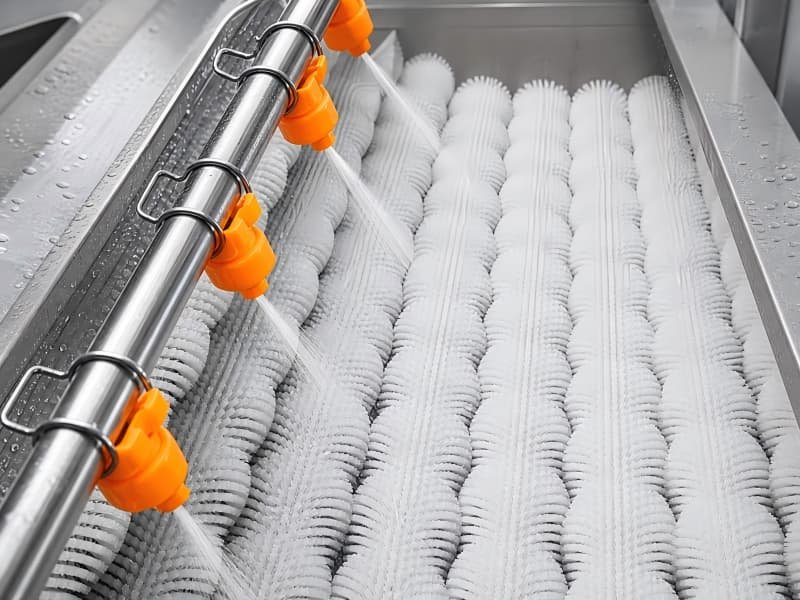
Grit Selection Guide
| Grit Size | Material | Skin Removal Speed | Flesh Loss Risk | Recommended Application |
| 40-60 mesh | Coarse diamond/carborundum | Fast | High | Thick-skinned root vegetables only |
| 80 mesh | Silicon carbide | Moderate-Fast | Low-Moderate | Standard stored potatoes |
| 120 mesh | Aluminum oxide | Moderate | Very Low | Fresh-harvest/thin-skinned potatoes |
For most of the commercial potato lines, 80-mesh SiC abrasive filaments would seem to provide the best balance between the speed of throughput and minimum flesh loss. For facilities that process multiple types of vegetables, an OEM solution for a vegetable cleaning brush to match grit specifications for each product would be worth exploring.
Match Speed to Avoid Potato Over-Peeling
The thickness of the potato skin undergoes significant changes with the duration of storage. Fresh-harvest potatoes are characterized by paper-thin skin that detaches with minimal mechanical force.
- Stored potatoes (3–6 months): Thick, leathery skin that resists removal
Running at a single high RPM setting all year would ensure over-peeling during the fresh-harvest season. The brush shall not only take away the thin new skin but also a good layer of flesh under it. Effective operations will adjust roller speed based on incoming product condition:
- Run an initial sample on every new lot of potatoes
- Cut RPM by 15%-25% for fresh-harvest or thin-skinned types
- Raise RPM slowly for aged, thick-skinned stock
- Save perfect settings by supplier and season for consistent results
This discipline of matching speeds, along with the right specification of the brush, forms the basis of peeling with low losses. New operators in this process can refer to guidance on how to choose a brush for cleaning vegetables that allows for variable speed.
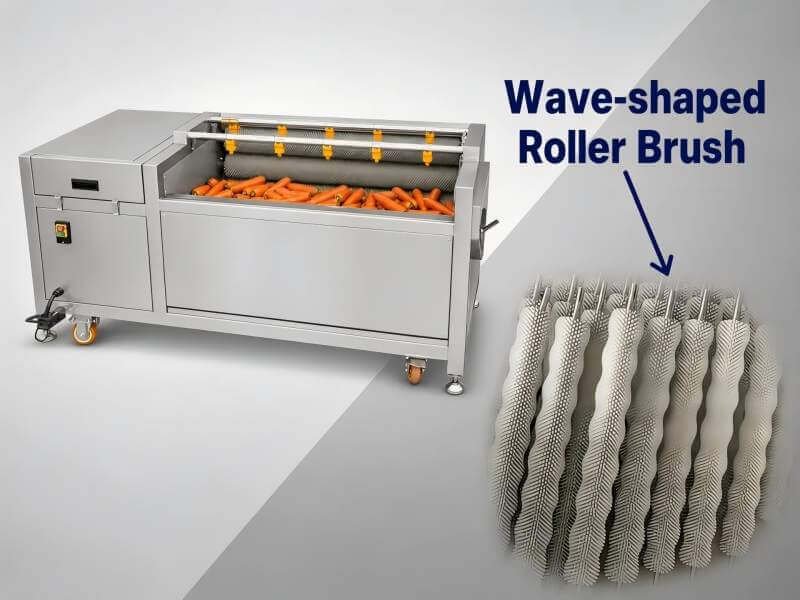
Low-Spec vs Standard Potato Peeling Brushes
The table below summarizes the practical differences that directly affect potato peeling loss on a production line:
| Specification | Low-Spec Roller | High-Performance Roller |
| Shaft material | Thin-wall carbon steel | SUS304 stainless steel, heavy wall |
| Shaft deflection under load | Measurable bending | Negligible deflection |
| Abrasive grit | 40-60 mesh coarse | 80-120 mesh fine |
| Flesh loss rate | 5%-10% above baseline | Within 1%-2% baseline |
| Speed compatibility | Fixed high RPM only | Supports variable-speed matching |
| Corrosion resistance | Low—rusts in wet environments | High – food-grade stainless |
| Total cost of ownership (1 year) | Higher (waste + replacement) | Lower (efficiency + durability) |
The initial investment in a premium potato peeling brush roller set is high. But the TCO always favors the premium spec—total cost of ownership, factoring in waste, downtime, and the frequency with which one has to procure new sets.
Hygiene standards across the entire process chain for a processor with multi-line facilities or one who manages both the peeling and transport stages are maintained by pairing peeling rollers with a matched conveyor belt cleaning brush.
FAQ
Q1: What Grit Size Reduces Peeling Loss in Potatoes Stored for Several Months?
An 80-mesh silicon carbide filament would give the best compromise: fast enough for thick-skinned stored potatoes while keeping flesh loss under 2%.
Q2: How Regularly Should a Brush Roller for Potato Peeling Be Changed?
Most good rollers will last between 1,500 and 3,000 working hours. Check filament wear monthly; change the roller if peeling uniformity is uneven.
Q3: Can One Potato Peeling Brush Handle Both Fresh and Stored Potatoes?
Yes, if the line permits variable speed. Pair a fine-grit roller with an adjustable RPM so that it can support different skin thicknesses without changing equipment.