
A low-quality Vegetable Cleaning Brush slows down production and also increases contamination risks, drives up replacement costs, and creates unexpected downtime. This is a big deal for a high-volume line at a food processing plant. The right brush impacts — directly — compliance with food safety, operational efficiency, and long-term control of costs.
This will guide you through the key points that every plant manager and procurement team should consider before choosing a Vegetable Cleaning Brush for industrial use.
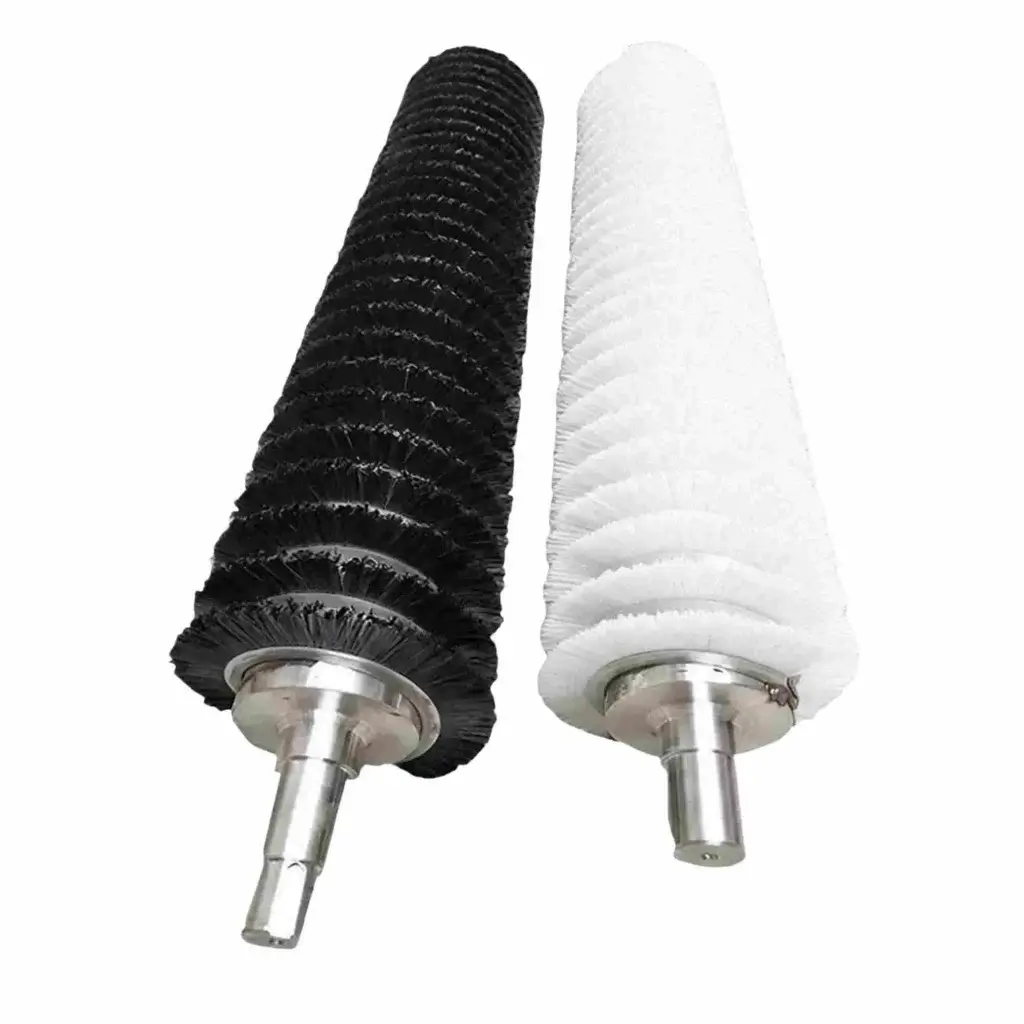
Safety Risks and Costs: Why Quality Problems with Vegetable Cleaning Brushes Make them Important
Most plants still classify brushes under cleaning as consumables. This, therefore, leads to more issues. The cheap ones will often use non-certified bristle materials that shed fibers into the food products. Inferior ones do not keep rigidity under continuous high-speed rotation for even a full month; hence, they lose quality much sooner, which means replacements have to be made more frequently, thus disrupting the production schedule.
Problems of a Low-quality Brush May Include:
- Shedding Bristles which Contaminate Vegetables
- Quick Deformation under Sustained Mechanical Load
- Corrosion of the Shaft in Wet Processing Environments
- Inconsistent Cleaning Coverage Due to Poor Brush Geometry
And these problems get worse over time. For example, a factory that switches out its brushes every two weeks instead of every two months ends up paying much more— not just for the brushes but also for the labor, the downtime, and potential regulatory fines. So, knowing what a Vegetable Cleaning Brush is and how it should be made for use in industry will keep the team from falling into such common traps right from the start.
The ideal brush rests on four critical pillars: material safety, bristle durability, customization capability, and shaft strength. Most low-quality brushes mostly expose certain points of failure.
What to Look for When Choosing a Vegetable Cleaning Brush
Choose Food-Grade Safe Materials to Prevent Secondary Contamination
A Vegetable Cleaning Brush comes into direct contact with food; therefore, material certification should not be negotiated. Factories should check and confirm safety at the level of raw materials and not just believe in general claims made by the suppliers.
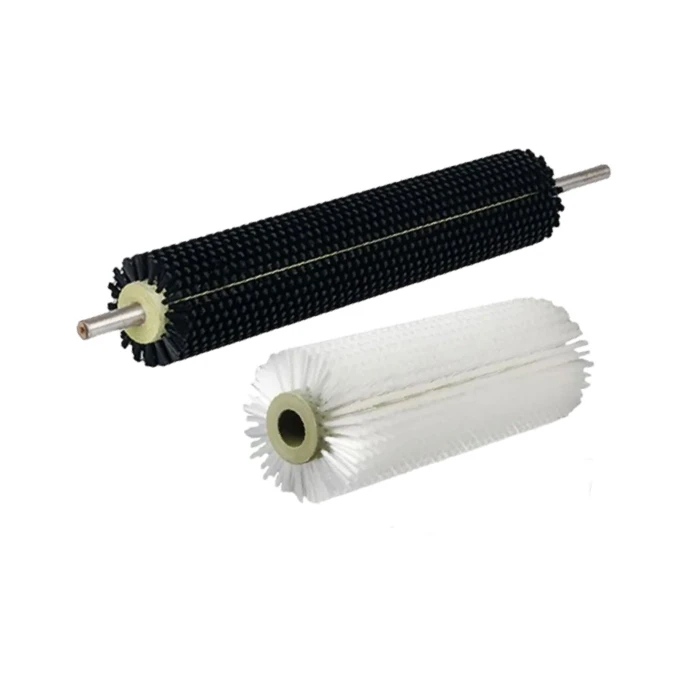
Bristles are still preferred in food-grade nylon for a few reasons: it doesn’t absorb water, so it won’t support bacterial growth, it doesn’t release any harmful substances in its use, and it can even resist microplastic generation under high friction.
When procuring Nylon Cylinder Brush options for vegetable processing, competent procurement teams will always ask for material test reports to confirm the brush’s compliance with FDA or EU food contact. This eliminates the most severe contamination risk long before the brush is received at the production line.
Select High-Wear Bristles to Cut Replacement Costs
Brushes run continuously for 12-16 hours a day on a line in food processing. Common bristles cannot hold up under such a workload and retain the same hardness. They soften, splay, and quickly lose their cleaning effect.
This is solved with bristles made of high-wear food-grade nylon. Proper bristles will keep their original stiffness and shape after thousands of hours of operation, significantly decreasing how often a factory must change brushes. For operations that use a Conveyor Belt Cleaning Brush system, this becomes even more critical since the brush must maintain constant pressure against the moving produce.
Plants that switched to high-wear nylon typically report:
- Brush replacement once a year, reduced by 50–70%
- Cleaning quality remains consistent from shift to shift
- Decrease in unplanned maintenance events
A high-quality Nylon Cylinder Brush will deliver the same performance simply because its bristles can maintain their structural integrity under continuous load.
When learning how to choose a Vegetable Cleaning Brush for an industrial setting, put bristle wear data at the top of the list, not the purchase price.
Support Full Customization to Match Different Production Line Needs
Food processing will not have two lines with similar specifications. Roller spacing, conveyor speed, type of produce, and water pressure will always differ. This is why an off-the-shelf brush is almost always a poor fit — and the result is cleaning blind spots or mechanical interference.
This is especially true for a Conveyor Belt Cleaning Brush application, where cleanliness is directly related to the alignment with the width and the speed of the belt.
A really useful Vegetable Cleaning Brush has to be super customizable. Factories should be able to supply their exact line parameters and work with manufacturers who can offer non-standard sizing for:
- Brush diameter and length
- Bristle density and trim pattern
- Shaft diameter and connection type
- Rotation direction compatibility
Eliminate all gaps in coverage with a custom Cylinder Rotary Brush, which will also keep your equipment running at peak production and free of mechanical friction and collision. OEM Vegetable Cleaning Brush solutions give that precision to plant engineers — you!
Demand High-Strength, Corrosion-Resistant Shafts
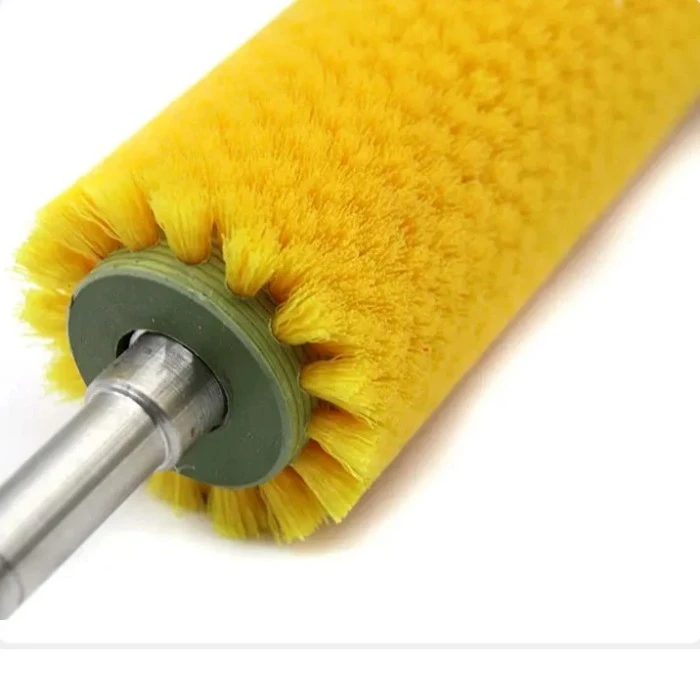
Make the shaft out of steel and ensure it can carry all roller cleaning brushes. In wet and high-load conditions, standard steel shafts will bend and then later corrode, resulting in failure. A bent shaft causes not only wobbling but also uneven contact of the bristles and early damage to the adjacent parts. Therefore, an industrial Vegetable Cleaning Brush solution would have the shaft made out of stainless steel or out of a steel alloy — one that can’t deform or corrode over its long life.
Quality vs. Low-Cost Vegetable Cleaning Brushes
The table presented below shows the pragmatic differences between a well-engineered brush and a cheap alternative:
| Feature | High-Quality Brush | Low-Cost Brush |
| Bristle Material | Food-grade nylon (FDA/EU certified) | Uncertified generic plastic |
| Bristle Lifespan | 2,000+ operating hours | 300–500 operating hours |
| Microplastic Risk | Virtually none | High under sustained friction |
| Shaft Material | Stainless steel / treated alloy | Carbon steel (prone to rust) |
| Customization | Full non-standard sizing available | Fixed standard sizes only |
| Cleaning Consistency | Stable across full service life | Declines rapidly after the initial weeks |
| Annual Replacement Cost | Low | great (3–5× more frequent changes) |
As the results indicate, the initial savings of the low-priced brush are quickly wiped away as soon as the replacement frequency, downtime, and contamination risks come into the picture.
FAQ
What bristle material is best for industrial vegetable cleaning brushes?
A: Food-grade nylon is the best material. When you select a Nylon Cylinder Brush, it does not absorb water. It does not allow the release of harmful substances. And it stays hard under continuous high-speed operation on processing lines.
What is the replacement frequency of vegetable cleaning brushes by factories?
A: High-quality Vegetable Cleaning Brush options can last over 2,000 operating hours. Low-cost alternatives may need replacement every few weeks, which significantly increases annual consumable budgets.
Can vegetable cleaning brushes be adjusted to fit current production lines?
A: Yes. Good manufacturers can do non-standard customization on diameter, length, density of bristles, and shaft to meet exact line parameters. A customized Cylinder Rotary Brush or Conveyor Belt Cleaning Brush can be designed to fit your specific line configuration.
Conclusion
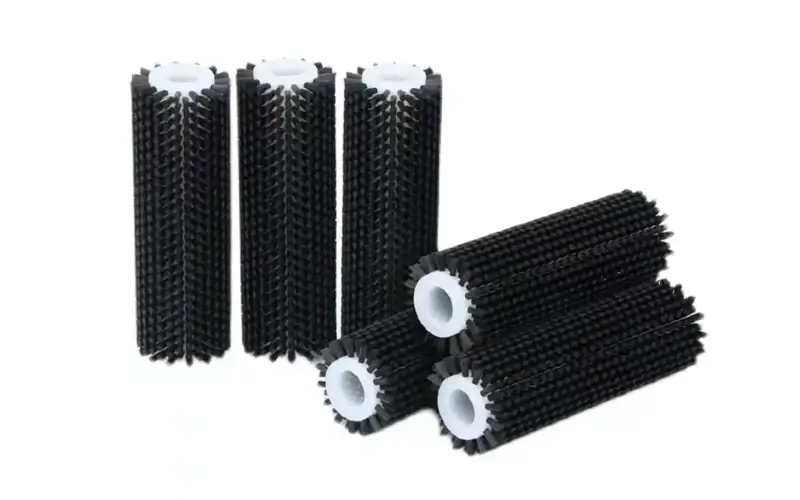
Select a hard brush for processing lines and name it material safety, bristle durability, depth of customization, and strength of the shaft as well. Not one factor is enough on its own. People who go for food-grade nylon bristles and a shaft that resists corrosion with precision customization always end up with lower operating costs as well as stronger compliance in terms of food safety. For a broader perspective on criteria for selecting brushes, the guide on how to choose a Vegetable Cleaning Brush gives more practical insights.
Whether you’re selecting a standard Cylinder Rotary Brush or a custom one, these four pillars apply just as strongly.