
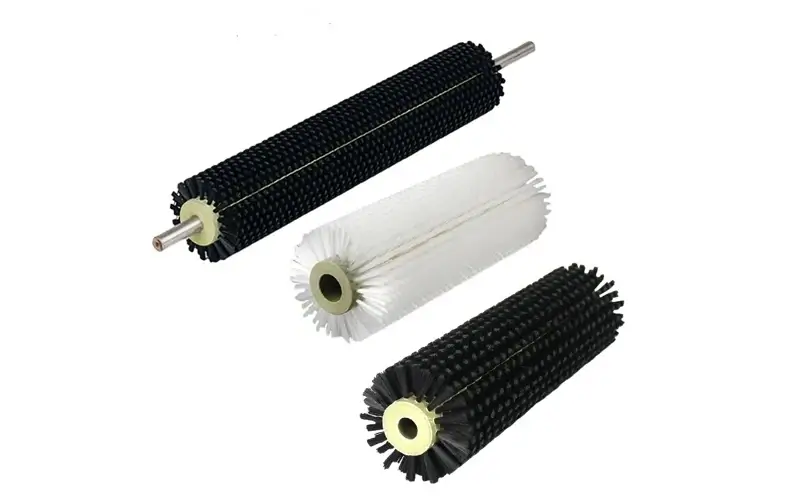
Tufted cylinder brushes can be difficult to understand. Choosing the right one depends on your application, filament, size, and density. If you choose incorrectly, regardless of your underlying reason, you may not utilize the tool to your fullest potential. Across many industries, proper selection of a tufted cylinder brush allows for efficient cleaning and polishing of a substrate surface, preparing that surface for subsequent treatment.
Why Brush Selection Matters
Using an inappropriate brush means that you will not get an optimal result from your operation. In addition, using the incorrect brush will increase the life of the brush unnecessarily and leave you with downtime while the brush is being replaced. Tufted cylinder brushes must be designed specifically for the job they are performing. In other words, the brush used in each application must have a specific combination of size, density and filament type.
Manufacturers that understand what’s tufted cylinder brush technology have a clear competitive advantage, because they match the specifications of the brushes they use to their actual operational requirements. This results in reduced waste and higher-quality output.
The selection process does not need to be complicated. A few key factors guide the decision effectively.
Key Factors When Choosing a Tufted Cylinder Brush
1. Define Your Application First
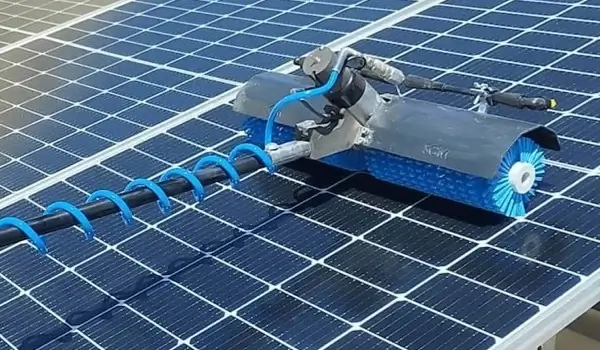
There are many functions for a brush but there is no one brush that can perform all functions. Both a fruit and vegetable brush used in the food industry and a nylon solar panel cleaning brush require non-abrasive, food-safe filaments; however, an industrial deburring operation requires stiffer/more aggressive filaments.
To determine which type of brush you need, start by answering the following four questions:
- What type of contact will the brush make with the material?
- What is the maximum amount of pressure that can be applied to the material’s surface?
- Will the material be wet or dry during use?
- What will be the speed of the brush during use?
By answering these four questions, you will quickly narrow down your choices for the type of brush.
2. Material Selection
The material of the filament influences the performance and longevity of the brush. Each type of filament material will work best for certain applications.
Nylon: This material is extremely versatile and durable. It works really well for cleaning, polishing, and light deburring. Nylon filaments will also perform well in wet conditions.
Polypropylene (PP): This type of filament is chemically resistant and cost-effective. Filaments made with polypropylene are commonly found in food processing and washdown applications.
Natural Fiber: Gentle on more sensitive surfaces. Typically seen in specialty finishing applications.
Abrasive Nylon: Nylon with embedded abrasive particles; create an aggressive conditioning surface.
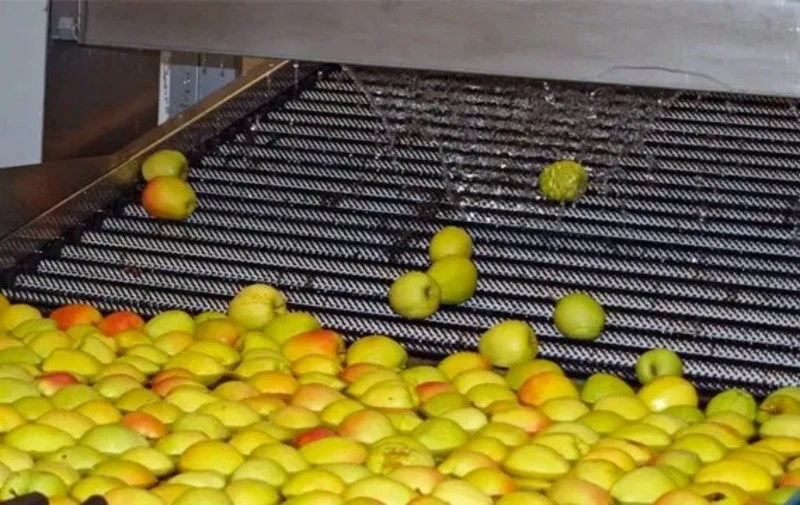
In vegetable cleaning brush systems, soft nylon and PP are most usually used for food application, compliance with food safety and the ability to withstand moisture.
3. Getting Your Dimensions Right
Brush dimensions must correspond with equipment and workpiece dimensions. Three key measurement points include:
- Overall Length – Will fit exactly into machine brush housing.
- Outside Diameter – Determines the contact area and distribution of load against the work.
- Core Bore Dimensions: Must Be an Exact Match to The Shaft
Brushing too much too fast can cause a lot of unnecessary weight on the brush. Not enough brushing leaves gaps in coverage and affects overall performance.
Core Material Options
Different types of core materials can also affect the performance of the brush. Steel is recommended for heavy duty usage; Plastic is lightweight and does not corrode; Wood is best for less demanding applications at slower speeds.
4. Evaluating Pattern and Density of Tufts
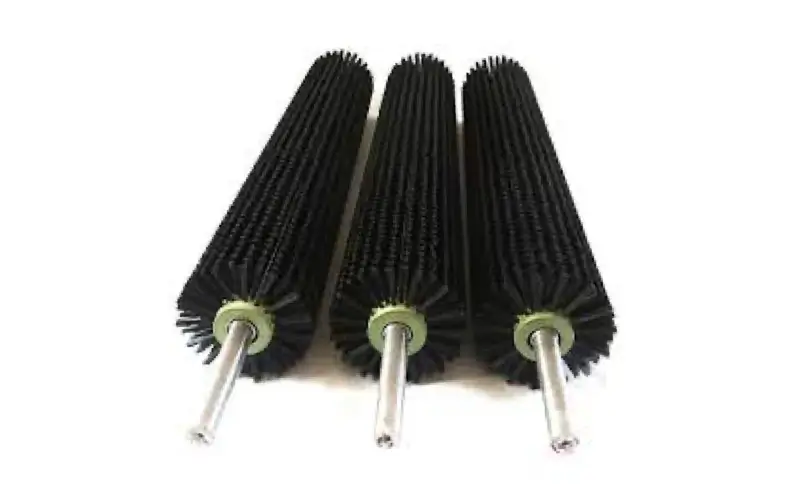
A tufted staple set cylinder brush is made with a specific pattern of staple clusters that are fastened into the brush base. The way that the tufts are arranged to form this pattern can greatly influence how well the brush works (performance).
High Density: More tufts per row. Best for polishing and fine clean-ups. Will provide maximum uniform contact on the surface.
Low Density: Less number of tufts per row and spacing is greater. Best for aggressive cleaning operations where debris must have some space to exit.
Spiral Pattern Arrangement: The tufts are arranged in a spiral fashion; therefore, when used, there are fewer vibrations due to the alignment of the tufts that help to regulate the flow of product or debris through the brush.
Depending on the type of cleaning, density is an important factor. For instance, cleaning dirt from produce requires moderate density, while polishing surfaces that have already been smoothed will require more tightly spaced tufts.
Suggested Specifications by Application
A table summarizing the most common applications:
| Application | Filament Material | Grit / Softness | Tuft Density | Speed Range |
| Fruit Cleaning | PP / Soft Nylon | Soft, food safe | Medium | 200 – 500 RPM |
| Vegetable Washing | PP / Soft Nylon | Soft, food safe | Medium to High | 200 – 500 RPM |
| Solar Panel Cleaning | Soft Nylon | Very soft, no scratches | High | 100 – 300 RPM |
| Deburring Metal | Abrasive Nylon | 80 – 120 grit | Medium | 800 – 1,500 RPM |
| Finishing Wood | Nylon / Natural Fiber | 180 – 320 grit | High | 600 – 1,200 RPM |
| Conveyor Cleaning | Nylon / PP | Mid-Stiffness | Low to Medium | 300 – 800 RPM |
These Figures Above Are Guidelines; Finalized Specifications Should Be Determined Based on Specific Equipment As Well As Production Requirements.
Approaches To Assessing Brush Quality
Every tufted Brush Is Not Created Equal. Differences in Quality Will Affect Performance And Longevity. Below Are Indicators For Determining If A Brush Has Been Well Made:
- Anchor Security Of Tufts: The Tufts Should Not Pull Out Easily — Loose Tufts Can Contaminate Products And Reduce Brush Life.
- Consistent Trim Height: Results in consistent filament contact. The best brushes are made with tight tolerances.
- Balanced Core: An unbalanced brush will create a vibration when running at speed, which will damage the bearings and deliver mediocre performance.
- Material Certifications: When using brushes for food and solar panel cleaning brush applications, knowing that the material of the brush you choose has been tested for compliance with defined material certification standards within your business provides you additional assurance in your choice of brushes.
Before committing to a bulk order, it’s good practice to request a sample. Testing the brush under ordinary operating conditions will provide you with information about how it will perform that’s not available from specifications alone.
Conclusion
In order to choose a tufted cylinder brush, it is essential to identify the task it will perform. Appropriate filament material, dimensions, and tuft density all should be selected based on the intended application and its requirements. This will also result in reduced costs, improved quality of the product, and a longer service life of the brush throughout the entire industrial application process.
Frequently Asked Questions
Can I get a tufted cylindrical brush specifically designed for my particular machine dimensions?
Yes, the majority of manufacturers can provide customised core lengths, diameters, bore sizes, and filament arrangement to achieve a particular equipment requirement.
What is the average minimum quantity for wholesale tufted brushes?
When ordering standard specification featuring tufted brushes, there will be an average size range between ten (10) and fifty (50) pieces. For any custom manufactured item, the minimum quantity will depend on how much tooling and raw material you’ll need to procure.
Are there food-safe filament options for fruit and vegetable processing lines?
Yes, there is plenty of food-safe filament options for your fruit and vegetable processing lines such as PP and FDA compliant nylon filaments that can be easily sourced and also meet food safety standards while still being able to withstand many wash-down cycles.