In coil processing lines, the brush often determines whether the finished surface meets spec or gets rejected. A poorly matched brush creates uneven finishes, accelerates wear, and forces unplanned downtime — all of which eat directly into production margins.
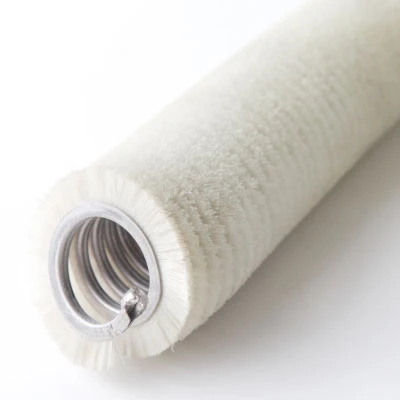
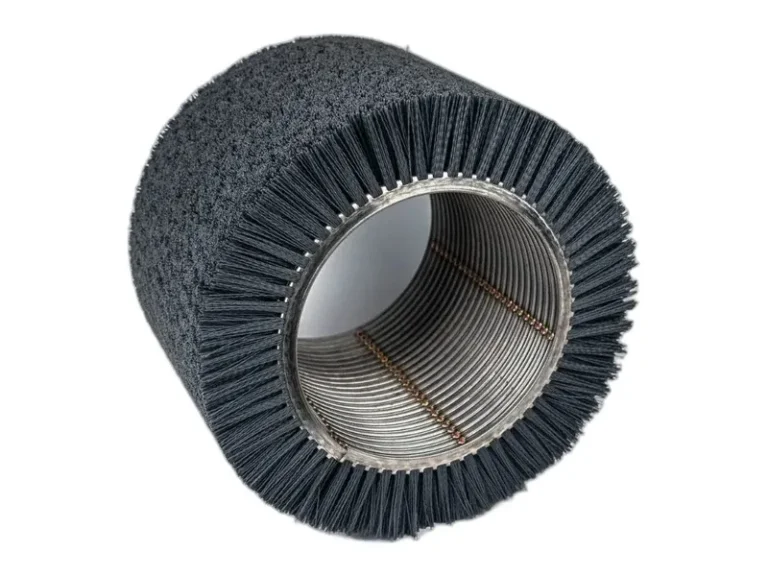
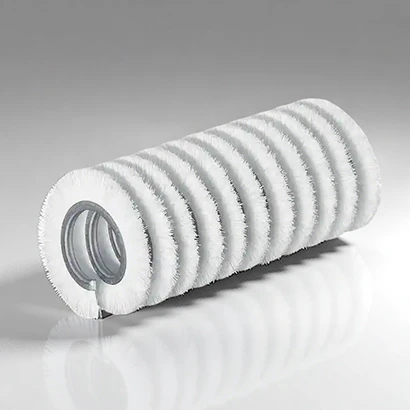
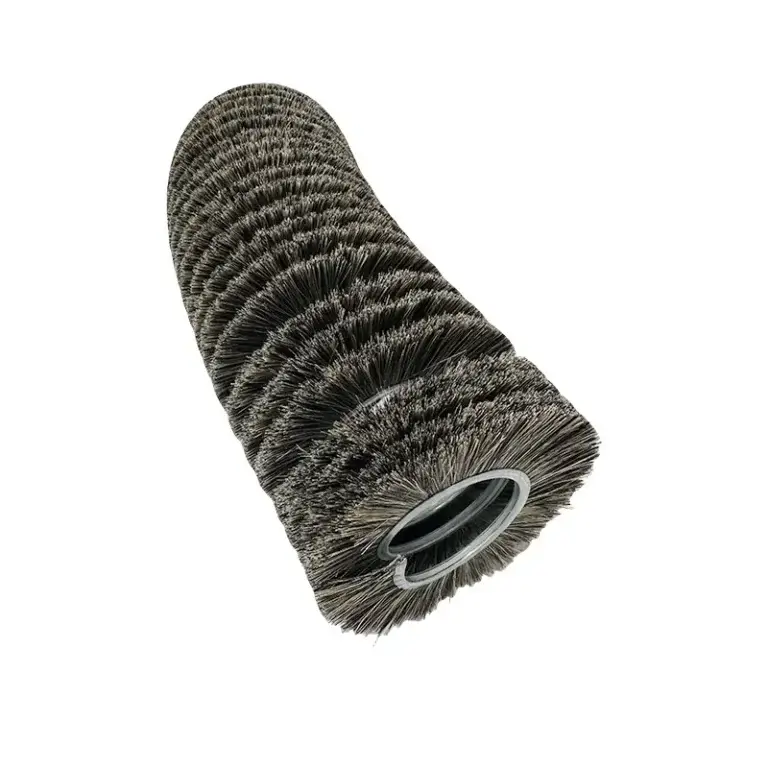
The creation of an outside coil brush begins with wrapping a metal-backed channel strip onto a rod, core, or mandrel to create a cylindrical rotating coil brush. By changing the space between the coils of wire, the manufacturer can establish the density of that brush – tightly wound for heavy-duty, and wider for lighter-duty brushes.
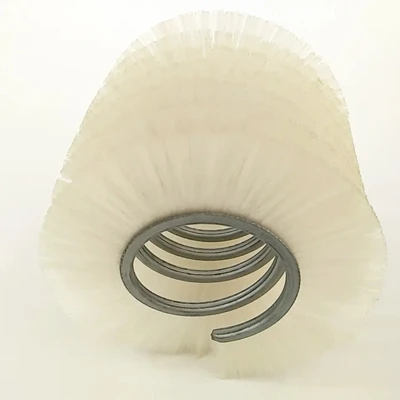
While the brush’s versatility makes it an ideal surface treatment tool, the purchase of a brush requires the buyer to consider a number of variables when ordering. For anyone unfamiliar with the product itself, reviewing what an outside coil brush is provides a solid foundation before diving into the selection process. This guide breaks down the key decision points so that purchasing teams and engineers can specify the right brush the first time.
Key Factors for Selecting an Outside Coil Brush
Every brush specification starts with four core variables: what the filament is made of, how tightly the coils are wound, what holds the brush together, and whether the dimensions match the machine.
Filament Material
Filament selection has the greatest impact on brush performance. The wrong material either damages the coil surface or fails to achieve the required finish.
- Nylon (PA) — Durable and flexible. Works well for general cleaning and light polishing where the substrate must not be scratched.
- Abrasive nylon — Nylon filaments impregnated with silicon carbide or aluminum oxide grit. Ideal for oxide removal and surface conditioning on metal coils.
- Steel wire — Provides maximum aggressiveness for heavy scale removal, weld cleaning, and rust stripping on steel strip.
- Brass wire — Softer than steel. Used when the surface requires cleaning without risk of ferrous contamination.
- PP / PE / PET — Economical synthetic options suited to wet environments or light-duty cleaning tasks.
A detailed comparison of each option is available in the outside coil brush material guide, which covers performance characteristics, wear rates, and recommended applications for every common filament type.
Coil Pitch and Brush Density
Pitch refers to the spacing between each wound coil on the core. It directly controls how much filament contacts the workpiece per revolution.
| Pitch Type | Density | Best For |
|---|---|---|
| Close-wound (tight pitch) | High density | Aggressive cleaning, heavy oxide removal |
| Medium pitch | Moderate density | General polishing, surface conditioning |
| Open-wound (wide pitch) | Low density | Light dusting, delicate surfaces, wet applications |
Tighter pitch means more filament in contact — greater material removal but also higher drag on the drive motor. Open pitch reduces contact pressure and allows debris to clear more easily, which matters in wet processing environments where material buildup is a concern.
Most experienced operators find that medium pitch offers the best balance for general-purpose surface cleaning brush applications, while specific processes like heavy descaling demand close-wound configurations.
Core Construction and Mounting
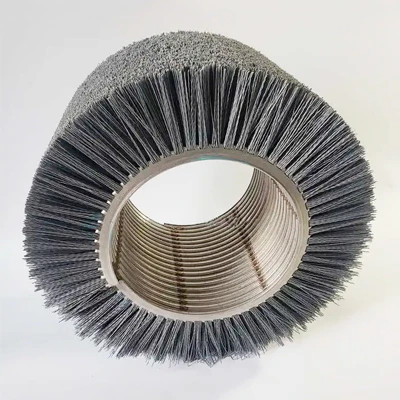
The core is the structural backbone of the brush. It must withstand continuous rotation at production speed without flexing or failing. Common options include:
- Complete assembly with journals — The brush arrives pre-mounted on a core with bearing journals, ready to install. This is the fastest option for standard machine formats.
- Wound directly on a shaft — The channel strip is wound onto the customer’s own shaft, eliminating adapter issues.
- Replacement coil only — For operations that reuse existing cores, a replacement coil strip reduces cost and waste.
Selecting the right mounting format depends on the machine design and how frequently the brush needs replacing. High-volume lines that change brushes often tend to prefer replacement coils for speed and lower unit cost.
Brush Dimensions
Three measurements must be confirmed before ordering:
- Outer diameter (OD) — Must match the machine’s brush chamber. Outside coil brushes can be produced with ODs as small as 20mm for compact line configurations.
- Body length — Should cover the full working width of the coil being processed.
- Inner bore/shaft diameter — Must fit the drive shaft precisely. Even minor misalignment causes vibration, uneven wear, and inconsistent surface results.
When standard catalog sizes do not align with the machine, a custom coil brush built to exact specifications is almost always the better investment. The cost difference is small compared to the production problems caused by an ill-fitting brush.
Matching the Brush to the Application
Specifications only matter if they serve the actual production scenario. Below are two of the most common use cases and what each one demands.
Coil Surface Cleaning
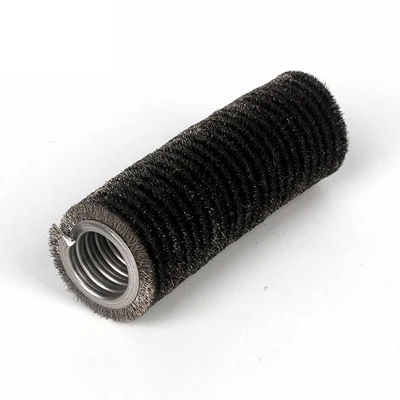
The majority of the time, people use coil cleaning brushes for the removal of oils, minor oxidation, and contamination from the surfaces of metal coils before they undergo additional processes. Coil cleaning brushes are manufactured in such a way as to clean coil surfaces thoroughly with an abrasive nylon, or only a medium-stiffness nylon filament (medium pitch), without altering the surface profile of the base material underneath.
The speed of the line is an important consideration. In other words, denser brush configurations are needed for faster lines because they provide adequate contact (cleaning time) per foot of coil surface.
Polishing and Finishing
To obtain a consistent and visually homogeneous surface finish for stainless steel and aluminum coil finishes, it is best to use relatively soft filaments at 90 to 100 output density and relatively high filament density (100/250) for optimum results.
The contact pattern is even, as a result of the close pitch of the fine abrasive nylon. This evenly distributed contact pattern produces a streak-free finish. Overall coil width must have consistency in filament density and brush balance in order to minimize the potential for visible bands in the finished product.
Common Selection Mistakes to Avoid
Based on repeated observations across the industry, these errors cost buyers the most:
- Choosing a type of wire that is more aggressive than needed can result in damage to the coil surface, reducing the life of the brush.
- Selecting a code for how closely to pitch your wire is another area where excessive aggression can be an issue. For example, if you default to a close pitch every time you wire, this will typically perform better for most light-duty jobs but will run cooler than using an open or medium-pitch wire.
- Ordering standard sizes of brushes for non-standard machines — Brushes that do not have a perfect fit will not perform as well. It is important that you take measurements of the brush when ordering and obtain the required specifications before ordering.
- Sample testing may be skipped. Actual machinery operates under different conditions than laboratory conditions, so a sample will produce mistakes that exact specification measurements will not show.
Frequently Asked Questions
Q1: Can outside coil brushes be customized for non-standard coil processing lines?
Yes. Most professional manufacturers offer custom dimensions, filament types, pitch density, and mounting configurations to match any specific machine and application requirement.
Q2: What is the usual Coiling Brush Minimum Order Level for a wholesaler?
The Minimum Order Quantity (MOQ) for manufacturers varies depending on reasons such as how much customization has been requested. An OEM or manufacturer of coiling brushes has an MOQ of 10-50 units; discounts generally apply to bulk orders placed with that same manufacturer.
Q3: How often to replace an outside coiling brush in production?
You will replace an outside coiling brush based on the speed of the production line, the materials that make up the brush construction, and the type of bristle used within the brush – generally speaking, inspections should be done regularly to determine uneven wear of the outside coiling brush where it does not clean properly or wear is excessive.