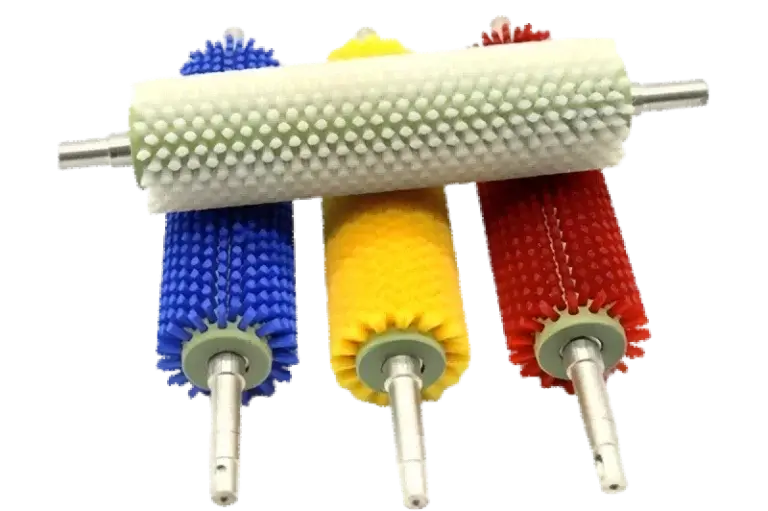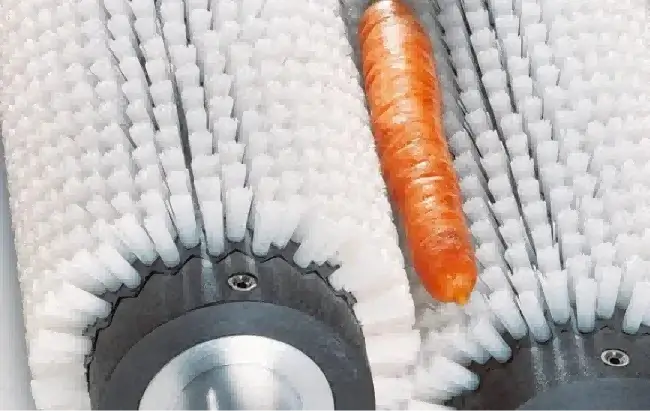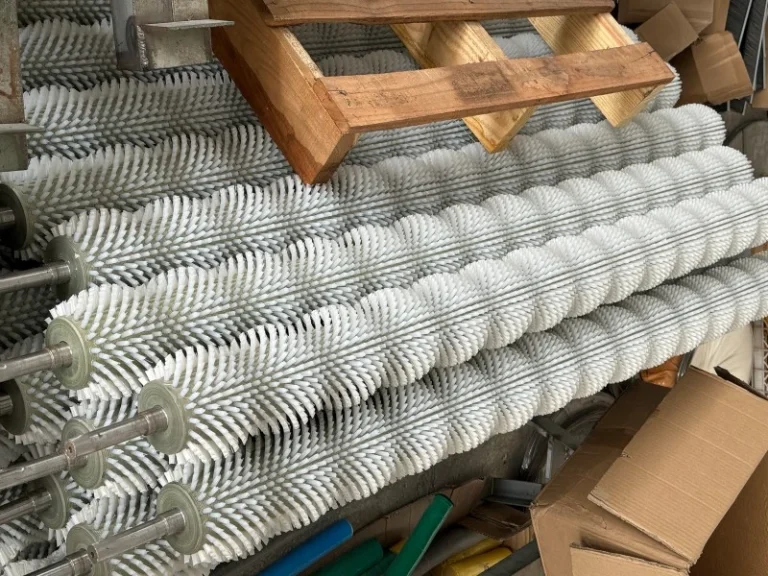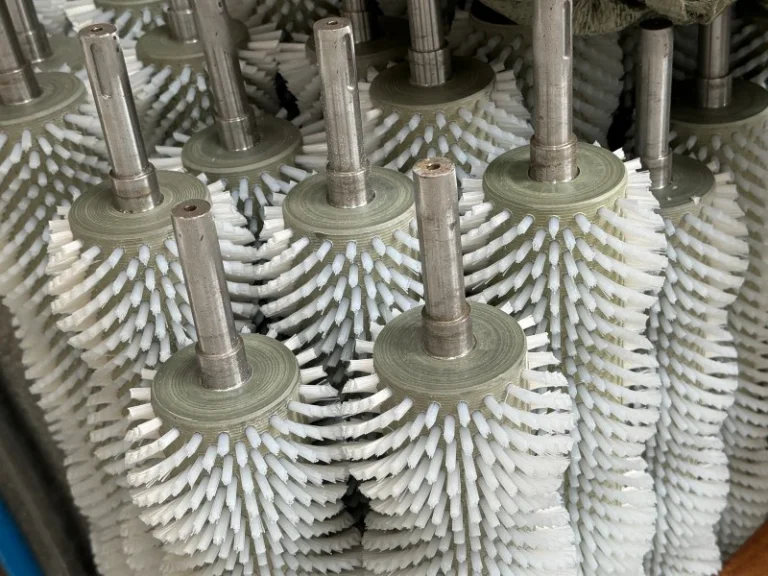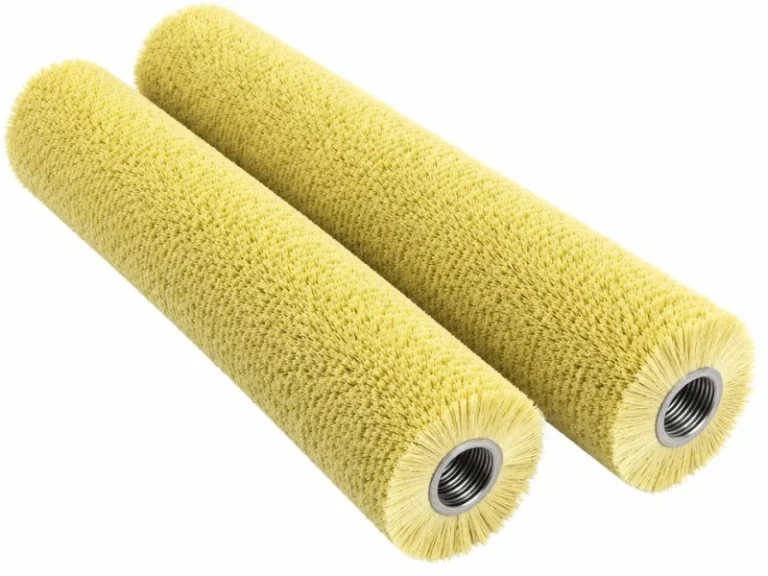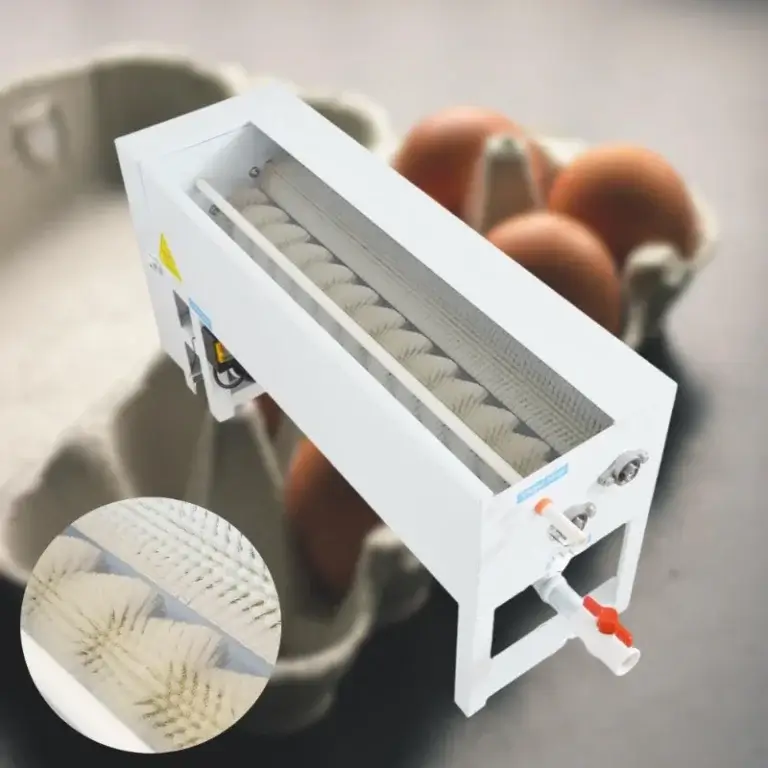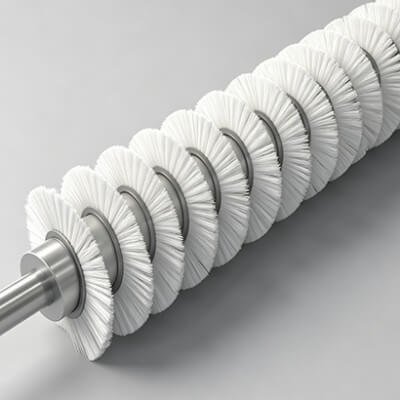
Picking the correct vegetable cleaning brush is not just about choosing the softest bristles or the biggest diameter. The wrong brush selection can result in inconsistent cleaning results, increased brush wear, and food safety issues at food processing facilities, produce wash lines, and commercial kitchens or kitchen supply companies. Properly selecting a vegetable scrubber will provide you with a long-lasting, cost-saving, efficient production process that will help to ensure the efficiency of your facility.
In order to better understand how brushes differ based on their specifications, you must begin by identifying exactly what the specific application is that needs to be accomplished with the brush. To determine which type and size of brush will work best for your application, consider the following key questions about your specific needs:
- What type of produce are you washing – hard skin type (e.g., potatoes, carrots) or soft skin type (e.g., tomatoes, peaches)?
- How does your washing process work: will you use water jets/sprays, immerse the produce in a tank, or use dry brushing only?
- What is the conveyor or roller speed?
- Does the brush need to meet food-grade or FDA compliance standards?
A fruit cleaning brush operating on a high-speed citrus line operates under very different conditions than root vegetable washing brushes that operate at lower speeds. By clearly defining the operational conditions beforehand, you will considerably narrow down your selection.
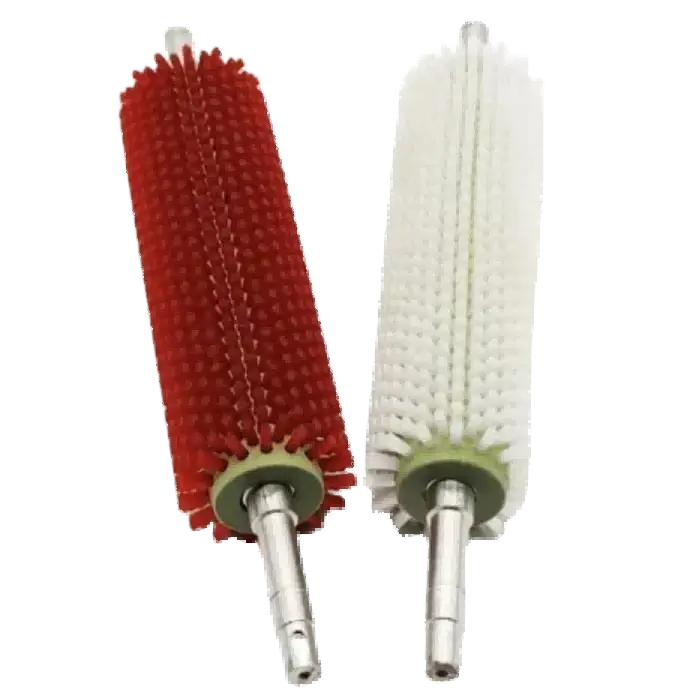
Bristle Material: The Most Critical Selection Factor
Bristle material is one of the primary criteria determining the aggressiveness of the brush, the compatibility of the brush with chemicals, and the food safety compliance of the brush. The following are the primary bristle materials used in most industrial produce washing applications:
| Bristle Material | Cleaning Type | Recommended For | Food-Safe Grade? |
|---|---|---|---|
| Nylon 6 / Nylon 612 | Gentle to Moderate | Soft and Hard Produce | Yes |
| Abrasive-filled Nylon | Moderate to Aggressive | Roots, Peeling | Yes |
| Polypropylene (PP) | Gentle | Wet Wash-down Lines | Yes |
| Natural Fibers (Coconut, Tampico) | Very Gentle | Delicate Fruit Surfaces | Varies |
| Stainless Steel Wire | Aggressive | Non-Food Surface Preparation | No |
A nylon cylinder brush continues to be the brush of choice for most applications in produce washing. Nylon has the right amount of flex, moisture resistance, and durability, with food-safe grades available for lines that require compliance documentation. Buyers searching for brushes for mixed produce lines will find that nylon offers greater versatility in providing suitable cleaning for a variety of produce types while reducing the frequency of brush changeovers.
Brush Geometry: Diameter, Length, and Trim
Outer Diameter
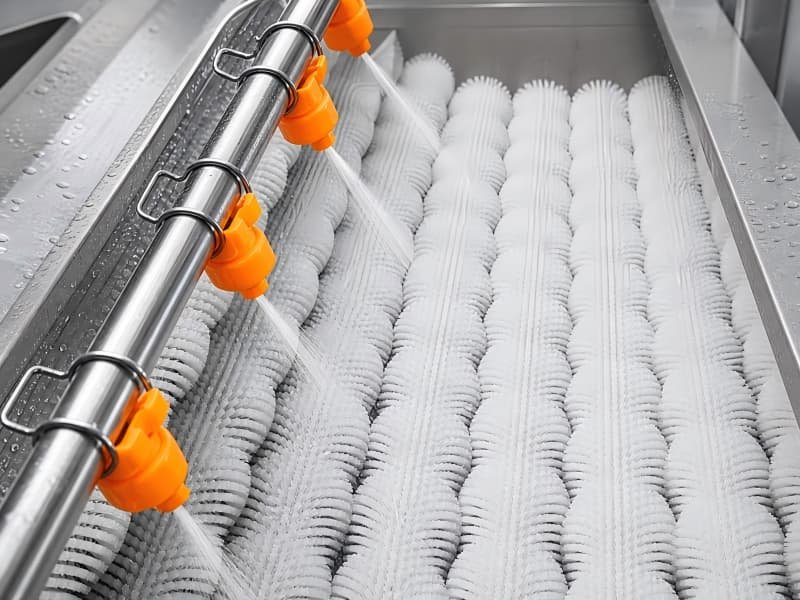
The outer diameter of the brush will impact contact pressure and how well the brush engages with the surface of the produce. A larger diameter creates more surface contact for each revolution, therefore being beneficial for machines that operate at a high rate of speed. Conversely, a smaller diameter will create less force on the surface area of the produce and allow for greater precision when cleaning in restricted areas or with smaller produce items.
Brush Length
When using cylinder cleaning brushes, the length of the brush should equal the width of your conveyor or wash channel. If the brush is too small, there will be areas on either side that remain uncleaned; if too large, there will be excessive drag, resulting in unnecessary wear. If your conveyor width is non-standard, a custom-length cylinder cleaning brush can be manufactured to fit.
Trim Length and Bristle Diameter
Longer trim lengths are flexible and adaptable, conforming more easily over non-uniform surfaces of irregularly shaped root vegetables. Shorter, more rigid trims provide consistent contact pressure, making them suitable for uniform-shaped produce like apples and citrus fruits. The same logic applies to bristle diameter: thinner bristles provide light cleaning, while thicker bristles deliver a heavier cleaning action.
Mounting and Drive Compatibility
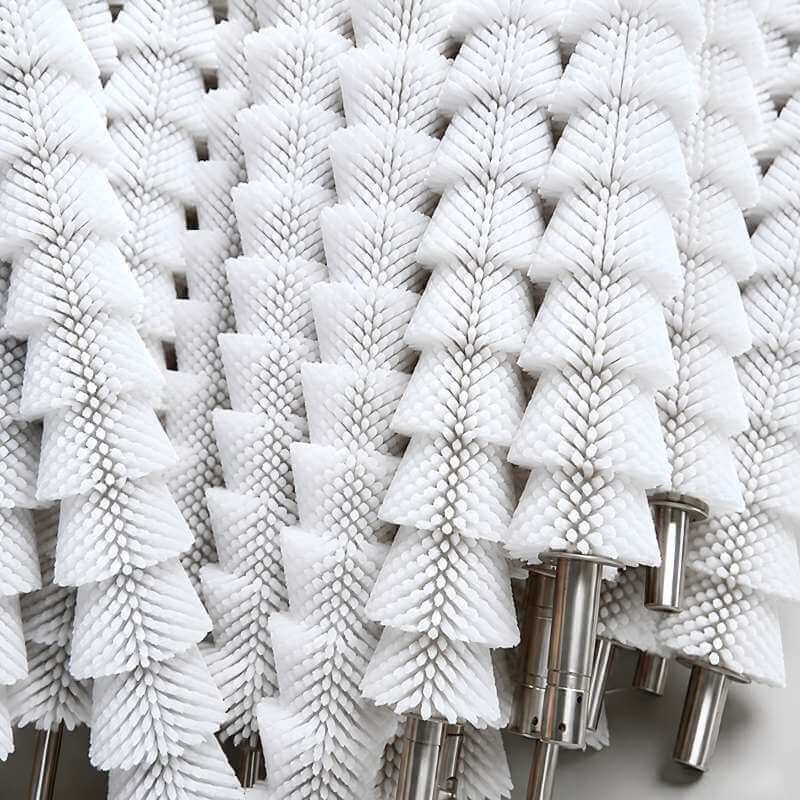
A brush that performs well on paper but does not fit the existing machines results in installation delays and added expense. Buyers should confirm the following items before finalizing a specification:
- Shaft diameter and bore size
- Drive type (direct drive, belt drive, or chain drive)
- Bearing housing dimensions
- Required rotational speed (RPM)
- Compliance with food zone standards (no hollow shafts that can trap moisture)
OEM or custom configurations allow suppliers to adapt shaft sizes and core materials to fit existing machinery — particularly important when replacing brushes on older or imported equipment.
Hygiene and Maintenance Considerations
When selecting a vegetable cleaning brush for food processing environments, ease of cleaning and resistance to bacterial buildup are essential. Solid cores are preferable to hollow cores from a hygiene standpoint because they eliminate internal moisture accumulation. Nylon bristles will not support mold growth, nor will they retain water, reducing contamination risk between wash cycles.
Factors buyers should take into account include:
- High-pressure washdown capability
- Compatibility with cleaning chemicals used on the line
- How quickly bristles can be inspected for wear during routine maintenance
A brush that is difficult to inspect or replace will slow down maintenance cycles and increase the likelihood of degraded cleaning performance going unnoticed.
When to Consider Custom Specifications
Standard catalog brushes will suffice for most applications. However, production lines with non-standard belt widths, unusual produce types, or strict compliance requirements could benefit from custom specifications. For additional context on how these brushes are used across different produce types, the article on fruit and vegetable cleaning brush applications provides useful background. For first-time buyers, the overview on what a vegetable cleaning brush is covers the fundamentals before diving into specifications.
Custom options typically include:
- Non-standard lengths and diameters
- Multiple bristle materials within a single brush
- Specific core materials for washdown or corrosive environments
- Compliance documentation for food-grade certification
Conclusion
Choosing the right vegetable cleaning brush comes down to matching bristle material, brush geometry, and mounting configuration to the actual demands of the production line. Buyers who develop a detailed description of their application conditions before approaching suppliers consistently achieve better outcomes — longer brush life, improved cleaning performance, and fewer unplanned replacements. For high-volume or compliance-sensitive operations, custom specifications are worth the additional lead time.
FAQ
Q1: Can vegetable cleaning brushes be custom-made for different conveyor widths?
Yes. Most brush manufacturers build to custom lengths and shaft configurations. General lead time for custom brushes is between three and six weeks.
Q2: What is the MOQ for cylinder cleaning brushes used on produce washing lines?
MOQ varies by supplier and brush complexity. Standard configurations typically have lower MOQs; custom specifications usually require higher quantities to offset tooling costs.
Q3: Are food-grade nylon brushes available with compliance documentation for export markets?
Yes. Reputable manufacturers provide material certifications and compliance documentation for both FDA and EU food contact material standards upon request.