
To select the appropriate furniture polishing brush, there are three main criteria: type of material being polished, how the furniture was or will be finished, and whether the polishing is going to be done on a production line or by hand. You will likely have scratches, inconsistent gloss, and premature wear out of the brush from any of these losses. Tips for selection are provided below so that the procurement team and production team can get the correct brush without trial and error.
Reason for Brush Selection Affecting the Quality of Furniture
Furniture surface areas have a greater visual Quality than most of the manufactured goods. Customers tend to see every scratch or streak in the finish with differing levels of gloss. Many finished operators can tell you that they see most of the Surface problems being caused by bad choice in brush rather than the equipment.
For example, a brush made for removing old lacquer would dig into the newly top coated surface. A brush designed for polishing does not have the stiffness to remove the sanding marks left from prior stages. Each of the polishing stages use brush filaments of varying types, densities, and flexibility. Knowing exactly how the furniture polishing brush will perform at each stage saves times on setting up, and removes the element of guesswork from the use of brushes.
Primary Things to Consider When Choosing a Brush to Polish Furniture
Wood Type and Coating Type
Different wood types will tolerate different levels of brushing aggressiveness:
- Hardwoods (Oak, Walnut, Maple) use medium stiffness bristles
- Softwoods (Pine, Cedar) use softer bristles to avoid denting the wood under pressure
- Veneered Wood Panels require very fine flexible bristles to avoid delaminating where the edge of the veneers are adhered
When a surface is lacquered or painted, only the finest, softest, natural or synthetic bristles should be used, as they will produce a polish without cutting through the coating. The level of gloss on the wood’s surface is equally important to consider when selecting a brush. For example, a high gloss lacquered surface requires a finer bristle than a matte oil finished surface.
Finishing Stage
Furniture finishing typically moves through three distinct phases, each requiring different brush characteristics:
- Surface preparation — stiffer filaments remove dust, raised grain, and minor imperfections before coating
- Inter-coat smoothing — medium-stiff brushes level the surface between layers of finish without cutting through
- Final polishing — soft, fine-tipped filaments develop sheen and produce a uniform appearance
Most The Quality Issues Occur When A Brush Used On Multiple Phases During The Finishing Process. Dedicated Brushes Should Be Used For Each Of The Finishing Phases, As They Will Provide Noticeably Better Results Than A Brush Used For Multiple Phases.
Production Method
The production method determines brush format and mounting requirements:
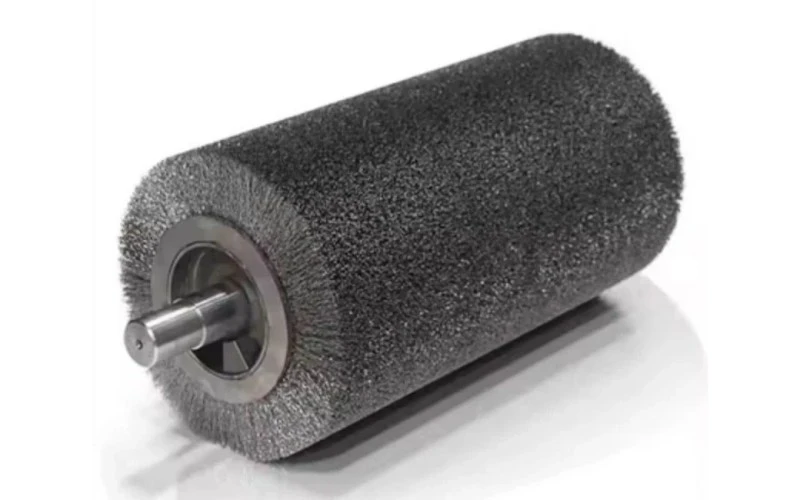
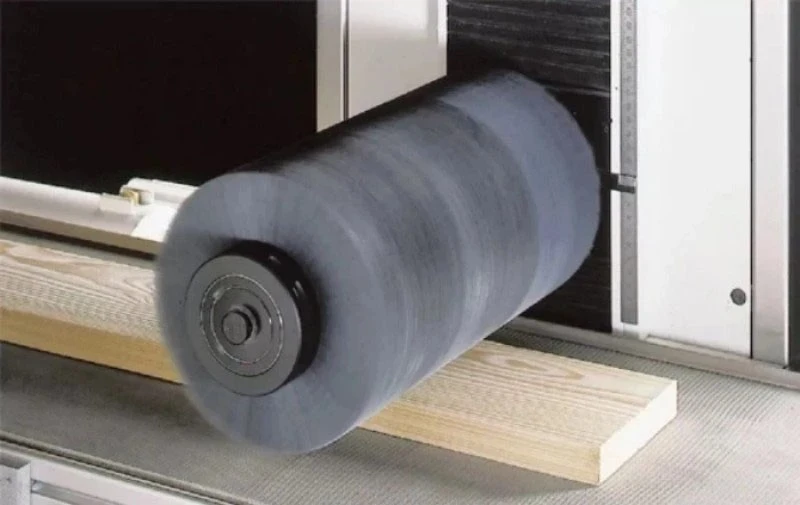
- Automated finishing lines use cylinder-mounted brushes with specific bore sizes, diameters, and core lengths matched to the machine
- Manual and semi-automated operations often use handheld or drill-mounted brushes for spot work and small-batch finishing
- High-volume production demands brushes with higher filament density and durable core materials to maintain consistency across long runs
Compare Different Furniture Polishing Brushes
The following table compares common brush types used in furniture finishing, helping buyers match each type to the correct application.
| Brush Type | Stiffness | Best Use | Surface Compatibility | Typical Application |
|---|---|---|---|---|
| Horse hair cylinder brush | Low | Final polish, high-gloss buffing | Lacquer, painted surfaces | Automated |
| Tampico fiber brush | Medium-Low | Inter-coat smoothing | All types of coated surfaces | Automated and manual |
| Nylon abrasive brush | Medium-High | Denibbing, light sanding between finish coats | Hardwood, veneered panels | Automated |
| Sisal brush | High | Surface preparation to open wood grain | Raw hardwood | Pre-coat |
| Soft synthetic brush | Low | Dusting and final buffing | All surfaces | Automated and manual |
As a pleasant surprise, soft natural fiber brushes (horse hair, etc.) are the last step in furniture finishing. When the emphasis is on the appearance of the finished product, brushes with horse hair or tampico fibers produce the best results on surfaces to be finished.
When to Use Metal Brushes in the Process of Furniture Production
Not all furniture work requires a soft brush. Some of the preparatory steps may have to be done with more aggressive contact.
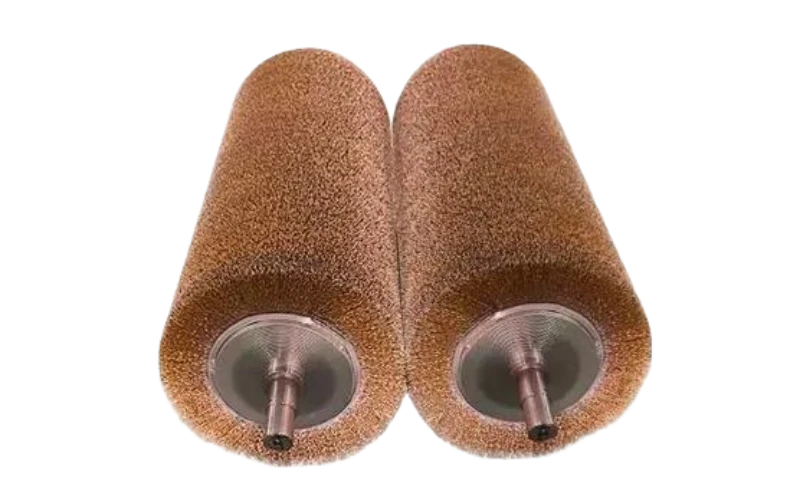
For instance, for removing old paint, varnish or surface oxidation from reclaimed furniture pieces, the use of a metal cylinder brush is very effective. Metal cylinder brushes have steel or brass wire filaments which can strip material without using chemical solvents. Knowing what a metal cylinder is capable of will assist engineers in deciding if mechanical stripping is suitable for their restoration process.
A metal polishing brush made of fine brass wire filaments may also produce a unique brushed finish on metal hardware — drawer pulls, hinges, and decorative hardware — just prior to application of a protective coating.
However, metal brushes should never come into contact with finished wood surfaces; they are to be used strictly in the preparatory and hardware finishing steps.
Drill Polishing Brushes for Small-Batch Operations
Drill polishing brushes provide a viable alternative to complete cylinder systems for workshops dealing with custom orders, repairs, or small production runs. Drilling brushes can be used on standard drill chucks and are ideal for polishing curved surfaces, carved details, or hard-to-reach places (areas where flat cylinder brushes cannot reach).
A drill-mounted brush works best for the following types of jobs:
- Touch up polishing after spot repairs
- Polishing all turned legs, spindles and curved items
- Small-batch custom furniture where it does not make sense to set up dedicated production lines
Although drill-mounted polishing brushes do not provide the same level of consistency as automated rotary cylinder systems, they serve an important function within mixed-production environments.
Specifications That Affect Brush Performance for Bulk Buyers
In addition to filament type; depending on your application there are several mechanical specifications that affect how well a brush will work and be compatible with your application; these include:
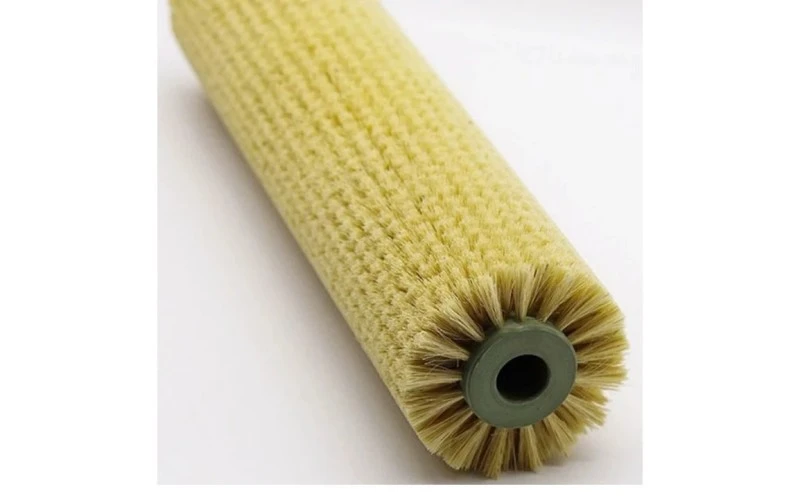
- Brush Trim Length — the longer the trim setting on a drill mounted polishing brush the better it will conform to contoured surfaces; Shorter brush trim is best for providing better control when working on flat panel surfaces.
- Brush Core Material — brushes having steel core material are normally used when the application requires use on high-speed lines and brushes with lighter core materials are used where there would be high stress placed on the machinery while operating.
- Brush Bore Size — having a custom bore size for a drill mounted polishing brush can help provide perfect alignment between the drill and the drill chuck minimizing both vibration and runout during operation of the brush.
Most industrial brush suppliers offer many different configurations for fully customizable furniture polishing brush designs. Buyers can place a brush order and specify the exact dimensions, which will allow existing equipment to be utilized without the need for additional adapter pieces. This means that the performance of the replaced brush will be unchanged over several cycles.
Directory of Practical Procurement of Brushes
Those who place larger orders for brushes should seriously consider the following when evaluating the supplier(s) of that brush:
- Whether the supplier can provide a custom bore size and trim length which matches the existing machinery
- If the supplier provides consistency in filament quality from production run-to-production run
- If the supplier has reliable lead times on repeat orders of brushes
Technical support provided by the supplier for the selection of appropriate materials and assistance with reviewing the specification will ensure that both the buyers and suppliers can avoid miscommunication and each replacement brush will function identically to the previous brush. All specifications should be included in a specification document that is to be submitted prior to ordering.
Frequently Asked Questions
Q1: Can furniture polishing brushes be customized to fit a specific automated finishing line?
Yes, most furniture polishing brush manufacturers can customize bore size, diameter of rollers and density of filament in order to match the specific machine shafts without the need for using adapters or modifying the machines.
Q2: What is the standard MOQ for wholesale orders on furniture polishing brushes?
Different suppliers and types of customization can generate different minimum quantity orders (MOQ). Most manufacturers will base minimum order quantities on their standard order quantity (SOQ) of 10 to 50 units per specification.
Q3: Are different types of brushes required to use with lacquered/finished vs. oil finished surfaces?
Yes, lacquered surfaces require a softer filament to prevent cutting into the coating, while oil finished surfaces can use slightly stiffer bristles for effective buffing.