
What’s Metal Cylinder Brush?

Explore metal cylinder brushes: their robust construction, versatile materials, and essential applications in industrial surface treatment, deburring, and heavy-duty cleaning.

In the heavy-duty world of manufacturing, where steel meets scale and timber meets texture, there is a tool that doesn’t just clean—it dominates. If you’ve ever walked through a metal fabrication shop or a high-end flooring factory, you’ve likely seen a metal cylinder brush (or perhaps several) spinning away at high speeds. It’s one of those industrial staples that everyone uses, but few people actually stop to analyze—until, of course, the finish on a batch of parts goes sideways.
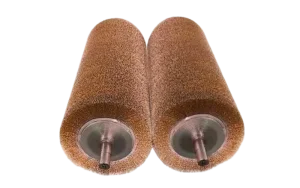
Copper-coated Steel Wire Brush

Essentially, these are high-torque, rotary tools designed for the “unforgiving” jobs. While nylon brushes are great for washing apples or dusting circuit boards, a metal roller brush is what you call in when you need to strip, de-scale, or texture. It’s about friction, heat, and the mechanical energy of thousands of wire tips hitting a surface.

The Core Construction: Not Your Average Scrub Brush

A metal cylinder brush is fundamentally different from household cleaning tools. It starts with a heavy-duty core—usually made of steel, aluminum, or thick-walled plastic—designed to withstand the centrifugal forces of high-RPM operation.

The “filaments” or bristles are the stars of the show. These are typically made from carbon steel, stainless steel, brass, or even phosphor bronze. Depending on how the brush is manufactured, these wires are either stapled into the core in tufts or wound in a continuous spiral strip.

Why Metal Over Synthetic?

It comes down to aggressive action. A synthetic brush might deflect when it hits a patch of heavy oxidation, but a metal bristle has the stiffness to bite into the material. It’s the difference between using a sponge and using a chisel.


The Multifaceted Roles of a Metal Roller Brush

One of the most interesting things about observing these tools in the wild is seeing how the same basic design (a spinning cylinder of wire) can be used for two completely opposite industries: heavy metallurgy and fine woodworking.
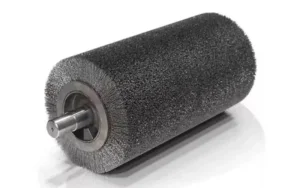
metal polishing brush

1. The Heavy-Duty Rust Remover Brush

Corrosion is a constant battle in industries like shipbuilding, automotive restoration, and structural steel prep. A rust remover brush is often the first line of defense.

  • Efficiency: It covers a much larger surface area than a hand-held wire brush.

  • Consistency: When mounted on an automated line, it provides a uniform finish that manual labor simply can’t match.

  • Reach: The spinning action allows the wire tips to “flick” into pits and crevices that a flat sanding disc would just skip over.

2. The Artistic Wood Polishing Brush
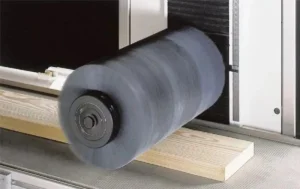
One of the wood polishing brush solutions

On the flip side, you have the flooring industry. Ever wonder how “wire-brushed” oak flooring gets that deep, textured look where the grain seems to pop out? That is the work of a wood polishing brush. By using a metal cylinder brush with slightly softer wires (like brass or thin-gauge stainless steel), manufacturers can strip away the softer “early-wood” of a plank while leaving the harder grain intact. It creates a tactile, weathered texture that is highly sought after in modern architecture.


Comparing Wire Materials for Different Applications

Choosing the right wire is a “make or break” decision. If the wrong metal is chosen, you risk cross-contamination (like causing stainless steel to rust because you used a carbon steel brush on it).

Brush Filament Material Selection Guide
Wire TypePrimary BenefitCommon Application
Carbon SteelHigh cutting power; economical.Heavy-duty de-scaling; rust removal on iron parts.
Stainless SteelCorrosion resistant; no "after-rust" residue.Cleaning aluminum or stainless; food-grade machinery.
Brass / BronzeNon-sparking; softer touch.Decorative wood texturing; cleaning delicate molds.
Abrasive NylonFlexible but gritty.Fine deburring; "scuffing" before paint.

The Nuances of “Tip Action” and Pressure

If there’s one thing to remember from an observational perspective, it’s this: The tips do the work. In many workshops, you’ll see operators leaning into a metal roller brush, thinking that more pressure equals faster cleaning. In reality, it’s the opposite. When you press too hard, the wires bend. Instead of the sharp tip “pinging” off the rust or scale, the side of the wire just slides over it.

  • Excessive pressure leads to heat buildup.

  • Heat causes wire fatigue (the wires snap off at the base).

  • It creates a “smeared” finish rather than a clean, etched one.

Ideally, the brush should just “kiss” the surface. A high-speed metal cylinder brush relies on centrifugal force to keep those wires stiff and straight, turning each individual wire into a tiny, high-velocity hammer.

Maintaining the Edge

A metal roller brush is a consumable, but it shouldn’t be a “disposable” one that dies after a week.

  1. Rotation Reversal: If your machine allows it, occasionally reversing the direction of the brush can “re-sharpen” the wire tips.

  2. Proper Storage: Metal brushes, especially carbon steel ones, shouldn’t be left in damp environments where the bristles themselves can corrode before they are even used.

  3. Balance Checks: Even a slightly bent core can cause massive vibration at 3,000 RPM, which will eventually destroy your motor bearings.


FAQ

1. Can I use a carbon steel brush on aluminum?

It is generally a bad idea. Using a carbon steel metal cylinder brush on aluminum can leave tiny carbon particles embedded in the softer metal. Over time, these particles cause “galvanic corrosion,” leading to unsightly dark spots or structural weakening of the aluminum. Always use stainless steel or brass for non-ferrous metals.

2. Why is my wood polishing brush leaving burn marks?

Burn marks usually mean your RPM is too high or your “feed rate” (how fast the wood moves under the brush) is too slow. The friction from a wood polishing brush generates a lot of heat. Try speeding up the conveyor or slightly backing off the brush pressure to let the tips “flick” rather than “rub.”

3. How do I know when to replace my rust remover brush?

Look at the “trim length.” Once the wires have worn down by about 25-30% of their original length, they become much stiffer and less effective at reaching into uneven surfaces. Also, if you notice the brush is “shedding” wires frequently, it’s a sign of fatigue and a potential safety hazard.

Share:
Twitter
LinkedIn
Facebook

Post Category

Table of Contents

Contact Us

Scroll to Top

GET A QUOTE

Fill out the form below,  and we will be in touch shortly.

Custom Solution

Drag & Drop Files, Choose Files to Upload