Helical Brushes: Solving Binding in Curved Tubes
The Cleaning Challenge: Buildup in Curved Sections and the Binding Problem
Curved tube passages are common in industrial equipment, from heat exchangers and boiler tubes to pneumatic conveying lines and chemical processing systems. These curved sections create natural collection points for scale, rust, carbon deposits, and process residues. Over time, buildup narrows the internal diameter, restricts flow, and causes pressure drops that reduce operating efficiency.
The real problem, however, is not just the accumulation itself. When operators attempt to clean these curved sections with rigid tools or straight brushes, the tool often jams, binds, or gets stuck at the bend. This binding wastes time, risks damaging the tube interior, and can turn a routine maintenance task into a costly equipment teardown. Maintenance teams need a cleaning tool that follows the curve instead of fighting it.
How Helical Brushes Work: Flexible Core Design That Follows the Curve
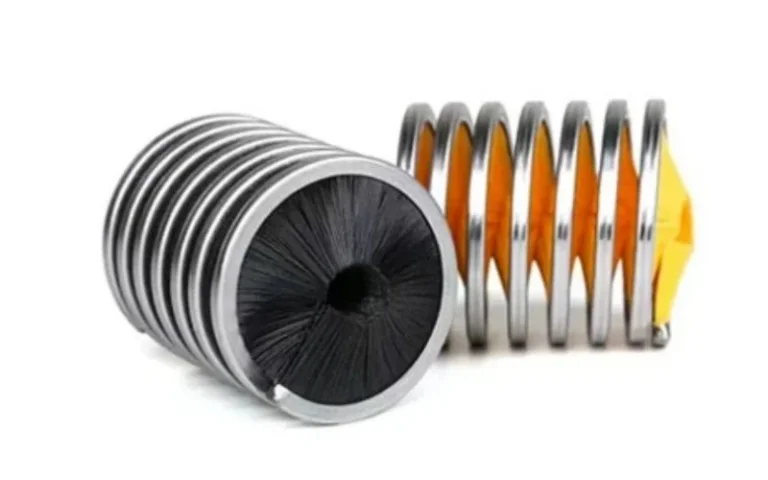
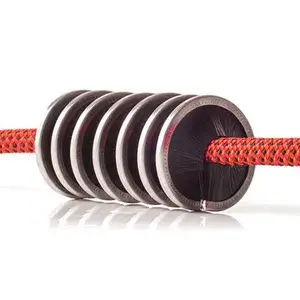
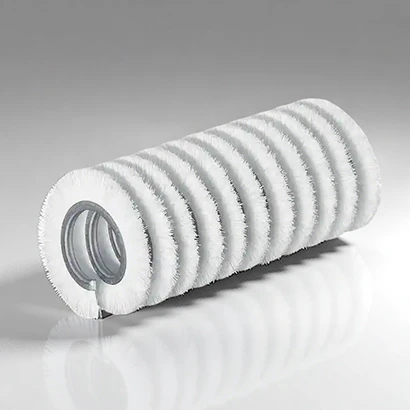
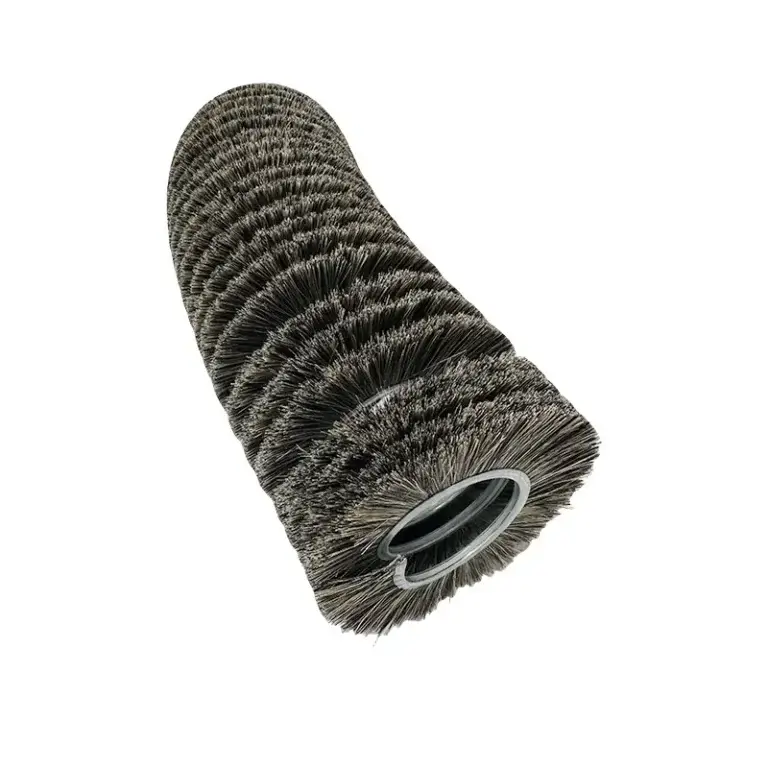
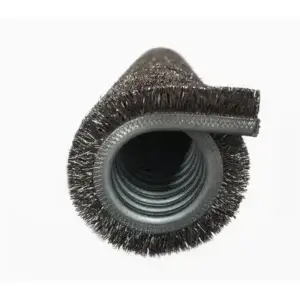
A helical brush solves binding in curved tube passages through its continuous spiral core design. Unlike straight brushes with rigid stems, a helical brush wraps bristles around a flexible wire core that bends with the tube, maintaining full bristle contact around the curve without jamming. The twisted stem acts as a self-guiding mechanism, allowing the brush to follow the tube path while scrubbing the inner wall evenly through bends, elbows, and irregular transitions.
The flexibility of a helical brush changes how maintenance teams approach tube cleaning. Rather than disassembling equipment to access curved sections with short-handled tools, operators can feed a helical brush through from one end and let it navigate the full passage. This capability reduces downtime and extends the interval between major overhauls.
What This Guide Covers: Binding Mechanisms, Design Features, and Material Selection
Understanding why helical brushes outperform alternatives in curved applications requires looking at how binding happens, what design features prevent it, and how different brush materials match different cleaning challenges. The sections below break down each aspect of helical brush performance in curved tube passages.
What Causes Binding in Curved Tube Passages
What Causes Binding: Rigid Stems, Oversized Diameters, and Misaligned Angles
Binding occurs when a cleaning tool encounters a change in tube direction that exceeds its ability to flex, causing the tool body to wedge against the inner wall. Rigid stems, oversized brush diameters, and misaligned insertion angles are the three most common causes.
When a straight cleaning rod or a brush with a stiff shaft enters a bend, the outer edge of the tool presses hard against the tube wall while the inner edge lifts away. This uneven pressure creates a wedging effect. The tighter the bend radius, the stronger the wedge. In tubes with multiple consecutive bends, each curve compounds the problem until the tool stops moving entirely.
How Internal Deposits and Tube Geometry Compound the Binding Problem
Deposits inside the tube make binding worse. Scale, rust, and hardened process residues reduce the effective inner diameter at the bend, leaving even less clearance for a rigid tool to pass through. The tool encounters the deposit at the point of maximum wedging force, which can gouge the tube surface or snap the brush stem. In heat exchanger tubes, where wall thickness is often only a few millimeters, this kind of damage can require tube plugging or replacement.
The geometry of the bend itself matters. A long-radius bend creates a gentler transition that rigid tools may still navigate. A short-radius elbow, common in compact equipment designs, presents a much sharper direction change. Standard straight brushes cannot handle these tight turns, which is why many facilities keep separate sets of short-handled brushes for elbow sections, a practice that doubles tool inventory and cleaning time.
How Does a Helical Brush Prevent Binding During Cleaning
How the Flexible Twisted-Wire Core Prevents Wedging in Curved Tubes
A helical brush prevents binding by combining a flexible twisted-wire core with continuous spiral bristles. The core bends to match the tube curvature, while the bristles maintain 360-degree wall contact throughout the bend. This design distributes insertion force along the curve instead of concentrating it at a single wedging point.
The stem design provides this flexibility. A helical brush uses two or more wires twisted together with bristles captured between them. The twisted construction creates a stem that flexes in all directions, unlike a solid rod that resists bending. When the brush enters a curved section, the stem follows the tube path without transferring high lateral force to the wall. The bristles, arranged in a continuous spiral, remain in contact with the tube surface around the entire circumference, including through the bend.
Continuous Spiral Bristles vs. Segmented Clusters: The Gap-Free Advantage
This continuous contact pattern is what separates a helical brush from a brush with segmented bristle clusters. Clustered brushes create gaps where no cleaning happens as the tool rotates through a bend. A helical brush has no gaps. The spiral bristle pattern covers every degree of the tube interior as the brush advances, pulling or rotating. This design also helps the brush self-center inside the tube, reducing the risk of the core scraping the wall.
Selecting the Right Diameter: Maintaining 10-20% Oversize for Effective Scrubbing
The diameter relationship is important. A helical brush should be selected so that the bristle diameter is slightly larger than the tube inner diameter. This oversized condition, typically 10 to 20 percent, creates the interference needed for effective scrubbing. In a straight section, this interference is uniform. In a curve, the flexible core allows the bristles on the inside radius to compress while those on the outside radius remain engaged, maintaining cleaning coverage without binding.
Steel Coil Brushes vs. Nylon Coil Brushes for Curved Passages
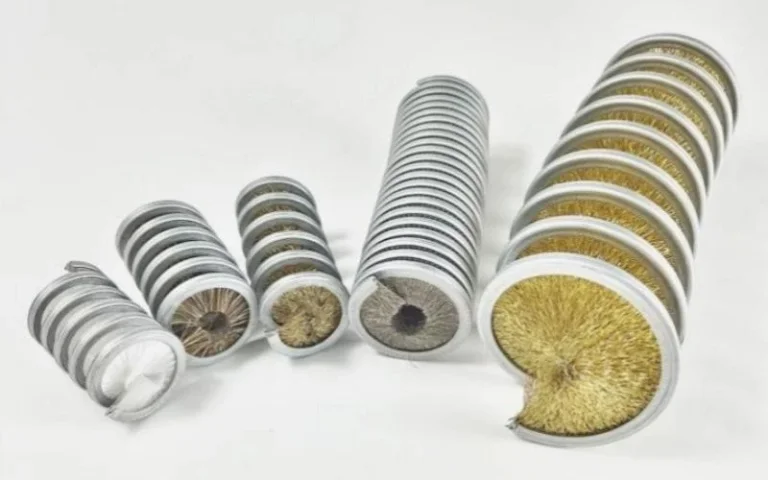
Steel coil brushes deliver aggressive cleaning for heavy rust and scale in curved metal tubes, while nylon coil brushes provide scratch-free cleaning for delicate surfaces and chemically sensitive environments. The choice depends on tube material, deposit type, and surface finish requirements.
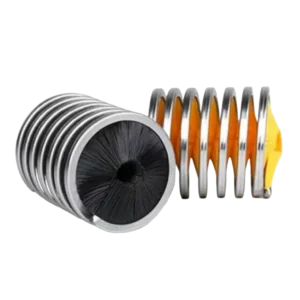
A steel coil brush uses carbon steel or stainless steel wire filaments wound around the helical core. The steel bristles cut through hardened deposits, weld slag, and thick corrosion layers with minimal passes. In curved heat exchanger tubes where baked-on carbon has accumulated through hundreds of thermal cycles, steel filaments provide the abrasion needed to restore the bore to its original diameter. The same helical flexibility that prevents binding also allows the steel bristles to maintain aggressive contact through elbows where a straight steel brush would either stick or skip.
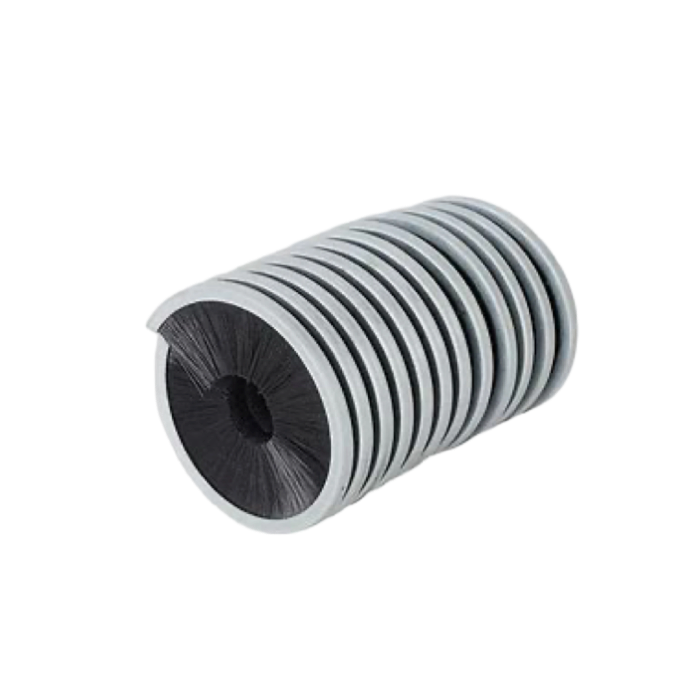
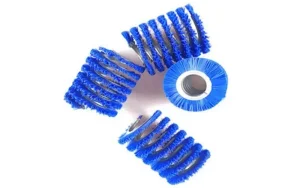
A nylon coil brush replaces steel filaments with nylon bristles that clean without scratching. This matters in curved passages made from soft metals like copper, aluminum, or brass, where steel bristles would score the interior surface. Nylon also resists a broad range of chemicals, which is relevant when cleaning tubes that carry solvents, acids, or food-grade materials. In pharmaceutical processing lines with multiple direction changes, a nylon outside coil brush navigates the bends without metal contamination risk.
The table below summarizes the selection factors:
For applications that combine tough deposits with surface sensitivity, some facilities run a steel brush first to break up scale, followed by a nylon brush to remove loosened debris and polish the surface. The helical design ensures both brushes navigate the same curved path reliably.
Key Design Features That Make Helical Brushes Effective in Tubes
The Twisted-Wire Core: Pitch, Flexibility, and Multi-Wire Stem Options
The effectiveness of a helical brush in curved passages comes from four design features: the twisted-wire core for multi-directional flexibility, spiral bristle density for uninterrupted cleaning, diameter oversize for controlled interference, and filament material selection matched to the application.
The twisted-wire core is the foundation. Most helical brushes use a double-wire stem, where two wires are twisted together at a controlled pitch. This pitch determines how tightly the bristles are packed and how flexible the stem becomes. A tighter twist packs more bristles per inch and creates a slightly stiffer stem. A looser twist increases flexibility at the cost of bristle density. For curved tube passages, a moderate twist pitch balances both properties. Some manufacturers offer triple-wire, or quadruple-wire stems for large-diameter tubes where additional stiffness is needed to prevent the brush from collapsing.
Bristle Trim Length and Brush Length: Balancing Flexibility, Scrubbing Force, and Reach
Bristle trim length affects how the brush behaves in a bend. Long bristles provide more flexibility and conform to tube irregularities more easily. Short bristles create a stiffer brushing action and are better for breaking up hard deposits. In curved passages, a medium trim length typically works best. It provides enough flex to navigate bends without sacrificing the scrubbing force needed to remove deposits effectively.
The overall brush length matters in multi-bend tube runs. A brush that is too short may not span an entire curved section, forcing the operator to work the brush back and forth to cover the full bend. A brush that is too long becomes difficult to handle and may buckle under push force. For most industrial tube cleaning, a brush length of 150 to 300 millimeters provides a practical balance of coverage and control.
Stem Diameter and Wire Gauge: Balancing Push Force with Flexibility
Stem diameter and wire gauge determine how much pushing force the brush can transmit before buckling. Thicker stem wires carry more force but reduce flexibility. This tradeoff is why curved-tube applications benefit from custom brush specifications rather than off-the-shelf sizes. A brush designed for the specific tube diameter, bend radius, and deposit type will outperform a generic brush in both cleaning speed and tool life.
Best Practices for Using Helical Brushes in Industrial Tube Maintenance
Brush Sizing: Measuring the Narrowest Point and Applying the 10-20% Rule
Effective tube cleaning with helical brushes depends on correct brush sizing, controlled feed rate, appropriate rotation speed, and regular brush inspection. Following these practices extends tube service life and reduces unplanned maintenance events.
Start with brush sizing. Measure the tube inner diameter at the narrowest point, which is often inside a bend where deposits accumulate. Select a brush with a bristle diameter 10 to 20 percent larger than this measurement. For heavily fouled tubes, start at the lower end of this range and move up to a larger brush once the first pass clears the loose material. Using a brush that is too large for the available clearance creates excessive insertion force and can snap the stem inside the tube.
Feed Rate and Rotation Speed: Steady Pacing and Variable-Speed Control
Feed rate and rotation matter for cleaning quality and brush longevity. Feed the brush at a steady speed of 10 to 20 millimeters per second through curved sections. Rushing causes the bristles to skip over deposits rather than scrub them. Rotate the brush at 500 to 1,500 RPM depending on tube diameter. Larger tubes tolerate higher speeds. Smaller tubes and tight bends require lower speeds to prevent bristle damage and stem fatigue. If using a power tool, choose a variable-speed drill so you can adjust rotation in real time as the brush passes through bends.
Inspection and Replacement: Bristle Wear, Stem Condition, and Scheduling
Inspect brushes between cleaning cycles. Look for bristle loss near the stem ends, which indicates the brush is bottoming out on the far side of a bend and needs a shorter length or a different insertion technique. Check for stem kinking or permanent deformation, which signals that the bend radius is too tight for the current stem wire gauge. Replace brushes when bristle wear exceeds 30 percent of the original diameter, as worn bristles lose the interference needed for effective cleaning.
Schedule cleaning based on operating conditions rather than fixed calendar intervals. A tube run that handles abrasive slurries needs more frequent cleaning than one carrying clean gas. Track pressure drop across tube circuits and clean when the drop exceeds 10 percent of the baseline value. This condition-based approach catches fouling before it hardens into deposits that require aggressive brushing or chemical treatment to remove.
Conclusion
Curved tube passages do not have to be maintenance bottlenecks. A helical brush turns a geometry problem into a routine cleaning step by flexing through bends instead of fighting them. The twisted-wire core and spiral bristle pattern work together to maintain full cleaning contact around curves, eliminating the binding and jamming that plague rigid alternatives.
Selecting between steel and nylon bristles comes down to the deposit you are removing and the surface you are protecting. Steel handles scale, rust, and weld slag in hard metal tubes. Nylon handles light debris in soft metals and sensitive environments. In both cases, the helical design delivers consistent results through elbows and direction changes that would stop a straight brush.
The upfront investment in properly sized helical brushes pays back through faster cleaning cycles, fewer damaged tubes, and extended overhaul intervals. When maintenance teams stop fighting their tools in curved passages, they spend less time on cleaning and more time on the inspections and adjustments that prevent failures.
Frequently Asked Questions
How do I choose the correct helical brush diameter for a curved tube?
Measure the tube inner diameter at the tightest bend, not at a straight section. Select a brush whose bristle diameter is 10 to 20 percent larger than that measurement. For heavily fouled tubes, start at the lower end of the range and step up after the first pass clears bulk deposits.
Can a helical brush clean tubes with multiple consecutive bends?
Yes. The flexible twisted-wire core allows the brush to navigate multiple direction changes in a single pass. For tube runs with more than three consecutive bends, a medium-length brush with a moderate twist pitch provides the best combination of flexibility and push force transmission.
How often should helical brushes be replaced in a production environment?
Replace a helical brush when bristle wear exceeds 30 percent of the original bristle diameter, when the stem shows permanent kinking or deformation, or when bristle loss near the stem ends becomes visible. In a high-volume production environment running daily cleaning cycles, a steel brush typically lasts 200 to 500 cycles, while a nylon brush may need replacement after 100 to 300 cycles depending on tube material and deposit abrasiveness.
What rotation speed works best for helical brush cleaning in curved tubes?
A speed range of 500 to 1,500 RPM covers most applications. Lower speeds in the 500 to 800 RPM range work best for tight bends and small-diameter tubes under 25 millimeters. Higher speeds of 1,000 to 1,500 RPM suit larger tubes above 50 millimeters, where the bend radius is more generous. Always use a variable-speed driver so you can reduce rotation when you feel increased resistance through a curve.