Why Oil and Grease Are Hard to Remove
Oil and grease settle into grooves, collect along edges, and cling to textured automotive parts. A quick rinse may remove the visible buildup in many production environments, but a thin film often remains. That slight residue can still affect coating adhesion, assembly quality, and the appearance of the finished product.
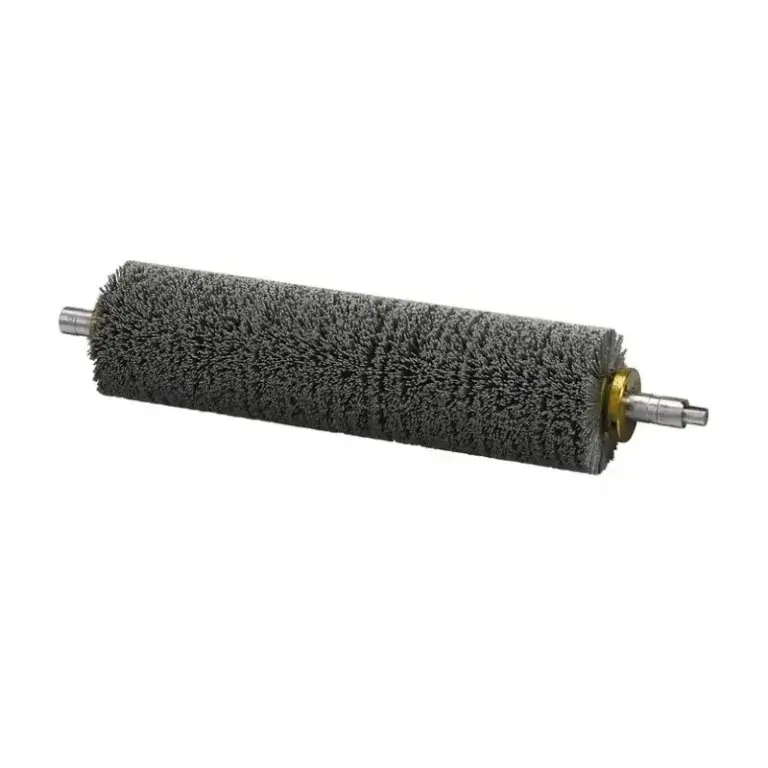
A cylinder cleaning brush tackles the problem by maintaining mechanical contact with the surface. Rather than leaving the entire task to chemicals, it combines pressure, moving filaments, and rotation to clear contaminants from hard-to-reach areas. On repetitive production lines, this approach often delivers more consistent cleaning results.
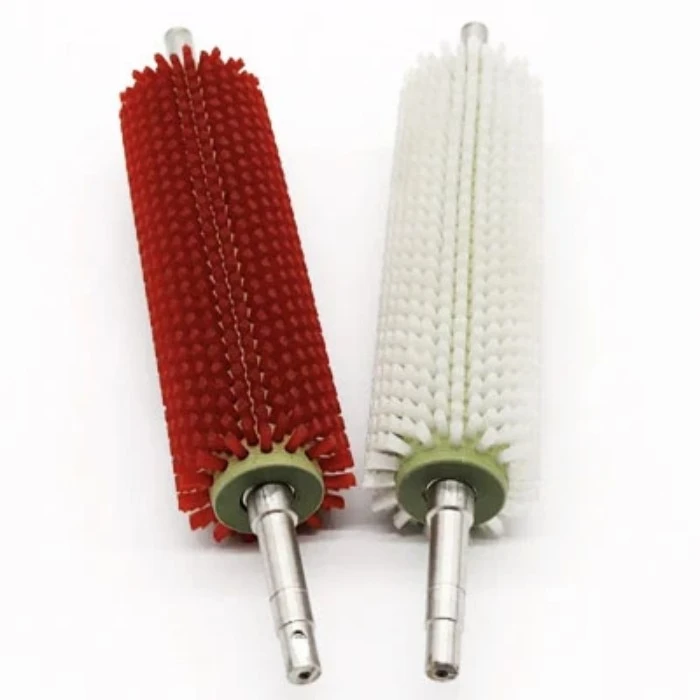
How a Cylinder Cleaning Brush Works
The Role of Rotating Filaments in Cleaning
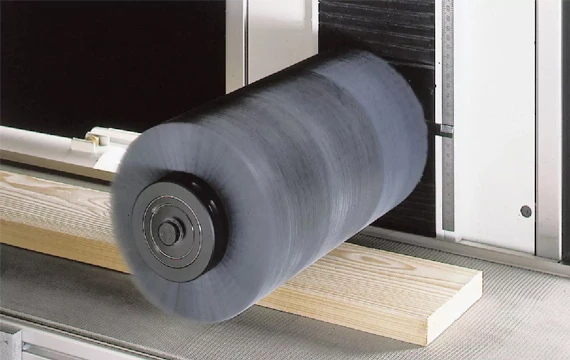
A cylinder cleaning brush uses rotating filaments to clear away contaminants while keeping steady contact with the work surface. As the bristles bend, recover, and pass over the part, they break up stubborn oil and grease without causing excessive damage.
The Cleaning Process Step by Step
The process usually follows a simple sequence:
- The part enters the brushing area.
- The filaments make contact with the surface.
- Rotation creates friction and lifts the contaminants.
- Oil and grease are removed from the part.
- Debris and residue are carried away from the cleaning area.
Why Consistency Matters in B2B Applications
The process may look simple, but its effectiveness depends on consistency. In many B2B applications, that consistency can decide whether downstream operations run smoothly or fail because of surface contamination.
Balancing Mechanical Action with Surface Protection
While the rotating filaments provide the scrubbing force needed to remove oil and grease, the brush design also ensures that the action remains controlled. The bending and recovery of bristles allow the brush to follow the contours of the part, delivering effective cleaning without risking damage to precision surfaces.
Which Brush Type Fits Different Cleaning Tasks
Brushes are built in different ways because industrial cleaning jobs are not all the same. Selecting the right one usually depends on the part’s shape, the degree of contamination, and line speed.
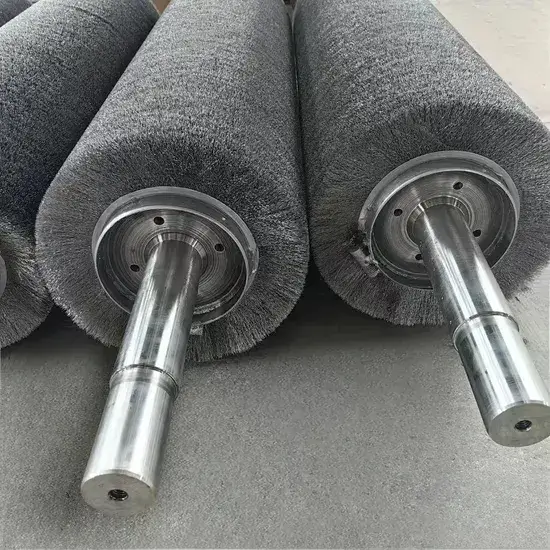
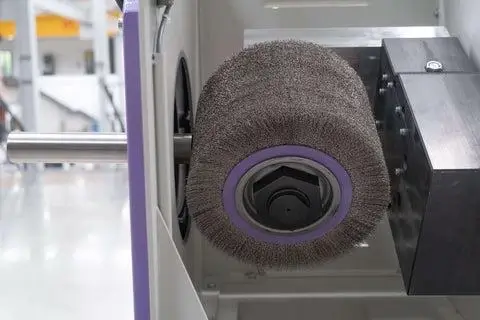
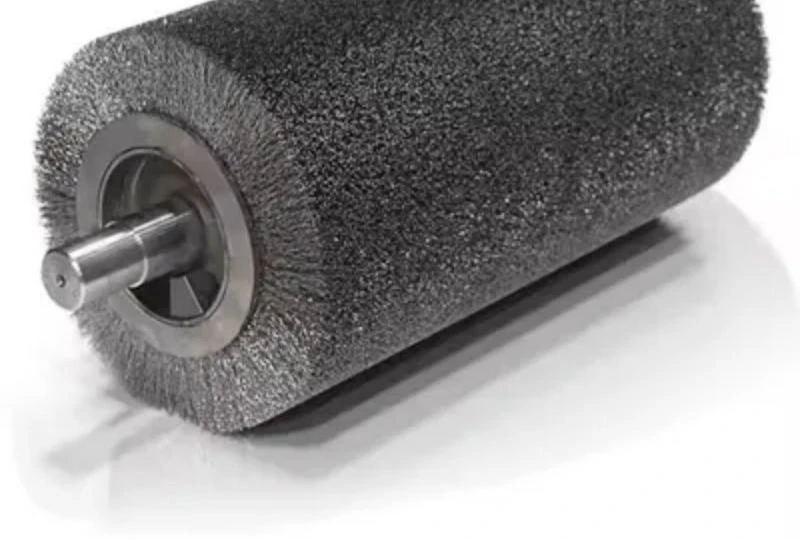
A Nylon Cylinder Brush is often the right choice when cleaning needs to be controlled and excessive wear is a concern. For heavier buildup, particularly oil mixed with dust or oxidation, a Metal Cylinder Brush provides stronger scrubbing. In automated systems, the Cylinder Rotary Brush maintains broad contact and consistent rotation as the line operates.
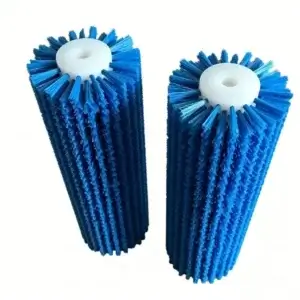
Why Brush Material Matters
Brush material affects both the force needed for cleaning and the part’s safety. Soft filaments are less likely to damage precision surfaces, while firmer or metallic filaments work better against heavier contamination. Experienced operators typically match the filament to the part’s sensitivity rather than automatically choosing the most aggressive option.
A cylinder cleaning brush with nylon filaments usually works well for degreasing, lifting surface oil efficiently while leaving a smoother finish. Stubborn deposits on rugged components call for a Metal Cylinder Brush instead, but careful setup is needed to avoid unnecessary abrasion. In automotive workflows, that difference matters because both part tolerance and finish quality are important.
Where Cylinder Cleaning Brushes Work Best
Cylinder cleaning brushes are most useful in operations that require the same cleaning result from one cycle to the next. Common applications include:
- Engine parts
- Transmission components
- Brake system parts
- Machined metal surfaces
- Pre-coating cleaning lines
Here, the brush does more than remove dirt or residue. It gets parts ready for later stages, including painting, bonding, and assembly. Clean surfaces can help keep the process stable, which becomes even more valuable as production volume increases.
Why They Work Better Than Basic Wiping or Spraying
Spraying alone may only distribute the oil, rather than remove it entirely. Wiping can miss recessed areas and leave the finish uneven. A cylinder cleaning brush offers steadier mechanical action, repeatedly reaching the full surface while keeping pressure consistent.
This is especially useful when cleaning curved or cylindrical automotive parts. The brush follows rounded surfaces, keeping a broad area in contact with them. For more delicate materials, a Nylon Cylinder Brush cleans gently without excessive wear. When the job calls for more force, a Metal Cylinder Brush adds scraping power exactly where it is needed.
Practical Selection Tips for B2B Buyers
Prioritize Process Requirements Over Price
For buyers choosing a cleaning brush, the demands of the process generally take priority. In practice, the decision often comes down to several factors:
- Surface sensitivity
- The type of oil or grease
- Part geometry
- Required cleaning speed
- Expected brush lifespan
When a cylinder cleaning brush suits the application, it can help limit downtime and reduce the chance of rework. In many factories, that consistent performance may be worth more than a lower upfront price.
Review Specifications and Product Details
Buyers comparing options may want to review the general guidance, examine specifications for different models, and check product details for various filament materials. It is also helpful to understand the basic function of these brushes and how to select the right one for a given application.
Match Brush Type to Application Needs
Selecting the right brush means matching filament material, brush geometry, and cleaning intensity to the specific parts being processed. A well-matched brush reduces wear on both the tool and the component, while delivering repeatable cleaning results across high-volume runs.
Consider Long-Term Performance and Total Cost
While upfront cost is a factor, long-term performance often carries more weight in B2B environments. A brush that lasts longer, requires fewer changeovers, and maintains consistent cleaning force can lower overall operating costs more effectively than a cheaper alternative that wears out quickly.
Final Takeaway
A cylinder cleaning brush removes oil and grease by rotating against the surface, with its filaments applying steady pressure as they maintain contact. Because the brush moves mechanically, it can reach uneven areas and deliver repeatable results. For automotive parts, that means cleaner surfaces, better process quality, and more consistent production.
When the job calls for gentler treatment, a Nylon Cylinder Brush is often the better choice. For heavier contamination, the more aggressive action of a Metal Cylinder Brush may be needed. In automated cleaning lines, a Cylinder Rotary Brush usually provides a practical middle ground, covering the surface efficiently without sacrificing speed.
FAQ
Q1: How does a cylinder cleaning brush improve automotive part cleaning?
A cylinder cleaning brush reaches grooves and edges that a cloth may miss, removing residue more consistently. That leaves parts with fewer contamination issues before they move on to coating or assembly.
Q2: When is a Metal Cylinder Brush the right choice?
Choose a Metal Cylinder Brush for durable parts coated in heavy grease, oxidation, or stubborn buildup. It is especially suitable when the cleaning process calls for more aggressive mechanical action.
Q3: Can a Nylon Cylinder Brush be used on precision parts?
Yes. A Nylon Cylinder Brush is often well suited to precision parts because it cleans effectively without greatly raising the risk of surface damage.