
The following guide will aid buyers in the industry to choose the most suitable tufted cylinder brush by giving information about filament material, core type, density, and specific cleaning applications it suits.
That’s money and time down the drain if you pick up the wrong brush. A custom tufted cylinder brush has to be made to fit the application in material, density, and dimension for uniform results — no other way around it. This guide will walk you through the major aspects of selection an industrial buyer should consider before placing a large order.
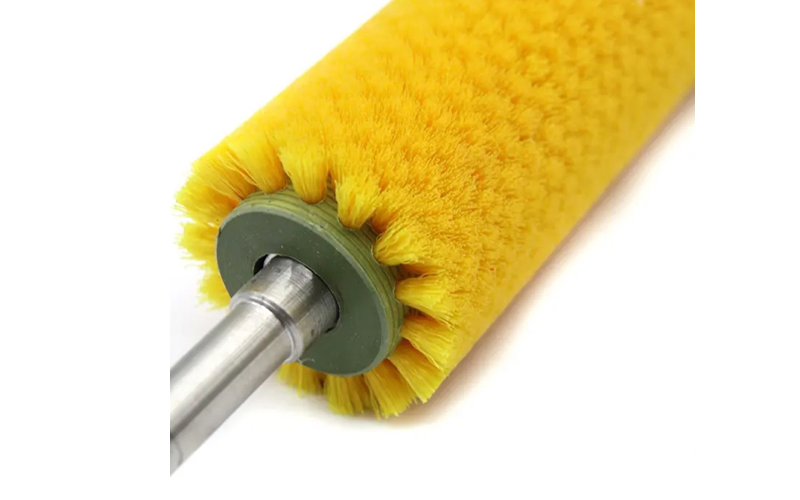
The Relevance of Customization
All production lines can apply non-standard brushes. This is because there are differences in shaft lengths, varying cleaning targets, and different operating speeds from one machine to another. The manufacturer may have a tufted cylinder brush custom-made and, in doing so, may specify all parameters — from filament type down to hole pattern — to ensure optimal contact and performance.
Regarding where they come from, custom brushes may have longer replacement cycles. They wear more uniformly and much longer under similar operating conditions.
Key Selection Parameters
The performance of a custom brush boils down to three: filament material, core construction, and brush geometry — each as impactful on cleaning effectiveness and service life.
Filament Material
Filament material should depend on the type of surface to be cleaned and the working conditions. For tufted cylinder brushes, the most common options include nylon and polypropylene (PP).
A nylon tufted cylinder brush wears very well and is extremely pliable. Nylon retains its shape very well after repeated flexing, so it’s suitable for high-speed machinery — and for applications that need constant contact with a surface. Check out the full line of nylon cylinder brushes for specs.
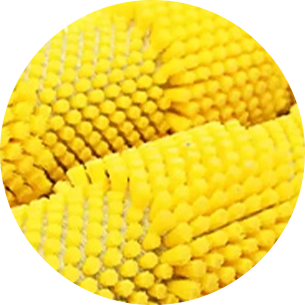
A PP tufted cylinder brush is highly chemically resistant and comes at a lower cost. This is because polypropylene can better withstand acidic and alkaline environments than most other synthetic filaments; therefore, it is commonly used in food processing and wet-cleaning operations.
The table below will show you the key differences:
| Property | Nylon | PP (Polypropylene) |
| Abrasion Resistance | High | Moderate |
| Chemical Resistance | Moderate | High |
| Moisture Absorption | Higher | Very Low |
| Heat Tolerance | Up to 120°C | Up to 100°C |
Core Type and Diameter
Match the brush core to the mounting system of the host machine. Common options for the core are:
- Solid Wooden Core – Light and cheap, so it is good for low-torque applications.
- PVC or Plastic Core – Resistant to corrosion and performs well in damp places.
- Metal Core (Steel or Aluminum) – Able to bear heavy loads and rotate at high speeds.
Length of filament exposure also depends on core size. A larger core at the same outer diameter means short bristles exposed — stiff contact. A smaller core means long, flexible bristles. So most informed buyers would ask for sample brushes with two or three core sizes to check the contact pressure on their actual production lines.
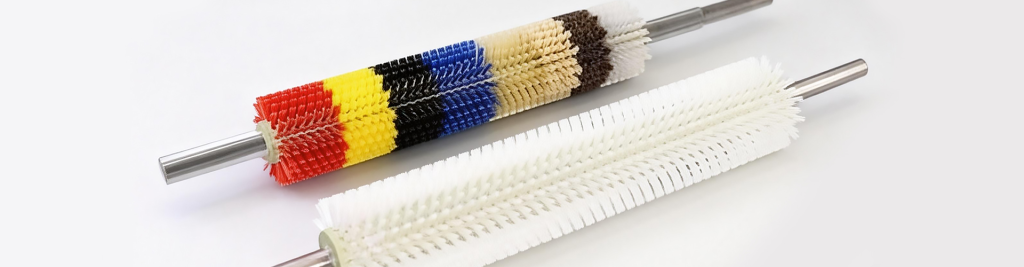
Brush Density and Trim Length
Density is the count of tuft holes in one square unit. More density would also mean more resistance on the motor, and hence more energetic cleaning; lower density is for lighter tasks like dusting and polishing.
Trim length is the distance from the core surface to the tip of the bristle; it’s basically a measure of flexibility. Short lengths will give stiff action; long lengths will give soft contact. These are some of the parameters that will help you find the right balance for the target surface and machine speed.
Application-Based Selection Logic
The brush configurations required by different industries will be different. The tufted cylinder brushes shall be taken as general logic for selection as a guide, as follows:
- Solar Panel Maintenance – Medium soft nylon filaments density to prevent micro-scratching on glass surfaces. Use with a robotic cleaning system requires a lightweight core.
- Vegetable and Fruit Processing – Food-safe PP filaments at a higher density are used for the removal of soil without bruising the product. A brush for vegetable cleaning designed for this application must meet hygiene standards even under continuous water exposure.
- Conveyor Belt Maintenance – A conveyor belt cleaning brush has stiff nylon or abrasive-embedded filaments on a metal core to remove residue at high line speeds.
To see where these brushes add value on a broader scale, the top 5 applications for tufted cylinder brushes will bring in more industrial scenarios.
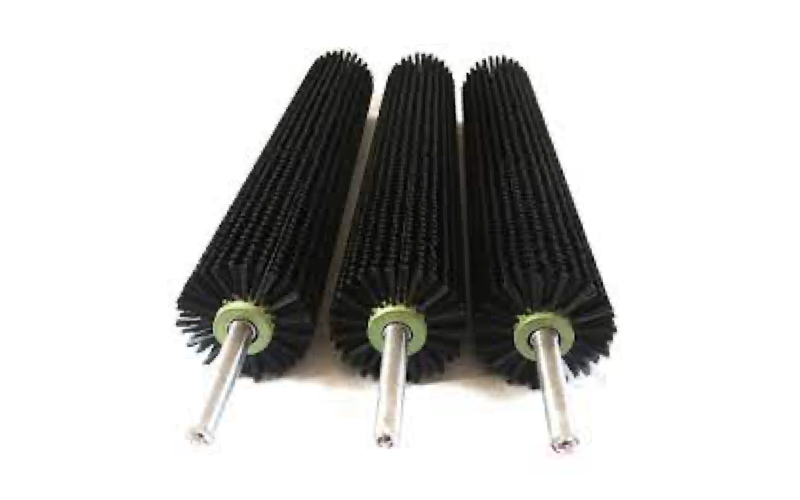
Common Specification Mistakes
Many times, the details get ignored by experienced procurement teams, such as:
- Operating speed is often left out – A brush that is rated for 300 RPM will deform fast at 800 RPM. Always confirm the actual rotation speed of the machine.
- Neglecting moisture conditions – Nylon absorbs water and becomes pliable over time. In constantly wet environments, PP or abrasive nylon might work better.
- Specifying only the outside diameter – Two brushes having the same OD but different core sizes will not perform in the same way; both dimensions are important.
- Skipping sample testing – One pass on the actual machine will reveal more problems than could ever be anticipated from any datasheet.
FAQs
What’s a pretty standard MOQ for a custom cylinder brush?
Most manufacturers set MOQs at about 50 to 200 pieces, which will vary with core material and filament type. Small trial orders can be negotiated for new projects.
What is the lifespan of a custom brush in a conveyor belt cleaning system?
In a cleaning system, lifespan primarily varies by speed and type of debris. Typically, a well-specified conveyor belt cleaning brush should last between three and six months under standard industrial conditions.
Can one brush design work for both wet and dry applications?
Not really. Wet applications call for moisture-resistant filaments — like PP. In dry applications, you can use the better recovery of nylon. Specify separate brushes for each environment for optimum results.