
Every production line presents unique challenges, including the diverse surface materials that must be treated and the specific types of contamination present. Furthermore, manufactured surfaces must meet rigorous quality requirements during every production cycle. This is when a cylinder rotary brush becomes highly valuable. By generating constant, continuous, and even contact with surfaces as it rotates, it serves as an ideal tool for automated and robotic systems.
Experienced operators frequently note that these tools adjust seamlessly to both gentle and highly aggressive manufacturing conditions. For those new to this technology, understanding exactly what a cylinder rotary brush is helps clarify its operational mechanics. Generally, it consists of bristles attached to a cylindrical body that rotates against a target surface, creating an even cleaning action. This article explores five of the most frequently used industrial applications where these brushes consistently deliver success.
1. Cleaning Vegetables and Food Processing
Rotary brushes are commonly seen in food processing operational areas like cleaning lines of vegetables. Vegetable cleaning brushes effectively remove dirt, mud, and surface contaminants from root vegetables and other produce with significant volume (i.e., during the high speed of operation).
Hygiene is a critical consideration for this marketplace and thus all filaments used are food-safe materials such as polypropylene or nylon, and the completed assemblies must be built to survive the frequent washing processes involved with this application. Common examples of produce cleaned using these cleaning devices include:
- Potatoes and sweet potatoes
- Carrots and beets
- Ginger and radishes
- Citrus fruits (lemons, limes, oranges)
The big challenge with vegetable processing operations is to ensure that sufficient cleaning is achieved without causing damage to the produce. Filament stiffness and rotation speed must be matched to the product that is being cleaned (friendly cleaning is gentle enough not to scratch the skin). If you clean aggressively, you can cause damage to the skin of the product, whereas cleaning too gently will leave dirt behind.
2. Glass Washing and Surface Preparation
Glass cleaning requires precision. If the glass surface has even a small scratch or smear, it is visible as soon as a human eye sees it. Therefore, brush selection is critical when using a non-automated glass washer. Some examples of glass that an automatic washer with glass washing brushes can clean without causing any surface defects include: architectural glass, automobile windshields, display panels, and photovoltaic glass.
The following are important considerations when selecting glass washing brushes:
- Filament material must be softer than the glass surface it’s being used on to avoid scratching the glass surface during cleaning.
- Tuft density must be large enough to provide complete coverage of the entire glass surface being cleaned.
- The water flow must be integrated into the washer so as to wash away all of the loose particles once they have been removed from the glass surface.
- The rotation speed of the brush must be controlled in order to minimize heat buildup from friction.
Experts in the industry have agreed that the quality of the brushes used have a direct effect on the amount of rejects from reworking, the material that was wasted due to cleaning errors, and the time it takes to complete production process (to include reworking due to cleaning errors).
3. Cleaning of Conveyor Belts
Conveyor belts can quickly build up residue, debris and product fragments if their hygiene is neglected. Allowing the conveyor belt to remain unclean will wear down the canvass faster, increase the chance of contaminating products together, and cause more unplanned maintenance. Conveyor belt cleaning brushes are mounted to the return side of the conveyor belt and can be used continuously while the conveyor is operating.
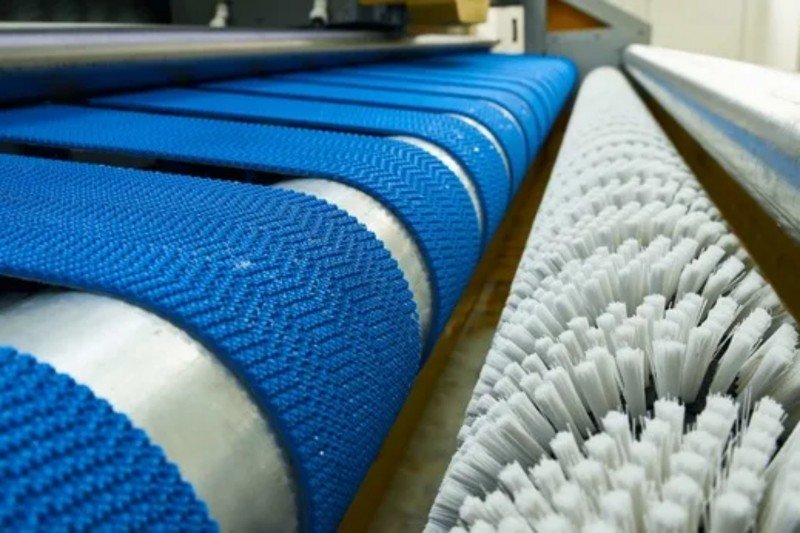
Using a conveyor belt cleaning brush will help:
- Reduce contaminating between batches of products
- Increase the overall service life of the conveyor belt
- Decrease unplanned stoppages
- Reduce manual labour
The brush used to clean conveyor belts should match the type of conveyor belt used. The table below provides general recommendations:
| Belt Material | Recommended Filament | Stiffness Level |
| PVC / Polyurethane | Nylon | Medium |
| Rubber | Nylon or Polypropylene | Medium–Stiff |
| Steel / Wire Mesh | Abrasive Nylon or Steel Wire | Stiff |
Correctly matching the brush to the conveyor belt will allow for effective cleaning, and help prevent any damage to the conveyor belt materials.
4. Textile Processing and Finishing
During the textile production process, cylinder rotary brushes can be used at many of the stages including raising the nap of the fabric, removing loose fibre, cleaning prior to dyeing and creating surface textures. Every process has its unique textile processing brush configuration.
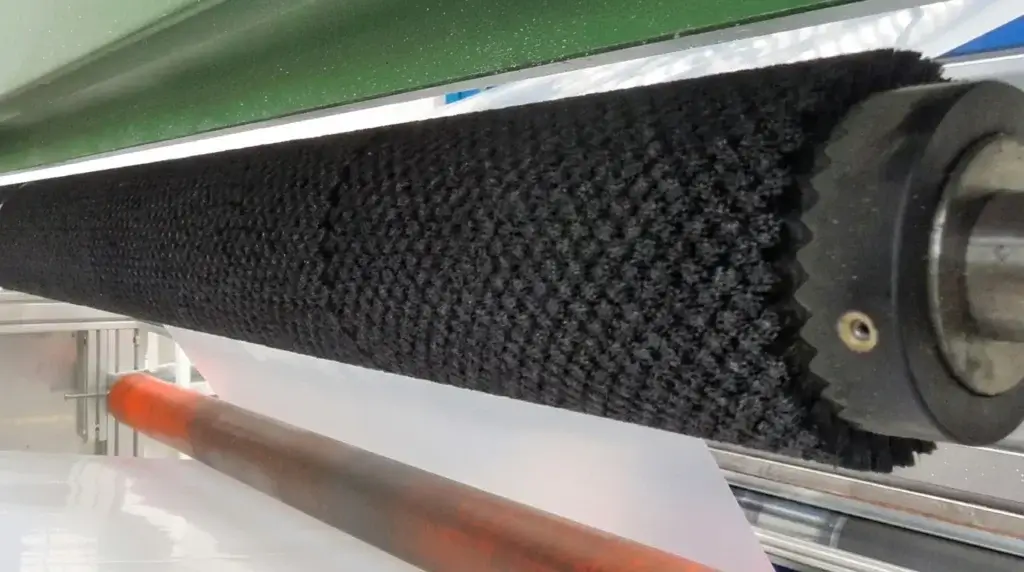
The type and weight of the fabric play a key role in determining which type of textile brush is used for that fabric:
- Delicate natural fibers (silk and fine wool) would use soft filament brushes at low RPMs.
- Heavyweight fabrics (denim and canvas) work best with stiffer filament brushes at much higher RPMs.
Therefore, manufacturers of textile brushes usually recommend that manufacturers assess all types of fabric that are used in production before finalizing the brush specification. In most cases, a single brush design is very limited in its ability to clean multiple fabric types effectively.
5. Maintaining Solar Panels
Dust, pollen, bird dropping and other environmental material build up on solar cells will reduce their efficiency. Studies have shown that dirty solar panels can lose up to 15%–25% in electricity production because of this dirt. Regular cleaning can restore the panels’ efficiency, but cleaning large solar arrays is not very practical to do by hand.
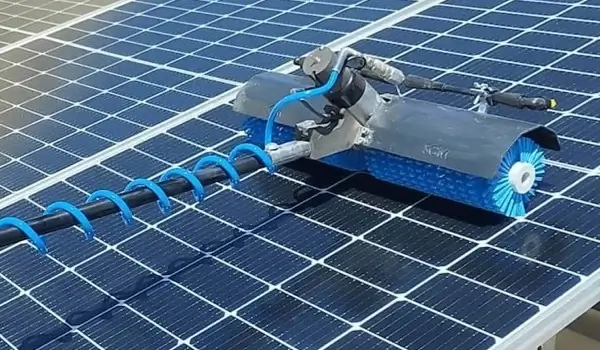
Automated solar panel cleaning brushes (with ultra-soft nylon bristles, low RPM, and water rinsed) are designed to clean a solar panel without damaging the PV glass coating. Below are some of the critical requirements for solar panel brushes:
- The filament is very soft, rating below tempered glass hardness
- A dense tufting arrangement will provide complete surface coverage
- The core and end fittings are made from corrosion-resistant materials, and can be used outdoors
- They are lightweight to help reduce the loads placed on the cleaning robots used with them
The rapid growth of this sector is directly correlated with the world-wide expansion of solar energy; this is one of the fastest growing industries for cylinder rotary brush applications.
How to Pick the Correct Brush
There are many application-specific factors that must be considered when selecting a proper cylinder rotary brush. People without knowledge about the selection process should look to guides that outline how to choose cylinder rotary brush specifications. Important factors to consider are:
- Sensitivity or fragility of the surface
- Type of contamination (e.g., loose dust versus very large caked residue)
- The condition of the environment in which the brushes will be used (i.e., wet, dry, hot, or food-grade)
- The line speed and the required tuft density
Sample testing should always be conducted under actual running conditions before being committed to ordering the full supply of the product.
FAQs
Are custom cylinder rotary brushes available to fit non-standard machines?
Yes, they are. The majority of manufacturers provide a range of options to customize your order based on specific machine information and application requirements. Some examples include but aren’t limited to core diameter, overall length, filament type(s), and tufting pattern.
Is there a minimum order quantity for bulk purchases?
That is dependent on each individual supplier. Most suppliers will allow for an initial trial order to confirm that your specifications will meet your needs. They will also typically be willing to offer bulk/discount pricing based on the number of units you order thereafter.
Which filament material works best for general-purpose industrial cleaning?
For general-purpose cleaning in an industrial setting, generally medium stiffness nylon filament material will be adequate. If you are working in a specialized environment where you will encounter high heat, chemicals or a lot of heavy residue, it would be wise to check with the manufacturer for specific filament recommendations.