
There is something inherently satisfying about the way raw timber transforms under the right touch. It isn’t just about the wood itself, but the tools that bridge the gap between a rough-sawn plank and a piece of heirloom furniture. Among these tools, the wood polishing brush stands as a somewhat unsung hero. While sandpaper gets all the credit for the heavy lifting, the brush is what breathes life into the grain (so to speak), reaching the places where flat pads simply cannot venture.
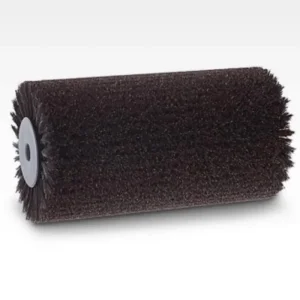
One might observe that in the world of woodworking, “polishing” is often misunderstood. It isn’t just about making things shiny; it’s about refining the surface texture until it interacts with light in a way that feels intentional. Whether one is dealing with a sprawling oak floor or a delicate mahogany cabinet, the choice of brush can dictate the final character of the piece.
Understanding the Core: What exactly is a Wood Polishing Brush?
At its simplest level, a wood polishing brush is a specialized abrasive or buffing tool designed to clean, smooth, or apply finish to wooden surfaces. Unlike a standard cleaning brush, the bristles are specifically calibrated for the density of wood fibers. They aren’t meant to just move dust; they are meant to interact with the cellulose structure of the timber.
It is often observed that beginners rely too heavily on orbital sanders. While effective, sanders tend to flatten the “peaks and valleys” of natural wood grain, sometimes resulting in a look that feels a bit… well, plastic. The brush, however, follows the natural contours. This is particularly vital when working with “distressed” or reclaimed wood where the character is found in the unevenness.
The Anatomy of the Brush
The construction of these tools varies wildly depending on the intended outcome. One might see a simple handheld block with stiff bristles, or a complex sisal cylinder brush designed to be mounted on a machine. The anatomy generally consists of:
The Core/Backing: Often made of high-density plastic, wood, or metal (especially in industrial settings).
The Filaments: This is where the magic happens. Materials range from natural fibers to nylon infused with grit.
The Density: How many bristles per square inch? Too sparse, and the finish is streaky; too dense, and the brush “clogs” with wax or dust.
Materials Matter: From Sisal to Synthetic
Choosing the right material is probably the most critical decision in the polishing process. It’s a bit like choosing the right spice for a meal—the wrong one doesn’t just fail; it ruins the whole thing.
The Rugged Efficiency of Sisal
The sisal cylinder brush is often the first choice for heavy-duty applications. Sisal, derived from the Agave sisalana plant, is incredibly tough. It’s a stiff fiber that doesn’t lose its “bite” easily. When one sees a large-scale flooring project being prepared for a final coat, there is a high probability that a cylinder brush is involved.
Sisal is particularly good at “opening up” the grain. It clears out the soft springwood between the harder latewood rings, creating a tactile depth that is highly sought after in rustic designs. It’s a bit of a workout for the wood, but the results are undeniably authentic.
Natural vs. Abrasive Nylon
Then there is the debate between natural fibers (like Tampico or Horsehair) and abrasive-infused nylons.
Natural Fibers: These are excellent for applying wax. They hold the heat generated by friction, which helps the wax penetrate deeper into the wood.
Abrasive Nylon: These bristles are impregnated with silicon carbide or aluminum oxide. They act like thousands of tiny sandpaper wires.
The Role of the Furniture Polishing Brush
When the focus shifts from industrial flooring to home décor, the furniture polishing brush takes center stage. This tool is often smaller, more ergonomic, and designed for finesse. One might notice that furniture has nooks, crannies, and carvings that a flat sanding block would destroy.
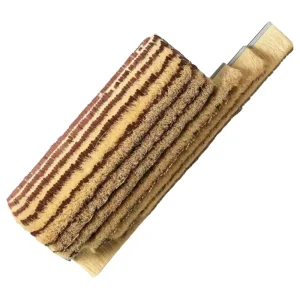
A high-quality furniture polishing brush allows the craftsman to get into the “shoulders” of a tenon joint or the depths of a carved floral motif. It ensures that the finish is even across the entire piece, preventing the dreaded “wax buildup” in the corners. It’s often said that the difference between a DIY project and a professional piece is found in the corners. If the corners are dull or gummy, the brush was likely skipped.
Why Use a Wood Polishing Brush Instead of Just Sandpaper?
It’s a fair question. Why buy another tool? One might argue that sandpaper is “good enough.” However, “good enough” is often the enemy of “exceptional.”
1. Preserving the Topography
Sandpaper is a leveller. It wants to make everything flat. But wood isn’t flat—it’s a biological structure. A wood polishing brush respects the topography of the grain. It polishes the highs and the lows simultaneously. This results in a “3D” effect where the grain seems to pop out at the viewer.
2. Managing “Grain Raise.”
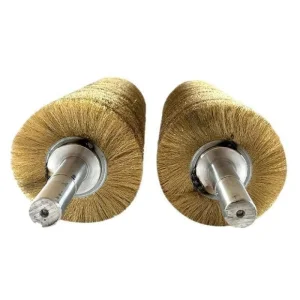
When you apply a water-based finish, the wood fibers often stand up (grain raise), making the surface feel like a cat’s tongue. A quick pass with a fine-grit abrasive wood polishing brush snips these fibers off without cutting through the thin layer of finish you just applied. It’s a delicate balance that sandpaper often fails to strike.
3. Efficiency in Large Projects
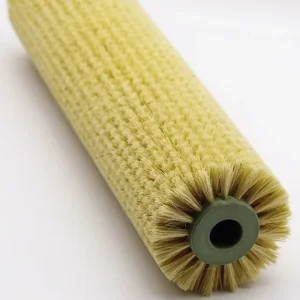
If one is finishing 500 square feet of decking, a handheld cloth is out of the question. This is where the sisal cylinder brush proves its worth. Mounted on a walk-behind machine, it can process vast areas with a consistency that manual labor can’t match.
Best Practices for Using a Wood Polishing Brush
There are some unwritten rules—well, perhaps they are written now—that one should follow to avoid ruining a project.
Always follow the grain: Even with a brush, going against the grain can create microscopic scratches that show up once a stain is applied.
Watch the RPMs: If using a power tool, too much speed creates heat. Heat can melt certain waxes or even scorch the wood. (It’s a fine line between a polish and a burn).
Clean your brushes: A clogged wood polishing brush is useless. If you’re using wax, the bristles will eventually gum up. A quick dip in mineral spirits or a dedicated brush cleaner is necessary to keep the “bite” alive.
Don’t mix grits: Much like sandpaper, if you use a brush for a coarse task, don’t use that same brush for a high-gloss finish without a thorough cleaning (or better yet, keep separate brushes).
The “Observation” Phase
One should always test the brush on an inconspicuous area. Wood is fickle. A brush that works beautifully on Oak might be too aggressive for soft Pine. Observing how the fibers react—whether they “fuzz up” or smooth down—is the hallmark of a true craftsman.
Maintenance and Longevity
A good wood polishing brush is an investment. It’s not a disposable item. Whether it’s a manual furniture polishing brush or a large sisal cylinder brush, proper care extends its life by years.
Storage: Store brushes with the bristles facing up or hanging. Never let a brush sit on its bristles, as they will take a “set” and become permanently deformed.
Comb it out: Occasionally, use a metal comb to remove dried finish or dust from deep within the bristle clusters.
Humidity Control: Natural fibers like sisal or horsehair can react to humidity. Store them in a dry place to prevent the wooden blocks from warping or the fibers from becoming brittle.
Conclusion: The Final Word on Brushing
In the end, the wood polishing brush is about the marriage of science and soul. It’s a technical tool that requires an understanding of RPMs, grit sizes, and fiber density, but it also requires a “feel” for the wood. It’s about knowing when to push harder and when to let the weight of the tool do the work.
Whether you are restoring an antique with a fine furniture polishing brush or prepping a commercial floor with a sisal cylinder brush, the goal remains the same: to reveal the natural beauty hidden within the timber. Woodworking is a slow craft, and the brush is perhaps the best tool to remind us that the best things take a little bit of friction and a lot of patience.