
What’s Textile Processing Brush?
Walking through a high-output textile mill, one is immediately struck by the sheer volume of dust, lint, and loose fibers floating in the air. It is a messy, beautiful chaos. Amidst the hum of the looms and the heat of the dryers, there is a component that rarely gets the spotlight but does the heavy lifting for fabric quality: the Textile Processing brush.
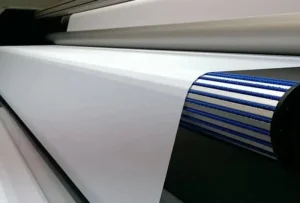
It seems that people often forget that “raw” fabric coming off a loom is rarely ready for the consumer. It is often stiff, covered in stray threads, or perhaps too slick for dye to take hold. This is where mechanical brushing comes in. A Textile Processing brush is essentially the tool that bridges the gap between a rough industrial weave and the soft, polished garment that eventually hits the retail shelf. It’s about more than just cleaning; it’s about surface preparation, finishing, and maintenance all rolled into one rotating component.
The Functional Essence
The core objective here is surface manipulation. Whether the goal is to “raise” the nap of a fleece or simply to clear away the “fly” (those tiny loose fibers that clog up machines), a cylinder cleaning brush is almost always at the center of the action. These brushes are integrated directly into the production line, spinning at high speeds as the fabric web passes over or under them.
Why Mechanical Brushing?
It is an observational truth that air knives and vacuums can only do so much. When fibers are physically entangled in the weave, you need mechanical agitation.
Removal of Contaminants: Dust, seeds (in cotton), and loose threads are flicked away.
Surface Leveling: Ensuring the “hairs” of the fabric are all leaning the same way.
Softening: Breaking the “sizing” or chemical stiffness of the raw material.
Construction Types
In the world of textile machinery, there is no “one size fits all” brush. The way the bristles are anchored to the roller determines how the brush will interact with the delicate (or rugged) fibers. This leads to the two most common industrial configurations: the wound cylinder brush and the tufted cylinder brush.
Wound Cylinder Brush
A wound cylinder brush—sometimes called a strip-wound brush—is made by taking a continuous metal channel filled with bristles and winding it around a steel or aluminum core. It looks a bit like a giant, hairy spring.
Because the winding can be done very tightly, these brushes offer an incredibly high bristle density. This is vital for “sueding” or “emerying” processes where every square millimeter of the fabric needs to be touched. If there is a gap in the bristles, there will be a visible streak on the fabric (which, obviously, is a disaster for high-end textiles).
Tufted Cylinder Brush
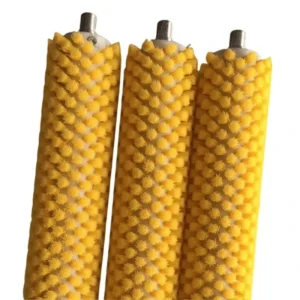
The tufted cylinder brush is constructed differently. Holes are drilled into a solid core, and bunches (tufts) of bristles are stapled or fused into those holes.
The beauty of the tufted design lies in its versatility. You can have a “staggered” tuft pattern that allows the fabric to “breathe” as it passes over the brush. This is often preferred for lighter cleaning tasks where you don’t want to overwhelm the fabric with too much friction. It’s also much easier for debris to fall away from a tufted brush, whereas a wound brush can sometimes “trap” lint deep in its dense roots.
Key Applications
It’s fascinating to see how a Textile Processing brush adapts to different stages of the manufacturing cycle. It isn’t just about the final polish; it starts much earlier.
Singeing and Pre-treatment
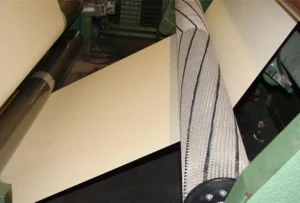
Before fabric is dyed, it often goes through a singeing process where loose fuzz is burned off. After the flame, a cylinder cleaning brush is used to whisk away the charred remains. If that ash isn’t removed perfectly, the dye will be blotchy. It’s a high-stakes cleaning job.
Raising and Napping
Think of a cozy flannel shirt. That “fuzziness” is created by metallic or stiff nylon brushes that literally pull the ends of the fibers out of the yarn. This creates an insulating layer of air.
Mercerizing Support
In the mercerization process (treating cotton with sodium hydroxide to make it shiny), brushes are used to ensure the chemical is spread evenly across the surface. Here, the chemical resistance of the bristle material—usually a specialized cylinder cleaning brush filament—is the most important factor.
Comparison of Brush Configurations
To decide between a wound cylinder brush and a tufted cylinder brush, one must look at the specific requirements of the fabric line.
Technical Specifications: Bristle Selection
The “heart” of any Textile Processing brush is the filament. You can’t just use any plastic; the heat and friction of a textile line are enough to melt cheap materials onto the fabric—which is an expensive mistake to make.
Nylon (The Industry Standard)
Nylon 6, 6.6, and 6.12 are the most common. They have great “memory,” meaning they snap back after being bent thousands of times per minute.
Nylon 6.12: Best for wet processing because it doesn’t absorb water and lose its stiffness.
Abrasive Nylon: Often impregnated with silicon carbide or aluminum oxide for “sueding” denim and heavy canvas.
Natural Fibers
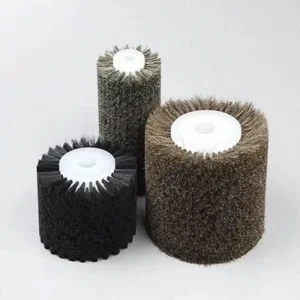
Sometimes, you’ll see Tampico (a plant fiber) or horsehair used. These are great for preventing static electricity buildup. In a dry lint-heavy environment, a static spark can literally start a fire, so natural fibers or anti-static synthetics are a safety requirement, not just a preference.
Maintenance Insights
It is a common observation that maintenance teams wait too long to replace their brushes. A cylinder cleaning brush is a consumable item. Once the bristles wear down by just a few millimeters, the “tip velocity” changes, and the cleaning efficiency plummets.
Practical Maintenance Tips:
Check the Rotation: Ensure the brush is rotating against the direction of the fabric for maximum agitation.
Vacuum Integration: A brush without a vacuum hood is just moving dust from the fabric into the air (and eventually back onto the fabric).
Tension Management: If the brush is pressed too hard against the fabric web, it creates heat. Heat leads to “pilling” or even melting of synthetic fibers like polyester.
Cleaning the Brush: Paradoxically, the Textile Processing brush needs to be cleaned itself. Compressed air or “comb” attachments are often used to keep the bristles free of lint buildup.
Performance Metrics
How do we measure if a brush is doing its job? In most factories, this is done through a “lint count” or a visual inspection of the fabric’s “hand” (the way it feels).
Efficiency of Lint Removal by Brush Type
(Scale 1-100, Based on observational factory data)
Note: For delicate silks, a high-density wound cylinder brush can actually cause surface abrasion, proving that “more” isn’t always “better.”
Subjective Perspective: The “Feel” of Quality
There is something undeniably tactile about this industry. You can often tell if a Textile Processing brush was used correctly just by running your hand over the finished bolt of cloth. If the fabric feels “hairy” or uneven, the brush was likely worn or the RPM was set too low.
It is a bit of a vague science at times. Even with all the sensors in the world, the final check is often a human being feeling the fabric as it rolls off the line. It’s a reminder that even in an age of high-tech automation, the physical interaction of bristles on fiber remains a craft.
Future Trends in Textile Brushing
As sustainability becomes the driving force in manufacturing, we are seeing changes in brush technology. There is a move away from chemical softeners in favor of “mechanical finishing.” This is great news for the environment, as a cylinder cleaning brush doesn’t require thousands of gallons of water or toxic chemicals to soften a fabric.
We are also seeing “smart” cores in wound cylinder brush designs. These cores can detect vibrations; if a bearing is failing or if the brush is out of balance, the system alerts the operator before the fabric is ruined. It’s an exciting time for a tool that has, in some form, existed since the dawn of the industrial revolution.
Conclusion
The Textile Processing brush is a vital, if understated, hero of the garment industry. From the heavy-duty wound cylinder brush used to scuff up denim to the precision tufted cylinder brush used for lint removal on fine knits, these tools ensure that the clothes we wear are clean, soft, and durable.
Understanding the nuances of bristle density, material selection, and maintenance isn’t just for the engineers in the mill—it’s for anyone who values quality in the products they use every day. If your fabric looks perfect, a brush likely made it that way.