
Rust is, in many ways, the silent tax on everything made of iron or steel. It’s a relentless chemical reaction that doesn’t care about the structural integrity of a bridge or the aesthetic of a classic car. When one stands before a piece of machinery that has been left to the elements, the orange-red flake of oxidation feels almost like a biological growth. To fix it, you need more than just hope; you need the right Rust Remover Brush.
But what exactly defines this tool? It isn’t just a “wire brush” in the generic sense. Depending on the scale of the task—whether it’s a hobbyist cleaning a bolt or a factory refreshing a pipeline—the Rust Remover Brush evolves from a simple hand tool into a complex piece of industrial engineering.
The Nature of the Beast: Understanding Mechanical Rust Removal
Mechanical removal is often preferred over chemical dipping because it allows for localized treatment. One might observe that soaking an entire engine block in acid is risky, whereas a targeted brush can strip away the corrosion without compromising the “healthy” metal underneath.
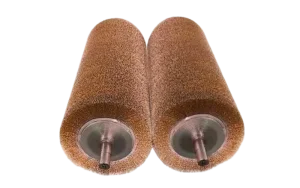
The primary function of a Rust Remover Brush is friction. By driving hardened wire filaments against the oxidized surface, the brittle rust is shattered and swept away, revealing the stable substrate below. It’s a gritty, dusty, and somewhat loud process, but there is a profound satisfaction in watching the shimmering silver of steel emerge from beneath a crust of decay.
Why Brushes Instead of Grinding Wheels?
A common mistake is assuming a solid grinding stone is better. However, a grinding wheel removes a significant amount of the base metal. A brush, particularly a high-quality cylinder polishing brush, is more conformable. The bristles can “flick” into pits and depressions in the metal where a flat stone would simply skip over the surface.
Types of Rust Removal Brushes in Industrial Settings
In the world of heavy manufacturing and metal processing, a handheld brush simply won’t cut it. This is where the machinery gets specialized.
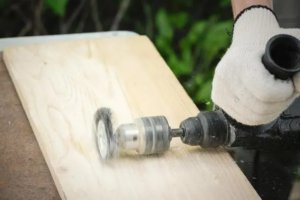
The Metal Cylinder Brush
When dealing with large surface areas—think sheet metal or massive industrial plates—the metal cylinder brush is the workhorse. These are usually mounted on automated lines. One can see these massive rollers spinning at high speeds, effectively “scrubbing” the rust off as the metal passes through.
The beauty of a metal cylinder brush lies in its consistency. Unlike a human hand, which tires and varies in pressure, a machine-mounted cylinder provides a uniform finish across miles of material. It is often the first line of defense in a mill before the metal is primed or painted.
The Coil Polishing Brush
For those in the steel and aluminum industries, the coil polishing brush is a familiar sight. Metal coils (huge rolls of sheet metal) are prone to surface oxidation during storage or transport. Before these coils can be unrolled and turned into car parts or appliances, they must be perfectly clean.
The coil polishing brush is designed to handle the high tension and speed of a coil-to-coil processing line. It’s not just about removing rust; it’s about preparing the surface energy of the metal so that future coatings actually stick. (Nothing is worse than painting over a “clean” surface only to have it peel off six months later because of microscopic oxidation).
The Specialized Cylinder Polishing Brush
Sometimes, the goal isn’t just “cleaning” but achieving a specific surface roughness (Ra value). A cylinder polishing brush often uses finer filaments or even abrasive-infused nylon to ensure that the metal isn’t just rust-free, but also smooth to the touch. It’s a delicate balance between aggression and finesse.
Choosing the Right Filament: A Comparison
The effectiveness of a Rust Remover Brush is almost entirely dependent on what the bristles are made of. One might think “the stiffer, the better,” but that’s a shortcut to damaging your workpiece.
Safety and Environmental Considerations
Let’s be honest: removing rust is a dirty job. When a Rust Remover Brush hits a surface, it isn’t just removing iron oxide; it’s also potentially removing old lead paint, chrome, or industrial coatings.
Respiratory Protection: The dust generated is microscopic. One might not feel it immediately, but your lungs certainly will. A P100 respirator is usually the baseline for this kind of work.
Eye Protection: Wire brushes are notorious for “shedding.” A single wire filament flying off a metal cylinder brush at 3,000 RPM is essentially a tiny, jagged needle. Always wear a full face shield.
Cross-Contamination: Never use a brush that has touched carbon steel on a piece of stainless steel. Tiny particles of the carbon steel will embed themselves in the stainless, and—ironically—the stainless steel will start to rust.
Applications Across Different Industries
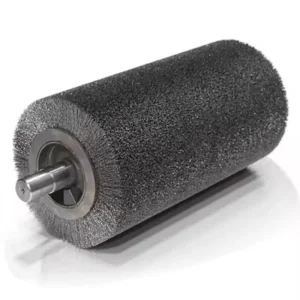
It is fascinating to see how the Rust Remover Brush adapts to its environment. It seems that every sector has a slightly different take on how to use these tools effectively.
1. Automotive Restoration
In the world of car restoration, the brush is used for everything from cleaning up a chassis to prepping a fuel tank. A cylinder polishing brush is often used here to clean the inside of cylindrical parts or to give a brushed-satin finish to custom trim.
2. Marine Maintenance
Saltwater is the best friend of rust and the enemy of everything else. Ships require constant maintenance. Here, you’ll see massive pneumatic tools equipped with heavy-duty brushes. The scale is different—the rust can be an inch thick—but the mechanical principle remains identical to the brush in your garage.
3. Pipeline and Oil & Gas
Pipelines are prone to “pitting.” A coil polishing brush or specialized internal pipe brush is used to scrub the interior and exterior surfaces before inspections. If the rust isn’t removed, the ultrasonic sensors can’t get an accurate reading of the wall thickness.
The Subjective “Feel” of Quality
When one holds a high-quality Rust Remover Brush, there’s a certain weight and balance to it. Cheaper brushes tend to vibrate excessively—a phenomenon called “chatter.” This isn’t just annoying; it causes an uneven finish and can lead to hand-arm vibration syndrome (HAVS) in professional settings.
A premium brush, whether it’s a manual hand-held or a component of a metal cylinder brush system, should feel “true.” When it spins, there should be no wobble. The distribution of the wire must be perfectly symmetrical. It’s one of those things where you get exactly what you pay for.
Maintaining Your Brushing Equipment
To ensure a long life for your tools, a little bit of care goes a long way. It seems like common sense, but many brushes are thrown away long before their time.
Reverse Direction: If you are using a circular or cylinder brush, occasionally reverse the direction of rotation. This “self-sharpens” the wire tips.
Dry Storage: Moisture is the irony of a rust-removal tool. If a carbon steel brush gets damp, it will rust itself into a solid orange block.
De-greasing: If you are brushing a part that has oil on it, the oil will gum up the bristles. Use a solvent to clean the brush frequently, or you’ll just be “polishing” the rust with grease.
Conclusion: More Than Just a Scratchy Surface
The Rust Remover Brush is a testament to the idea that sometimes the simplest solutions are the best. Despite all the lasers and chemical wonders of the 21st century, the mechanical action of a wire bristle remains the most reliable, cost-effective, and versatile way to handle corrosion.
Whether you are an engineer looking to integrate a coil polishing brush into a manufacturing line, or a hobbyist cleaning up a garden tool, understanding the nuance of the brush—the material, the speed, and the pressure—is what separates a botched job from a professional restoration. It’s about more than just cleaning; it’s about preservation.