
In the massive world of industrial food processing, the transition from a farm-harvested product to a supermarket-ready item is a complex dance of mechanics and hygiene. At the heart of this transition lies the fruit cleaning brush. It isn’t a simple kitchen tool found under a sink; rather, it is a high-performance, engineered component designed to handle thousands of kilograms of produce every hour. These industrial brushes are the gatekeepers of food safety, removing soil, pesticide residues, and natural waxes that cling to the skin of apples, oranges, and stone fruits.
The sheer scale of a modern packing house requires machinery that can operate 24/7 without fail. When one observes a high-speed sorting line, the fruit cleaning brush is often seen arranged in a series of long, rotating beds. This setup ensures that as the fruit rolls across the surface, every millimeter of its exterior is contacted by the bristles. (Interestingly, the stiffness of these bristles must be perfectly calibrated—too hard, and you bruise the fruit; too soft, and the cleaning is purely cosmetic).
Fruit Cleaning Brush
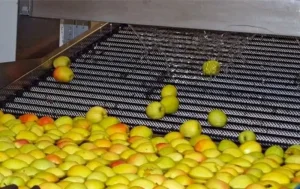
The industrial fruit cleaning brush typically consists of a central shaft—often made of stainless steel or high-strength plastic—with synthetic filaments anchored firmly into the core. In the context of large-scale agriculture, the primary role is friction-based removal.
Pesticide Reduction: Mechanical scrubbing is often more effective than high-pressure water alone at dislodging chemical films.
Wax Application: Beyond cleaning, these brushes are often used in a secondary stage to apply and polish food-grade waxes that extend shelf life.
Debris Removal: Eliminating leaves, twigs, and orchard soil before the fruit hits the washing tanks.
The density of the fruit cleaning brush is a critical factor. For delicate fruits like peaches, a “staggered” tuft pattern is often preferred to allow for a gentler touch. For citrus, however, a much denser bristle configuration is required to penetrate the pebbled texture of the rind. One might notice that in these environments, the sound of the brushes—a low, constant hum—is the soundtrack to modern food safety.
Vegetable Cleaning Brush
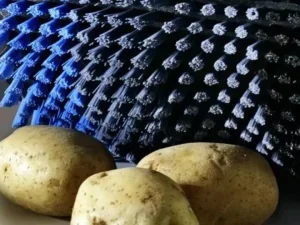
While fruits require a delicate balance of pressure, the vegetable cleaning brush used in industrial lines for root crops—like potatoes, carrots, and beets—operates on a much more aggressive principle. These vegetables are often caked in heavy clay or abrasive soil that would destroy a standard domestic brush in minutes.
The industrial vegetable cleaning brush must be incredibly resilient. The filaments are frequently thicker, often made of Nylon 6.6 or specialized polyesters that can withstand the abrasive nature of sand and grit. In many processing plants, these brushes are part of a “peeling” or “polishing” line.
Food Grade Roller Brush
Safety in the food supply chain is non-negotiable, and this is where the food grade roller brush becomes essential. In the eyes of a food safety inspector, it isn’t just about whether the fruit is clean; it’s about whether the brush itself is a source of contamination. A food grade roller brush must be constructed from materials that are “non-migratory,” meaning no chemicals from the plastic or the glue can leach into the food.
Cylinder Cleaning Brush
From a mechanical engineering perspective, the cylinder cleaning brush is the most versatile form factor in the industry. These are typically long, cylindrical units that can be customized for specific machinery. Whether it is a “spiral-wound” design or a “staple-set” design, the cylinder cleaning brush is the workhorse of the conveyor belt.
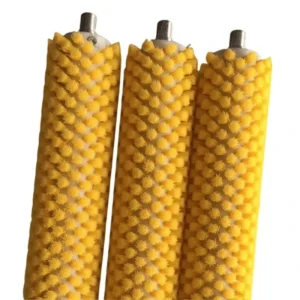
Spiral-Wound Construction: A continuous strip of bristles is wrapped around a metal core. This is excellent for heavy-duty scrubbing as it provides a zero-gap cleaning surface.
Staple-Set Construction: Tufts of bristles are punched into a plastic core. This allows for better water flow between the tufts, which is vital for rinsing applications.
Modular Designs: Some modern factories use interlocking segments, allowing a single section of the cylinder cleaning brush to be replaced if it gets damaged, rather than replacing the entire six-foot roller.
The efficiency of a cylinder cleaning brush is often improved by the addition of internal water feeds. Some high-end models have hollow cores where water or sanitizing solution is pumped through the center and forced out through the bristles. This ensures that dirt is flushed away immediately rather than being moved around on the surface of the fruit.
Technical Considerations for Industrial Use
When selecting a fruit cleaning brush for a high-output facility, one must consider the “bend recovery” of the filaments. If a brush is running for 18 hours a day, the bristles will naturally want to flatten out. High-quality industrial brushes use filaments that have “memory,” allowing them to spring back to their original position after every rotation.
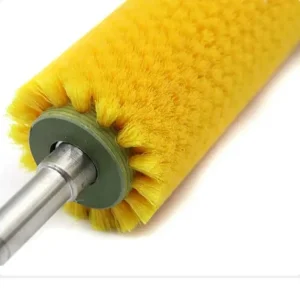
Moreover, the environment of a food processing plant is often wet and acidic. Citrus juices, for example, can be surprisingly corrosive over time. Therefore, the choice of a food grade roller brush must account for the pH levels of the produce being handled. (It’s one of those small details that separate a cheap brush from one that lasts for several seasons).
Maintenance Best Practices
To maintain the integrity of a cylinder cleaning brush, industrial operators follow strict protocols:
Daily Inspection: Checking for “holidays” or missing tufts that could harbor bacteria.
Rotation Reversal: Occasionally reversing the direction of the motor to prevent the bristles from taking a permanent “set” or lean in one direction.
Chlorine Compatibility: Ensuring that if bleach is used in the wash water, the bristle material won’t become brittle and snap off into the food supply.
The Impact of Precision Brushing on the Consumer
It is easy to forget that the pristine appearance of a gala apple or a clean, mud-free potato is the result of thousands of hours of mechanical scrubbing. The fruit cleaning brush is the unsung hero of the produce aisle. By removing the grit and microbial load at the source—the processing plant—the industry significantly reduces the risk of foodborne illnesses.
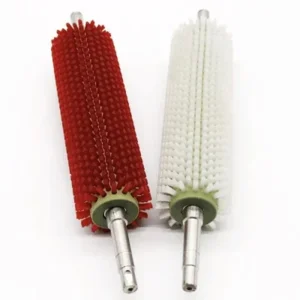
Furthermore, the use of a specialized vegetable cleaning brush in industrial settings allows for “skin-on” processing. Many modern frozen or pre-cut vegetable lines prefer to keep the nutrient-rich skins intact, but this is only possible if the food grade roller brush can achieve a level of cleanliness that is virtually surgical.
Ultimately, the technology behind the cylinder cleaning brush continues to evolve. We are now seeing the integration of antimicrobial filaments—bristles that are infused with silver ions to actively kill bacteria on contact. While the basic shape of the brush hasn’t changed in decades, the science of the materials has reached a point of incredible sophistication.